






Ever since I went to a Halloween party hosted by my friend’s church youth group in the 6th grade, I’ve been almost inseparable from my identity as a Christian. From the time I was in middle school to the time I came out as transgender on my Facebook, I could be found at church at least two days a week. I grew up in a Catholic household, but we weren’t really too involved at church. Then, our family friends, who had a Catholic father and a Baptist mother and were heavily involved in both churches, started to invite us to events at their Baptist church. Going to this church was a whole new experience for me. They had uptempo music with electric guitars and a drum set. They had a pastor who wore Hawaiian shirts and told jokes and talked about football every Sunday. Most importantly, they had a youth group that was actually fun, unlike the tedious CCD classes I was used to taking. It was here that I truly found my place in the church, it was here that I stopped saying “the church” and started saying “my church.”
Now, I never gave up my Catholic identity, I still went to mass every week for a long time and even today I go on Holy Days of Obligation. Being Catholic is too tied into my identity as a Chicana and as a member of my family to ever truly give it up. My parents raised me to believe in a loving God, one who doesn’t judge, punish or hate gay people or women or non-believers or people who have abortions. But I was constantly reminded that most of the Christians around me didn’t think that way. Whether it was my pastor saying “Now, all I’m going to say on the topic of gay marriage is that God created Adam and Eve, not Adam and Steve,” (yes, he actually used that horrible cliche in a sermon), or it was the Pope saying that gay people shouldn’t be allowed to be parents, or it was learning that my church offered gay reparative therapy for a time, I was constantly bombarded with the idea that followers of Christ were not cool with the idea of queer people.
Because of this, whenever I had inklings that I might not fit neatly into the traditional gender binary or the heteronormative narrative that I was being taught twice a year when my church had its “Sex and Marriage” series, I would do my best to ignore those feelings and say that they were just a phase. But by the time I got to college, they were still there. I was starting to go online and do some research about trans* women. I was learning that it wasn’t so strange to feel the way I felt. I was pretty sure that I had found who I really was. But then, during my first year of college away from home, I started to feel extremely depressed and suicidal, in large part due to my dysphoria and hiding in the closet. So I decided to move back home where I knew I had a strong support system of friends and family.
When I did, I got even more involved with the Baptist Church. I became a youth group leader, I taught Sunday School, I worked at the church’s coffee bar; I was one of the most recognizable faces in the congregation. In public, I had to keep mostly quiet about my opinions on gender and sexuality, but I also knew that if I really was trans* and a lesbian, I would need to gather as many people on my side as I could. I started quietly asking around, finding out my close Christian friends’ opinions on gay marriage and other queer issues. Soon I got more bold. I started having arguments with the youth pastor about how men and women should act and dress. I taught Sunday School lessons about how the Bible said that we should accept and love gay people. I would have open discussions in the church on Sundays with members of the youth group about how the verses in the Bible about homosexuality are mistranslated and taken out of cultural context. I even started dressing and acting more femininely. I dyed my hair pink, started wearing light makeup when hanging out with certain friends and added some more androgynous pieces to my wardrobe. I wanted to see how far I could go without actually coming out as transgender.
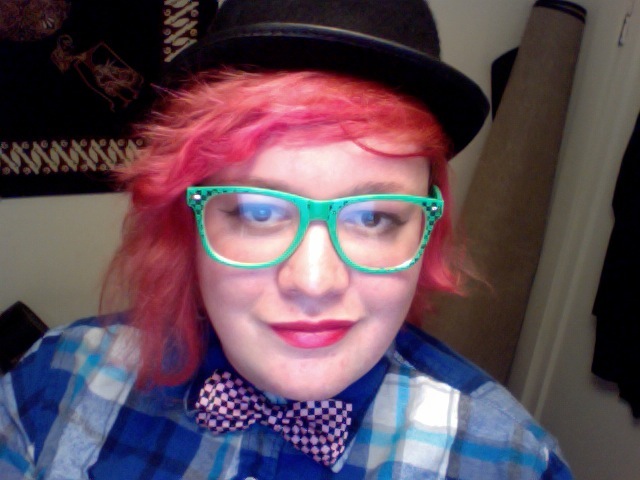
By the time I decided to finally come out to everyone at church, I was the longest serving member of my church’s youth staff, helping out there for six and half years. I also taught Sunday School for close to five years and was heavily involved in many other ministries. I was prepared for all of that to come crashing down. I was pleasantly surprised at what actually happened. I got messages of support from my friends at church ranging from “Love you and support you!” to “I am happy for your faith and I will pray that God gives you continual strength!” I even got several messages from parents of the youth I had served with who said that they were proud of me and would always support me no matter what. I was overwhelmed by the support I was getting online. I thought to myself, “These people really are showing me Jesus’ love.” My fears of walking into church and being met with hatred and judgement were relieved.
That is, until I talked to one of my friends. I had worked with his mom in the youth group for years and I was extremely close to his family; I spent more time at their house than probably any place but my own house, my job and school over the past seven years. When I asked how his mom responded, I was told that she started yelling that I was accusing God of making a mistake. That I wasn’t really a woman. That I was doing something horribly wrong. That’s when my fears started coming back to me. I called up as many friends as I could to go to church with me. If there were going to be people there who would judge me and attack me, I wanted to have people there who I knew would support me and love me and back me up.
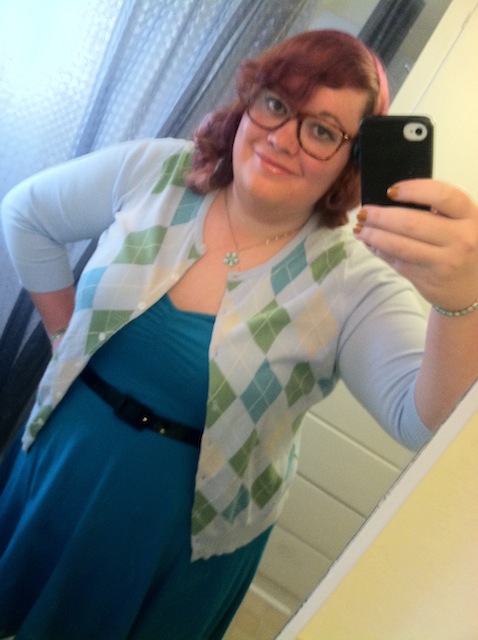
On November 4th, 2012, I put on one of my favorite blue dresses, curled my hair and spent extra time on my makeup, making sure that I wasn’t overdoing it for church. I had been in public as Melínda several times before, but it had always been at costume parties, with close friends who I was already out to, or when I went out of town. This was my first time going out in public in my hometown in front of a large group of people. By the time my friend Richell came to pick me up for church, my stomach was all the way down in my painted toenails. The first person who greeted me at church smiled, shook my hand, and called me by my birth name, giving me very mixed signals about what I should expect. After that, I started getting hugs. Parents, my friends, and members of the youth group started coming up to me, telling me how great I looked and how happy they were for me. Several people told me that they had suspected something for a long time or that they had never seen me look so comfortable- that I seemed like I was glowing.
But not everyone was happy for me. As a part of the sermon, the pastor asked everyone to write the name of someone on a paper fish and hang it on a net on the wall. These were people that were in our lives who didn’t know God. We were put in that person’s life, our pastor told us, to show them God. One of the youth who had been learning about the Bible from me for the past four years came up to me and told me that she wrote my name, and that she was excited to be praying for me. One parent glared at me the first time we saw each other. Later during church, she looked at me and her eyes started watering. Her friend put her arm around her and gave me a dirty look as they walked away. This was a woman who worked with me on the youth staff for years and who had some children I had taught in youth group and Sunday school and other children I was best friends with. That afternoon I found out that the Pastor had talked to my brother before church and asked him if I was being serious with all this stuff or if it was just “some Halloween thing.” I’m still not really sure what he meant by that.
Over the next few weeks, I went back to church many times. Every week more and more people were supportive of me. Some people from my church even friended me on Facebook for the first time after I came out. But the leadership felt another way. The pastor asked to meet with me, saying that he wanted to talk to me about my “life journey and my worldview.” When I finally got up the courage to meet with him face-to-face, he mostly talked about how he was worried that I was a “secular humanist” who didn’t believe in God. After I assured him that I still believe in Jesus, he started talking to me about how God created marriage for one man and one woman and how some parents complained about me working with the youth, so if I wanted to keep serving in any ministry, he and I would have to have many more meetings before that could happen. He also said that he would have to talk to the church elders and parents before deciding if I was going to be allowed back. Going to church was suddenly less fulfilling and a whole lot more conditional.
At the same time that my relationship with the Baptist church I was so deeply involved with was reaching a crossroads, I was actively avoiding the Catholic church. I knew their stance on queer issues and I had less friends to support me there. The next big step for me in my transgender church experience came around Christmas time. We drove down to Los Angeles to spend the holidays with my grandparents and other relatives. Both my father’s family and mother’s family are Catholic, so even though I had been happily accepted by all of them, I was very nervous to go to Christmas Mass. I had gone to church many times as Melínda, but never to a Catholic service, let alone at a church where the only people I know are the 20 members of my family.
We arrived in LA only a few hours before we had to head off to Mass. I was nervous and worried and running on little sleep, so I gave in and decided that I would just go to church as a guy. Luckily, my mom noticed how sad that idea was making me, so she suggested I go and get changed and dress however makes me most comfortable, not what I think the people at the church want me to dress like. I opened my suitcase, put on one of my dresses, took a deep breath and headed to Mass. When I first got there, I nervously sat down and tried to keep to myself. I only looked up when I was being introduced to family friends or greeting my extended family. Before Mass started, one of my cousins came up to me and said, “I like your dress, you look very beautiful.” As soon as she told me that and I realized that everyone was being nice to me, I calmed down and smiled through the rest of Mass.
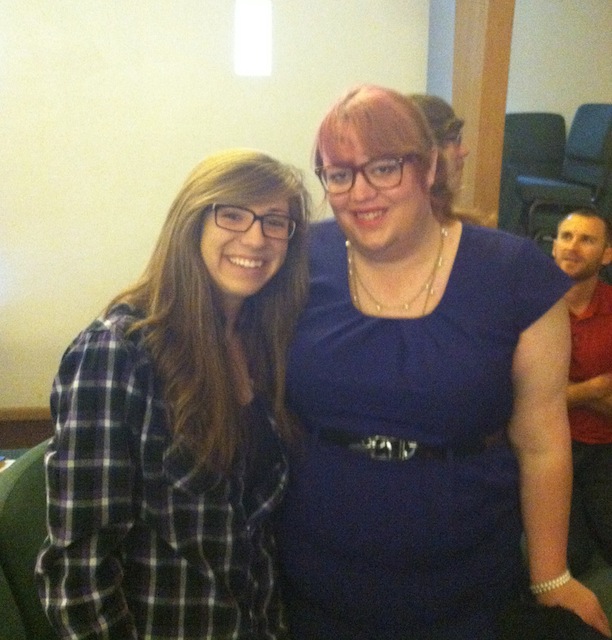
When I came back to Idaho, I knew that I was done with my old church. If my membership there was going to depend on whether or not I was willing to go sit in weeks and weeks of meetings with the pastor and elders, my membership wasn’t real. Their willingness to accept me as long as I didn’t shake the boat too much was in direct opposition to God’s unconditional love. So I asked around and found out that there was a local church where a lot of the queer Christians that I know go. My friends and I decided to check it out at the beginning of the summer and right away we could tell that they were super welcoming to the LGBTQ crowd. In the announcements they asked who wanted to march with the local queer group in the upcoming parade, they have a queer woman presiding over the service and a gay man leading worship. I felt way more comfortable here than I had felt at church in years.
The only problem is that they might put a little too much effort into welcoming the queer community. The first Sunday I went there, the first three conversations I had during coffee hour after church were about a parishioner’s gay relative who lived in San Francisco, Prop 8 coming before the Supreme Court and gay marriage in California. All of these conversations were started by other people without any prompting from me. It could just be that they were a small church and weren’t used to having a group of newcomers show up on a random Sunday, but it was still a little strange. Even though the coffee hour conversation was a little repetitive, I still had a good time. My relationship with the church was starting to turn around.
That relationship hit a huge hurdle later in the summer when one of my good friend’s wedding was coming up. Before she moved to another town for a teaching job, she and I had been very close. She was one of my best friends at the Baptist church and I even looked up to her as a Christian role model. We worked together in the youth group, we were in the same small friend group and we would hang out on a regular basis. When I came out she offered her love and support via Facebook. A few weeks later when she was back in town visiting, she saw me at church, gave me a big hug and told me I looked beautiful. I was really looking forward to her wedding. But then, just a few weeks before the date, I got a Facebook message from her.
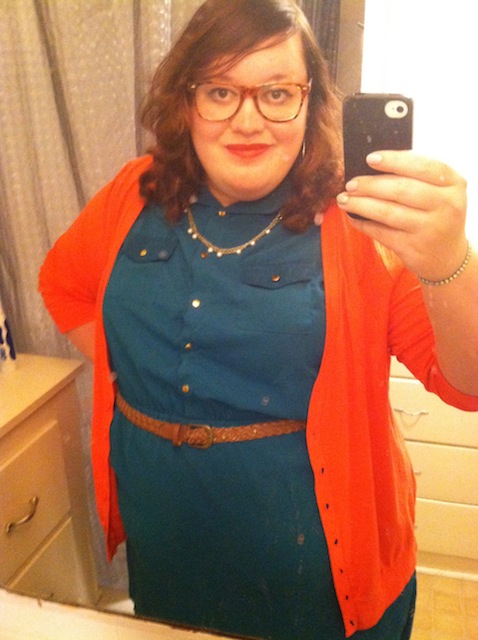
She said that she wanted her wedding to “honor God” and that she and her fiancé didn’t think that I was doing that. She misgendered me and used my birth name throughout the message and told me that she didn’t “condone” me coming to her wedding as Mey. This, according to her, was not showing partiality, and she was expecting all of her guests to honor God under the same set of rules. However, those with less visible “sins,” such as divorce or premarital sex or atheism were still invited. She did, however, invite me to come if I were willing to dress and act like a man and pretend like I had never come out as the real me — as a woman. She said that as long as I was not following God, I was not welcome, and I guess the only way she could tell that I wasn’t following God was if I were to show up in a dress and lipstick. And that’s where the problem lies. Unlike so many other things that many Christians consider to be against God, being transgender is, for many of us, a very visible thing. When I went to church for the first time after coming out, everyone could see the change and was constantly reminded that I was now a sinner in their eyes.
In addition to being judged for being a “sinner,” I’ve had a lot of people assume that when I was coming out, I was also renouncing my faith. I’ve had to explain over and over again that there are plenty of transgender and other queer Christians. I’ve had to tell people that no, me being trans doesn’t mean that I think God made a mistake. I don’t even want to think about all the people who have told me that they still love me, they just don’t support my decisions and that they know that this isn’t what God wants for my life. I’ve never understood this clearly what people mean when they say “love the sinner and hate the sin.” And it isn’t a good thing. They spend an awful lot of time focusing on the sin that they hate so much and not enough time focusing on the “sinner” that they’re supposed to be loving. I have no time for churchgoers who are going to judge me or tell me that I’m being a bad Christian for being who I am. I was taught that I am Wonderfully and Fearfully Made, and that means that my transgender body is wonderful and is exactly what God had in mind when They made me. In fact, that thought is one of the things that keeps me going in hard times. God created me to be transgender and queer, and so I have to remember, as the Bible says, if God is for me, who can be against me?
Joan of Arc was burned at the stake for crimes that included dressing like a man, but it’s for those same actions that she was canonized by the Catholic Church almost 500 years later. Now, I’m far from being a saint, but I like to think that if she can be celebrated and honored by the church for challenging gender norms than so can I. Or at least I can find a place that will fully welcome me for being who I am.
I currently still have a very complicated relationship with the church. I absolutely don’t want to belong to an organization that condemns people like me or even has second thoughts about me being a full member because of my gender or sexuality. I’m not sure when I’m going to find another church that I’ll feel as at home as I did at my last church, or if I ever will. I still very much believe in and have a relationship with a God who doesn’t judge and instead welcomes everyone into Their loving arms. In fact, it’s my relationship with God that has given me the hope and strength I’ve needed to make it through some of my darkest moments of depression and dysphoria.
I’d like to be able to find a group who wants to share in that hope and faith with me. I’d like to be able to sing and share meals and pray together and work together to make our community a better place. I’m still looking for that place, and sometimes I run into groups who would rather judge me or flat out refuse me a place at the table than welcome me in. Those aren’t the type of Christians I want to identify with, and those aren’t the type of Christians I want to sit in church with. So I have to hold onto hope that I’ll be able to find a church that will celebrate my transness with me, that will celebrate my queerness with me and that will see that I too am created in God’s image.
Special Note: Autostraddle’s “First Person” personal essays do not necessarily reflect the ideals of Autostraddle or its editors, nor do any First Person writers intend to speak on behalf of anyone other than themselves. First Person writers are simply speaking honestly from their own hearts.



Comments
I can’t even believe how brave you are. I was born in Idaho and still have family there, I couldn’t have come out if I still lived there. I didn’t even feel comfortable in Portland and ended up moving to Seattle for college and that is when I came out and transitioned. I loved this piece, it is so amazing to read about how hard you’ve worked to find a place of worship that will work for you. I just gave up and no longer go to Catholic things, again you’re very brave and a great person!
Jess
Thank you for writing this.
There are too few pieces out there that talk about being queer but that not changing your relationship with God, and every time I read one it makes me happy that I’m not the only one.
Most Christians don’t understand the one point that is the most important in the queer Christian experience, and a lot of queer people don’t either, but that point, that no matter how crappy Christians can be never affects God’s love, and that God always loves us, all the more I think when we have to face the hate of the people who think they love God more.
Hope that all makes sense, I just woke up. :)
I completely second this! It is so hard to find people who understand what it is like to be queer and a Christian. It often seems as though people think the two are mutually exclusive, which seems strange to me.
Agreed. The “it’s us versus them” mindset seems to be widespread in both the queer community and the religious community. It’s very sad to see that type of emotional violence being fostered in any context; as though people were logically and morally obliged to remain loyal to ONE aspect of their identity instead of all aspects.
<3 hope you do find the right church for you
(Aside from their issues I totally understand the appeal of Baptist Churches, even my atheist self had fun at one)
Sorry, just logging in to say that the Leelee Sobieski in Joan of Arc is one of my roots. And I KNOW I’m not alone on this one.
Thank you for sharing your story! The organization Believe Out Loud has some amazing resources for queer Christians and those who want to learn more about welcoming theologies: http://www.believeoutloud.com/
Oh my goodness, you live in Idaho? So do I, and I’m a Catholic queer. I can’t tell you how much this article lifted my spirits today, thank you so much!
So, I think I’m going to share this around at our next Faith & Sexuality group meeting, if that’s ok? I really think this will resonate with a lot of people there. (Also you are so gorgeous and brave and I want to give you all the hugs.)
Yeah, that’s totally okay! I’m glad that you think people will be able to relate to this and hopefully get sometihng out of it!
I was raised Catholic too and am now agnostic, but I work in a lot of Catholic schools and the way I think about it is that rather than being a mistake, couldn’t God have purposely made some people trans as a test of how loving and accepting we can all be towards others?
Catholic one sounded right. No fanfare, just a quiet welcome. That’s what I’ve noticed in some Catholic churches I’ve gone to. Odd considering the doctrine, huh?
As a queer Episcopalian, and the daughter of two lesbian Episcopal priests, it’s practically my duty to make a plug for the Episcopal Church. Like every religious institution, it’s not perfect – but in my opinion, it’s damn near it.
While some congregations are more conservative than others (a fact I think is amusingly highlighted by several in the South that have actually LEFT the Church recently over their acceptance and inclusion of LGBTQ people and promotion of marriage equality), as a whole the E. Church’s policy is one of absolute inclusion, love, and respect for all people – just like God’s. Women and LGBTQ individuals are allowed the same opportunities to participate and be a part of the Church community and service as everyone else – including the ability/right to become priests and bishops, if they are so called and chosen. As far as the liturgy itself goes, it’s very similar to that of the Catholic Church (except a bit more modernized), which is why a lot of Catholics who no longer feel comfortable with the CC’s policies end up becoming Episcopalians.
Really I could go on and on about the amazing community and people I’ve found in the EC, but I don’t want to completely bore you to death – if you have any questions about my experiences or the Church, or if you’re interested in talking to someone with more knowledge and insight, please feel free to contact me!! Here’s a link to the EC website’s official “LGBT in the Church” page. Good luck in your search, and I hope this helps :)
Oops, forgot the link! Here it is: http://www.episcopalchurch.org/page/lgbt-church
As a lifelong Catholic who will be received into the Episcopal Church this coming Sunday, I wholeheartedly second this. It’s such a wonderful balance of the Catholic-esque service and sacraments combined with an open-minded approach to religious and social issues. Episcopalians don’t try to force everyone to adhere to the exact same beliefs, and encourage independent thought and reason, keeping in mind the basic premise that God loves everyone. The Episcopal churches that I’ve attended (including some in the South) have been very welcoming and, again, open-minded.
So if you’re looking for a new church to try out, I definitely recommend it. Thank you for sharing your story, Mey; it’s beautiful, and so are you!
I second that! I grew up Presbyterian, but left my church when they defied the national denomination’s vote to ordain gay pastors. I now am an Episcopalian with my girlfriend, who grew up Catholic. They are lovely and welcoming, but not overly so- I totally relate to Mey’s experience of being rainbow-bombed, and it being a bit weird. I just want to be treated like other parishioners, not welcomed extra-specially because I’m queer. I’m now attending seminary, and it is a continual revelation to me to be so welcomed and accepted.
Good show, Mey. I hope your communities come around to accepting you with a greater openness of heart. Although I’m not a Christian, I have some experience with the difficulties of coming out to conservative people. Your courage is astounding and inspiring.
I think I would just give up on organised religion altogether tbh, if all the religious groups near you have a doctrine of faith that says you are a sinner and you disagree with that assessment surely you have to start questioning the doctrine (i.e. Bible) itself? I mean you already said you taught young people that the Bible was a product of it’s cultural time and therefore presumably not the word of God?
Maybe that’s where your at anyway, never understood the particular denominations of Christianity though.
I don’t mean to speak for Mey, but I think that she means to understand the Bible we have to look at the cultural context in which it was written. That cultural context doesn’t make it invalid, it just takes a little bit more time to understand it.
Also, once someone has a relationship with faith and God it is not so easy to give it up. Even when I questioned religion after I came out, I never doubted that there was a loving God who cared deeply for me.
I hope that made sense.
Good point! The Bible has a rich history of interpretation and theological criticism, and the opinions of the church and its many facets have evolved over time. I could never leave the church completely, even though my home church was judgmental and uncomfortable for me, because my relationship with God as experienced through Christianity is too important for me.
The thing about blaming homophobia in the Bible on “cultural context” is that you’re telling me this is an omnipotent god who could become a man and die for our sins but somehow they could even get the Bible writers to include one tiny explicitly positive passage about queer people? ONE TINY PASSAGE that might’ve saved so many people from pain was beyond god’s power because it would’ve contradicted with “the cultural context” – the whole Gospel goes against the culture that preceded it, that’s why early Christians were oppressed??
This is NOT an argument about whether Christianity is inherently homophobic, your comment is beyond rude, and you can stow the evangelism.
-also a queer atheist.
Thank you so much for sharing your story Mey. I was so encouraged to hear about your faith journey with the church, because it is so similar to mine. I started crying while reading this, thinking that someone understands. I have been lucky enough to find an amazing UCC church that is open and affirming. Even though I miss upbeat music, finally being part of a community of supportive people brings me such a peace I didn’t think I could ever get back.
I can completely relate to people saying “love the sinner, hate the sin” and I’m still struggling to explain to people from my old church that there is no sin to hate here. That I am who God wants me to be and that I am “fearfully and wonderfully made.”
Again, thank you so much for sharing your story and giving me such encouragement. I hope and pray that you will be able to find a loving church community that will be be there for you through thick and thin.
This is perfection! She referred to God as They which is accurate on two levels because it acknowledges the third pronoun and also the fact that God is three persons. As a Catholic Christian, this is incredibly inspiring. I am a Sunday School teacher for Kindergarteners and as Mey said she did, my coteacher and I also spread the message of love evident in the curriculum. The core message of our faith is God’s love and any beliefs contrary to that are propaganda thrust down the throats of Their children.
Ugh! Just another horrific story of intolerance and hate. It reminds me of my coming out story so many years ago! (Of course, every time I walk into their church now, they STILL don’t even acknowledge me).
If you are ever in the Bay Area, come visit us. We’d love to have you be in our worship services! We are a cross between Baptist/Pentecostal and completely LGBT-affirming.
Dapstep Ministries
http://www.dapstepministries.org
Mey, every time one of your articles is posted on AS my heart grows 3x its size. This was simply beautiful and so encouraging. You are a complete badass, and I wish I had half the courage and tenacity you did while I was actively involved in my church youth group.
(Also that last outfit for going to a Catholic wedding is so fetch.)
I love this piece. My best friend is Quaker and loves Jesus and is a trans* guy! Interplays between and discussions of spirituality and sexuality always make me think of him.
Mey, I really loved this article. Thank you. As a queer Catholic, I understand a little bit about how being Catholic is a really important part of you. I kept going to church until the archdiocese in MN started pushing hard against gay marriage (asking parishes to read a ‘marriage prayer’ at mass, etc).
I haven’t gone in a year, since my cousin’s wedding, but Catholicism will always be a part of me.
I hope you find a place that is really great for you <3
Ugh, I hate that kind of stuff so much! At the local church here they started handing out these prayer sheets at the end of mass asking us to pray for the protection of marriage and unborn children.
My (less Catholic than my father) mother and I amuse ourselves during Mass by waiting to see how the pastor of our parish will incorporate the evils of abortion into his completely unrelated homily topic each week.
(Needless to say, I had a bit of a giggle last week when the Pope said that preaching about abortion wasn’t the most important thing in Catholicism.)
If you find somewhere you feel comfortable, I’d love for you to do another article about it. I’ve been pretty lost in my faith journey since I broke away from the Catholic Church and I’d really appreciate if I could see how another Catholic queer resolved their faith questions.
I suspect that transphobic Christians are forgetting the part of the Bible (Galatians 3:28) that says “There is neither Jew nor Greek, there is neither slave nor free, there is no male and female, for you are all one in Christ Jesus.”
Um, speaking as a Jewish (at this point ethnically anyway, whatever that means) trans woman… I’m not one in Christ Jesus. No thank you, I reject that membership. And I’m proud to say that for at least three branches of the religion I grew up in, no matter what our other imperfections are, we’ve been incredibly inclusive in terms of gay, queer and trans people (Orthodox Judaism… no comment).
I loved this piece! And I can totally relate as a gay Catholic – the “love the sinner, hate the sin” saying is full of crap. I don’t understand why it affects people so much that we’re just being who we are. It’s other people’s problem if they have a problem with you, not your problem.
You’re awesome and I hope you find a good church! <3
Beautiful. Thank you for sharing :)
Mey, thank you so much for writing your experiences; I’m a transgender lesbian sunday school teacher also, and can I just say, sometimes I feel like the only one is the universe who didn’t give up her faith while coming out. I grew up serving every week in the Baptist church, and after going to college served with the FourSquare church for ten years – but both gave me the same “I’m so proud of you, but now I have to treat you like you’re living in sin” treatment you talked about. I’m so sorry. If it was for you anything like it was for me, well, I understand. For what it’s worth, I’ve found a new home church. I actually started teaching Sunday School again just this month, and it’s so nice to be able to have real relationships with other people in church, and to learn and sing and serve together, and to have them see me as nothing more than just “another young person”.
this was really compelling and important, thank you mey
i’m a jew, so i don’t have anything much to add personally, just “i’m really happy to have read this”
Thanks so much for sharing this, Mey! I have spent the summer interviewing LGBTQ people about spirituality, and I find that I *rarely* hear voices of Trans* folks talking about spirituality… the mass-media conversation usually focuses on “God vs. Gays.” So thank you for being awesome, standing on your holy ground, and speaking up! So many happy butterflies. And so much love for Autostraddle.
Mey, what a wonderful article. Having pastored and evangelized in a conservative protestant denomination and come out as trans, I relate very well to your plight.
Just an FYI, not all baptist churches are condemning and in fact there is an organization called Accepting and Welcoming Baptists which has a list of friendly LGBT churches. Also, the United Church of Christ very accepting as well.
Gina, I know of one Orthodox Rabbi, Levi Alter, who is trans and fully accepted (yes, visited the moyal had his bar-mitzah). He is also intersexed, so I am not sure how much that played into as part of the decision to accept him as an Orthodox Rabbi.
I ‘realized’ I was queer, and discovered my faith, all in the same year. They are two incredibly important aspects of my identity, and are even a little tied together for me because of their importance in my life, the necessity to always have to be explaining them to people, and the way they both came into my life at the same time. I love reading stories about fellow queers and religious believers. So thank you, Mey!!! You’re so brave, and I hope it isn’t too ‘church-y’ to say that you’ll be in my thoughts and prayers as you continue to look for ‘your’ church.
Hey Mey! I just read this article just now. I wanted to say thank you for writing this. I echo many people’s sentiments on this thread in that my Christian faith is a part of me that will always be around, and which impacts so much of who I am and who I want to be (even if sometimes it has been and it still a source of painful questioning and struggle – or perhaps it’s the words of its followers that still take me to this place sometimes).
Anyhow, I deeply appreciated this. In 240928 years when I get to A Camp I hope that you are there and that we and others can have some God moments (and maybe sing some excellent church songs!) together. That would be glorious.