





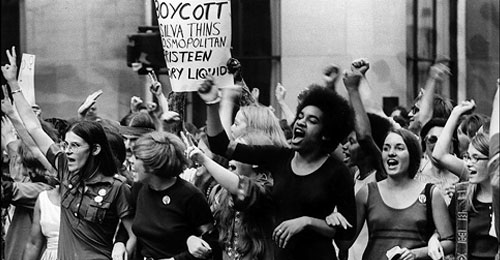
Hey how do you feel about intersectionality? Do you know what it is? We’re going to talk even more about this in the second installment of our feminist roundtable. This discussion is going to be even better than a college class because 1) we aren’t your Soc 101 professor, we’re Autostraddle!, and 2) we’re talking about the real life feelings of queer girls, and who doesn’t love those?
“Basically, the idea is that being a white woman and being a black women (or being a straight woman and being a gay woman) are really different experiences that come with different types/degrees of oppression.
To bring everyone up to speed, here’s the basics on intersectionality: It’s a sociological way of thinking that was made popular mostly because of Patricia Hill Collins. She has written a BUNCH about the ways that different identities — usually race and gender, in her case — interact with each other. Basically, the idea is that being a white woman and being a black women (or being a straight woman and being a gay woman) are really different experiences that come with different types/degrees of oppression. These were controversial issues a few decades ago, though it all might seem pretty obvious to those of us who grew up with third wave feminism — but even third wave feminism still often fails to deal adequately with these issues.
Intersectionality is now pretty much the most widely accepted way of thinking of about identity, at least for sociologists. But that doesn’t mean the real world has caught up. For many women, reconciling multiple oppressed identities is still a daily struggle.
At Autostraddle, almost all of us deal with being a woman and being gay — and some of us have to deal with being racial or religious minorities, too. That can feel like fighting a war on three fronts at the same time, which brings us to our next roundtable question. But first, if you haven’t already read it, check out part one of this roundtable when we discussed how we became feminists.
Question 2:
How does your race and/or sexuality impact your feminist identity?
Do you ever feel you have to “pick one”?
+
Editorial Disclaimer: The individual opinions and views expressed below do not necessarily reflect those of the editorial board, Autostraddle.com, The Excitant Group LLC or other sponsors and partners.
.+
 LANEIA, EXECUTIVE EDITOR: I had to untangle a lot of my negative feelings about male privilege and expectation — feelings I’d had for a lifetime, but hadn’t been able to vocalize or own.
To be honest, my feminist identity hasn’t been burdened by my race at all. It was, however, stunted by my upbringing in a rural southern town, which I’m pretty sure I’ve gone over ad nauseum. For what it’s worth, I’m not putting down the South in any way — I don’t believe anyone consciously kept me from this greater knowledge of the world. But with my limited resources, it sure as hell was hard to find. I’m willing to take the blame for most of that, though. It was no one else’s job to enlighten me.
Like any other parent, I’m really just hoping
not to raise a couple of assholes.
+
This might sound terrible, but I used to have a difficult time reconciling my feminist identity with the fact that I was the queer mother of two young boys. Probably if I’d had my children after realizing I was gay, this wouldn’t have felt so massive and urgent. As it was, I had to untangle a lot of my negative feelings about male privilege and expectation — feelings I’d had for a lifetime, but hadn’t been able to vocalize or own — and really focus on what I knew to be true of these young men I’d created and promised to care for: a) they haven’t done anything wrong, and b) I get to help shape how they view the world.
It’s been challenging to see things through their eyes. I’ve witnessed how their privileges also come with burdens, like the need to appear emotionally passive or hyper-masculine, and I’ve learned to be sensitive to these burdens in a way that feels almost like going backstage at a concert. Seeing the other side of the pressures they face has made me understand the world in a completely different way, and it really only serves to reinforce my feminist ideals. I don’t believe they’d face these unnecessary pressures if we didn’t live in such a binary society, where masculinity (in approved forms, of course) is celebrated, while femininity makes everyone squeamish.
Like any other parent, I’m really just hoping not to raise a couple of assholes. And like any good feminist, I’m hoping to teach these guys that their actions matter and that understanding concepts like consent, respect and equality doesn’t mean you’ve given up anything as a man.
+
.+
 BECKY, STYLE EDITOR: I am a feminist because I was born thinking I had to stand up for what I believed in — or die trying.
Being the crazy Cuban that I am, I think a lot about how my gender/sexuality/race congeals into the person that I am. Most of my thinking on the subject actually comes from my grandmother. Though she’s probably never even heard of the term “feminist,” she’s never taken sh*t from anyone — especially men. The things she did to get out of Cuba are going to be made into a movie some day (hopefully by my hand). I’m talking secret plots, arson, seduction, sleeping outside of embassies for days, working for that Che Guevara t-shirt everyone has come to so blindly adore, cutting deals with the communists, getting her brother out of prison, working three jobs for an extra pound of potatoes and still having to cook my father’s pet bunny in a paella to survive. Oh yeah, and when she was 17, she was the sole provider for her ailing parents, her brother, her toddler son, and her no-good-cheating-drunk-husband she ‘kicked out’ (’cause she took no bullsh*t) but helped support because he actually would’ve died without her and she never wanted to commit murder, at least of him.
Okay, so I just revealed so much of my family history that it’s a little disconcerting. But the point is, being a woman allowed her to do a lot of what she was able to do, but it was also the reason why she had to do most of it. I think about that a lot. When my sister and I were children, my grandma would pull us aside and tell us how pretty we were and how smart we were, and then she would lower her voice and whisper, “trust no one.” Actually she still does that now.
Much of my feminist mentality has been both incited and hidden behind my Cuban heritage.
+
Anyway, anything strong, powerful, independent, and ultimately feminist we did from there on out, we would label it Abuelita Nanny style (that’s what we call her). When we do something bold or abrasive, or stand up for ourselves or for our identity or for any damn thing we feel like we should be standing up for, we call it our Cuban roots kicking in.
It’s interesting because I’m just realizing this now, but much of my feminist mentality has been both incited and hidden behind my Cuban heritage. For me, I never felt like I had to pick between being a feminist and being a “good traditional Cuban” because my grandma already took the initiative to rebel against all that. When my grandma was 14 her parents wanted her to stay home and “help the mother and attend to the men.” I mean, come on, they were Spaniards in 1942. But my abuelita decided to work at a dry cleaners instead so she could pay for night classes at a university. When I was 14, I thought I was rebellious because I’d wear shoelaces around my neck.
Consequently, in the beginning of figuring out my sexuality, I did feel like my queerness was a betrayal of everything my grandma had worked so hard for. (It seems absolutely appalling to say now, but that’s how I felt.) I just kept thinking that she risked her life for the American dream, the white picket fence, the millions of red-blooded great-grand kids …yes, after all of this, suddenly, somehow, I got it into my head that my grandma kicked ass so my sister and I could be Taylor Swift.
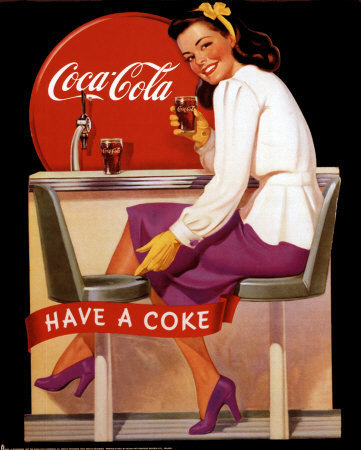 I think it was because when she finally did make it onto the plane to America, they were served Coca Cola, and she cried and cried because she hadn’t seen Coca Cola in years. So I equate Coke with the American dream. Seriously. And I thought I was rejecting all that by being gay — throwing it back in her face. It took an outside source (a straight, white, male friend) to ask me something along the lines of: don’t you think you would be betraying her more if you came to a country where you could be so free only to hide who you really are? And that’s when it dawned on me: 1) my grandma risked her life for FREEDOM, not for Taylor Swift grandchildren 2) she loves me more than life itself no matter what — and that includes gender identity and sexuality, ’cause those things are part of life.
I don’t know if this rambling answered the question, and I probably could have said this in far fewer words and with far less mushy stories. But I am a feminist because I was born thinking I had to stand up for what I believed in — or die trying. And for a moment, I forgot my sexuality was an extension of that. But now I know — viva la style de Abuelita Nanny!
.+
 SARAH, ASSOCIATE EDITOR: I started thinking about feminism at the same time I realized I was gay, so issues of gender and sexuality have always been intertwined in my head.
I experience sexism much more than homophobia on a daily basis. Even though I live in a fairly conservative area, my presentation is pretty straight. If someone knows my sexuality, it’s because I’ve told them — or maybe because of Facebook, but that’s another conversation. Of my oppressed identity characteristics, I have to worry about being a woman much more than I worry about being gay, at least when I’m walking down the street.
My feminist friends read about rape,
while I read about DADT or trans beatings.
We end up educating each other about those topics.
+
Because of Autostraddle, though, I’m usually more aware of systematic oppression based on sexuality. My feminist friends read about rape, while I read about DADT or trans beatings. We end up educating each other about those topics, luckily, but my priority has definitely been LGBT issues lately. Still, that doesn’t mean that my gay identity is more important than my feminist identity. I started thinking about feminism at the same time I realized I was gay, so issues of gender and sexuality have always been intertwined in my head.
One problem is that — like the question says — sometimes I feel like I have to pick one of my identities. When I get angry about the Prop 8 trial and that sexist Dockers ad in the same week, I start getting more eye rolls or weird looks. I can’t decide lately how I should respond to those looks: pick my battles, or just keep doing what I’m doing.
 TIARA, GUEST CONTRIBUTOR: [TheMerchGirl.net] To ask me to “choose one” or accuse me of non-solidarity because we don’t share the same views is to silence me.
For me, race and gender and sexuality, they’re all interconnected. But I do face frustration when other people — particularly people that come from a position of privilege, such as white feminists — think they don’t have much to do with each other. It all comes down to kyriarchy. There are certain characteristics that make up a dominant class, and anyone who doesn’t fit faces oppression. We all have a mix of privileges that intersect and can sometimes make up for the lack of privileges in other areas, but not always.
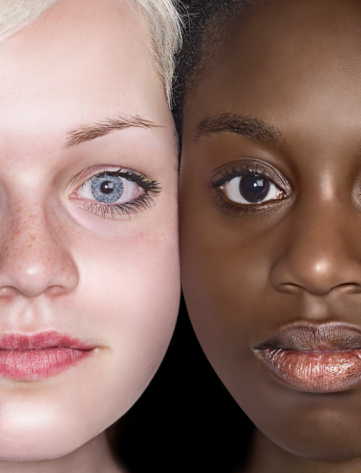 Growing up, my main issue was racism. I was an uber-minority and had racist teachers and peers in school. I was so regularly othered for my race that I didn’t have the time or opportunity to think about other aspects of my identity. My experiences with racism gave me a deep awareness of why othering is wrong. I was mostly unaware of feminism, though; I spent 11 years of my life in an all-girls school, but we NEVER talked about feminism. I think they would have considered it an “evil liberal Western concept” if it ever came up.
When I first went to college, my race became less of an issue, and at the same time I was starting to get involved with women’s rights. In Malaysia, domestic violence is a huge issue, and there are plenty of feminist orgs working towards protecting abused women. I learned about the depths of abuse women suffer just for being women — not just in terms of domestic violence, but also in more subtle ways such as not being taken seriously or being told how to be “proper”. I was still dealing with my thoughts on abortion or pornography. I had taken the stance of “that’s BAD! None for you!” and the prevalent culture in Malaysia supported that.
The seminal moment for me as far as the abortion question goes was during my Up with People tour. We were doing an activity where you stand on different sides of a line depending on your take on a question. One question was “I believe abortion is wrong,” and I was the only one who was stuck in the middle. When asked why, I said “Well I don’t think I would want an abortion for myself, but that’s just me. I don’t think we can speak for anyone else.” Then one of my friends on the pro-choice side yelled “That makes you pro-choice, silly!” And I’ve identified as pro-choice ever since.
I may not want to be a sex worker, but some women do. The most feminist thing I can do is respect their agency and fight to ensure they are not degraded, oppressed, or abused when making that choice.
+
When I came to Australia, my awareness of sexuality blossomed, and with that came a more nuanced view of feminism. I saw how feminist issues played out — especially as they interacted with race, religion, etc. — in a completely different culture. I started learning more about sexuality, especially in queer culture and sex work, and adopted a sex-positive view of feminism. I may not want to be a sex worker, but some women do. The most feminist thing I can do is respect their agency and fight to ensure they are not degraded, oppressed, or abused when making that choice. She’s not suddenly anti-feminist just because she decides to commodify her body. Ever since doing burlesque I’ve been more and more baffled and how much with a big deal we make about our bodies and sexuality, as though no one can ever make money out of them or choose to control when they’re being “objectified”. The Gaze, male or female or otherwise, isn’t always a bad thing, especially if you have control over it.
My experiences growing up in Malaysia, as well as being exposed to various Muslim cultures from my parents and the outside world, has given me a different perspective on things that white Western feminists tend to dismiss as “unfeminist” — burqas, for example. People who want to ban burqas tend to have a narrow-minded, stereotypical view of Islam, and they don’t appreciate that there are a lot of different opinions about veiling even among Muslims. Sure, you have the conservatives who try to control women and say ridiculous things about people who don’t veil up or be modest, and a lot of what counts as normal fashion in Australia or the US is seen as revealing.
But there are also many feminist Muslim women, such as Sisters in Islam, who work with Islam and its history of being a woman-forward, feminist religion, to find the best ways to encourage women’s rights within an Islamic context – even withing the ideas of veiling and modesty. Not all women who veil are oppressed, silenced, terrorists in the making. Many women make a conscious choice to wear it, and some women don’t put much stock in the significance of the veil. It’s frustrating to me when I hear people dismiss Islam so easily as anti-feminist because they haven’t taken the time to understand the cultural context and history or to realize that their values are not universal.
I have felt left out from some contemporary discourses on feminism because they assume a position of relative privilege and take local power structures as true across the world. I can appreciate people who say “I’m not a feminist AND” because they usually have good reason to not associate with the feminist crowd even though their feelings are very feminist. Womanism, trans issues, queer feminism — they all intersect. And even feminists can oppress people in other ways. To ask me to “choose one” or accuse me of non-solidarity because we don’t share the same views is to silence me.
.+
 TAYLOR, TECH EDITOR: I think an identity succeeds when it becomes so normative and so integrated that it dissolves entirely.
Even though I used to feel like my identity as a feminist would implicate my sexuality, the two aren’t really related at all for me. I actually don’t articulate my identity as a feminist very often at all, but I often verbally identify myself as gay. And that isn’t reluctance or shame anymore for me, thank god. I find that I only socially “employ” my identity (as a feminist, a gay woman, a southerner, a geek, an Irishwoman, sexy-as-all-get-out, whatever) when I need to: these parts of myself are sometimes a means to an end for me, and they tend to emerge selectively.
Like when I attend civil rights rallies, my queer identity emerges. When everyone in my office is talking about American Idol, and I was playing WoW the night before and don’t know what the fuck they’re talking about, my geek identity emerges. Being a feminist and being gay and all of those other identities are there all the time, but they’re kind of translucent when I don’t engage with those parts of myself directly, if that makes any sense.
Being a feminist and being gay and all of those other identities are there all the time, but they’re kind of translucent when I don’t engage with those parts of myself directly.
+
Maybe it’s a good thing that my identity as a feminist doesn’t really come up — it’s assumed (and desiring gender equality should be assumed for most anyone with a brain). I think I unconsciously express feminism through all of my actions, choices and words. And now I’m comfortable with that. Of course, I’ll rush to the side of the word ‘feminism’ when it’s in danger or needs defending, and unfortunately that does come up from time to time. But I’d like to think feminism has become normative now for almost everyone in my life. Ideally, for me, an identity succeeds when it becomes so normative and so integrated that it dissolves entirely. Like how we don’t need to identify as Suffragists any more. Or as supporters of interracial marriage. Unless we start moving backward, that is. Let’s just pray or incant or something so that doesn’t happen.
.+
 KATRINA, EDITORIAL ASSISTANT: Just by being unapologetically “different,” I’m making a feminist statement in the Filipino community. And just by being visibly Filipino, I’m representing Asians in the feminist community.
As far as being a minority in America goes, being a queer woman of color is supposed to be a pretty sizable mess of trouble. As much as feminism may be a bad word in the U.S., it’s pretty much non-existent in the Philippines – there’s no room to be a feminist because there’s not much room to be anything outside of a mother or a wife …to a man of course. These restrictions make me feel like I don’t have to choose one, though; the choice seems to have been made for me. Just by being unapologetically “different,” I’m making a feminist statement in the Filipino community. And just by being visibly Filipino, I’m representing Asians in the feminist community.
When it comes to sexuality, though, being a lesbian is what solidified me as a feminist because it exposed me to communities full of and centered around women. And even though lesbian cliques can tend to get exclusive or catty once in a while, what really defines them is the way that women support each other, not because they need to make up for the absence of men but because they know that women are simply capable.
 RACHEL, EDITORIAL ASSISTANT: There are definitely times where “mainstream feminism” just doesn’t feel that relevant to me. …Plenty of it still seems to be focused on how to have an egalitarian heterosexual relationship.
I’m pretty privileged in that, as a white girl, the mainstream feminist movement has most of my interests at heart. Historically, what we usually think of as “feminism” has done the most for my demographic, so I would feel weird about complaining too much.
There are definitely times, though, where “mainstream feminism” just doesn’t feel that relevant to me. I start to feel bored, like I want to fast forward to the revolution. It’s definitely not all of the modern feminist discourse, but plenty of it still seems to be focused on how to have an egalitarian heterosexual relationship — how to make sure your husband does his share of the laundry, how you shouldn’t feel pressured to have sex with your boyfriend on prom night, how a real man doesn’t require you to wear makeup or starve yourself to attract him, etc.
After a while you get tired of hearing “Well, we want to have a feminist wedding, so we’re taking the ‘honor and obey’ out of the bows,” and having to think to yourself “That’s nice, but I WOULD LIKE TO BE ABLE TO GET MARRIED PLEASE.”
+
I understand that these are important concerns for many American women, and that they do affect me to some extent because they’re about what the norms and expectations are for all of us, but after a while you get tired of hearing “Well, we want to have a feminist wedding, so we’re taking the “honor and obey” out of the bows,” and having to think to yourself “That’s nice, but I WOULD LIKE TO BE ABLE TO GET MARRIED PLEASE.” Or hearing a lot about how important it is for survivors of abuse to be able to leave their husbands, but having the queer community be left on its own to figure out its own issues of partner violence.
Feminism has been hugely important to me since a very young age, but eventually I just stopped going to the Feminist Majority Leadership Alliance chapter on my campus after a few semesters of feeling totally disconnected from the issues they discussed and getting tired of being the token queer woman there. Maybe it’s insular of me, but I feel more comfortable talking with my queer friends about the same topics. It’s not that we always have the same opinion, but at least I don’t have to preface every statement with “Well, as a gay woman, I feel…”
.+
 EMILY CHOO, INTERN: Yes, I’m Chinese, but I’m also Awesome and no one seems to talk about that.
As a person who represents four minorities (Chinese, Jewish, lesbian, woman), I often feel trapped/beaten by all the stupid jokes and comments I’ve heard and that made me the angry adolescent I was in high school. I never said “I’m Chinese”; people said it for me. I hate when people assume things about me. Yes, I’m Chinese, but I’m also Awesome and no one seems to talk about that.
My race does not affect my feminist identity one bit. In fact, I’d rather identify as Canadian rather than Chinese because I feel way more attached to Canadian culture. However, most people see me as Chinese when they look at me because, well, I look Chinese. Out of the four minorities I represent, I identify the most with lesbian woman. Firstly, no matter how much people say that being gay is only a small part of who they are, it is a HUGE part of who I am and has played a huge role in making me the person I am today. Secondly, being a woman is fucking awesome. I would rather be a woman than be part of the sex that repressed and treated women like shit for centuries. Kind of like how I feel ashamed of the way Europeans crossed the Atlantic and shat on the natives.
I would rather be a woman than be part of the sex that repressed and treated women like shit for centuries.
+
China is really far away for me. I’ve never been there, I don’t speak the language, and my household is so “Canadianized” that it’s almost impossible to get a grasp of what “Chinese” is really supposed to mean. However, I have a first-hand account of what it’s like to be a woman. As a woman, I’ve faced struggles and sexist comments, and I feel a connection with other women who can understand period problems or how it feels when an unwanted guy tries to grope you at a club.
Life isn’t easy being a minority x 4. But I feel like definitely, as a woman and as a bisexual lesbian, I have something to fight for and a person I can be proud of.
.+
 LILY, INTERN: I wish I could separate these two identities so that each demand a bigger impact on the people I meet.
I wish my sexuality always influenced my feminist identity in a positive light, but I’m afraid that is not necessarily the case. More often than not, I’m afraid my personal association with feminism is diminished because of my sexuality. It has even been said to me before “Oh of course you’re a feminist, you don’t like men.” It is so ridiculously frustrating to try to explain that yes, I’m not predominately attracted to men, but that doesn’t mean I don’t like them, and being a lesbian does not always correlate with being a feminist (and vice versa).
Sometimes, I feel that I have two strikes against me because not only do people often assume that lesbians hate men, but they also assume that feminists hate men. I wish I could separate these two identities so that each demand a bigger impact on the people I meet. Each would come as a surprise and as a learning tool, rather than expected attributes of my identity.
.+
 ZAHRA, INTERN: I think that I wouldn’t have such a strong concept of how important women’s rights are if I didn’t live my life as who I am.
I identify as black, while I am biracial. I identify as queer, while I am only attracted to women. I identify as a feminist, as I believe that I have many values and ideas that conform to feminist thought. I feel that each of those labels —black, queer, feminist — act as umbrella terms. That is, I can be a part of those groups without compromising my identity. When I present myself as a black woman, I’m able to be part of a group that is inclusive and diverse, yet I don’t have to give up any of my own heritage. My story stays the same. If I use the term queer, I can be proud of who I am, find my community, and yet feel comfortable to not have been pigeonholed in terms of the way I present myself to others.
I think the term feminist works similarly. Being a feminist doesn’t mean that I have to share the same ideas as every other feminist any more than I would be expected to think the same way as anyone who is black or who is queer.
My experience being black shapes my experience being queer and vice versa. Both of those things mold the type of feminist I am.
+
These three categories impact each other in an interesting way. For example, combining any two of them together immediately brings up different things. Is a black feminist so different from a queer feminist or a woman who is black and queer? Are they problematic when they overlap? I think some things can be in conflict but more often they contribute to each other. They’re also inherently connected — I can’t take away any of those parts of me and my being one thing has a lot to do with my being another. For instance, my experience being black shapes my experience being queer and vice versa. Both of those things mold the type of feminist I am. I think that I wouldn’t have such a strong concept of how important women’s rights are if I didn’t live my life as who I am. Of course, it’s kind of a circular argument because I haven’t lived any other life, but I still feel strongly that not one part of me can be separated so easily from another.
.+
 RIESE, EDITOR-IN-CHIEF: I guess you could say I put feminism first because I think anti-feminist sentiments are at the root of all homophobic evil.
I think feminism and homophobia are more married than I’ll ever be. Homophobia is rooted in gender-related fears: men being intimidated by female sexual power, a societal obsession with strict gender roles, religious dogma, ancient patriarchal systems of economic and psychological control… so I guess you could say I put feminism first because I think anti-feminist sentiments are at the root of all homophobic evil. And I don’t put feminism first “as a woman,” because I think feminism aims to make a better world for men and women both.
Sooooo race. Listen: I keep putting off writing the answer to this question. Does it matter that I’ve read everything I can? Does it sound patronizing to say “I don’t know what to say besides that I know what you think when you look at me but I am trying, and have always tried, to learn as much as I can about what my life would be like if I didn’t look like a paper plate?”
I’m a white girl, right? Yup. I’m Jewish on one side. At my Bat Mitzvah, I did a Torah Portion about the importance of women in the synagogue. Then I stopped going to Religious School because the other girls there were bitches. The other side of my family is mostly Native American and Quaker. My Dad’s family were farmers, they sold the farm a few years before my Dad died. Both of my parents grew up poor but did okay later on. Now my Mom is a lesbian and her partner has two adopted kids. One of my half-brothers is African-American. So that’s my family. I didn’t realize people thought Jews were yappy girls with too much money ’til college; growing up it was just something else that made me feel Different.
I know that the burden of responsibility is on me to understand how to acknowledge where feminism fails to be inclusive and how to change that.
+
Over the past six years I’ve mostly lived in neighborhoods where I was the racial minority, which I generally prefer. But as I describe in this blog post, one particular neighborhood really wore me down when I was called a “cracker” and heckled daily “hey white girl” this and that; the only times I could avoid heckling when I was with my not-white then-girlfriend or when I was dressed as a boy (I cut my hair to pass), but maybe I felt like I deserved it.
I just read a lot and took a lot of classes and did a lot of volunteer work with kids in the juvenile detention system (a racially mixed group, but socioeconomically similar). I know what you see when you look at me. I cannot speak from anyone’s experiences from my own, but I know that the burden of responsibility is on me to understand how to acknowledge where feminism fails to be inclusive and how to change that. Which I try to do — especially now, with this website.
So I was sitting here trying to answer this and I remembered having a conversation with my ex-girlfriend where she said she felt racism totally trumps sexism or homophobia in her day-to-day life; I think we were talking about the relative importance of Prop 8 or something. So last night I thought maybe I could just g-chat her and ask her to answer the question for me, again, even though we hadn’t spoken in months.
She didn’t really remember the conversation but said now that she identifies more as a hermit and a writer than as part of any greater community, like even a feminist community. She said she’s more concerned about human rights and international politics than women’s rights per se. So I suggested perhaps the majority of feminist discourse felt distant to her — issues such as workplace discrimination or sexual objectification — because her overall attitude and gender presentation is essentially male, and she’s totally removed herself from pop culture and has no body image issues. And she said maybe that’s true.
So then she said she identifies as an “individualist.” I said a lot of earnest things about breaking down patriarchal institutions that maybe sounded stupid. And so ultimately I didn’t really know what to do with that conversation. Or if it was important to like, talk her into being a feminist just because she is a woman, and I want every woman on our team because I genuinely believe it’s the best team to be on.
But maybe for some people it just isn’t. Maybe the world will go on if it isn’t. What did I remember about the conversation? Did she need to even answer my question. Or maybe she did, maybe she answered the exact question, “do you feel like you have to pick one?” Her answer was yes; I did feel that way, and none of those boxes fit me. And so I made my own. And I don’t know that I entirely blame her for that.

Comments
I have several thoughts on this subject but first I have to ask: what is a “bisexual lesbian”?
I actually saw that and liked it. It is assumed that bisexual is “I like who I am supposed to like (the opposite sex-the norm), but I also like the same sex too (which is not the norm?). A bisexual lesbian would be someone who likes women and men, but not necessarily men more, or men first, as many people think is implied when you say you are bi. For me saying I’m bi, people think “dated all men, found one girl, switched identity to bi”, when in actuality, even before dating a girl, or ever thinking I could, I said I was bi. Friends would say “How can you be bi if you haven’t dated both?” It’s not the act of dating both, but the potential to do so.
I say I am “bisexual-female identified” meaning that I feel a stronger connection and love for woman and that is who I prefer to date, but I cannot deny that I did date men, wanted to date those men, and could never rule out men in the future, even though I don’t see that as an option now.
bisexual with lesbian tendencies?
what leah said.
I think it’s when a woman is sexually interested in two ladies at the same time… right?
Seriously though, I can’t really speak for anyone so I won’t try to explain it but when I read it I felt like I ‘got’ it, or at least the sentiment behind it. Like, the term I’ve used to explain myself is ‘predominantly homosexual’. ‘Homo that has not experienced, but is open to, exceptions/an otherwise-inclined attraction’ was another one I considered. It seems that I like my labels undetermined and mysterious like that (it’s fun!).
So ‘bisexual lesbian’… I’m all for it. If it was a typo, I’m still for it and will probably use it someday.
What they said.(Next time refresh before submitting, wepa, it’s not that complicated.)
i officially love that term. this needs to catch on. :)
It’s a term I actually feel some affinity for, even if I don’t use it myself (I just go with queer).
I had a college professor who used to identify herself that way – she was in a LTR with a woman, much like I am. And people definitely identify you as a lesbian if you’re sleeping with a woman, no matter how many times you say Brad Pitt is hot. So in some ways, you function in society like a lesbian, so that becomes part of your identity too.
I’m norwegian, and in Norway that expression actually means something else. Even though it might be right in this, it might be interesting to note that norwegian actually distinguish between or homophile/heterophile/biphile and homosexual/heterosexual/bisexual.
While -phile expresses who you fall in love with ore what you identify as, -sexual expresses who you’re sexually attracted to. Lesbian/gay are most often associated with what one identify as.
Following my language’s (somewhat weird) logic, a bisexual lesbian would be someone who is sexually attracted to both men and women, but who only fall in love with women.
I won’t be able to say anything as articulate as those who posted in the article, but just…cheers for talking it about it all and educating us people who are finding there way through it. I’m trying to find out how to articulate what I used to call my “taking no bullshit” stance (now I think I’m just a feminist) into something more useful for myself and for the issues I want to see change in. And these articles are really helping.
I’m not sure whether to be horrified with my generation or not (I’m 18).
In english class last week my (female) teacher asked us if any of us consider themselves a feminist. My class has two boys and around 20 girls and I was the only person to put their hand up. At first I was horrified, but listening to the discussion further it seemed to me that I would call just about every girl in my class a feminist – they assumed, rather than demanded, equality – every single girl (and boy) in that class saw themselves as having the opportunity to make their own choices about careers and families and self expression. They abhorred misogyny in the media and took it for granted that our male contemporaries do not see us that way, and I think I have to agree. They saw boys who sleep around as sluts, exactly the same as girls.
I live in Cambridge, England and I admit it is kind of a weird bubble – predominantly white, middle class and full of lefty academics. And my english class is full of clever clogs, which I think helps with the postive attitudes. I’m sure such viewpoints do not exist everywhere, and you only have to look at the shameful number of female executives and politicians in Britain to see how far we have to go, but I’m hoping my generation can be the ones to do it.
I agree 100% with Riese that homophobia stems from sexism, and I think this is the reason I have only ever received (serious) homophobic comments from men. As a lesbian, I feel I identify far more as a feminist than my friends – they see ‘feminist’ as ‘man-hater’ an unnecessary position in the 21st century – whereas my viewpoint from outside the husband-and-kids mould lends itself far more to feminist thinking. But, listening to the viewpoints of my peers I would undoubtedly call them feminists – they demand equality by assuming it, and see choice as essential for women to have choices – society demanding that women have careers and leave their kids in daycare is just as oppressive as a society that forces women to be housewives.
Women having to work and leaving their children in day care is a mark of a society where family can not be fed otherwise. This is not a gender issue and should not be made into one.
Also calling anyone a slut for sleeping around is one example of reactionary values and should be opposed.
Although I do agree that women having to work and leave their children in day care is a societal issue, I disagree that it is gendered…only because we live in a society where women are socialized as caretakers and men as providers. I’m not sure how anyone cannot see that as a gendered issue.
Women having to work and using childcare isn’t always a gendered issue, but I think it is more often than you would think.
That particular point came from a discussion of the idea of ‘yummy mummmies’ – criticising women of a certain class who chose not to work and to live off their husbands fat paychecks and dress their babies in designer clothes etc. The Daily Mail has a particular vendetta against them. The issue is wrapped up in class and celebrity culture and a whole lot of other things but the basic point is that chastising women for choosing to live off their husbands’ pay and saying they should have careers of their own is just as constrained as saying their rightful place is in the kitchen etc etc. And I think I agree with that.
Agreed. I think my friend Kelley who works for Choice USA out in D.C. said it best when she said, “I’d say the bigger problem there is that no one is makin a living wage! And what about the women that want to work, but can’t afford the damn diapers necessary to leave their kids in the government subsidized shitty daycare system?”
Least of all women. I’m not sure what it’s like in the US but here in the UK women on average earn 76p for every pound men earn for the same work. I think I’m remembering that figure right, forgive me if I’m not though.
I was just saying that you can´t have the rights without the responsability. With votes comes work. And i´m not down with the idea of the stay at home mom. As too most icelanders that idea is both foreign and laughable.
I try to live my life as papers like the daily mail don´t exist.
Except there *are* benefits to a child having a caregiver at home with them all day, especially in those early years. (Whether or not that caregiver is a mother, a father or some other sort of non-gendered parental figure).
I think that choice comes down to the family, what they can afford and what they want to do.
Plus, you act like being a stay at home parent is easy. It’s not. It’s a hell of a lot of work.
Alice,
I’ve had exactly the same experience — speaking in an English class in an all girls school in yr 12, I said, “well, we’re all feminists here, how can we not read as feminists?” only to have my happy fantasy dislodged when nobody nodded in agreement.
I live in a similar bubble, a predominately white, wealthy suburb in a prosperous and growing city, and made that comment in a private religious school. Despite my classmate’s complacence, I have had my most disturbing encounters with sexism within five minutes of both the school and my home. The school itself has a reputation of being the place to send your daughter if you want her to marry a doctor, rather than to be a doctor herself.
I was a lesbian feminist before I ever had kids but having kids has completely blown my gender-based assumptions out of the water. I felt completely capable of raising a girl because I knew what she would face. Then, I had a boy. I didn’t have a lot of baggage about boys but I have now seen first hand how all the gender stereotyping affects boys – I’ve seen how it hurts my son and makes him less than/different than he truly is. Through raising my son, I have become fierce about empowering both of my kids to be true to themselves. Like Laneia, I just don’t want to raise assholes. Ya know? We talk about everything and I do mean everything because this world has problems and kids need to understand that but also need to feel that they have the power to make a difference. So we talk about what’s wrong/right with the world. We talk about our privilege as white people. We talk about our class privilege. Sometimes, we do it well and sometimes we don’t but we’re talking.
Sometimes, we do it well and sometimes we don’t but we’re talking.
yes
Fantastic article AS! As I have said I don;t really identify feminist but I see the need for feminist.
I am not gay, queer, curious or whatever but I do see homophobia and homo-ignorance everyday. I know its a HUGE ridiculous problem. I speak against it every time. I often get teased or questioned about my sexuality. And as I tell even my mother you do not have to be a victim to stand up and say this is wrong.
‘I remembered having a conversation with my ex-girlfriend where she said she felt racism totally trumps sexism or homophobia in her day-to-day life;’
I agree with this statement. Racism is first and then sexism. Racism is the greater of the three because you can tell from a distance I am black, mexican, asian, middle eastern, etc. You can not hide your ethnicity. And of course your gender is obvious. However your sexuality, not that it should be hid, can be hidden.
Once I got to see Mandy Carter speak; she’s a black lesbian feminist with an incredible history of organizing and coalition-building for activism. It was amazing. Anyways. She was fantastic, and she had one bit that was like “You know, let me settle this debate for all of you right now. I’m a minority because of my skin color, my gender, and my sexual orientation, and I can tell you right now the one I get the most shit for is my skin color.” I believe it.
And the sad thing is, even supposedly-enlightened queer people give you crap because you look different, because your cultural ideas of relationships don’t fit the dominant idea even in their subculture. Screwed either way; neither side wants you.
Where is Tinkerbell’s contribution to this round table?! :-(
Also, love you ladies and all your thoughts and feelings.
excellent discussion and a really interesting mix of viewpoints. thanks everybody for sharing what it feels like to be you.
–
tiara your piece in particular sheds light on what i feel is a very real, current issue in contemporary feminism internationally – Sarkozy’s recent remarks in France and Quebec’s ongoing debate around “reasonable accomodation” are just a few examples of how the western world is grappling with questions of identity, nationalism, xenophobia, racism, and gender equality. and a lot of it is really frustrating. but i do think that there is a gradual shift happening within western feminism (and i use that term generally – obviously there’s no homogenizing possible there) away from “let’s save the brown women from their cultures” and more towards recognizing the importance of cultural context and prioritizing the voices of Muslim women in discussing their own experiences and realities, and recognizing the power dynamics inherent in who’s doing the talking and who’s being talked about. there’s obviously a lot of work to be done but i do think that it’s happening. Chandra Mohanty’s writings in particular have been really useful for me.
–
on a semi-related, anecdotal note, i was recently having a discussion with a white dude friend of mine about Sarkozy’s proposed banning of veils/burqas in public places, and while it took about 20 minutes, he did change his mind on a few points. and i think that that’s sort of how it should be where issues of oppression are concerned – i think that the onus should never be on the oppressed to educate the oppressor, though historically it usually has to start that way. i think white people should be the ones educating white people about anti-racism, and that straight people should be calling straight people out on their homophobia, and feminist men calling out other men on their sexism. real change comes when people choose to use their power and privilege to affect change in the lives of those oppressed by that power and privilege. my $0.02.
–
okay ONE MORE THING. in terms of INTERSECTIONALITY/this discussion/my feelings, i’m a kinda pretty butchy white lesbian and while i do face homophobia and sexism, i also walk around with a lot of MALE PRIVILEGE that i didn’t ask for. so i face homophobia, transphobia, and sexism, but i’ve also got white privilege AND male privilege (and a million other privileges or whatever). the first time that a woman crossed the street at night to get away from me was a like a monkey wrench in the blades of my feminism. and that’s something that i’m still trying to figure out how to navigate daily/use to change the world through covert ops. the end.
I’m glad my piece got you thinking! I had a really frustrating conversation over dinner one time between a whole bunch of people who would only ever deal with the burqa theoretically (including a Rotary Peace Scholar) vs me, who actually had to wear a headdress at school. You’d think my experience would actually count for something, but noooooooo…
i’d like to have an entire group discussion about the male privilege given to / forced on butch lezbeans and how it balances with the ‘sir, i think you’re in the wrong bathroom’ bullshit / if it balances at all. I FIND THE SUBJECT TO BE VERY INTERESTING INDEED. thanks for bringing it up!
I agree, I think it’s fascinating. I hope in said discussion we can discuss how whenever we were at a crowded place, like say Grand Central Station, where the line for the ladies room is like 5 miles long, my ex-girlfriend would just zip up her coat and stroll into the men’s room and get in & out in two minutes while meanwhile I just had to fucking hold it. Rawr.
Me, too! It’s super interesting because this is discussed amongst femmes at the FemmeCon and amongst butches (I assume) at the ButchCon, but I’d really love an integrated discussion in that type of setting, so we can HEAR each other (and at the same time be inclusive of those are neither butch nor femme but caring, interested, open-minded queers).
In general, I think everything the group wrote for this Part II was well-written, fascinating and really lovely to read.
I’ve been trying to figure out what I wanted to say here ALL DAY.
I have so many feelings about this topic in general, the article, the responses. Phew, HonAys!
I agree with Rachel’s quote of Mandy Carter’s, every last bit of it. Growing up in a community of color, in my experience, I’ve found that my peers and I have had this similar conversation: You have to work twice as hard to get half as far. Our race was always at the forefront of the discussion. My womanness was not something I really had to address until I addressed that inequality and began asking questions.
I guess you could call me a young activist, at least, my resume would appear to be that of one. But all I know is that when it comes to identifying myself, feminist is a term that no longer comes to mind. Why? Because much like the LGBTQ movement that I was once so mainstream and intricately involved in, its politics do not reflect mine. It does not appear to be a movement that understands me, or works for me.
In my experience, the feminist movement is often strictly Western in its view and missions, very much so taking an Eve Ensler approach to feminism, without truly understanding, talking to or getting to know the REAL views of these women yet fighting for what they see as their inequalities.
Feminism is about all people, right? However, I don’t really feel like most people who identify as feminist really understand its intricacies. Just because you want equal pay and hate the skinny models on Seventeen magazine that make us insecure, does not necessarily a feminist make.
As a black woman, I ask about black communities? What do we know about them? Octavia Butler is one of many black authors who opened up an interesting dialog about the gender roles of black communities, particularly in Wild Seed Still, I find it hard to find someone who can explain to me the seemingly androgynous ways of black women in the household, which is due to the dismantling of the black male. What about the struggle of these women? Issues like this bleed into communities of color and we can see them in domestic violence rates, single parent households, government subsidies, etc. These women who take male roles to compensate for what their homes lack. How do my mother and I teach my brother that despite the fact that he makes good grades, is an all-star athlete, and a basic gentlemen, some of his friends parents are always going to think it’s okay for him to befriend their daughters but not date them? These issues seep into our lives in so many ways and they are feminist issues. Parenting issues. OUR ISSUES.
In my opinion, it is issues like these that are at the forefront of what I believed feminism was about: our very humanity and wellness as people for all people. The aforementioned does not beget the issue of the dollar and equal pay, but perhaps I just see the issue of humanity and equality from a different end.
Reading articles like this makes me feel bad because I never really think about things like gender identity or race or how any of that effects my experience as a woman in this world. I always wondered whether being a feminist was inherent or something a woman would feel.
“the majority of feminist discourse felt distant to her […] because her overall attitude and gender presentation is essentially male, and she’s totally removed herself from pop culture and has no body image issues.”
i kind of gasped to myself reading that because (a) i think it’s totally beautiful, (b) i think it’s totally true, (c) this is my goal as a feminist, i.e. to live in a society catering to the individual, not the ‘isms.’
based on my experiences with my lovely butch friends and ex-girlfriends, i’m completely envious, albeit a bit stunned, by their apparent disassociation with feminist struggles. it’s like they woke up one day when they were twelve and said ‘eff this being-a-timid-girl business’ and the skirt-wearing shadow just walked away. mine still creeps around sometime.
growing up as a (white) immigrant, an (atheist) muslim, a (tomboyish) woman, and a (bisexual) femme, the only thing i’ll gladly label myself as is a humanist. because checking that box allows me to acknowledge that discrimination happens at all levels to all (the relative weight, however, depending on the established normative). it also allows me to actively and more objectively fight for social justice, for choice, against repression, for economic development, against violence and abuse, for education, and for opportunity.
i will say that, over the years, i’ve had a much harder time being accepted as a feminist than as a lesbian. apparently there’s something very uncanny about a straight girl who can stand up for herself and others.?!
I don’t have much to add that hasn’t been said, so click on my name, because FOUND Magazine had the PERFECT find yesterday… ;)
While the story of Becky’s kickass Abuelita Nanny was the most entertaining, I think I find my own views on identity most closely aligned with Taylor’s account; that mercurial way the different aspects of yourself become more pronounced according to the situation.
Mainly, I feel my identity is fragmented, like a shattered mirror. There are big shards, for being a woman, a dyke, a geek; smaller ones, for being northern, english, british; down to the tiny sliver for that one day a month I identify as nothing more than an awkward hormonal monster.
But to scoop up all these fragments and piece them together is an intractable problem. Some bits you haven’t even found yet. I find it amazing that anyone is capable of choosing just one identity because I believe that everyone’s reflection is a jagged composite, whose whole you can never see because some part is always obscured or distorted, depending on where the light is shining.
Where does feminism fit into it? The more I think and read about it, the more I’m coming to realise how much gender issues underpin most things in life. To continue the terrible mirror analogy, it’s the silver coating behind each of those glass fragments of identity.
I guess I’m struggling to think of concrete descriptions of my intersectionality because I’m in an enviable position of being able to get away with being oblivious to it (actually that’s a semi-lie, oblivion just courses through my veins with all the blood and tea).
However, I am now choosing not to be ignorant. I feel like being in a position of privilege means I have so much catching-up and self-education to do.
Your ‘shards of a mirror’ analogy is all kinds of awesome. I also related most to Taylor’s feelings of how different personality aspects show themselves at different times, but not really consciously. I mean, I’m not gonna put my geekery out on full display at a family dinner, and likewise, I won’t put on my polite family dinner face when I’m with my friends. To me, it seems like different personality traits are more evident in certain situations.
I’ve never really thought about my being white as being in a position of privilege. Being a young South African, I think that we’ve learned to become ‘colour blind’, to a certain extent. I have lots of friends from many different race groups, and it’s never really been an issue. However, I do see where race would come in as a factor, w/r/t positions of privilege. I can definitely see how people take more shit for their race than for other things. Race seems like a much bigger deal for some people than, for example, sexual orientation. I guess it might be because race has been a marker for discrimination in society a lot longer than sexual orientation has.
Anyway, this is an awesome article, it brought up a lot of interesting thinking points.
I have taken a few classes from a sociology professor in college, and he has a really interesting theory of identity that I think fits right in with what you guys are saying. His book on the subject is called Peacocks, Chameleons and Centaurs.
It breaks down like this. For each identity trait, a person falls into one of three categories:
1) Identity Commuters — This person exhibits an identity to the max in certain situations and represses it in others. Using gayness as an example, someone who is closeted at work and hides their sexuality, but goes to a lot of gay bars on the weekend and only hangs out with gay people in their free time is a commuter.
2) Identity Integrators — This person exhibits an identity moderately in almost all situations. So that’s like a gay person who maybe is somewhat out at work, has groups of straight and gay friends who both know each other, and goes to gay spaces as well as straight spaces.
3) Identity Lifestylers — This person exhibits an identity trait to the max in all situations. So maybe a gay person who lives in the Castro, is out to everyone, has mostly gay friends and goes to mostly gay places would be a lifestyler.
I used sexuality as the example here, but it works for all identity traits. Gender, race, even your status as a sports fan or your profession. Maybe you’re a lifestyler with your gender but an integrator with your sexuality. Any combination is possible. I think it goes a long way toward explaining the intricacies of how our different identities form ourselves as a whole.
These are really interesting models.
I just realized that this all reminds me of a psychological model I was really into in late college- Brewer’s “Optimal Distinctiveness Theory.” I wonder if these sets of models would be at odds or complementary?
Here’s one of the papers. I feel ODT explains almost everything that ever happens.
http://www.psych.ubc.ca/~ihansen/JOBSEARCH/optimaldistinctiveness.pdf
It relates to discourses around self-stereotyping, which is one of the most interesting social phenoms I can think of.
self stereotyping: http://www.sciencedirect.com/science?_ob=ArticleURL&_udi=B6X01-46D5XF1-6&_user=142623&_origUdi=B6WJB-457D4G3-V&_fmt=high&_coverDate=04/30/2002&_rdoc=1&_orig=article&_acct=C000000333&_version=1&_urlVersion=0&_userid=142623&md5=f2c9badd3368a6010b5e006add10885a
What about people who are forced to adopt an identity marker whether or not they want to? There are people who assume a hell of a lot about me, and adjust my access to things based on those assumptions, just because I’m brown and foreign – without giving me a chance to prove or disprove their assumptions. Many times you don’t get to choose which shards get shown. You might be pushing for one shard or one identity, but something else gets in the way – for example, I’ve noticed that people get so flummoxed by my foreign-ness in queer spaces that they neglect to consider that hey, I could be foreign AND queer! it’s like you can only be one thing at a time. The ability to choose what sort of identity you transmit and not have other factors interfere is a huge privilege.
I think that’s something these models interfacing with, though accounting for visible “signifiers” or (perceived signifiers) of race (skin color) and cultural identity (accent, dress, language, etc) or sexuality sometimes (cropped hair, “gender-atypical” clothing) adds another layer of complexity and identity negotiation. And these things vary wildly in terms of having that privilege to articulate your own identity (how you see fit), as a function of innumerable factors.
The oppressive assumptions are often something that causes someone to commute between identities. I relate to the idea of shifting degrees of access (as I’m sure most people here do in some sense). At any given time, being identifiably gay, identifiably female, (sometimes) identifiably from the Southern United States or being identifiably white adjusts my access and privilege in ways that I don’t choose. And then we do all of this identity commuting around on the paths that remain available to us.
I think these theories are a lot more about how one performs their own identities, which is just one aspect of the topic. It’s more internal than external. Obviously, as Taylor pointed out, those two things interface with each other. But this model is specifically talking about the choices one consciously makes when presenting an identity.
I had that, my neighborhood is really multicultural which is really good. But at the same time you can be the only white kid in your class. Then you get white jokes alllll the time. You cant jump cuz your white.you cant do math cuz ur white. etc etc My brother was once told by his asian friend that his parents didn’t want him to hang around because white people are a bad influence.
100,000,000 points to Autostraddle for being far and away the most intelligent/entertaining site on the Interwebs.
also, becky’s story is amazing, i want to meet your abuelita!!
– k
[…] the word “intersection.” (Nothing gets a lesbian wetter than discussing things like the intersection of race and sexuality. When I think of the word “intersection,” I think of the place where two streets cross, […]
Hey, great round table AS! Wov eww !! :)
I don’t face these type of issuses daily in terms of race as I’m White and live in northern Ireland tho mayb our skin colour should b White(r), the main obstacle I would face would be a religous judgement in that ppl r always tryin to figure out “what you are” catholic/ Protestant, and which ever faith u even remotly lean to you are assumed to be either a republican/nationalist( supports a united Ireland ) or a unionist ( to remain part of the uk), recently a wingnut group of republicans have started blowing up courthouses/army barracks AND have killed 2british soldiers in a seperate attack , as well as leaving bombs under police officers personal vehicles, so things r quite on edge at th moment.. But usually everythings a-okay, but with a war that’s raged since 1690 even before then it’s hard to dilute th hatred/suspicion of one side by another but it is happening, it’s when a mutual understanding/ sympathy of each others grievences, addressing them and then moving foward will that happen. This may sound totally ignorant, and tell me if I’m wrong because I’m not up to speed on black issues, in time black citizens of earth have come a long way from being inslaved to having th one of th most influencial world leaders within their numbers and although it took a few hundred years and many terrible things happened in th interim other discrimination has been rife far longer, racism (jus to clarify-racism is one nationality hating on another not skin colour necessarily, so isreal/ Palestine, england/ Ireland, england France, USA/ canada) has been around for millenia, as well as xenophobia .. basically human beings have been complete arseholes To everyone else that dosent conform to what we know (our normal, which really stems from fear of the unknown/ change)from day dot but wer getting ther.
Now, In terms of sexuality I would deem myself femme bi, tho I’m not out to many ppl and I don’t thinkit should be any strangers business what I do in th privacy of my own home, I think in a previous post someone said do we ask straight people how long have they been straight, how do they know their straight, when was their 1st straight kiss?? it’s actually quite insane when I think about it, sexuality is a private issuse. Tho I have experienced when I tell what I belivee to be close friends that I’m bi their demeanor totally changes from how they used to be in my presence which is very unsettling but it’s an obstacle that usually resolved in time once they realise I’m still me and that I won’t shag them the 1st chance I get..
I suppose in th end it education that’s th solution to this problem
but again great postings so far, it’s great to get an insight in to how other people deal with other peoples expectations/assuptions/opinions.
:)
This post is feeding my soul. It’s actually spot-on with what I’ve been thinking about lately.
Me, I’m in a theatre company which consists principally of queer women of color. Our mission statement is that we view marginal bodies, experiences and subject positions as central to the form and content of creating work. As such we strive to promote, foster, and engage performance, writing and ideas of/with people of color, queers, gender queers, women, working class people, immigrants and youth.
I operate as the stage manager, which I love, because it affords me a place of behind-the-scenes assistance to the queer women of color actors and directors in the troupe. Simply via my association with them and the work that we do, my eyes have been opened to the the real differences and forms of oppression that my non-white sisters (yeah, I said it) have to contend with on a constant basis. This keeps me humble, and helps me to really possess the experience of intersectionality, on multiple levels. My experience as a queer white girl is different from the experience of my company members, but it’s okay. We’re learning about the tension between race/feminism/sexuality by working with one another on projects that speak to all of us as a whole, and also address our individual issues.
Via my work with them, I am often confronted with a sense of “white guilt”, and an anger at the obliviousness of other white people, even still after all of these years. I know that often I can’t speak to the otherness of a queer woman of color, because my mantle of oppression is different, but even so, as a white queer woman, I experience oppression in an entirely different form. I often wonder if my experience is important enough, measuring it up against the struggles of the other women in my company, and if it’s even worth expressing. It’s a different brand, but does that make it less worthy of attention?
So far in this Round Table, I have identified most with Riese, and her feelings on the matter. Racism exists, even when you’re white, and it’s bittersweet, because A: it still stings but B: you still sort of feel like you deserve it. Racial masochism. I think I need to get over that, but it’s difficult to figure out the line between being humble about my struggle and also commanding respect from those who seem to have a “tougher” time than I do. I can’t say if it’s “tougher” or just “different”, because it’s not my experience. But it has been an incredibly enriching and eye-opening experience to be able to witness the realities of my fellow company members, and to understand them alongside with my own.
http://genericensemblecompany.blogspot.com/
Thank you, Autostraddle, for being brilliant! I really loved this roundtable, and it made me understand some issues that’ve been on my mind lately.
I’ve identified as a feminist for as long as I can remember, but even though I’ve never seen anything wrong in being LGBT, I’ve only identified as lesbian for a short time. I’ve had to do a lot of thinking (and going back in time) to sort out my thoughts, and this roundtable just made it a bit easier. I’m a feminist, I’m lesbian, I’m a geek and I’m tons of other things. I don’t express them to the same degree in all situations, but they’re all part of how I see myself.
The difficult part is that even though I get angry when people aknowledge me with these identities, I also get angry when they “label” me as one of them. I want to be all of them, without being redused to a label, or a bunch of labels.
Still, I think that to be able to do just that, we can’t cease to identify with all the labels. Rather, it’s about showing that we can have all those identities, and still be more than the sum of them.
And I don’t know what I am .