





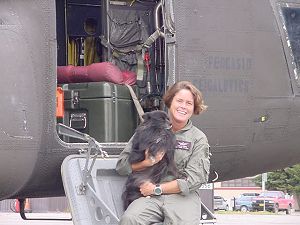
 “After just being cleared to be a professor at West Point, I learned that I was being kicked out under DADT. And after 20 years in the military – from 1982 to 2002 – I was left with absolutely nothing: no pension, no salary, nothing. I wanted to be the dean of West Point, the first female graduate dean; that was my dream.”
– Lissa Young, West Point ’86
 Since 1993, the U.S. military has operated under the Don’t Ask, Don’t Tell (DADT) policy, which allows gay people to serve in the armed forces so long as they do not discuss or disclose their sexual orientation. And although recent debates about DADT have taken center stage in gay media — and sometimes mainstream media too — most of the people speaking for DADT are male, even though the policy targets both genders equally. The distinct experience of a gay person in the military — a specific socio-cultural space — lies at the increasingly complicated intersection of gender politics and sexuality politics and is therefore worth looking at from both sides of the gender divide. Autostraddle thought it would be beneficial to add a female voice to the conversation. Furthermore, women are disproportionately affected by DADT. While women make up 14 percent of Army personnel and 20 percent of Air Force personel, 46% and 49% of those discharged under DADT in 2007, respectively, were women.
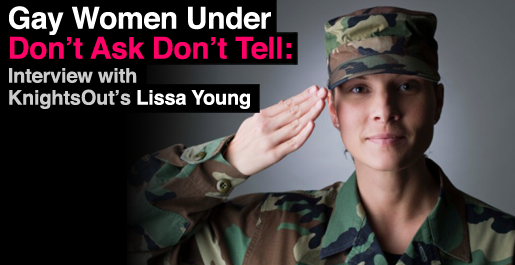
For years, opponents of the policy have argued that the policy is discriminatory and is founded on the same faulty arguments the military used to support segregation or to keep women out.
First; some background: According to the Center for American Progress, DADT has resulted in the discharge of more than 13,000 highly qualified (and patriotic) men and women since it was enacted more than 16 years ago. Nine months after being sworn into office, President Obama has not yet repealed DADT, despite his campaign promise and subsequent pledges to do so. The CAP reports that, as a result, more than 265 service members have been discharged under DADT since Obama took office. For years, opponents of the policy have argued that the policy is discriminatory and is founded on the same faulty arguments the military used to support segregation or to keep women out.
The media has highlighted a variety of voices on DADT policy, including Lt. Dan Choi and Lt. Colonel Victor Fehrenbach. [Autostraddle also did a Dan Choi exclusive! It was hot!] In May, Choi wrote an open letter to President Obama in which he argues that DADT is “an immoral law and policy that forces American soldiers to deceive and lie about their sexual orientation. Worse, it forces others to tolerate deception and lying.” Choi adds “these values are completely opposed to anything I learned at West Point. Deception and lies poison a unit and cripple a fighting force.”
This policy of discrimination continues despite a lack of credible evidence supporting the underlying arguments for DADT – namely that allowing gay men and women to serve openly would undermine unit cohesion and military effectiveness. As the CAP report underscores, even the architects of DADT have acknowledged that the policy is misguided and is “based on nothing but our own prejudices and our own fears.” Dr. Nathaniel Frank – author of Unfriendly Fire: How the Gay Ban Undermines the Military and Weakens America – echoes this sentiment, pointing out the shaky foundation of the policy: “The ban on openly gay service was not based on sound research because no research has ever shown that openly gay service hurts the military.”
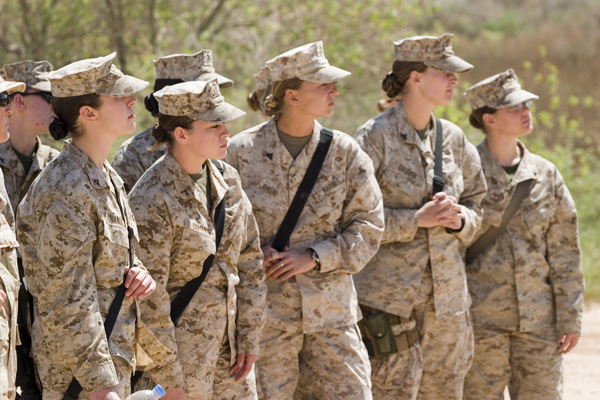
To shed some light on DADT as it relates to gay women, Autostraddle has been fortunate enough to snag an interview with Lissa Young, an insanely intelligent, aware, reflective and accomplished woman. Lissa graduated from West Point in 1986. After 16 years of active duty, selection for promotion to lieutenant colonel and permanent assignment as an academy professor directing leadership education at West Point, Lissa was asked to resign her commission because of DADT.
She is now a member of KnightsOut, an organization of out LGBT West Point alumni, along with other supportive alumni, staff and faculty members who are united in supporting the rights of LGBT soldiers to openly serve their country.
Lissa spoke to me about her experiences in the military and her thoughts on DADT and its (blerg-ful!) impact on military culture.
I think I had this ridiculously naïve idea that West Point would be like a physically tough Ivy League. I don’t think I realized – until I was there – how NOT like a normal college experience it was: like you can’t just not go to a class, you can’t just wake up and think ‘eh, not going today.’
NATALIE (NR): Lissa, what led you to West Point and then ultimately to serve in the US military?
LISSA (LY): I wanted to fly helicopters! Seriously.
I was a junior in college and was not being challenged. It was pretty soon after they started to admit women to West Point and I thought ‘this would be an interesting route to take.’ There were several people that influenced me; Marion Dent, my godmother, was one of them; she wrote me a letter about what it means to be a soldier and a human being. Marion Dent was the wife of my father’s West Point roommate, best friend, Air Force F-100 wingman, and best man. While her husband flew missions over Southeast Asia, Marion marched in Washington against the Vietnam War. Yet she encouraged me to join the academy and serve the nation as a soldier. The day I received her letter, I applied for admission to the U.S. Military Academy.
And then I got in, and I had to make a serious decision about what to do with my life: be a soldier or be a college student.
NR: What was West Point like? Was it what you expected?
 LY: I had all these ideas about West Point and what it would be like; but when I got there, it was very different. I think I had this ridiculously naïve image that it would be a physically tough ivy league. I don’t think I realized – until I was there – how NOT like a normal college experience it was: there is a lack of freedom of choice, you can’t just not go to a class, you can’t just wake up and think ‘eh, not going today.’
Additionally, I was not really, truly, thoroughly aware of the connections between West Point and war; that didn’t really hit me until I got there. People go to West Point for a variety of reasons, but ultimately West Point is about training soldiers to lead wars.
NR: Would you recommend the military as a workplace to other women?
LY: Definitely YES. The military is a profession that demands more from you than imaginable by other professions. It’s about mind, body, & spirit – all at 100%. It’s about teamwork, service, personal sacrifice and personal bests. It teaches women to dig deeper and give more than has ever been required of them. The confidence that comes from learning how to face such challenges and manage such fear is irrevocably woven into her character, which she will continue to develop over a lifetime.
There is no reason to believe that the military is more misogynistic than many other institutions in America, like let’s say, our own Senate.
NR: As compared to other workplaces/careers, is the military more/less gender sensitive/women friendly?
LY: The military is a masculine domain. It is one of the last bastions of masculinity in America. However, given its integration of women, it is also (unwittingly?) redefining what gender actually means in this country. The military is not women “friendly,” but neither is most of the rest of the world, and there is no reason to believe that the military is more misogynistic than many other institutions in America, like let’s say, our own Senate.
NR: What is the situation right now around women in combat roles (and what exactly constitutes ‘combat roles’)? I believe that women are still technically not allowed in combat roles…but the present wars have shifted this in reality?
LY: Yes, there are only three branches of the Army (infantry, armor and special forces) in which women cannot serve. However, given the nature of irregular warfare and counterinsurgency operations, the delineation between combatant and non-combatant is no longer relevant or meaningful. So, women are in the line of fire just like everyone is. And they are just as likely to have to maneuver and shoot as anyone in the “combat” arms. Clever enemies target supply trains, transportation convoys and support organizations, which is where most of our female troops are found.
In many ways, I think it is easier to be a lesbian in the military than a gay man; this has to do with gender identity development and prevailing gender norms in the United States.
NR: How is the experience of being gay in the military gendered? I imagine it is a different experience to be a gay man than it is to be a gay woman.
LY: In many ways, I think it is easier to be a lesbian in the military than a gay man; this has to do with gender identity development and prevailing gender norms in the United States. The specific socio-cultural space in which the military is placed brings into focus the ways in which our culture defines, creates and reinvents masculinity and femininity.
I think it’s particularly hard to be perceived as moving from masculine to feminine, which is what the stereotype is for gay men. This move is much more marked and stigmatized in the military. There is a culture of heterosexism; and I think gay men are reminded more of this, reminded that they are not in the “in group.” You certainly cannot be a faggot and be taken seriously as a warrior. However, it’s easier to be a lesbian woman – moving stereotypically from the feminine to the masculine – doing male things…it’s less threatening, and becoming more masculine is in consonance with the concept of being a warrior.
 NR: What is it like to be gay under DADT?
LY: In the military, it takes a lot of bandwidth/mind strength to “be all that you can be.” Being a lesbian under DADT, you are forced to use additional bandwidth – already at its capacity – in order to maintain a particular persona. You have to be cautious and careful about how and with whom you communicate. I think DADT, in this way in particular, is an obstacle to a gay individual’s potential to perform at 115%. As a gay individual, you are constantly engaged with managing this other piece.
I did not begin each day with my sexual identity as my defining quality, just as I suspect straight people don’t get out of bed thinking about going to work as a straight person.
While being gay is certainly hairy, at the same time it is absolutely unremarkable. It is not what you lead with in the military; it is not what I led with. I did not begin each day with my sexual identity as my defining quality, just as I suspect straight people don’t get out of bed thinking about going to work as a straight person. While I was conscious always of having to hide my sexual orientation, I also didn’t define myself by it. As I went into my day, I didn’t have to be cautious. I just did my job.
NR: What is the rationale behind the policy? How is ‘keeping gays from openly serving’ beneficial to the military?
LY: Well, I think that the idea is that somehow having gays serve openly would be deleterious to good order and discipline in the ranks, and this has an impact on morale and the cohesion of the military.
I served before DADT came into force. In the ’80s, the argument for keeping gays out of the military was around immorality: somehow having gays serve in the military was thought to be immoral and would threaten cohesion.
 When Clinton came to power, he issued a moratorium on this policy. In response to this, the military had to craft something that would fit that mandate; DADT was born – a military response to a presidential mandate. The rationale, I believe, went something like this: gays are okay in the military, but only if we don’t know who they are. If we don’t know there is a gay person amongst us, then we can still fight! If we know, then we might as well drop our guns and flee.
NR: It’s really the same argument – different words, though – that was used to keep women and African-Americans from serving, right?
LY: Yes, exactly. Actually, I believe that the Servicemembers Legal Defense Network has a superimposed image of the rationale used to prevent African-Americans from serving in the military and the rationale used to prevent gays to serve and, now, to serve openly. And it reads practically the same.
I think it is about discrimination obviously, but also it’s about a level of denial, sustained denial. It has been shown time and again that knowing someone is gay does not cause the military to collapse, to lose cohesion. In fact, I believe that preventing gays from openly serving is in fact far more detrimental to the foundations of and the functioning of the military than allowing gay individuals to serve openly. Cohesion is based on trust and intimate relationships…and by silencing gays, you are keeping the entire organization of soldiers from fully being able to connect, to feel trust and then ultimately to build cohesion. This is very plain for me to see. That is why I think that Congress is in denial: DADT is a big mistake, and it has backfired.
By silencing gays, you are keeping the entire organization of soldiers from fully being able to connect, to feel trust and then ultimately to build cohesion.
NR: Do you think this is a failure of leadership?
LY: Yes, for sure. The military is under civilian leadership; there is, in turn, great respect for the civilian leadership by the military’s senior ranks. The military must listen to Congress; the military follows Congress’s orders. But interestingly, Congress is listening to the military on this one – and not just listening but deferring – and that is the source of the problem. And there is a failure of leadership in both spaces, a failure to speak up and say this is wrong and antithetical to the very core of the military’s teachings.
NR: But who is this “military” we speak of? I imagine it is a few voices at the top, the voices that get heard.
LY: Yes, this is most definitely a huge minority. But these few people, the Joint Chiefs of Staff, are the ones who get to speak and are extremely influential. But certainly this opinion seems to be a disconnect from the military at large. The other officers are not speaking up, while serving, though. However, when they get out of the military…they speak and say that DADT should be lifted. They need to do this when inside the military.
Also, though, the military is a dynamic entity, and as the older, less tolerant veterans move out and new people move in, attitudes changes. People are much more educated and understanding of gay people now.
NR: Were you able to speak about your sexuality – directly or indirectly – with members of your platoon?
LY: No, we did not talk about it. I did not talk about it. In this respect, I should say that there has been a small benefit of the DADT policy: DADT brought the concept of gays in the military out there, into view. It put gays in the minds of America and on TV, allowing the issue to be debated, opening up space for change.
After DADT was in place, people relaxed a bit in their silence: you could be who you were as long as you did not engage in homosexual conduct (whatever that is) or be openly gay. But, as a result of being a bit more relaxed, many more people were released for being gay; there was a huge increase in folks being kicked out. I don’t think this was the intention of DADT, but it has certainly been one of the consequences.
NR: Why is President Obama dragging his feet then in overturning the ban?
LY: I don’t think Obama is dragging his feet. I think he is being smart and learning from the mistakes of President Clinton. I believe he is in the process of learning who the opponents are of lifting the ban and what he needs to do to shift Congress to get their backing. Democracy is a slow process… but the result will be better! Also, Obama has other things to think about and has put this issue rightfully in perspective. DADT is a small aspect of the entire world.
Obama has other things to think about and has put this issue rightfully in perspective. DADT is a small aspect of the entire world.
Right now, you can bet the Pentagon is engaging with this issue in preparation for the inevitable. There are probably discussion about silly things like ‘do we need separate bathrooms?’ The ridiculous questions that ensue in relation to the implementation question are there, just like it was when they were debating letting women into the military.
NR: How did you cope with being discharged under DADT? How did you come to where you are now?
LY: After just being cleared to be a professor at West Point (super exciting!), I learned that I was being kicked out under DADT. And after 20 years in the military – from 1982 to 2002 – I was left with absolutely nothing: no pension, no salary, nothing. I wanted to be the dean of West Point, the first female graduate dean; that was my dream. So this was very hard. I had to grieve.
I went to work with Raytheon, a defense contractor, and I learned how to be a civilian again. This helped me grieve in a healthy way. I was able to think and process and disintegrate and reintegrate; I learned how to de-link my identity from solely being a soldier.
 I continued to think about teaching/being a professor/scholar. And I realized that I did not have to be a soldier to do that. I just wanted to teach. Period. I thought, ‘OK, I can teach at West Point as a civilian. It would be great.’ I love that atmosphere, that environment… I especially love teaching cadets. So I applied to Harvard and got in. And here I am.
If ultimately I return to West Point to teach, I will be a government employee and it will be okay to be gay. And in this way – in returning and doing what I love – I can reclaim what I had earned.
NR: What are you studying?
LY: It is called intellectual history. I just finished by master’s degree …and am now going directly into the PhD.
In terms of my studies, I am studying the history of psychology. I am looking at how war influences that discipline, and how that discipline generates knowledge. I am really interested in how an idea is generated, becomes legitimate (or not) and then moves into the academic cannon. So, I am thinking things like: what knowledge gets privileged, and what knowledge winds up on the intellectual cutting room floor, and why?
At the end of this, I would like to teach the history of psychology, philosophy or sociology. I am just fascinated by how these disciplines evolved.

The Pentagon has spent more than $200 million taxpayer dollars to replace service men and women discharged under the ban since 1993, according to a 2005 GAO report. A 2006 Blue Ribbon Commission Report found that the total cost of implementing “Don’t Ask, Don’t Tell” between FY 1994 and FY 2003 was at least $363.8 million. The military has discharged almost 800 “mission-critical” troops and at least 59 Arabic linguists and nine Farsi linguists under “Don’t Ask, Don’t Tell” in the last five years.
For more on this issue check out The Servicemembers Legal Defense Fund and Knightsout.org.





Comments
Wonderful interview/article! I now, even more so, think that DADT is the worst thing since dill pickle chips. Excuse me while I bang my head against the desk…
also banging my head right now! it is just such a silly policy. utterly ridiculous.
thanks for your words!
I like dill pickle chips. DADT… no; Dill pickle chips… yes.
If the United States military needs any proof that the repealing of don’t ask don’t tell will not create the problems they claim it will they need not look any farther than Canada. Canada lifted restrictions of gays serving in the military in 1992 this move did not lead to any changes in unit cohesion or any change in military performance. I can not think of any reason why people who support don’t ask don’t tell can’t look at the Canadian example and admit that their argument is antiquated.
snaaap. absolutely. but then again i iagine those who support DADT are not so into things like logic or “the real world”
This is wonderful! Great interview! Thank you Natalie for bringing this to Autostraddle. And thanks to Lissa for sharing! Yet another reason why Autostraddle is a vital asset to our community and all communities.
heya robin! thanks for the comment. lissa was awesome to interview–and i agree: i think her voice brings much needed texture to the discussion. yay! autostraddle!
This is so great, well done Natalie! I actually learned a lot!
hiii emily! yay! so glad you liked it…i too learned a lot doing this piece.
Lissa! How awesome, we went to g school together -lost contact with you after NY and would love to get back in touch.
ps. Wonder if Win can pass along my email address? Sorry to use this article as a means of reconnecting, but I seriously thought you had fallen off the face of the planet!
hi teri from KU:
yes! I will pass along your message to lissa:)
Thanks Natalie, it was so great to hear about a fantastic friend and more importantly, a wonderful woman. Lissa loved the military and is such a great example of a smart, capable woman done wrong by antiquated bullshit policy. You won’t meet a more open and supportive person than Lissa and it’s our country’s loss. However, she’s on to new and greater things and I’m so glad to hear she’s going to teach future generations about what really matters. Yay Lissa! :)
Natalie this is a wonderful interview. Thank you, and thank Lissa for being so open and engaging. (And I definitely agree with the Obama question)
she IS so open and engaginng, isn’t she! it was such a pleasure speaking to her. really glad you liked the interview.
very interesting interview. thank you for this :)
glad you found it interesting:) thank you!
I’ve read that the military ban (call it “DADT” or whatever) also is used to coerce women in the military into having sex with men. They are threatened to be labeled as lesbians if they don’t go along.
blerg. double blerg. this makes me want to punch my head against the wall even more. sigh.
What? You’d think we weren’t in 2009 or something.
great interview, natalie!
—————–
totally agree w/ Lissa re: Obama’s handling of the DADT repeal. however, while it is best to have as many people backing the repeal as possible, can anyone think of a good reason not to put a freeze on current and future investigations of “homosexual behavior”? i’ve heard a lot about the importance of repealing DADT in the most measured way possible, but i’ve not heard a single intelligent explanation for why the Obama administration condones and pays for the continued investigations and terminations of military personnel.
laneia,
agree totally. i don’t understand the hesitation in issuing an executive order halting the practice…maybe there are some drawbacks (politically, strategically?) to this? i don’t know. The palm center at UC Santa Barbara did this report in May on exactly this issue, stating that the president has the legal authority to end gay discharges with a single exectuive order. More on this here: http://www.palmcenter.org/press/dadt/releases/New+Study+Says+Obama+Can+Halt+Gay+Discharges+With+Executive+Order
I haven’t read the report though…so not sure if it discusses the pros and cons of an executive order.
thanks for the comment, lady!
The epitome of insidious discrimination based not really on DADT, but the “elite” that never did want women to have equal rights and are petrified by brilliant women.
thanks brenda for your note; yes, sadly, so many people are still terrified of brilliant women. i think it’s a fear of losing power..or sharing power…
Have just read your interview with Lissa with great interest. Albeit I am a canadian living in the UK, I do follow LGBT issues in North America. DADT is not only discrimatory, in human, but such a terrible waste of talent. I hope that Obama really keeps his campaign promise and recind DADT unconditionally & irrevocably.
I love the argument that US military effectiveness would be reduced by open homosexuals – surely this can only be supported by people who have never noticed that there are other military forces in the world! Or am I giving them too much credit?
Natalie – interesting article and I am late to the dance I know. As a blogger I am sure you concur that words matter so I feel compelled to point this out. Lissa made a choice at 16 years (4 of those 20 years were at West Point as a cadet, so they don’t count towards retirement or any service time) to reveal her sexuality, so her angst about pension, etc, although relevant in the overall discussion about service for gays, is unusual considering her active decision to “come out”. She made the choice and knew that would eliminate those entitlements. And speaking of which, why did you not peel back the onion more on that? What caused her to come out? Did she have to come out? Why be courageous at 16 years instead of at 12 years? Or holding out until 20 years when she would get hee pension, etc? Some of us know the answers already and it changes alot about what you beleive about Lissa. I think you were starry eyed in this interview and did not ask any hard questions. By the way, I support repealing the current policy.
hee-the
beleive=believe
sorry!
Thank you for this. This was really helpful to me and my girlfriend because she wants to be in the military but can’t come out to them which is so stupid. Also, because of her interest, I am researching this topic for a project I’m doing in school. I chose the topic of why gays can’t be open in the military. I understand why in a way, because they’re trying to protect people but I really wish the world was a place where there wasn’t gay bashing and all that discrimination. Then, we could be open anywhere. So I understand both sides in a way but about the whole “straight guys feel more comfortable if they dont know that people they’re working with are gay” idea is stupid and I think the only acceptable reason would be protection for gays and lesbians. I am a bisexual and I believe that non-heterosexuals should be allowed to be open in the military. It’s about them taking their own risk by being open. I, personally, would rather be gay bashed rather than being kicked out of the military for being myself.
Very interesting article !
Hi, I’m french and I want to make an ” exposé ” ( in french… like a presentation front of the class ) in English class. So I have some questions, if somebody can answer it, it will be very very very great ! ( excuse me for my bad english :s )
So…
What is : CAP, West point, PhD ?
I need the original text to DADT ( in english because I have it in french but I need it in english ) so if somebody know where I can found it : I thank this personn !
And, to the end, I want to know if somebody know where can I found a interview with a gay military ?
I hope somebody will have pity for a poor Lesbien French who want to talk about homosexuality to her snub-nosed class ( and the teacher because she don’t know this law…)
. Especially that last year my ” exposé ” was in STONEWALL RIOTS, so, it is in the continuity of the topic.
Thanks so much…
Hi!
Thanks for your comment.
Here are some answers to your specific questions:
CAP: acronym for Center for American Progress – a progressive/”leftist” think tank in Washington, DC
West Point: Short for United States Military Academy at West Point – Esteemed military school (http://www.usma.edu/)
PhD: doctorate of philosophy
You can find out more information on DADT as well as perhaps speak to someone about gay United States military service members by checking out Service Members Legal Defense Network at http://www.sldn.org/ or Knights Out at http://www.knightsout.org/
Hope this is helpful!
Thanks so much !
I served with Lissa at Ft Bragg. She was a great officer and loved to ride her hog! I wish her the best where ever she is. Godspeed and Airborne.