





Do you ever have disagreements about where you want the story to go?
Emma: Definitely.
Nicola: Oh yeah. But we know that those conversations always produce the answer to get going in the right direction. So that conflict is very creatively fruitful and after 12 years of doing this together we trust that.
Do you ever feel that it puts pressure on your personal relationship that you have this entrenched professional relationship?
Emma: It’s hard for us to separate the two, it’s really one relationship we’re in. It’s profound and so much more than a friendship or business partners. We really refer to each other as our professional wives. Or just our wives. We’re both married to other people, but we’ve been through life and death together. We’ve been through life and death of books together. We’ve learned over the years that this is something you have to work at, this relationship. It’s not a fixture, it’s not the computer. We really want to check in with each other, communicate constantly, check in on our vision for what we want, where we’re going, check in on each other’s personal vision… monitor each other’s cholesterol. [laughs] It really is a marriage.
What writers inspire you?
Nicola: We’re obsessed with David Sedaris — The Santaland Diaries, Holidays on Ice — was sort of a turning point “Aha” moment in our early 20s. We though “Oh, this would be an interesting way to start talking about this really crazy experience we had as nannies.” He’s just so good at blending “skewering people” with “heart and compassion” and it showed us the way forward. It was a template that inspired us.
Emma: He has a real sense of how to calibrate the heart and compassion as well as poignancy and humor. I’m also a huge fan of Nora Ephron, her essay work. I think the general public thinks [essay-writing] is just slashing down some thoughts. To be a female writer, it takes so much to talk about things that can be uncomfortable and to do it so well and we’re really inspired by [how Nora did it]. And then, of course, much more sweeping authors that Nikki could rattle off now —
Nicola: It’s not necessarily someone who we’d say “Oh, my gosh. I read their entire oeuvre.” For example, I just finished reading, like every mom in America, 50 Shades of Grey. And the protagonist in that book is 21. And [the author] is in her late 30s / early 40s /mid 40s / late 40s… she writes 21 really well. And I had forgotten what it’s like to read someone grappling with those romantic emotions that are excruciating to go through, and that it’s very hard to relate that in a way that doesn’t come across as sophomoric or annoying. And so it made me realize that what I’ve written thus far in the next book wasn’t up to snuff. That I needed to go back and really remember what it was like to be 21.
I’m also constantly inspired by Nurse Jackie, because the next line is always unexpected. You never know what the person is going to say next, and it’s done with such humor and consistency over four seasons. I’m endlessly impressed.
Would you ever want to write for television?
Nicola: Yes and no. We love the media. We are obsessed with the media, but we heard that the hours are brutal.
So you decided to write about your experience as nannies and then from that decided that you were going to be writers? It didn’t happen the other way around, right?
Nicola: Five years later. There was a lag time. [laughs] I had gone on to act and I was just deciding that that was not what I wanted to do anymore. And I invited Emma to a reading of a play that I’d done and she e-mailed me the next day and said, “I have this idea about a book about nannies and I’m really looking for a partner.” I was like, “Well, it’s that or med school. Okay.”
For us it was a passion project. We had so many friends coming out of NYU who were “accountants by day / dancers by night.” Everyone was doing something in their “spare time,” so it was just OUR thing. It never occurred to us that we’d be able to make a career out of writing. As much as we loved it, that just seemed a really unrealistic goal.
So when Nanny Diaries was unbelievably a success, it afforded us the opportunity to just keep writing full time. We’ve been doing it ever since.

There was a lot of backlash over your second book, Citizen Girl. When writing about Kelsey dealing with everybody having opinions about her that she had no control over, did you draw on your experience dealing with that backlash?
Nicola: It’s brutal! We don’t even have to go back to Citizen Girl. Someone called Logan slutty the other day on a blog and I was really… There’s nothing Logan does that I haven’t done twenty times. I guess I’m a little slutty. All women are slutty. The internet is a vortex of cruelty and you have to come to it with a certain amount of Zen and a much thicker skin than I’ve built up yet. I’m working on it.
But certainly when we thought of Kelsey we thought about what it is when suddenly the tide turns against you. There’s this rush. There’s a hunger for blood. And something I’ve been thinking about a lot lately is that once you’re called “crazy,” you’re fucked. Sit quietly in the corner, you seem crazy. If you get up and say “fuck all you people,” you seem crazy.
Emma: You can only take so much time standing around dressed up with your legs crossed on the red carpet smiling politely. How many years of that before you’re allowed to say to the press “I think I’d like to be in charge of myself, please”?
Britney Spears was a huge part of the so-called “pornization” of female culture during the third wave, which you grappled with in Citizen Girl. Did Britney’s role in that culture come into play in your writing of this book?
Nicola: That moment where she was saying “Not yet a girl, not just a girl, not yet a woman.” She was trying to transition from her child persona to adult persona at the height of the bubble that we were writing about in Citizen Girl, and there was definitely a large hunger for everyone to be extremely naked.
Emma: And young. Naked and sort of sterilized. There wasn’t a lot of space for mature female wisdom in that stage.
And also she was so… well a lot of young female girls are discovering sex and sexuality and learning how much attention you can get when you’re wearing a skimpy bikini. We all went through that, it can be really intoxicating or masquerade as validation. But she went through that in front of everybody instead of privately, like almost everyone I knew did.
Emma: You take a gamble. What’s distressing to us, again, is that there was a team of people in suits participating in that. There were corporations making decisions and making money off of that. There was her Dad helping her pick out this little bikini for the shoot. I mean, that’s the level of it. It really is a machine. Not in a conspiracy way, but it was millions of dollars. It’s one of those conversations that becomes — she wasn’t a seventeen-year-old girl who put on this outfit and sat in front of her computer and recorded it and put it out there on YouTube. This was not an independent decision.
Are you guys your own business together? Like are you guys an LLC?
Nicola: Yes, of course. Wow, we’ve never been asked that before! We have an LLC. It’s called “Italics” because we speak in italics. We’ve learned a lot over the years about how to run a two person business. We have responsibilities and flow charts and projections and calendars. And we try to make sure that no one is doing more than the other, that everything is evenly shared.
Do you feel any particular challenges being women in the business world and publishing world?
Emma: The publishing company that we are at, Atria, the CEO is a woman and our editor is a woman and her colleagues are women and our publishing team are all women. So we’ve amazingly and luckily landed in a very pro-female environment, which is spectacular. And we know other houses aren’t like that so we feel very lucky.
What’s been the most rewarding part of your work?
Nicola: It’s really amazing when you actually see the physical book. You always cry the first time. It’s a really nebulous thing for us for months and months and months and months and then it exists as an actual object. My father is a book seller, my mother is a librarian and it still feels like a mystical moment when it arrives and it’s an actual tangible object. That is incredibly gratifying.
Emma: I think it’s our relationship. At this point in our career we make a decision to really be together, to decide that we didn’t want to do this alone. And I think we’ve been particularly grateful for that opportunity. It’s so delicious to have someone around with you who you can catch eyes with or to be watching some random reality show and be like, “Oh, my G-d, that’s the thing.” And to be able to text Nicci in the middle of the night and say, “Did you see this video and isn’t it bad” and get a text back, “Oh, my G-d, totally,” and “What if we did that?” It’s an amazing gift to have a partner like we have in each other.
Do you have any stories of meaningful interactions with readers or fans of your books that really stuck with you?
Nicola: There was this one woman in San Francisco at a reading of Nanny Diaries who stood up with a sleeping child in her arms and said “I’ve never had anything to point to to explain to people what I love about my job and the pride I take in it. Thank you.” And I’ve never forgotten her.
Emma: After Citizen Girl I had a woman say to me… she’s clutching the book to her chest and she’s like “It IS so hard.” She was the age of the protagonist. It IS. It is hard, you’re not crazy, and she found the book just so helpful. And I think that is probably true in almost all of our… or one of them you know, it isn’t you. It IS this fucked up. It isn’t you.
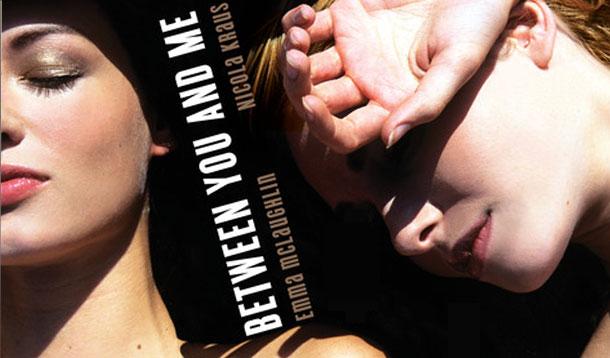
Between You & Me is on sale now everywhere.
You can download a free sample and read more about the book on their website.
Comments
i feel better and i didn’t even know i was feeling down.
great post, riese. thank you for all the hard work.
This was great and my peak level of interest in Britney Spears was when the “Sometimes” music video came out.
Totally great, sounds like an interesting book.
Super interview and I love that Emma and Nicola gave props to your Britney article.
I have placed this book on hold at the library based solely on this interview. Boom!
A couple of typos here and there, but this was a fascinating interview to read! I really like that you got them to open up about the writing process and their goals for the story – it’s giving me some things to think over with my own writing.
Gonna, gotta check this book out.
Hey there! I think we caught all the typos but email us at autostraddlemoderators [at] gmail [dot] com if you notice anything that slipped through. Thanks!
“You’re supposed to have an opinion but have it go along with everyone else’s but don’t just blend in. Just on and on and on. There’s so many contradictions, the paradox of being in the room. It’s kind of the strangest place.” So true! Really interesting, thorough interview.
this is a really great interview, love it!
oh my god riese i loved this. i was really fixated on the nanny diaries when it came out and i was INCREDIBLY fixated on your britney spears article (like, i still bring it up several times a month and often argue with people about britney spears and her life situation based on things i learned in your article) but i somehow had no idea emma and nicola worked together and were still writing books so this is a very exciting discovery (albeit one i feel a bit silly about because how did i not follow up on the authors of the nanny diaries?!) anyway now i plan to read both citizen girl and between you & me asap.
also, i LOVE what nicola said about being fucked once someone calls you “crazy,” and about how it’s a trick because no matter what you do you’re “crazy.” it reminds me of the gloss article “lady, you really aren’t ‘crazy’” (http://thegloss.com/sex-and-dating/women-crazy-334/) and the whole thing is so fucking infuriating and true. at least we are acknowledging it. maybe if we all keep pointing it out we can break the machine.
anyway, wonderful interview. thank you!
ace interview, riese. i really want to read this book now.
I remember when I was about 12, I was spending some time with my Grandma in Ohio and she took me to the store to pick out a book. I picked “The Nanny Diaries”, because I like “The Princess Diaries”. I read it in, like, a day, and I’ve read all of McLaughlin & Kraus’ novels since. All of their main characters are strong, smart women that were great literary role models for me. Thanks for highlighting them!!!
This is an amazing interview!
Thank you for bringing these women/books to my attention, which would probably never have happened otherwise, because modern book covers seem to be designed to induce extreme nausea in me.
I was thinking to myself the other day, hmmm Riese hasnt posted in a while, bet something good is cooking. I was right :) Great interview, really insightful and interesting – especially the bits about the writing process and obstacles etc. think I’ll buy the book now!
Great interview. I am also weirdly attached to Britney, and I remember that article!
I’m so glad they’re writing about this – you don’t hear people talking about the whole conservatorship thing at all. Personally I think it’s not just her father/parents that are suspicious though, I find her relationship with her boyfriend/manager to be really sketchy as well.
I’m so interested in reading this book now! I’m pretty much a huge, unashamed Britney fan, so…
I love the idea of co-writing a book. As a writer, the process is sometimes really isolating, and that’s an interesting way of renegotiating the ideal that writers lock themselves in little sheds for days on end.