





2017 was the best of times and the worst of times. LOL JK it was the absolute worst of times. One of the only consistent reprieves from the perpetually horrifying and demoralizing news cycle was queer TV. There was a lot of it this year. Maybe more than ever before. And not just a handful of characters on a handful of teen shows. Lesbian and bisexual characters were everywhere: lighting up prestige TV, anchoring critically acclaimed streaming shows, filling in the cast on broadcast networks. Riese will be breaking the whole thing down soon, but until then, here are our TV writers’ favorite and least favorite lesbian, bisexual, and trans women TV characters of the year.
None of these write-ups are the Official Position of Autostraddle on any of these shows or characters; they are the individual opinions of our TV writers.
FAVORITE
Riese, Editor-in-Chief
Devon, I Love Dick

Everything I knew about the Jill Soloway project “I Love Dick” suggested this was a very heterosexual affair. Like, the premise is this woman who goes to an artists colony in Marfa with her husband and falls so deeply in obsessive love with Dick (Kevin Bacon) that it consumes and nearly destroys her. But! Nobody told me about Devon, the butch Latinx artist and aspiring playwright living in the trailer behind the house where Chris and her husband are staying. Devon is a dreamy romantic, a dedicated artist with a compelling backstory and a unique perspective on the world. Also, she takes her shirt off a lot and I love her.
Niska, Humans

“[Thing] learns to love” is a trope as old as time — the beast, the android, the hermit — and it’s always heterosexual! But in the second Season of Humans, a sci-fi show that is basically another take on the “what if androids could feel” genre, Niska escapes the brothel where, as a “synth,” she’s been basically imprisoned and forced to work, and eventually lands in Berlin, where she falls in love with a girl. But Niska is so otherwise intriguing, too, and I think Humans is the most underrated show of the year, so there.
Svetlana and Veronica, Shameless

I should’ve done this last year but I wasn’t caught up yet, so this is my late-add, and they’re both still on the show even if they’re not in a thruple anymore, so, it’s still valid. Sometimes I read AV Club recaps and all the commenters are straight cis men who found that whole storyline totally absurd which like, okay thanks STRAIGHT CIS MEN what do you know about poly queers anyhow!?!! But I screamed through the whole entire thing (so did Erin, me and Erin screamed together). It was so fun and hot and fresh! Plus, they’re just incredibly smart hilarious capable alpha bitches who run shit and I’ve always loved that about both of them.
Rachel, Managing Editor
Rosa Diaz, Brooklyn Nine-Nine

In the haze of late 2017, Rosa’s still-recent coming out arc still feels like it was a dream or a maybe light hallucination experienced while staring into the fluorescent lights in line at the DMV. And yet it was, apparently, after months and months of fan daydreaming and Stephanie Beatriz coming out herself, a real thing that occurred! I wrote about this a bit when it happened, but I don’t think I’ve ever seen a coming-out storyline that so specifically and authentically engaged with uniquely bisexual experiences; it was heartbreaking and affirming to see my own anxieties and experiences reflected on screen. I also loved how this revelation about Rosa’s identity deepens and complicates the writing of her character — she’s always been incredibly private and reluctant to share anything even remotely personal with others, and when we see how her worst fears of losing the modicum of closeness she has with her parents are realized because she shares something about with herself, Rosa as a person makes so much more sense. It meant so much to get to see two hyper-independent and closed-off characters in Rosa Diaz and Raymond Holt, whose personalities and affect have been heavily informed by their queerness and repercussions for it, get to bond and be a little vulnerable together over identity. I’m so excited for the future of bisexual Rosa Diaz, who will not die on our televisions!!!
Heather Hogan, Senior Editor
Tig, One Mississippi

One Mississippi‘s second season was my second favorite thing on TV this year. I can’t say why any better than Riese did in her review. I love comedies that are rooted in something deeply sad, where the characters we learn and love find reasons to laugh even though they’re trudging through life’s bleakest moments and darkest days. (Which is why my first favorite thing on TV this year was Grace and Frankie which apparently wasn’t canonically gay, so.) Tig Notaro is a masculine-of-center middle-aged lesbian, which is something we never get to see on TV for starters, and we get to see her navigate falling in love and actually getting the girl. The series is so heartbreaking and it’s so sweet and it filled me with so much hope, which was a real feat for any piece of art in 2017.
Nicole, Fresh Off the Boat

Last summer The Hollywood Reporter talked to openly gay Fresh Off the Boat showrunner Nahnatchka Khan about telling stories networks usually shy away from. She said, “You want to do the material justice and the area justice but you also want to make it funny, you always want to not be preachy.” I thought about that a lot as I was watching Nicole’s coming out story unfold this season because Khan just kept doing it such justice in exactly the way she wanted. I know a lot of my attachment to this story comes from the fact that I was actually Nicole’s age in 1997, so all the callbacks to the gay stuff going on at the time, and the pop culture touchstones, make me nostalgic and allow me to imagine a world where I could have come out to my friends and family and plotted a date with the cute barista when I was in high school. But also it’s just really great TV. All of Nicole’s coming out moments are cute and hilarious, and her coming out episode — which takes place when she joins the local lesbian bar’s softball team — is one of the best I’ve ever seen. But it didn’t stop there! In last week’s Titanic-themed Christmas episode she fell for a girl and her friends helped her get the girl’s number. When they smiled their tender gayby smiles at each while Jessica crooned “My Heart Will Go On” my heart grew three sizes, and also I choke-laughed.
Denise, Master of None

“Thanksgiving” was my favorite episode of TV in 2017. It’s smart and it’s romantic and, of course, the whole thing is just revolutionary. To see a black masculine-of-center lesbian character played by the black masculine-of-center lesbian who wrote the episode and know she ended up accepting an Emmy Award in a full tux for it is — well, it’s basically the opposite of how nearly everything else in 2017 made me feel. I’ve probably watched “Thanksgiving” ten times, and I’ll keep going back to it for years to come. It will become go-to holiday viewing for me, and I’ll always remember the way it launched Lena Waithe into superstardom. And how she turned around and proposed to her IRL girlfriend on Thanksgiving!
Alex Danvers, Supergirl

Alex Danvers is the only character on my best-of list who wasn’t conceived and written by a queer woman, but I’m choosing her because she’s cultural progress personified. Five years ago, there’s no way a network superhero TV show would’ve written Alex as a lesbian. At best they would have given her three episodes to fall for and kiss another girl and then never mention it again and GLAAD would have been forced to keep counting her on their Where We Are on TV report. Two years ago, if the actress who was playing Alex’s love interested decided to leave the show, she’d have been dead on-screen faster than you can say Schechter (and probably Alex would have gone back to dating men or not dating at all). Supergirl‘s writers have taken such care with Alex. They didn’t just tell a coming out story. Or a falling in love story. They’re telling a queer life story, and it feels more real to me than anything that ever happened on The L Word. Alex and Maggie’s break-up was heartbreaking, for sure, but it was written tenderly and without tripping over any tropes or creating any unnecessary villains. Alex’s drunken leap into the bed with Sara Lance in the Crisis of Infinite Earth crossover was also legit, and so was the part where Alex woke up heartsick over Maggie, still, but with a new queer pal to lean on.
Natalie, Staff Writer
Elena Alvarez,One Day at a Time

Television has a habit of linking coming out with romance, as if your identity isn’t your own without someone else there to affirm it, and while that might make for great TV — who doesn’t love a love story, after all — the conflation of those two things has always struck me as a bit problematic. I didn’t expect One Day at a Time, the reboot of the 1970s Norman Lear multi-cam sitcom, to be the show challenged that convention, but it did.
When Elena comes out to her family, it’s about her. It’s not about some girl that’s waiting in the wings, equally smitten with her — though, in Season Two, that should totally happen because she’s adorable — it’s about Elena and this realization she’s come to about herself. Coming out is the moment we turn quiet revelations — borne, in Elena’s case, from countless hours of binge watching Buffy the Vampire Slayer, staring longingly at Kristen Stewart and kissing the wrong people — into public pronouncements and One Day at a Time gives Elena the space to own that moment.
The show, guided in part by two queer writers, allows Elena’s coming out to be a season-long triumph, not a byproduct of feelings she has for someone else, but a product of her fully accepting and loving herself. That version of coming out is the reality of so many people — there’s no Maya or Maggie or Adena spurning them towards acceptance and admission, there’s only them, owning their truth — and I was so grateful to see that version of the story told.
Cameron Wirth, Doubt

In and of itself, there is nothing remarkable about the love story, Doubt crafts for Cameron Wirth. Gorgeous defense attorney falls in love with a charming prosecutor with boyish good looks? Been there, done that.
But then, you add the fact that Cameron Wirth is a trans woman, that she’s a trans woman being played by an actual trans woman, that she’s a black trans woman, that she’s a black trans woman with trans girlfriends also played by actual trans women, and all of a sudden, the mundane becomes extraordinary. And the fact that all of this is happening in primetime on the most watched and (arguably) most conservative and least diverse network on television? Well, that’s a damn miracle.
When the first season (and only) season of Doubt concluded, I described Cameron Wirth’s story as a fairytale, a beacon of hope for trans women — and trans women of color, in particular — at a time when hope was in short supply.
Kayla Kumari Upadhyaya, Staff Writer
Adena El Amin, The Bold Type

The Bold Type allowed Adena’s life as a Muslim, lesbian, feminist artist be complicated without making it tragic. She challenges Kat in really beautiful ways, but she stands on her own as a character, too. And as a mere surface-level detail: Nikohl Boosheri and Aisha Dee are just really good at on-screen kissing.
Rosa Diaz, Brooklyn Nine-Nine

We’re only at the beginning of Rosa’s bisexual journey, but I can’t wait to see how it all plays out throughout the rest of the season. I couldn’t not say something about her in this list, because it truly feels like we have all been not-so-patiently waiting for the moment when she says “I’m bi” for the entirety of the show’s existence. I’m so happy she says it outright. Sometimes, there’s power in naming something.
Valerie Anne, TV Writer and Social Media Co-Editor
Waverly Earp, Wynonna Earp

Waverly Earp was my favorite new character last year, and this year in Wynonna Earp’s second season, my love for her continued to grow. She is the perfect combination of strength and kindness, fear and passion, brains and heart. She went through Some Shit™ this year but it’s been such a gift to watch her fight and cheer and sing and make mistakes and learn and grow and love. (Shout out to Nicole, Rosita, and Shae, the other badass queer women in Waverly’s life.)
Alex Danvers, Supergirl

Speaking of people who have been through Some Shit™…I know the show itself has had its ups and downs, but I have loved watching Alex’s journey. She came out last year, and this year she fell in love, got engaged, got her whole heart broken, fell into bed with Sara Lance, and started to put the pieces of her heart back together in one of those relatable and honest storylines I’ve seen on TV in my adult life. I look forward to seeing where Alex’s journey takes us.
Sara Lance, Legends of Tomorrow

When Legends of Tomorrow started, I thought it would be this throwaway show I watched for the rare glimpse of Caity Lotz punching a dude. And during Season 1, it mostly was. But this year, the back half of Season 2 and the first half of Season 3, this wonderful shift happened. They realized Sara Lance should be in charge, and the whole tone of the show changed. Caity Lotz has grown as an actor so much since she started back in Season 2 of Arrow, and Sara Lance has gone from preppy rich girl to traumatized assassin to badass vigilante to feral zombie to the captain of a time-traveling band of weirdos hell-bent on saving the world. It’s so wonderful to watch, and the show itself is so fun and wonderful and never ever shies away from Sara’s bisexuality.
Cosima Niehaus, Orphan Black

I loved a lot of TV this year, but I would be remiss if I didn’t take this final opportunity to give love to Orphan Black for giving me what will probably remain one of my all-time favorite queer characters for the rest of my life. Cosima once said, “My sexuality isn’t the most interesting thing about me,” and she continued to prove that time and time again. Her relationship with Delphine is the only romantic pairing that survived the series, and hell, SHE survived the series, against all odds.
Carmen, Staff Writer
Mary Charles “M-Chuck” Calloway, Survivor’s Remorse

I’m including M-Chuck, but this is basically a “Lifetime Achievement” award. Survivor’s Remorse was cancelled this fall, making 2017 her last opportunity to be included in a year-end list. That’s incredibly unfair! M-Chuck is hilarious, and in full ownership of herself, and a joy who brightens up the screen. Survivor’s Remorse aired in relatively short seasons; it’s hard to pinpoint a singular one as her “best” work. But taken collectively, they created a multi-layered character who uses sex and comedy as her armor, but also had her own haunting traumas and the world’s biggest, deepest heart. I’d sincerely argue that M-Chuck is one of the most well-rounded, best written lesbian characters in television history. Actress Erica Ash’s embodiment of her was a sight to behold. I’m going to miss her dearly.
Elena Alvarez, One Day at a Time

Looking around this roundup, Elena is definitely (and deservedly) the MVP of this year’s list; I won’t take up your time once again explaining her brilliance. I will say that as a former teen Latina feminist, raised by my Latina single mother, in a Caribbean Latinx household (though Puerto Rican, not Cuban)- watching Elena and her family last season was a singular experience not like any other I’ve had.
I made the commitment to watch One Day At A Time with my now 60-year-old mom, so I didn’t get to binge it like many others in the Autostraddle community. We went at her pace. And we went through so many boxes of tissues. We’d take breaks, talk, laugh, and then cry some more. It was intimate, but also gave us perspective. We saw ourselves, and I think we saw bits of each other, too. That’s probably a strange endorsement for a sitcom, but there you have it. Spending that time with my mother, watching this story unfold, is one of my most cherished memories of 2017. It reached beyond television.
Anyway, Elena Alvarez is a freakin’ superhero among teenagers. Get ready, she’ll be back on our screens when the new season of One Day At A Time drops on January 26th!
Cotton Brown, Star

Cotton is a trans woman on television like few that I’ve had the pleasure of seeing — particularly on network tv. Yes, she’s poor and she’s black and in many ways disenfranchised, but she’s also self-determined, ruthless, unapologetic, and lets no man stand in her way. Star is a chaotic love letter to young women, especially young women of color, who are unafraid to do the ugly work required to make their dreams come to life. I sometimes think I’m the only one watching, but I don’t mind banging the drums! The first season in particular was delightfully juicy hot mess of a soap opera and Cotton is an antihero I love rooting for. She’ll do whatever it takes to survive. I admire her strength, her steely resolve, her bravery, her grit. When it comes to peeling back those layers, actress Amiyah Scott puts in hard character work and really shines. Cotton hasn’t been utilized as much as I’d like in Star’s second season. But we’re less than halfway through, and I’m hopeful that her arc is ramping up for a strong finish! She deserves it.
Ofglen, The Handmaid’s Tale

Ofglen is the resistance. The Handmaid’s Tale was a nightmare of a television show to watch. I don’t mean that in terms of quality — the show is obviously exquisite — I mean it’s literally made up of the stuff from my nightmares. I am still surprised that I made it through to the end. But amidst all of the horror, Ofglen was a beacon. She was not merely placeholder for the torture that these women, and particularly queer women, were put through (though Oh My God there was also that). She was also a bright reminder the feral strength of women’s spirit. I had no idea that Alexis Bledel had this in her. When I look back at 2017 in television, it’s Ofglen’s wild, defiant eyes that burn back it me. She reminds me that I am no one’s property other than my own. It’s better rather go down fighting — always fighting — then lay down at all.
Mey, Trans Editor
Davina, Transparent

Each year Transparent has done a great job of highlighting some of its trans characters played by trans actors. In past seasons we’ve seen Hari Nef and Trace Lysette shine, and this year, like in Season One, it was Davina’s turn. Davina is an HIV-positive Latina played by legendary trans actor Alexandra Billings. We got to see her deal with her abusive boyfriend, reminisce about her past in the ballroom scene, talk about her regrets and she had a groundbreaking nude scene. She’s one of the best actors in a show full of great actors and we got to see her really shine this year.
Waverly Earp, Wynonna Earp

I had gotten behind on this show, but thanks to my girlfriends I got back into it. Waverly is amazing. She’s so precious and tender and bright and fun and wonderful and she looks amazing in a cheerleader uniform, she looks great waving some sticks around, she looks great even when she’s messing up the whole universe by helping an evil witch just in order to save her girlfriend. I wanna be like Waverly.
Rosa Diaz, Brooklyn 99

I started watching this show when it first premiered and since way back then, every queer woman in the fandom has wanted for Rosa Diaz to be bi. This call from the fandom only got a thousand times louder when Stephanie Beatriz, who plays Rosa, came out as bi. Rosa is a beautiful, badass, leather-clad Latina who manages to be eternally charming even when she’s speaking in a monotone voice about how she hates everything. And recently she came out to fellow detective Charles Boyles as bi, and told him that she’s dating a woman. This was what we were waiting for. This is what we were hoping for. This is what we were cheering for.
Elena, One Day at a Time

This was such a freaking great Latina-specific coming out story. It’s not just about “how do I tell my family I’m dating a girl, what if they reject me?” it’s also about “how will my die-hard Catholic abuela react?” “what do I do about my date for my quinceañera?” “what do I do about the dress I’m supposed to wear for my quinceañera?” This was the type of coming out narrative that queer Latinx teens can relate to, and that they need to have in order to be able to see this kind of possibility for themselves. When she walks out in that suit, I cried. Plus, I love the Autostraddle shoutout.
NEXT PAGE: Our least favorite characters
LEAST FAVORITE
Stef Schwartz, Vapid Fluff Editor
Tara Chambler, The Walking Dead
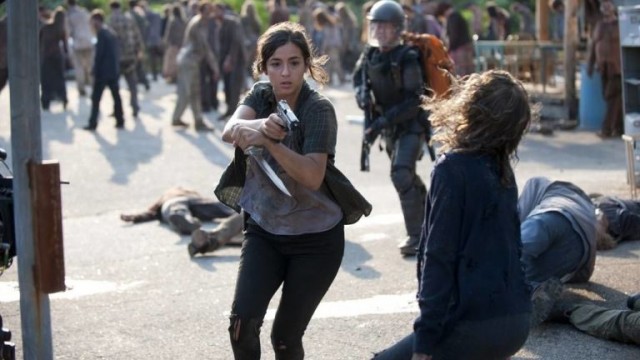
The Walking Dead went from being a pretty OK show about zombies to an absolutely terrible show about a bunch of sweaty men who are constantly trying to acquire more guns, and it happened so gradually that I didn’t even notice until it was too late. Every week I watch this show so I can report back to Heather whether or not Tara’s going to die, because of course she’s going to die! She’s a completely disposable fringe character who’s had just about zero storyline ever since they shot her girlfriend in the eye with an arrow. I thought maybe she might be the last queer woman left alive, but then last season she met an entire lesbian village and sold them out so Rick could steal all their guns. Tara, I am going to enjoy watching you get ripped apart by zombies, and then hopefully I am going to stop watching this show.
Valerie Anne, TV Writer
Nyssa al Ghul, Arrow
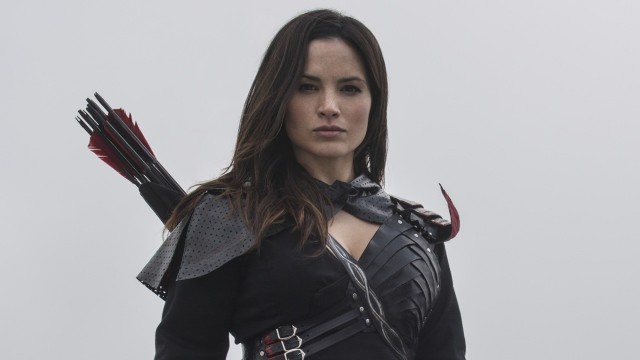
NYSSA WAS DONE SO WRONG, Y’ALL. She was one of the strongest characters left on Arrow, and when everyone was on an island that blew up last year, fates were doled out to everyone but her. Some people died, some were put in comas, some escaped…and no one will tell me what happened to Nyssa. I can’t tell if they’re saving “what happened to Nyssa” as a Big Reveal, or if they decided probably she’s dead but are like, “It doesn’t count as burying your gay if you just…never mention them again.” DON’T GHOST YOUR GAYS, EITHER.
Everyone, American Horror Story: Cult
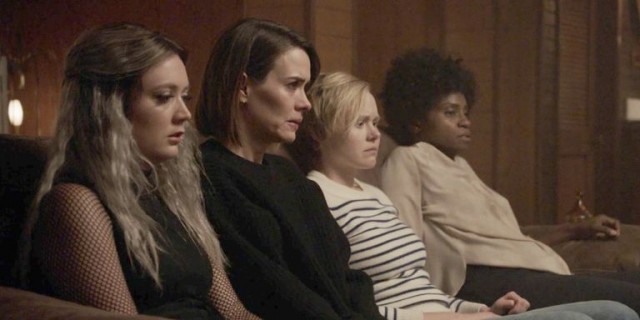
I don’t know if I’ll ever forgive Sarah Paulson for being so great that she got me to watch the entire season of AHS: Cult despite it being the bane of my existence the entire time. Also fuck Ryan Murphy for always having so many queer women on shows that make me want to carve my own eyeballs out. What’s a queer TV addict to do?!
Kayla Kumari Upadhyaya, Staff Writer
Colette Kimball-Kinney, The Mindy Project
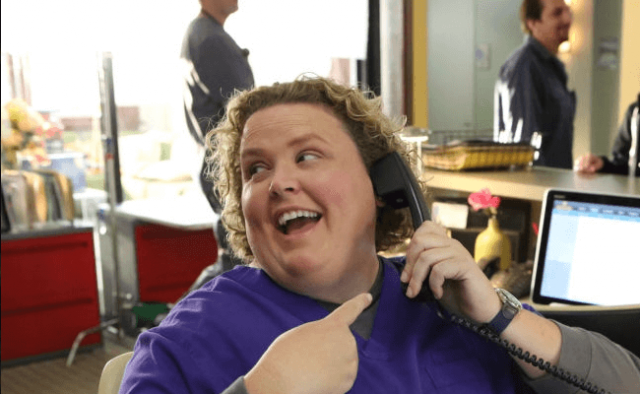
Would I have watched the final season of The Mindy Project in its entirety if I wasn’t covering it for work? Probably not! It was bad! The show has never been good with respect to its queer characters, whose queerness only serves as a punchline most of the time. The final season, in particular, only acknowledged the fact that Colette is a lesbian when it was making a lazy joke about it. It became extremely tiresome extremely fast.
Heather Hogan, Senior Editor
Alison DiLaurentis and Emily Fields, Pretty Little Liars
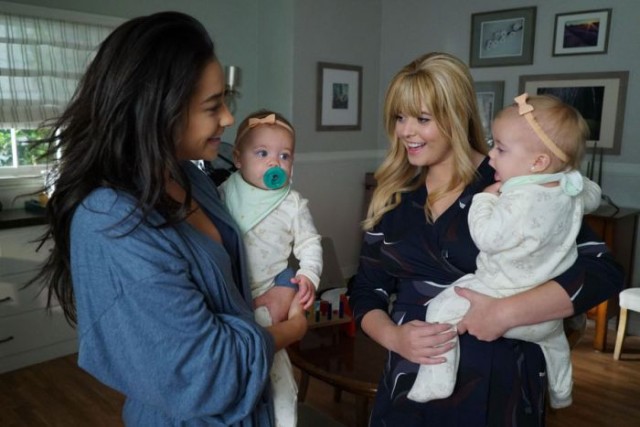
If you’d told me Ali and Emily were going to end up together in the early days of this show I would have thrown them a wedding shower in my own home, but the way it all played out was so stupid and terrible. What happened was Emily donated her eggs to get money to go to college and A stole those eggs and gave them to Alison’s fake-doctor-husband who fertilized them with a psycho’s sperm and then raped and impregnated Alison with them while she was drugged up and tied to a bed and in his imaginary psychiatric hospital and Alison and Emily got married and had those babies and lived happily ever after. Isn’t that sweet?
Carmen, Staff Writer
Eliza Minnick, Grey’s Anatomy
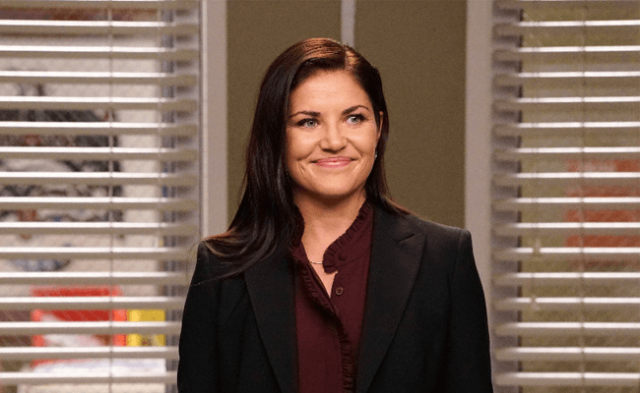
Can we be honest with each other? I struggled coming up with a “worst” character. Overall, I think 2017 was pretty solid for queer television representation and a lot of fun to watch.
That said, there’s still a lot of room to grow for our representation on television. My #1 hope for 2018 is that we get a trans queer regular character somewhere (played by a trans actor, of course). I think that representation for queer women of color was plentiful this year, but uneven in execution. Kat Edison from The Bold Type got a beautiful, bold love story but she wasn’t written in ways that felt authentic from black lens. Nova Bordelon remains one of the best written black activists on television, but her queerness was an afterthought in Queen Sugar’s second season. I’m still not over casting a non-Latina actress in the role of Maggie Sawyer on Supergirl, and then deciding continue to portraying her as Latina on screen anyway. Intersectionality is vital when writing queer women of color on television, because these layers are a permanent reality in the off-screen lives of queer women of color. We don’t get to “be a person of color today” or “a queer person tomorrow”. We are all of ourselves, constantly. Television needs to catch up to that.
Ultimately though, I looked in my heart of hearts and went with Eliza Minnick. Why? Because she was 100%, delightfully, enjoyably, purposefully The Worst (TM).
There was once a time, not very long ago, that if a new lesbian or queer character appeared on television, then I felt obligated to defend her. But, Eliza was a villain. She was cocky and arrogant and wholly unlikeable She came to Grey’s Anatomy with the goal of dethroning Chief Webber (and yes, he will always be Chief Webber to me)! Then in the season 13 finale, like any good television villain, she was ceremonially defeated. It was blissfully cathartic.
I loved every moment that I hated her.
Natalie, Staff Writer
Kat Edison, The Bold Type
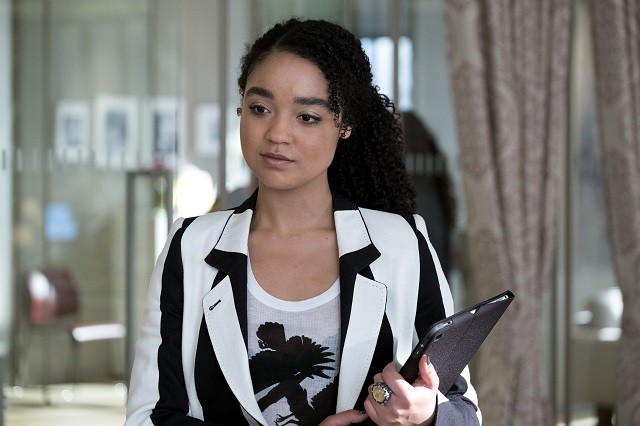
The first time it happens — in episode three (“The Woman Behind the Clothes”), when Kat’s taken aback by the heinous nature of online attacks — I raise a curious eyebrow. She’s a woman of color, with opinions, whose entire career is based around the Internet, and she’s just now realizing how vitriolic that place can be?!, I think. It seems absurd to me but I opt to cut the show a little slack…it’s new and they’re just finding their footing. Plus, the video from which Kat’s storyline is seemingly derived didn’t engage on the racial aspect either.
But the second time it happens — in the fourth episode (“If You Can’t Do It With Feeling”), when Kat punches a bigoted white man on the street, is arrested, while Adena scurries away, is subsequently lectured by her white female boss about her privilege and compelled to apologize — I find myself infuriated. I grab my phone and type out a quick text to a friend who I’d convinced to watch the show: do you think the writers forgot that Kat’s black? I’m hardpressed to think of a single moment of Kat’s story that wouldn’t be written exactly the same, if the actress that played Kat Edison was white… and that’s a huge problem.
Every black person wears their blackness differently — we are not a monolith, as the saying goes so I don’t expect Kat’s reaction to social media trolls or cops to be the same as mine. Her experience is unique, informed by her privilege as the light-skinned, educated, well-off daughter of two psychiatrists, but it’s still grounded in an America that openly flirts with — or, at its worst moments, fully embraces — white supremacy. To not engage, at all, about how walking through Trump’s America as a black woman presents specific challenges, makes Kat Edison’s character feel wholly inauthentic.
(And, yes, the complete erasure of Kat’s racial identity coupled with turning Alex into a magical negro and turning Adena, a minor character, into the lone representative for intersectional feminism, means that the seemingly progressive The Bold Type has a race problem…but that’s a larger discussion for another day…)
The death threats that Kat receives in “The Woman Behind the Clothes” wouldn’t be a new occurrence for her — it’s what women of color with opinions suffer through everyday on social media and Kat wouldn’t be immune from that. The fact that the episode doesn’t include a single racially-tinged threat among the litany that Kat receives, further reveals that The Bold Type doesn’t want to grapple with Kat’s identity at all… that it feels more comfortable in treating harassment as something universal when, frankly, it’s not. Kat should be allowed the space to be angry at Adena in “If You Can’t Do It With Feeling” because a black woman coming face-to-face with a bigoted white man and the police is at least as fraught as whatever sends Adena scurrying away. Kat’s faith in the justice system… that she, as a black woman, would be spared because she was right? What world is that and how can I get there?
The writers of The Bold Type clearly wanted to tell one overarching story about Kat Edison — the discovery of her sexuality and her love story with Adena — and that’s it. If Kat Edison was played by a white actress, maybe that’d be okay, but she’s not. By casting Aisha Dee, Kat Edison became an intersectional character and that necessitates intersectional storytelling. She is black and female and bisexual and American and she deserves to have all those identities represented. People who live their lives at intersections don’t get to shed all their other identities while interrogating one of them and the writers of The Bold Type shouldn’t be allowed to either.
Kristina Corinthos-Davis and Parker Forsyth, General Hospital
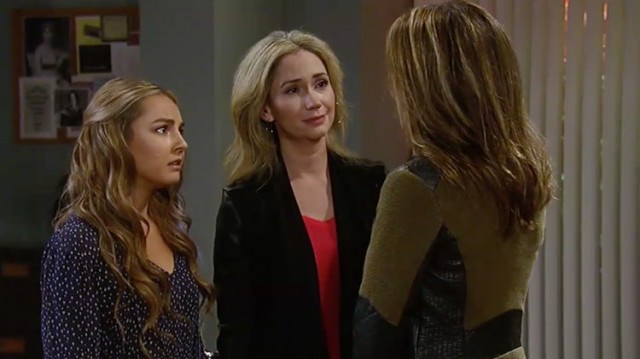
There are four types of couples in the soap world: the supercouple, the pair destined to find their way back to each other, no matter what drives them apart; the potential, the couple that, at times looks like a supercouple, but eventually the flame dies out; the “why-the-hell-not” couple, two people on the canvas tossed together for no discernable reason, usually reserved for gay characters and/or characters of color; and, finally, the the electric couple, the couple with amazing chemistry that’ll burn like a white hot light for a while before crashing spectacularly.
In all my years of watching daytime television, there’s never been a lesbian couple that’s fallen into that last group. The electric couple has been reserved for men who have affairs with their brother’s wives or women who hook up with the new guy working in the mail room… that is, until Kristina, a young Wesleyan co-ed, fell in love with her married lesbian English professor, Parker. They had all the elements of an electric couple — including that rare forbidden quality that makes you spend every second wondering if you should cheer for this pairing — but, ultimately, the relationship that should’ve crashed spectacularly just kinda fizzled out.
Fast forward to a year later and Parker’s moved to Port Charles and runs into her one-time lover right away. She’s newly divorced and Kristina — who’s barely had a storyline in a year, much less any romance — is single as well. They don’t fall into bed right away — Kristina’s understandably reluctant to re-engage with the woman who broke her heart — but they reconnect and show signs of turning from an electric couple into something more.
But then, the bottom falls out. The writing turns dreadful…some of the worst I’ve ever seen on a soap. The couple’s compelling (and problematic) history is, at best, rewritten and, at worst, completely ignored. Every interaction between the pair feels forced and/or recycled and they kiss with the enthusiasm of a kid forced to kiss his great aunt who smells like moth balls. Hell, when Parker’s teaching her class called “Women, Wit and Politics In Fiction From Rebecca West To Now,” she teach Jane Austen’s Emma, which precedes Rebecca West’s life by 77 years…and General Hospital couldn’t even be bothered to spell Austen’s name right on the prop book. It’s like they weren’t even trying to do this pairing justice.
And if that wasn’t bad enough, as one final show of disrespect to fans who’d waited a year for this story to resume, General Hospital shipped the couple off the canvas on National Coming Out Day.
Okay, your turn! Who were your favorite and least favorite TV characters of 2017?

Comments
Oh man so I think my favorite queer woman on TV this year was Waverly Earp (and Rosa Diaz but I still haven’t caught the most recent season of Brooklyn Nine-Nine yet.) I have to agree with AHS for least favourite – I loved Winter so so much but of course Ryan Murphy had to ruined it.
UGH EMISON
Exactly what you said, Heather. I have no idea how PLL managed to mangle what was once my favourite pairing SO BADLY that I ACTIVELY ROLLED MY EYES whenever they were on screen, but they did, so congrats I guess
They haven’t been my favorite pairing since like season one. What irks me isn’t that they ruined them, but that they robbed Emily, Paige and even Alison of their happy endings for them. Cause there’s no universe where being forced to raise a rape baby nobody wanted and losing the person you’re in love with and ending up forced in a relationship with literally your last resort counts as a happy ending.
IMO Delphine Cormier deserves some love for coming back from the dead and saving Cosima’s life and using her sexy Slytherin cunning to sneakily save the day. IMHO
Maybe this should’ve been done by House.
Delphine would definitely have been a Slytherin prefect.*The* Slytherin prefect.
With Siobhan possibly being the Head of House, but I’m leaving that up for discussion.
Just like in the show, Delphine NEVER GETS ENOUGH CREDIT! She’s frickin amazing.
“Alex Danvers is the only character on my best-of list who wasn’t conceived and written by a queer woman…”
Wait, wasn’t she both conceived and written by Ali Adler? You know, Sara Gilbert’s ex-wife?
I know who Ali Adler is, even outside of her relationship to Sara Gilbert. :)
And yes, she was part of the team who created and wrote Alex, but I don’t think she’s written an episode since season one, which was before Alex came out. She did EP for a while but she left in the middle of this season to work on two other projects for CBS.
She was driven away by Berlanti when he didn’t listen to her concerns about the sexual predator she was forced to work with, is a better way to put it I think.
I’m fairly certain Andrew Kreisberg owns the rights to Alex the character as “Alex Danvers, the adopted sister of Supergirl who is a DEO agent”. He spoke specifically about her as a character he created, together with Diggle from Arrow. He comes from a comic book background where legal ownership of the characters you created is really important because it means he will get royalties every time she is used in another context, such as the comic books. Of course when he created her she wasn’t gay yet.
I’m so, so happy Roberta Colindrez’s portrayal of Devon was mentioned. While the show was for sure… a bit strange… her performance was revelatory. It honestly caught me so off guard (but I was very on board.) (Kevin Bacon being nominated for that show instead of her seems so cruel, as well.)
I also appreciate Tara from TWD being a least fav because I can’t fully quit that show BECAUSE of her. I don’t want to watch it (and I mostly do not) but I keep on checking in like a dummy.
I am too. I watched the series and then searched Autostraddle to check what had been written here about Roberta Colindrez and I Love Dick and i was surprised how little coverage it got. It was a fairly good (and yes, weird, like I may never stop uncomfortably laughing inside about the “gaping” presentation) show and I loved her character.
I think I actually had to bail on that… sequence entirely during that ep hahaha
First of all
You all have perfect taste
(And yes Riese Devon was ❤️❤️❤️❤️❤️)
Faves: ROSA! ELENA! My babies!
Least Faves: Waverly (I don’t like the wishy-washy handling of it all), Eleanor and Tahani (either go there or don’t, just please stop the baiting).
Let’s hope I can add more next year. Man, I have some binging to do.
Some really good choices there.
Farewell Cosima (and Delphine of course). Being in the UK, Niska wasn’t this year for me, we got Humans S2 this time of year in 2016 but what could easily have felt like a throwaway character trait “the token queer” actually worked really well through the whole series in all kinds of ways. Thank you for reminding me about both Niska and Astrid and Humans – I’m looking forward to S3 now. And Waverly for my third choice really.
I think I’m lucky – I don’t watch a whole lot of TV, so I’ve missed a lot of the bad ones you’ve mentioned, although I’ve also missed some of the good ones too. Although it makes me sad to see Nyssa on the list.
This is fantastic. I loved the part about your favorite characters (and agree with all of them! Rosa! Waverly! Nicole! Elena!). But weirdly I think I loved the part about your least favorite more? Maybe that says something about where we are in queer tv that it can be so satisfying to dig into the missteps, missed opportunities, and weird calls, without feeling like the year as a whole was bad.
I especially/mostly commented to say YES re Kat on the Bold Type. I still love her/the show/the storyline, but I sent SO many angry/confused texts to friends when watching her scenes. Especially that scene where her white boss explains to her that cops can be bad (?!?!?!). It’s so weird, because the show is super willing to go there with Issues in general, but it’s like they decided they could only deal with one Issue per episode? And race was never the one they chose? I notice this problem on a lot of the CW/Freeform’s shows, but like, even on Riverdale where always talk about the justice system without ever mentioning race, they at least mention that the black mayor has faced racist harrassment in the past. It’s WILD that they don’t even go that far for Kat.
I’m so grateful for Orphan Black and Cosima and Delphine will be with me always. I have a feeling Waverly and Nicole will be the same. Pretty awesome year of TV! Elena Alvarez is definitely my new favorite this year!
I’m so glad my baby Niska made the list. I’d die for Niska. Humans really is such an underrated show. I can’t wait for season three.
Now, I’ve talked about my absolute disdain for The CW many times on here. Usually in relation to The 100 and Supergirl and even Legends to a lesser extent. I stand by that. I have MANY issues with those shows but Alex Danvers as a character and Chyler Leigh as an actress are not one of them. I love Alex/Chyler. She is literally the only reason I continue to keep up with that shit show despite it’s many Mon-El related flaws. And their will always be a special place in my heart for Sara Lance, as a character, even if I don’t necessarily agree with how her bisexuality is portrayed across the Arrowverse. Having Caity Lotz basically carry Legends was the best decision The CW has ever made. I hope she becomes after a bigger star when she eventually moves on in her career.
And what else can you say about The Bold Type that hasn’t already been. I’m looking forward to it’s return.
Moira from Handmaid’s Tale would be on my list of favorites. And not just because she was Samira Wiley. She brought a lot of spark to the show, regardless of how devastating her story was. I felt like the show just got a little bit more alive every time she was on screen. I am therefore terrified about Season 2.
In totally agreement on Bold Type’s Kat. That made me uncomfortable the whole time, so much so that I was honestly a little stumped by all the effusive praise for the show. (Adena is great, of course, but you know what I mean.)
Also I basically just blanketly adore everyone on One Mississippi.
I should really proofread before I post but hopefully my general points were clear!
Praised be, bitch. Moira is the best.
Yup, Moira
Yup, Moira
I’ll throw Mr.Robot’s Dom DiPierro into the ring, because she ticks all of my lonely, socially inept FBI agent boxes, and in a world without heroes, she’s still a Girl Scout.
Also she needs some love thrown her way. Like, desperately.
I’m hoping Nyssa’s big reveal will involve a certain Time Agent, Sarah Lance, and some seriously bad ass queer lady drama.
I get all the Waverly love but surely Nicole Haught deserves some too. To paraphrase Nedley, yeah it’s cool to fight demons but someone needs to protect the every day folk of Purgatory.
I pretty much agree with everyone’s likes and dislikes. I am right there with you Heather on the Emily and Alison of it all.
Same. I always saw Emison as a punishment for Alison and at first it seemed like a reward for Emily, but then Paily happened and it was so real and genuine that it outweighed any benefit Emison had carried and soon I started to really bond with Paily and sympathize with the both of them and Emison seemed more and more like a punishment for Emily. But even after all that happened and the ways Emily tortured Paige, I still didn’t think she was bad enough to deserve that punishment. After all, the thing she had with Paige was real and Emison had always been a sham. And even if Emily didn’t deserve it, Paige did. That’s why I was completely gutted when they ended up the way they did. I think Paige deserved one last ‘best character’ win for being so mature and polite about this whole thing rather than reacting the way a normal person would and smashing the windows of Alison’s car.
Nicole’s storyline on Fresh Off The Boat is so delightful! Definitely my favorite surprise of the year- most of the time I seek out a show for queer content, but I’ve been watching FoB from day 1, content with erstwhile Denim Turtle scenes and lowkey Jessica/Honey subtext (okay, that might just be in my head).
Jessica/Honey subtext is definitely in my head as well
3 heads! Cerberus!
there is a v serious dearth of jessica/honey fanfic. someone on this site pls help
I haven’t had opportunity to watch any of these but those pictures of Diaz on her motorcycle and holding that net gun.
Thank you, thank you very much ;)
I think my favorite has been Rosa Diaz as it’s the most fresh on my mind, but also because it was really well done, in not just one, but two episodes so far. My only real hesitation with the Rosa Dias is the fact the show humanizes and in a way pro police propaganda. Sure Stephanie has a lot of say in her character, but it’s still trying to say cops are funny, nice, and cool like regular people. Maybe I’m a bit jaded. I haven’t seen enough Doubt(only two episodes or how many aired before they burned it off?), but Lavern Cox is always a delight.
D E V O N. I Love Dick was possibly my fave new show of 2017. It captured me in a way that nothing else has? Couldn’t tear my eyes off the screen. But yes, Devon is my ideal butch.
Shout outs to Nova (queen of my heart, queen of arms) and to Rosa Diaz ofc.
Also, I miss The 100, when is it coming back?!
Alsoooo I knew someone would pick Minnick as The Worst. But I actually prefer her to Carina, who I think is just kind of empty? Like her only personality trait thus far is ‘likes sex, studies orgasms’.
Ofglen, the fucking scene where she watches her girlfriend get hanged?! my soul fell out of my body.
And Niska! wow, I loved Humans soooo much and can’t wait for its return.
TV has for sure been one of the most comforting things about this year (the only comforting thing??)
I second that. Minnick was better than Carina and far better than perfect Penny. I resent that name by the way. In my books the only character who’s ever come close to being perfect while also having a suitably alliterative name is Paige McCullers. Perfect Paige. Has a much better ring to it. I like Precious better of course. Precious Paige. But perfect is just as suitable.
I really enjoyed Anna Torv as Dr. Carr in Mindhunters. She lit up every scene she was in with her sheer presence. And it was nice to see her work and expertise frequently being what provided legitimacy to what her male co-workers were doing.
Nicole’s coming out story has been fabulous
CP I love you and all but Minnick as worst of the year seems a little bit much to me… she wasn’t that bad
Awesome list. As much as I love the faves, the least favorites and the reasons why was SO INTERESTING.
Any chance you’d elaborate on a A+ podcast? I’d love to hear a conversation on any part of the above.
Thanks for being willing to share what you found problematic, and pushing for better.
Everything about intersectionality on the bold type was spot on. I had the same thought.
oh-ho-ho am i glad i stopped watching PLL! wow. sorry to whoever had to sit through that. we appreciate your sacrifice!
Completely agree with the whole list, but there are a few oldies I would add! My personal faves Nomi and Amanita got engaged this year (swoon!) and were adorable in Sense8 season 2!
Also to add to the least favorites list- this season of OITNB was very uneven in their representation of queer women. I loved the vauseman engagement, but I really don’t like what they’re doing with Nicky and Lorna, like come on give a girl a break! They also have a long way to go after killing Poussey.
Loved the list! and I love the fact that a list this long doesn’t even cover all of the queer characters this year- Progress!!
Paige McCullers was one of the best lesbian characters of 2017 in my books. I will never get over how dirty the show did her in the end there. Still though, she did that.