





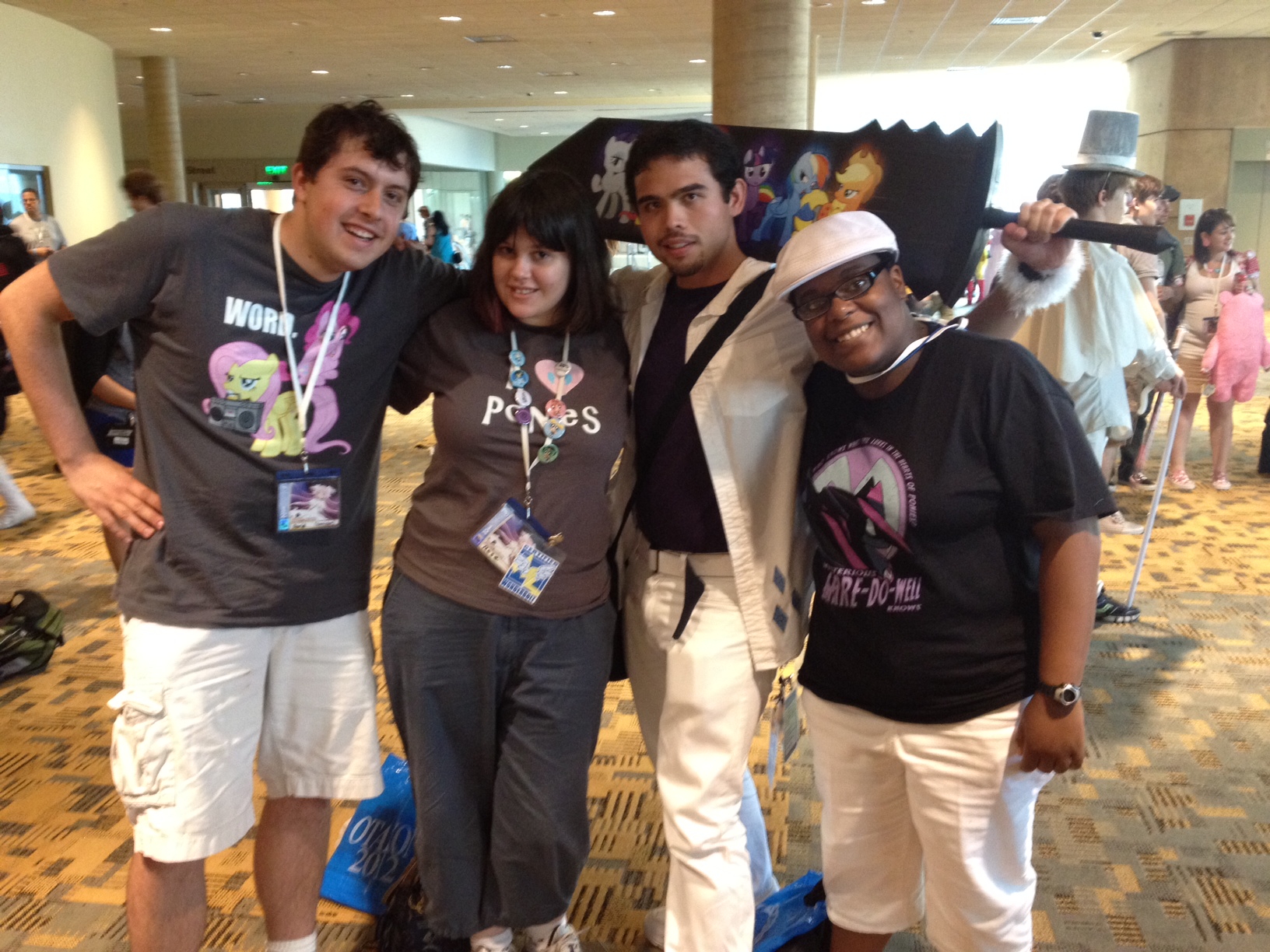
As a kid, I obsessed over the likes of Sailor Moon, Pokemon and Digimon like everyone else my age. As a college student, revisiting my former Sailor Moon nostalgia and exploring some yuri (lesbian-themed) series helped me in coming to terms with my bisexuality and the idea of having a relationship with another girl. Despite all this, I’ve never considered myself a big fan, or “otaku” (the Japanese term for huge fans of anime, manga and video games, which Western lovers of the medium have more than embraced). No matter how many hours I spend training and trading Pokemon on my Game Boy, no matter how many TV Tropes edits I’ve made on Puella Magi Madoka Magica or Fullmetal Alchemist, I’ve always been put off by some parts of the otaku (and larger, geek/nerd) subculture, particularly some of the parts that are less women and LGBT-friendly. But with my first convention visit last month, to Baltimore’s Otakon, I think my opinion of that is starting to change.
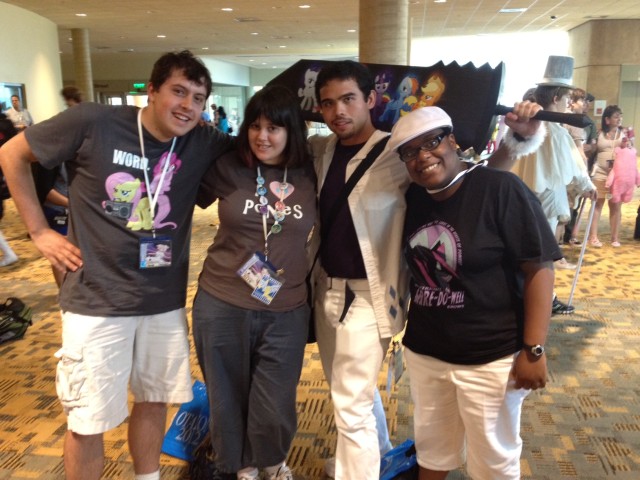
Otakon is the U.S.’s second largest anime convention (after LA’s AnimeExpo) and the largest on the East Coast, and I figured that my four years living in Baltimore were not complete without at least one visit. As it turned out, Otakon is a pretty good choice for a first convention: there is never a dull moment with panels on just about everything Japan-related you could imagine, from popular to lesser-known series’, from fan parodies to Japanese cooking to video game music to cosplay tips. And despite the actual convention’s fairly strictly East Asian focus, there were also fan-organized meet-ups for various kinds of non-anime geeks, like bronies, Nerdfighters and Homestuck fans. But for the sake of this article, I’ll mostly be summarizing my two favorite panels: “Sexism in Anime and Fandom” and “Navigating LGBT/Queer Identities and Issues within Japanese Media and Cultural Appreciation,” which spoke to me the most as a feminist, queer anime fan.
Disclaimer: Personally, I’m by no means an expert myself in gender or sexuality in Japanese culture or anime, or its differences from American culture in those respects; I’m just reporting on what I learned and the notes I took from the panels, as well as my own observations as a white American anime fan.
Sexism in Anime and Fandom
This Saturday afternoon panel was run by Lauren Rae Orsini, of The Daily Dot and Otaku Journalist, and Patrick Taylor, of Anime-Planet. It could be roughly divided into two sections: the first dealt with sexism in anime, manga and video games themselves, and the second dealt with it in the larger geek culture, including convention culture and cosplay. The slides are available via Patrick’s tumblr!
One of the major issues that was discussed with regard to anime itself was the issue of fanservice, a term that originated in the anime fandom for depictions of characters (usually women) in sexy outfits or poses purely for the sake of drawing in titillated viewers. Obviously, this trope is far from exclusive to anime, but the medium is particularly notable for it, due to the often over-the-top, unrealistic heights (link NSFW) it can take. Of course, anime also has a higher-than-usual amount of male fanservice; whole genres, such as yaoi (anime/manga featuring gay male relationships that are usually aimed at women), are built on it. But as the panel pointed out is that, while male “fanservice” characters are allowed to have well-developed personalities, but female “fanservice” characters are needed to be “accessible” in their personalities. Men can be eye candy but also be actualized as characters; women are eye candy first and foremost.
There was also a lot of discussion on the portrayal of “geek girls” in anime. One thing they noted is how geek girls in anime/manga “are the closest to relatable for female fans, but aren’t there for them.” Nearly all of them enjoy showing off their bodies, which isn’t a bad thing, but when sexualization is the only depiction, it’s sending the message to male otaku that girls watch anime and go to conventions for them. This was related to the way that girls are often forced to prove that their geeky interests are legitimate (especially if they are sexually-attractive) and that they’re not just “followers” in a way that male geeks often don’t have to. This is hardly exclusive to geek culture, but there does seem to be this particularly strong fear by some male geeks of non-geek girls “infiltrating” their spaces and “tricking” them, or something. Particularly “sexy” girls: hence the controversy, mentioned at the panel, over the former Miss USA identifying herself as a geek because of her love of history and Star Wars, as though the fact that she was in a beauty pageant means she can’t possibly be allowed to use the label.
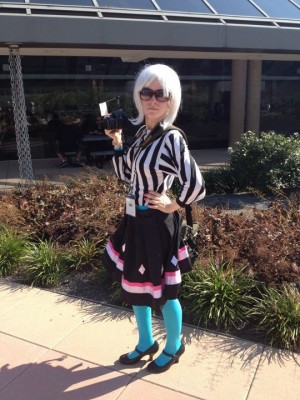
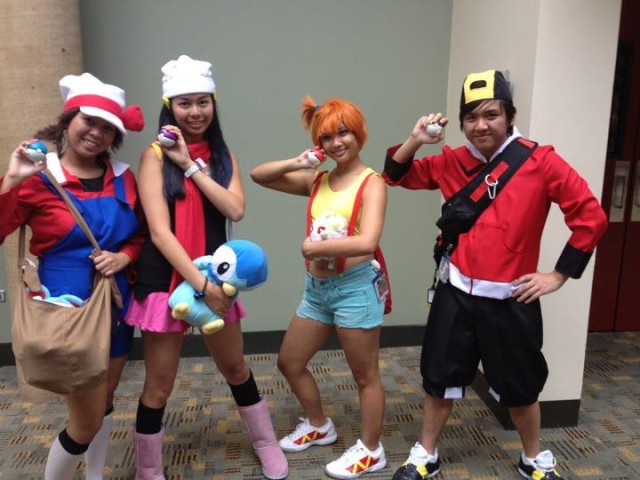
Another way in which sexism manifests itself in geek culture that was presented was through cosplay at conventions. In a survey the panelists took of 97 anime-convention-goers, 63% of female-identified cosplayers reported being harassed in some form while in cosplay, while only 43% of male-identified cosplayers did. And “nearly all respondents said they didn’t report the harassment for fear of not being taken seriously by staff.” The harassment that women faced was usually based on appearance – either being ogled if they were perceived as sexy, or told that they “should wear something else” if they were seen as not sexy enough for the character they were portraying. One girl remarked that she was surprised how much of the policing of “not sexy enough for that character” comes from other women. Others discussed how some “you shouldn’t play that character” comments also come from racism, despite the fact that black and Hispanic anime fans often have a limited number of characters of their races who they can cosplay. One person brought up the way that fans often put down Muslim women who incorporate their hijab into their costumes. Despite all this, though, most fans in the survey presented described conventions as “safe and welcoming” and thought that the anime fan community was a self-aware one in regard to the various issues with it.
Though it’s covered more in the next panel I’ll be discussing, there were also some points made about gender-ambiguous characters. While they noted that gender is often treated “as a performance” more often in anime than other forms of media, the transphobic notion that “gender-bending” characters are “traps” is still unfortunately common, both in the media itself and in the fandom’s reactions to such characters.
One girl presented that she thought that anime/manga was often sexist in terms of what it saw as “boys’ series” (“shonen”) vs. “girls’ series” (“shoujo”). While stuff that falls under the “shonen” genre encompasses a wide variety of genres and themes, from action-and-adventure to sports to fantasy to historical (take this image from the popular Shonen Jump magazine as an example), the stuff that is categorized under “shoujo” tends to mostly fall under slice-of-life/romance, or magical girls like Sailor Moon. While I thought this was a bit simplistic, the lack of variety in shoujo compared to shonen was something I found off-putting about manga after my initial interest in it as a teen. It felt kind of insulting that as a woman, it would be assumed that I would only be interested in either romance and everyday school situations, or girly fantastical superheroes, while the boys got so much more variety aimed at them. But the panelists suggested that a lot of this had to do with the kinds of shoujo that got picked up for publishing/airing in the U.S., and that as fans we could demand more variety by looking for stuff “on the margins” that reflects our interests better and making it known to the big anime/manga distribution companies.
What was really great about the panel, to me, is that Lauren and Patrick didn’t just leave us with identifying problems, but also solutions. Particularly, they gave the panel-goers tips for what to do when witnessing harassment, whether at conventions, in online gaming or anywhere else, which is that: silence often looks like agreement, and you can’t assume that someone being a jerk knows that he’s being a jerk. We need to shame sexist behavior and make it clear when we are offended, even if we think the other person might be “joking.”
Next: LGBT PANEL
The LGBT Panel
After a run-down of common Japanese LGBT terms, we learned some terminology and about the history of the different concepts of queerness. As the panelist Jill Stromberg explained, while Japanese culture doesn’t perceive homosexuality as a “sin” like in societies influenced by the Abrahamic religions, Japan’s strict gender roles mean it is still frequently seen as undesirable and abnormal. Western ideas of sexuality and gender (particularly the idea of sex and gender as separate things, where there was originally no distinction made in the Japanese language) are still new and often viewed as foreign. And despite the popularity of yaoi and yuri anime and gender-bending (but usually not explicitly trans*-identifying) characters, life is still difficult for many actual Japanese LGBT people. Stromberg shared a lot of personal experiences of Japanese queer people, of various different identities, and the backlash they’d received from family and friends and their difficulty fitting in with societal expectations.
One interesting thing that I noticed in this panels’ discussion is that, unlike Western media, of the few characters who identify as bisexual, there are more men than women. Also, we discussed how in anime, there is a sort of an inverse of one of the more common problems with queer characters in Western media: the character who is labeled as gay, lesbian or bisexual but rarely seen in engaging in any kind of same-sex relationship or affection. In anime, it’s more likely that, while we’ll see characters in same-sex relationships (including very affectionate ones), they will resist identifying themselves as any particular label. This could be seen, in one sense, as more progressive (after all, it’s not like characters in opposite-sex relationships have to go out of their way to label themselves as straight, it’s just presumed), but it was clear that it wasn’t viewed that way in the panel. It was more of a way to avoid tying these characters to the LGBT community or to the larger issues with a publicly queer identity. In some cases (particularly in a lot of yuri anime featuring young girls rather than adult women), it’s often done with the implication that the same-sex attraction is a temporary thing; as the relevant TVTropes page notes, relationships between teenage girls in Japan are often encouraged as a way to prepare them for the “real thing” (re: heterosexual relationships) later, but can be seen as “immature” if they continue into adulthood.
Some other unfortunate but common associations with queer characters in anime: Queer female characters are often shown as having strong negative associations with or histories of abuse from men, with it implied that that is the reason for their lack of attraction toward men. And while real-life same-sex relationships can often fall into a butch/femme or top/bottom dynamic, in anime this is pretty much the standard (especially in yaoi), in order to keep the relationship in line with traditional gender roles.
There was a separate discussion on trans* characters: like with LGB characters, characters who were merely “gender non-conforming” were more common than those who identified as some variety of trans* (according to Stromberg, because the Japanese language only recently began to distinguish between sex and gender, “transsexual” is still the default term in Japan rather than “transgender”). Like in Western media, trans* characters tend to be sexualized, and unfortunately, often portrayed as “traps.” Also, being gender non-conforming is often their only trait; rarely are they given development as a character beyond that.
Lastly, there was a sharing of experiences at the end of the panel, where the audience members talked about their lives as LGBT-identified or -allied otaku. Many people talked about how various anime or manga series helped them to come to terms with their identities. One common theme for queer men in the room was the difficulty of dealing with “yaoi fangirls” — women, usually straight-identified, who are huge fans of the yaoi genre and often male-homosexual-shipping in general — because many of them treated their relationships like entertainment for them, demanding impromptu make-out sessions from gay male couples. As I pointed out in my earlier-linked article about brony fanfiction, while many women are turned on by guys making out, their portrayals of it tend to be less exploitative than all the girl-on-girl experimentation we see in media aimed at men. It shows how fandom can develop its own culture with different issues from the mainstream (though, not entirely: as one girl remarked in the sexism panel, lesbians often receive the same treatment in geek spaces as they do in the larger culture about their sexuality being there for public consumption). One of the questions that was left open for the audience at the end of the panel is whether the strong prevalence of enthusiastic yaoi fans makes the anime/manga fandom more accepting of homosexuality (certainly, I know some fans who have become more pro-gay because of their love of yaoi or yuri anime) or whether the objectification and unrealistic depiction of queer men in those works only furthers stereotypes. (It’s worth noting that anime and manga portraying male-male relationships that are created by and for gay and bisexual men, rather than women, are usually classified as a separate genre from yaoi, called “bara.”)
Overall, both of these panels were incredibly informative about the portrayal of gender and sexuality in anime and manga, and what it’s like to be a queer, feminist fan of anime and manga and geek culture. While fan conventions can sometimes be a blur of gathering autographs, memorabilia and photos of your favorite costumes, occasionally you can find that you get to learn something new, too. And to me, that is the most rewarding kind of souvenir.


Comments
This was a great article to read– as someone who has been a fan of anime and manga from a young age, but likewise doesn’t identify as an otaku. I’m involved on the fringe with yuri scanlation and overall, feel the community there is self aware of the sexism.
One of the better quotes I’ve seen is that yuri and yaoi have LBGT content, without LBGT identity.
While it’s not always realistic or advocating for me (and in reality is exoticizing/exploiting LGBT experiences for $$), I do enjoy reading manga that relates to me just that little bit more. Overall, I also think that there has been a trend of more realistic and touching yuri than the previous hand-holding, our-love-is-so-pure stuff of earlier times. Which is great.
wow, this brings me back. At the peak of my anime interest ten years ago I found it really difficult to find series I liked because I basically didn’t (…and don’t) care about male-centered storylines in movies/books/tv. even the series I really enjoyed, like sailor moon, fruits basket and princess nine, had all this dude interest underwear-flashing moments I skipped over. it was probably a factor in my interest fizzling out by the time I left middle school. TBH I only follow studio ghibli releases these days, but when friends insult anime or write it off as weird I make them watch grave of the fireflies. not gonna lie though, wicked excited for the new sailor moon.
I think you might be the first person I’ve ever come across who liked Furuba but not for the boys, it’s practically a reverse-harem manga.
I was obsessed with Rin. also, I’m one of those queers who loves anything zodiac/astrology related so it was very much up my alley. I’m trying to remember if I ever actually saw the anime, I don’t think she was in it.
This is way late but I was re-reading this article and saw your comment, and I was wondering: have you read the manga Zodiac P.I.? It’s a shoujo series about a crimefighting magical girl who uses the spirits of Zodiac characters to solve crimes. I was really into it in middle school when I went through my Zodiac phase, and for something that initially looks like another generic magical girl series it’s pretty good (and actually kind of dark toward the end).
OMGosh, “Grave of the Fireflies.” Yes. But it’s one of those movies that’s so powerful I have to take months between viewings. Powerful, powerful stuff.
I’m sooooooooo happy this article was posted. ^___^ Hounto ni.
It’s true that most Yuri and Yaoi tend to follow gender norms. But it’s not always. In fact, my favorite Yuri Author Morinaga Milk always writes about Equal and long-lasting relationships between women in a completely natural way. I highly suggest Milk-sensei’s work “Chatting at The Amber Teahouse” and Minamoto Hisanari’s work “Wife and Wife”. I tried reading Yaoi, but the closest thing to it that I like may not even be Yaoi because the main character’s gender and sex have never been confirmed. (This would be the “Prunus Girl” manga…)
Then there’s possibly the greatest Queer Manga EVER. Hourou Musuko. I’m not impressed with the anime because it left out a lot of the story, though to it’s credit the animation style rocked and the op and ed were very well chosen. The main characters are a MtF Transgender and her friends; a fashion model that likes playing dress up with her, her best friend the FtM, a Lesbian that’s got a crush on the MtF, a gay kid that crossdresses, and the main’s little sister. This story gave me the courage to come out on Jan 30th of this year.
There’s actually a devoted fanbase for “Traps” that consider the term endearing.
My girlfriend and I are actually both Otaku. We met on a page for practicing Japanese in an Anime forum. I was a hikikomori and she saved me so I ended up falling in love with her.
君に注意:Dynasty Scans has all the good 百合漫画 titles in 英語。
The only yuri I’ve ever fully read (and loved) was one by Morinaga Milk: Girl Friends. I haven’t been able to find anything that was as normal and relatable as that manga was.
Have you tried Prism by Higashiyama Shou? It was pretty good albeit shorter. (and currently on hiatus.) I wouldn’t recommend that you check out any of his other works though.
Regardless of what chasers/fetishists think is “affectionate,” the word is inherently offensive. It refers to a transphobic, homophobic concept. It is a word meant to call a trans woman a man tricking other men into being attracted to her.
Anyone who cares the slightest about the welfare of trans people and pays any attention to politics knows how this concept is both hurtful personally and harmful sociologically, and is constantly used to hold back trans people’s civil rights.
I always find it amusing/eyeroll worthy how many animanga are classified as shounen when they’re clearly written either for a mixed audience or purely geared towards women. I hadn’t actually thought about it in depth before, but now I am, the labelling really is irritating.
As Brianna said, though there’s a lot of stereotypical gender roles shown in anime and manga, there really are a lot of manga out there with equal relationships or that turn gender roles on their heads. One of the first manga I ever owned in book form, as opposed to downloading or reading online, was Pheromomania Syndrome, which explores the relationship of a very tall and butch looking girl and a petit, feminine boy.
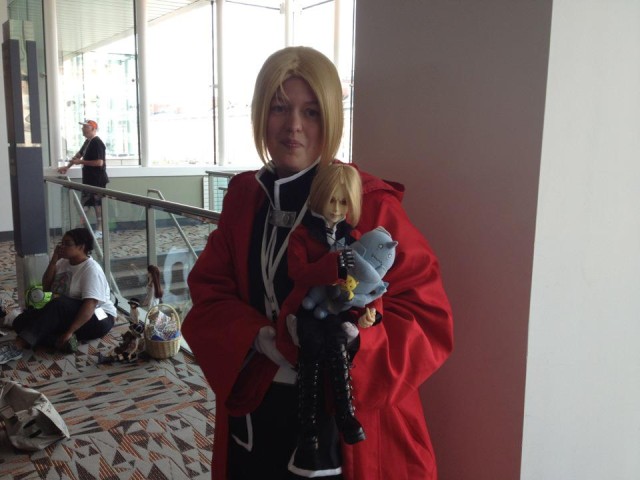
(Kind of unrelated but curious after the last photo, does anyone else on AS collect balljointed dolls?)
I always saw anime grouping to be similar to t-shirt categories. Unisex t-shirts are marketed towards guys, and unisex anime gets labeled shounen, because girls usually have less of an issue with things for guys than vice-versa.
It’s interesting, though, because I feel like in Western entertainment there’s usually more variety in the stuff aimed at girls, precisely because of this worry that boys will never accept anything with a female protagonist, so everything that’s centered around a girl goes under the “for girls” category. There is actually quite a lot of anime that is classified as “shonen” that has women as the leads (Kagome in Inuyasha, for example).
May I just say that I’ve been pretty impressed with yuri manga by Yamaji Ebine. She writes very real-feeling characters. :3
Also, I’m glad there’s discussion like this going on at cons. I haven’t been to any so far, partly out of lack of opportunity, and partly out of… well… wanting to avoid the creepier fan-people.
I was always worried about dealing with “creepy fan-people” from my sister’s con experiences, but there really aren’t very many – although that could be just because Otakon is so huge. But in general, most people who go to cons are pretty normal and also very accepting. It’s kind of like a miniature “geek paradise” for a weekend.
This is a truly wonderful article, especially for someone who’s just starting to get interested in anime.
I have to say though, I really think that everyone should watch Paradise Kiss. It was also originally a manga. In addition to being a really beautiful series, it avoided so many of the pitfalls discussed here.
I’d highly recommend Paradise Kiss and ‘Nana’ by the same author. Paradise Kiss treats the female protagonists sexuality with a far more realistic lens that your average manga. That and a strong trans* supporting character who is treated as an equal in the group, and who’s backstory segment always makes me tear up :*).
Yes, definitely. Paradise Kiss is an amazing manga. Plus, if you’re really into fashion porn, it’s the thing to read. I swear I’ve spent at least as much time fawning over the clothes as I have reading it. I also almost collapsed over the adorableness of Isabella trying on her first dress. That one scene had so many feelings for me. I just wish it had a better translation job. The intro page kept calling her either a transvestite or a drag queen.
Also, Wandering Son is an exquisite manga that is so very relatable (screw you spellcheck, relatable’s a word now) to me even though I didn’t identify as female anywhere close to the character’s age. Also, it’s got a translator that actually realizes how important it is to get it right, considering how delicate language needs to be with trans children on the cusp of figuring out who they are. Also also, I actually did collapse with feelings from the “first dress in the mirror” scene. In fact, it seems like every five minutes, I wanted to hug all the characters and tell them everything’s alright.
I’d also recommend Kashi Mashi (the title is a Japanese onomatopoeia for the sound of women talking (like chit-chat), and come from an expression that says ‘When three girls get together it’s kashimashi!).
It’s a classic body swap story in some ways as the male protagonist is hit by a falling spacecraft and the alien resurrects ‘him’ but is ignorant of human biology and recreates her as female. The part that really makes it trans* themed is how she doesn’t mind her new body at all, having always been a bit femme, but then has to confront how society will see the relationship with her girlfriend as gay (ie stigmatized), and feels pressure to like boys instead. As a trans woman I’ve felt all this firsthand…
Meanwhile her lesbian friend can only ‘see’ girls, but has always been able to see the protagonist, even when she was male-bodied – thus supporting the idea of an innate identity.
I was at both these panels during otakon and you summed up both panels very well.
I’ve been attending anime conventions for a number of years now but there i’ve never seen panels related to sexism or the lgbtq community (or i guess social issues?). So i was extremely surprised and excited when i saw these panels listed.
Initially i was worried that the sexism panel was going to be one sided (like talking about the sexism against women but not men) or there were going to be trolls and whatnot. But the panelist touched on both. And the q&a/discussion at the end was great. It is encouraging to see people want change.
It was def great to see so many people at the lgbtq panel. The panelist presented new manga i never heard of which covers the whole lgbtq spectrum. Except i was dumb and thought “hey i can remember these!”… except i couldn’t.
I also do not remember the panelist’s name… though I do remember the name sounding like they may be related to a friend…
Jill/Gilles Stromberg is my name! I was the panelist at the LGBT Panel.
Here is a list of all the animes I mentioned. These are my personal notes for the panel on this .doc, but it might come in handy for the shows you were curious about. I also mention the one I love the most in my big comment down there.
http://www.mediafire.com/?pbv9lu6h0i7qfxx
Also, I wrote an article about LGBT/Otaku experience specifically concerning Gay or Same-Gender-Loving Male Japanese Erotic Illustration, you can check it out in the Spring 2012 edition of the Syracuse Zine ‘The OutCrowd’
http://issuu.com/theoutcrowd/docs/outcrowd_spring2012
Many thanks for coming! If you have any feedback about my panel it’s greatly appreciated.
I know a lot of people wanted to have more small group discussion, and also people were excited about me adding more non-illustrated japanese media and discussions on asexuality in the future – which I’m excited to do :).
Jill, Thank you for identifying yourself. The post has been updated to give you credit.
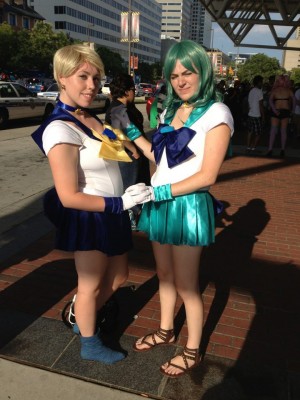
I’m not super well versed in anime or manga (though I’ve watched a *lot* of anime, especially after discovering it could be grown up and make me think, like “Ghost in the Shell” or “Akira.”) I also love anything from Studio Ghibli. But I would be lying if I didn’t say Sailor Moon made me the person I am today. I was mad obsessed with the American dub of it as a child and fell in love with the Japanese version as an adult just coming out. To this day I think Haruka and Michiru are two of the coolest, most loyal queer ladies I’ve ever seen on TV. I would also be lying if I didn’t admit I kinda want a love like theirs.
You should check out Honey x Honey by Takaeuchi Sachiko. It’s a realistic josei yuri manga. It’s one of the few that I actually enjoyed. Gunjou by Nakamura Ching is also pretty good. It’s kind of depressing though.
Seconded! Honey x Honey is awesome, more like an autobiographical comic strip than your typical manga :)
Sailor Neptune was my root.
My childhood best friend and I used to role play her and Sailor Uranus and go on “dates”
So basically Sailor Moon made me gay.
I recently found a big box filled with a bazillion old pictures I drew of Sailor Moon back in the day. Half of them depict her mid-transformation. You know, surrounded by ribbons and sparkles and totally completely naked.
Sigh, Sailor Moon made me gay too.
I’m pretty sure my experiences watching Sailor Moon as a kid contributed to my queerness too.
I had a lot of feelings for Sailor Mercury back in the day that I didn’t understand, but which come into rainbow focus now.
Also, Sailor Neptune and Sailor Uranus confused me for the longest time. Watching it as a kid, I totally didn’t buy the whole “cousins” thing and for a while thought Sailor Uranus was a guy who transformed into a woman. It was only years later when I looked it up online that I untangled the whole deal.
Turns out they’re actually lesbians. Thanks, homophobic American censors!
And you probably know this already but they also cut a gay male couple out of the first season: Zoisite and Kunzite (Malachite in the US). They were both men in Japan, but they made Zoisite a woman in the American dub in order to make their relationship heterosexual. Annoying!
I’m always amused when people say Japan has “strict” gender roles. They really don’t. Not as strict as people make them out to be.
As I said, I’m not an expert on gender relations in Japan and I’m mostly just quoting from what I learned in the panels.
It’s not that the gender roles are more or less strict, they’re just categorized differently from American ones. Things we would consider super girly aren’t necessarily so in Japan, while other things that we wouldn’t care about at all are very gender-marked.
I think the gender roles are also much more meaningful in Japan than the U.S. I’m living in Japan at the moment, and it seems like I get told “boys do this, girls do something else” on a much more regular basis than at home.
Basically, what happens in manga and anime with regards to gender and sexuality isn’t really very indicative of the society producing it as a whole.
Hello! My name is Jill/Gilles and I was the Panelist at the LGBT Convention. I heard from one of my fellow friends/future ACamp attendees that this was up on the website and I ran home to check it out.
Yes, I’m an avid Autostraddle fan and will be in the Catch 22 Cabin at ACamp in September!
If anyone is curious about some feedback or about the panel in general, I can email copies of the powerpoint as well as you can stalk me on my tumblr and check some of the feedback I responded to on tumblr.
I tried at the end of the panel to talk with as many people as I could, but the convention closed at 2 in the morning, so we went outside – through that, I felt like I lost a lot of people in the chaos. Thanks so much for this article, you really hit on the good layout of what I talked about at the panel.
also, out of all the manga i suggested, the one I just want to shout to the rooftops is Wandering Son, which you can check out here:
http://en.wikipedia.org/wiki/Wandering_Son
Talks a lot about gender identity.
Cheers~!
Rose, this was a really great article; thanks for giving us your summaries and thoughts on these panels. I’m totally digging the look at anime culture from a queer perspective.
That said, there really needs to be more discussion and understanding on these two issues in the geek subculture, as well as discussions of racism. Although lots of progress has been made, there’s plenty of room for improvement. I’m glad to see panels like these emerging in the large anime cons; it’s definitely needed.
By the way, have you heard of the Kickstarter project to host Gaymercon in San Francisco next year? They’ve made double their goal. It’s a LGBT convention for gamers! Relevant to AS readers’ interests, possibly:
http://gaymercon.org/
http://www.kickstarter.com/projects/gaymercon/gaymercon-everybody-games?ref=card
I’m totally stoked for this con! As someone pointed out, not only is this a cool way for queer gamers to connect and share a safe space, but if the con gets big enough, it’s a way to get attention from developers and let them know there’s definitely a market for queer games and queer characters!
I’m a gay guy and I went dressed up as Grell Sutcliffe, a MtF Transgender character. Even though all of my friends who went are pro-gay (although, two of them get squicked by the thought of lesbian relationships, eyeroll) most of them are transphobic. I’ve argued with them about Grell’s gender so many times and they ignore the author’s clarification on the matter and stick to transphobic arguments. Its really sad and infuriated me, but I didn’t want to ruin the trip by arguing with most of the people…