





You used to be able to finish social media.
Facebook’s feed used to stop when it ran out of posts from pages you follow. Instagram used to tell you that you’d caught up on recent posts and any further scrolling would contain recommendations. Reddit’s feed used to be split into pages and you had to click a button to see each new page.
Social media used to have built-in pauses. We could actually finish a session of scrolling. Every social media site has removed those pauses or launched without them. Their marketing divisions couched this change in language of ‘improving the user experience’ and giving you more of your favorite content’. It’s a laughable prospect. Our well-being doesn’t matter to social media corporations because we are the product being processed and sold.
The 2020 docu-drama The Social Dilemma declared: “If you’re not paying for the product, you are the product.” This is universally true for social media. Building data infrastructure that freely delivers seamless entertainment to hundreds of millions of people is not a sustainable business model. Social media profits by directing eyeballs to adverts. That requires holding our attention.
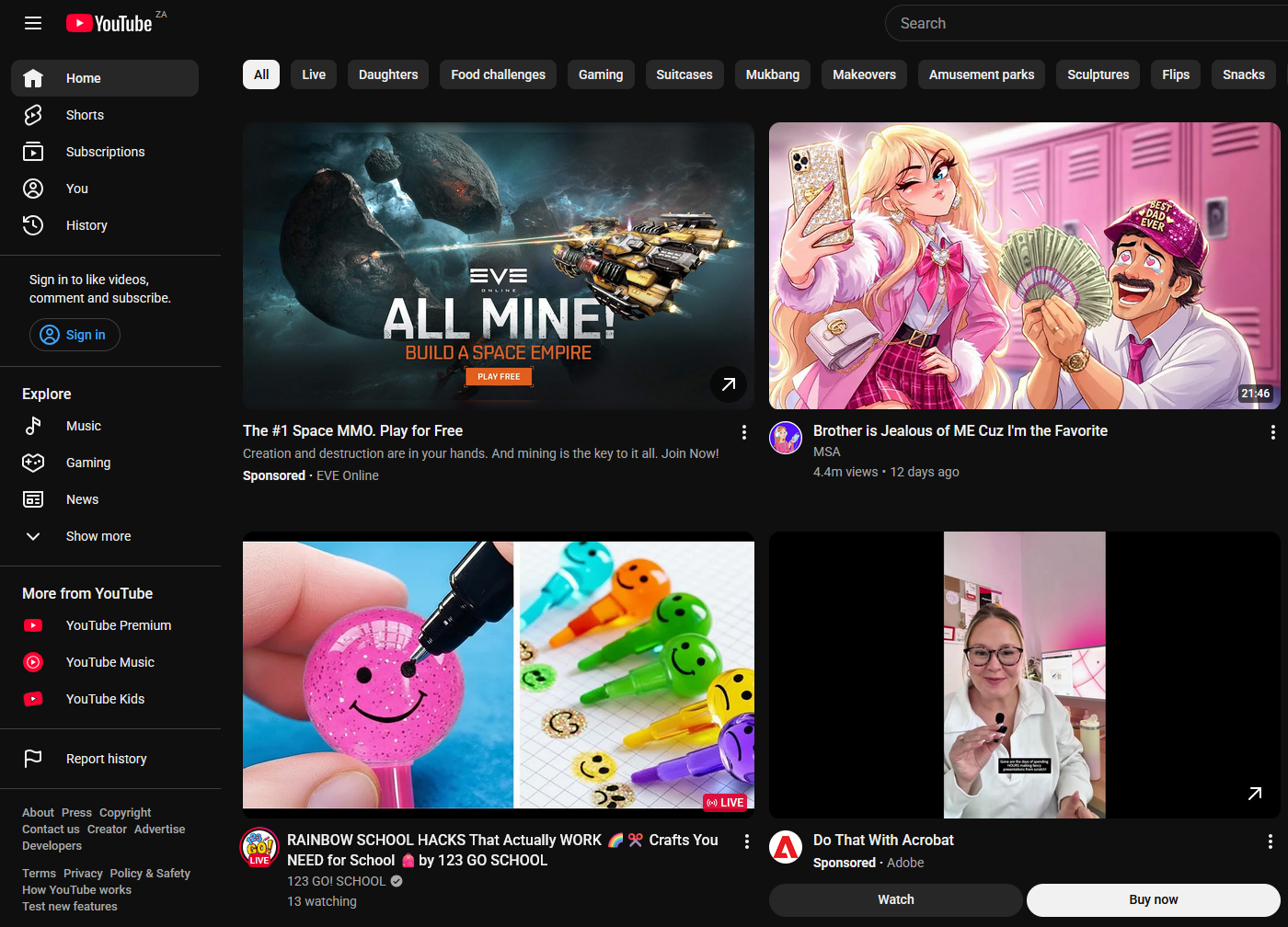
I spoke with psychotherapist Megan Collins for this piece, who says this of the attention economy: “Your attention is currency. Someone is spending it — and it isn’t you. You aren’t the customer, you are the product.”
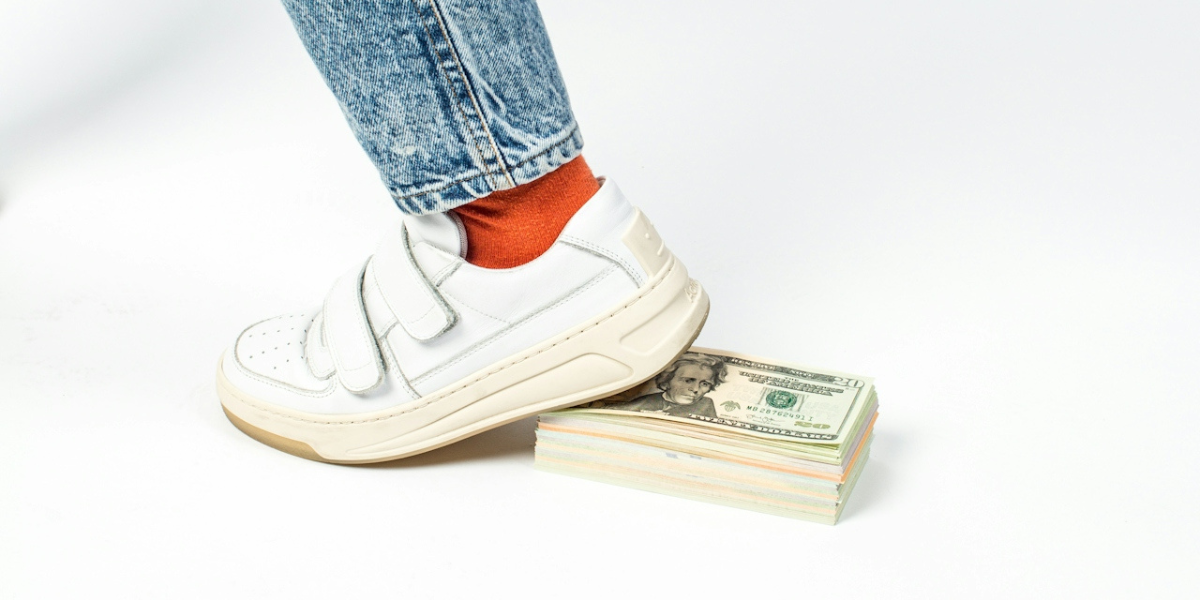
Social media giants call us users, members, and fans. We hear sweet epithets like Redditor and BookToker. When the company fucks up, they pull out big guns like the community and you. That’s all PR swill. They don’t like us because we’re not buying anything from them. We’re eating up their expensive computational resources. All we give to the company is attention that can be sold to marketers. We’re not users. We’re used.
I first felt the attention economy when some news outlets on my RSS Feed began listing estimated read times on articles. I found it funny, but it was the start of something insidious. Legacy media had learned that people’s attention was becoming scarce and valuable, so they began marketing articles on the basis of being easy to digest. A ‘4 min. read’ was something worth fighting for.
By the time they got onboard, legacy media was too late. Smartphone proliferation already made fast, exciting content the new norm. “Smartphones put dopamine machines in every pocket,” Collins says. “Algorithms learned what kept you scrolling, and free apps turned out to cost something after all, not just money. The infrastructure to hijack human focus was fully built, globally scaled, and endlessly refined.”
Once the Consumerist Engine that Devours Attention revs up, companies remove the guardrails that gave their apps a veneer of respectability. We experience this as enshittification.
An app launches in good condition and rockets to ubiquity over a few years. Once it acquires a critical mass of eyeballs and attention, the mask comes off. It gets more ads. The ads become unskippable. They roll out a ‘premium’ subscription with demanded features and a user experience that used to be free. They massively overstep boundaries for profit. They get sued and settle for peanuts when they’re caught. Every social platform follows the same business model and it doesn’t matter to them. Once the system purposefully engineered to be addictive is rolling, it has all the inertia it needs to sustain itself indefinitely.
If you use social media, you’ve seen this happen in real time. I can’t name a single social media app that’s given people a better experience over time. If we were truly users and clients of social media companies, intentionally making a service worse while gaining profits would be completely contradictory. In truth, the social media experience only worsens for the ones being mined for attention and value. It’s been great for the actual clients: advertisers.
Social media giants stumble, but they seldom fall. TikTok dethroned Instagram as the main visual social media app, but Instagram wasn’t destroyed. Tumblr banned porn—the business equivalent of placing a toothpick under the big toenail and kicking a brick wall, but it still exists. It’s been more than a decade since Facebook was cool, but Zuckerberg’s spawn has never once needed resuscitation.
We’re only ‘fans’ and ‘community’ insofar as it keeps us around long enough to drive revenue. Social media is the only industry where the produce is buttered up while alive—before it enters the machinery of its demise.
“The prefrontal cortex, which manages impulse control and long-term thinking, isn’t fully developed until the late 20s,” Collins says. It’s not coincidental that social media giants are engaged in a perpetual bar-room brawl over the precious teen-through-twenties audience. She lists the results as, “anxiety, depression, compulsive checking, sleep disruption, and a generation learning to measure their worth in likes.”
I keep referring to the ‘old days’ of social media because people younger than 25 may have missed them. Younger generations grew up in an online environment that’s already been enshittified. Their internet exposure began during the downhill descent into advert saturation and attention harvesting. Remembering a better online experience before Tinder had ads and SponsorBlock wasn’t mandatory on YouTube gives me a defense against the worst excesses of the attention economy. New inductees to the internet—especially teens—might not have those defenses yet.
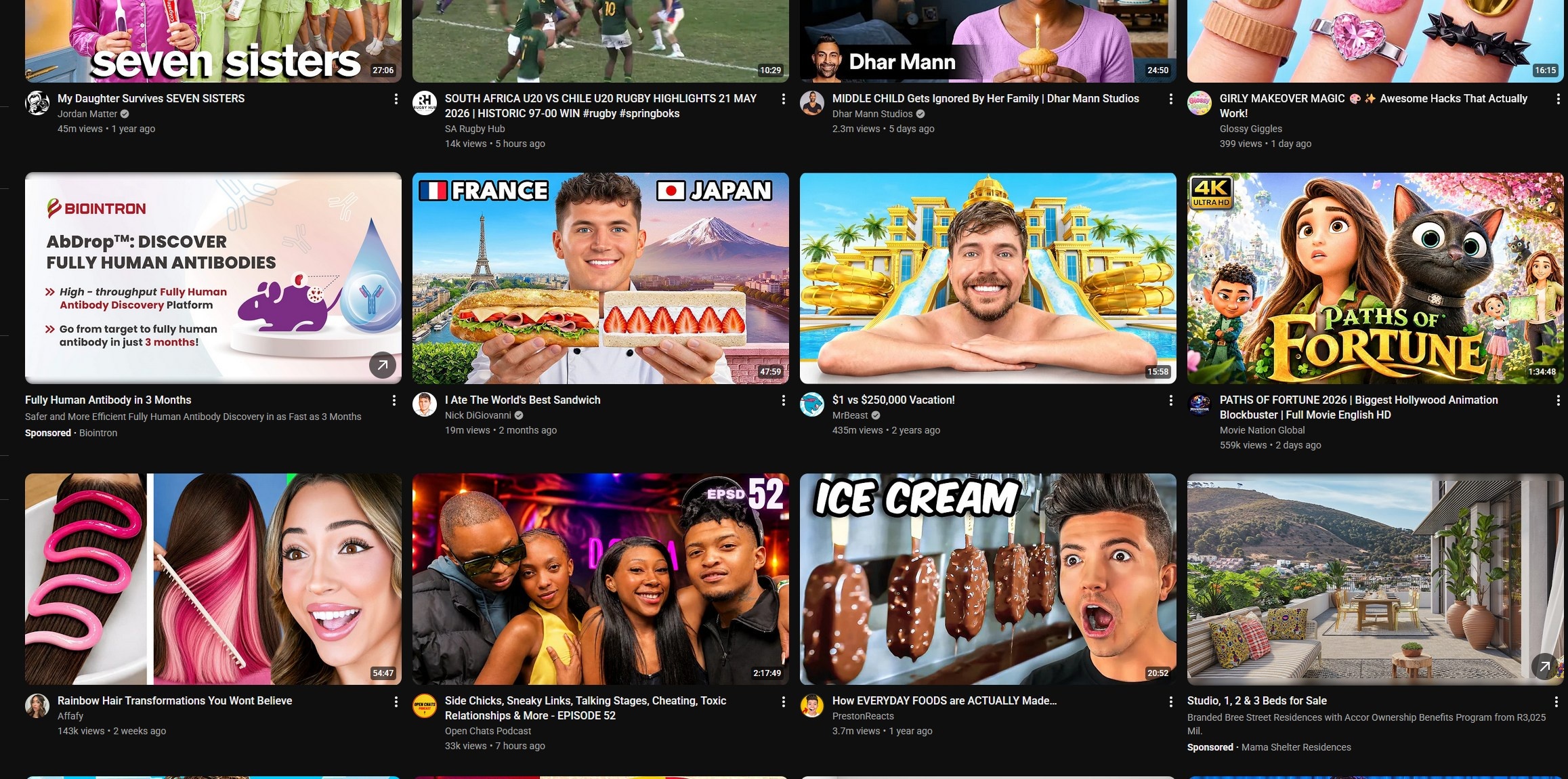
Insidiously, the main tools used to sustain and exploit our attention target on our most human facets. Effective social media content preys on humor, emotive arguments, priming, anxiety, and solidarity. They latch on with an eye-grabbing motion or a pop of color. They prime your emotions using written emotions or emojis (😂😮😂). The presenter is approachable or relatable to manufacture a sense of community. By this point, they already have your attention. The actual content is secondary to the goal of retention, but it will always have a build-up and a punchline.
That framework is foundational to social media content. It’s constructed by creators to be engaging. It’s served by platforms with billion-dollar incentives to optimize it. By the time it reaches us, it’s nearly irresistible. We’re just one ordinary person facing an industry of exploitation much bigger than us. The calculated nature of attention harvesting is why I don’t begrudge people who use social media more than is healthy. We’re not mentally frail or lacking in resilience. We’re unerringly human and businesses seek to exploit that.
I faced this realization when I noticed my pre-bed and morning phone time were getting longer. 2026 hasn’t been emotionally easy (relatable, I’m sure), and I’ve been retreating deeper into my scroll. Reddit and Instagram are my preferred poisons, but I found myself hitting up threads well past the point of enjoyment just to feel something. My sleep suffered accordingly. And although I don’t prescribe a lifestyle of productivity-at-all-costs, Instagram Reels are the least productive thing I could possibly do. Napping, eating, housekeeping, nuzzling a pillow, or anything else would be better. The rational part of me knows that, but ripping the screen out of my hands still proved difficult.
Ever the pragmatist, I won’t leave you with a call to action and no doable tasks.
First: Know the enemy. Identifying the tools of attention harvesting shows their true colors. I find that developing a healthy contempt for these mechanisms is a good way to respond to the contempt we’re treated with.
These pointers are all drawn from my conversation with Collins.
“Infinite scroll kills your stopping point”
It’s impossible to ‘finish’ social media without conscious effort. This is by design. Every social media UI is laid out to provide an endless stream of content via Recommendations, For You, auto-play, or just scrolling. Even shopping apps and sites have caught onto this. The only off-ramp from scrolling is equipment failure or direct action. The power to stop is in our hands, but we have to push the button.
“The algorithm doesn’t show you what’s true or good”
Social media and news media have long realized that emotion holds people far longer than plain facts. Every platform defaults to pushing content that’s emotionally charged or emotionally primed. Emotionally primed content front-loads emotion using emojis or embellishment in the thumbnail (you won’t BELIEVE; 😂😂; THIS). Emotionally charged content has an impassioned tempo throughout that keeps viewers aboard long enough to reach the creator’s pay-off—typically views, engagement, or an advert.
“Notifications are weaponized loss aversion”
Loss aversion is a tendency of people to avoid a perceived loss, even if it’s inconsequential. It’s potently weaponized via Fear Of Missing Out (FOMO), which pushes the viewer to act quickly for a perceived benefit. That ‘benefit’ could be a discount, not ‘missing out’ on future content, or losing touch with current events. These ‘benefits’ usually have no material value to the person acting on them and primarily benefit creators and platforms. Weaponized loss aversion is visible everywhere on social media, but is best seen in app notifications. Notifications aren’t meant to notify as much as they are designed to exert pressure that pulls people back into the app for another round of attention harvesting.
“You’re not weak, you’re outgunned,” Collins says. “The ability to put your phone down isn’t a character flaw. It’s the intended outcome designed by a behavioral scientist, refined by billions of data points, with one goal: to take up more of your time calling in an addiction and blaming yourself. This was engineered.”
That’s entirely true. Thankfully, we aren’t at the point where Zuckerberg, Chew, or Mosseri can break into our homes, peel our eyelids up, and force us to watch their streams for two hours per day. That’d be an ideal world for them, but we’re not there yet. Here are some ways to resist the constant siphoning of your attention, time, and energy by social media.
Anything else is a better use of time
Best case scenario: Engaging with social media entertains us while subjecting us to a flood of advertising that will eventually win out. Anything less than being actively entertained means that we’re giving our time and attention to marketers for no benefit. Every other activity I can think of is a more beneficial activity than social media use. And I’m not about to recommend you take up running or try a new meal prep regimen. Any low-energy recreation is still preferable. Music, birdwatching, lounging in bed, reflecting on the past month, petting a creature. None of these are immediately ‘productive’, but they’re all better than directionless screentime.
Get antagonistic about it
Social media presents a content landscape of relentless positivity and enjoyment to conceal its damaging nature. If you’re not paying for it, it’s not a ‘feature’. It’s bait. Features are for paying customers, shareholders, and advertisers. For the person being used, social media is fundamentally condescending and exploitative. The damage it’s done to our societal fabric justifies anger. Be angry about the time and money we’ve lost to platforms that siphoned our psyche dry. If connecting the evils of a platform to a mascot like the CEO or founder kills your next scroll, do it. The internet ecosystem of 2026 is engineered too well for us to disengage without anger and resentment. The hooks are set too deep for that already.
Cull your notifications, follows, and ads
This isn’t a guide on how to stop using social media. Social media is too ubiquitous for most people to cease. But we can always make ourselves less pliable to its influence.
- If you regularly use more than two social media apps (yes, YouTube is now social media), turn off ALL notifications from your single most-used app.
- Then go through your less-used apps and turn off their notifications until you only have two apps that are allowed to send you notifications at all.
- Think about the attention harvesting techniques I wrote about and block pages you follow that use them excessively. Don’t unfollow. Block. Make it final.
- Go into the dusty Settings section of your apps and find the Privacy and Ads settings. Set all of your Privacy settings to the tightest possible, deny any permission to serve you targeted or ‘relevant’ advertising, and delete any accumulated user data the site has.
None of these steps will stop your social media use. Stopping doesn’t have to be the goal. These steps establish a confrontational relationship with uncaring corporations that have already gained the upper hand against us. They’re the first step from being used to being a user.
ACAB, but so is every social media platform. There are no good ones. BlueSky began as the anti-AI ‘good guy’ alternative to X and look where they ended up. Social media deep-fried our attention spans and mauled long-form media while making itself indispensable. Internally, every platform progressively worsens itself to maximize profitability. They enshittify themselves internally while also enshittifying every society they touch.
Megan’s parting words to me were: “The attention economy hits hardest where vulnerability already exists. For these communities, it can shape identity, community, mental health, and safety. The fact that these same platforms are also genuine lifelines makes the exploitation harder to name and harder to leave. That’s not an accident either.”
I still find myself agreeing when I think of how social media has helped me by finding useful information and good friends. However, the cost of that was immense. I’m finally regaining the energy to claim some of my attention back for my needs, and so can you.



Comments
Another easy thing to try is setting your phone to grayscale. It makes it much less addictive.
I did a 4 week phone fast earlier this year and it was EYE OPENING. I gave up using all entertainment apps on my phone. I’m not on social media at all but I was spending a lot of time mindlessly killing time – mostly with books and games and blogs.
I had actual withdrawal symptoms the first week but I also immediately noticed improvements in my mood and anxiety. I used the Dopamine Nation workbook and I worked with my therapist.
Now that my dopamine fast is over, I’m able to use my phone more in moderation than I was. Keeping it on grayscale and using a blocking app helps.
Can we stop spreading the vast oversimplication that pre frontal cortexes are not developed until our twenties. Brain development is much more complex than this and neuroplasticity means that brains are developing throughout our lives.
This oversimplification has been weaponised to attack childrens’ rights and take away gender affirming healthcare for trans youth.
Yes, this article has pushed it back from the already oversimplified 25 to “late twenties”, that really stood out for me – and not in a good way.
I appreciate this take/contemptuous posture.
I am a huge opponent of social media. I don’t have a single social media app on my phone (unless you count Spotify) and I don’t have an active Instagram, TikTok, Reddit, or Snapchat account. But……. the tone of this article is pretty weird from a media site.
“Social media profits by directing eyeballs to adverts. That requires holding our attention.” Isn’t that true of…. well, all free media that doesn’t require a subscription? Even queer media websites?
“Every platform defaults to pushing content that’s emotionally charged or emotionally primed.” Like titling your article “Our Attention is Being Harvested”?
I’m not opposed to the message necessarily, although I WOULD argue that the goal should be, first, advocating for better privacy laws and laws that require more social media user freedom to turn certain settings on and off (including infinite scroll or recommended content), and second, yes, stopping your social media usage entirely.
That being said, the hypocrisy is off-putting and it undermines the whole thesis, especially because it’s never acknowledged. It makes it seems like you’re putting words in order without really thinking about what they mean.
That caught me initially too, it’s difficult when media critiques the concept of media. With independent media though, the design isn’t to get you addicted and the product isn’t attention for more ads.
The product is community. It’s fostering intellectual thought and discourse. It’s queer resilience.
Oh – and once you’ve removed your apps, delete your web browser off your phone entirely. Seriously. On an iPhone you can remove Safari as an allowed app in your Screen Time settings.
We useful information given in this article just like this website : https://www.webaitechsolution.com . please checkout this gem.