





Sometimes, you see a book and you just know it’s one for you. For me, it seems the requirements are a thinly-veiled innuendo for a title, an ultra-queer specificity in its themes, and a plot that teeters on the edge of absurd.
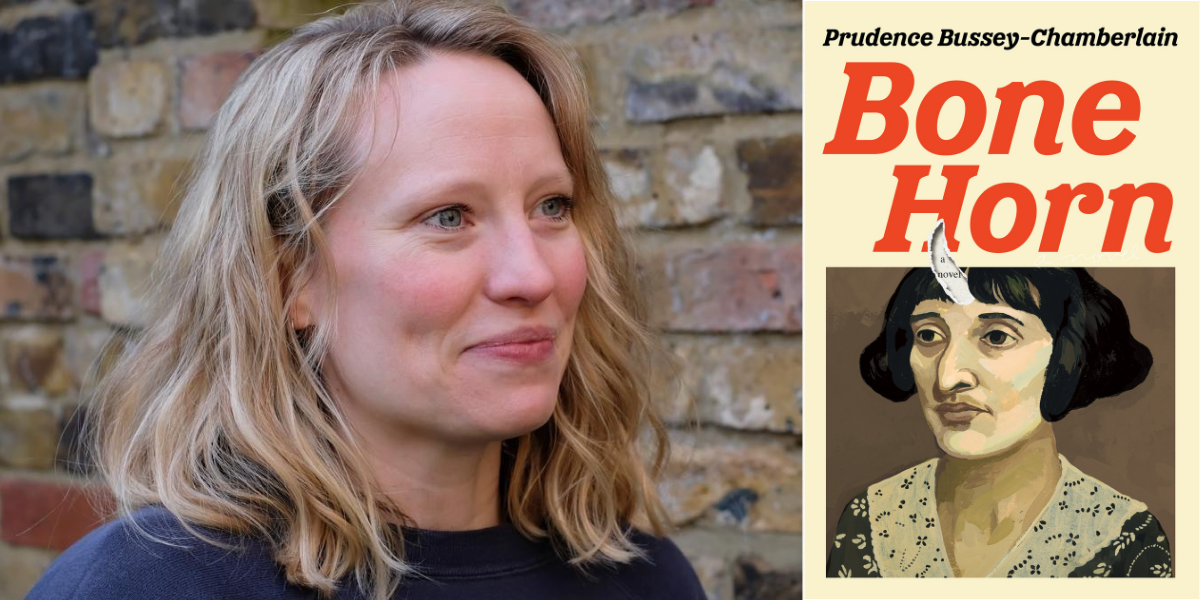
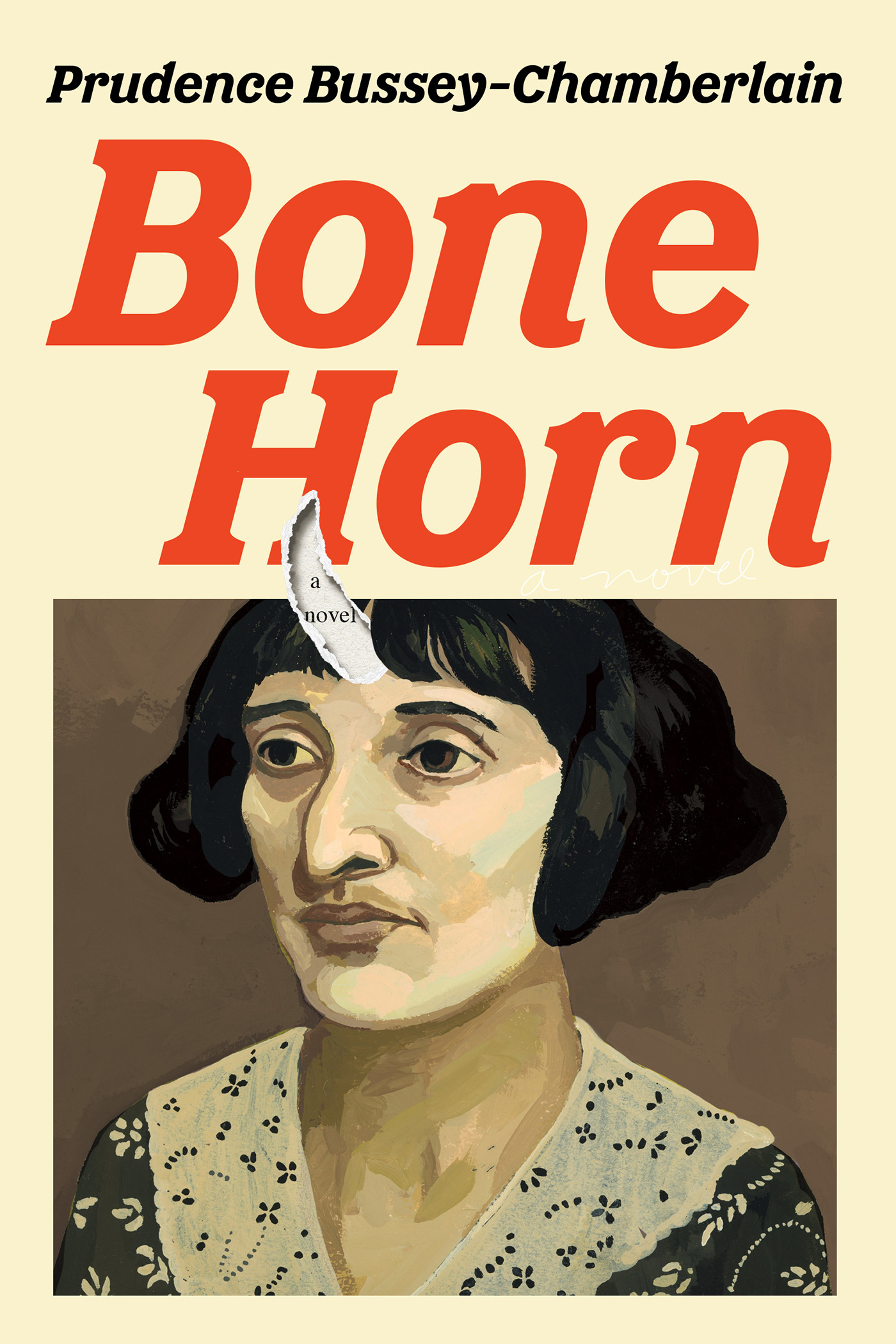
Enter: Bone Horn, from debut novelist Prudence Bussey-Chamberlain.
When a private investigator gets an anonymous call asking her to track down the putative horn of Alice B. Toklas—de-facto wife of literary legend Gertrude Stein—she is impelled by spiralling childcare costs to take the case. But this PI is not quite like any you’ve seen before: She’s a nameless ex-academic with dubious detecting skills but excellent game.
Slurping up her client’s generous expense account, our heroine is soon off to London, Paris, San Francisco and New Haven to dig deep into the personal lives of perhaps the most iconic lesbian couple in history, meeting an impressive array of suspicious queers along the way.
Despite an investigative approach that mostly comprises light Googling, light bondage and heavy introspection about her dead wife, our protagonist makes a series of discoveries encouraging her, and us, to wonder if the tales of Alice’s horn are so strange…could they be true?
Ahead of the book’s release in the US, I was lucky enough to sit down with the author at Brighton’s Crossbar to discuss queer literature, how detectives have sex, and lesbians of history who were obsessed with their dogs. So it was just like any other Friday afternoon, really.
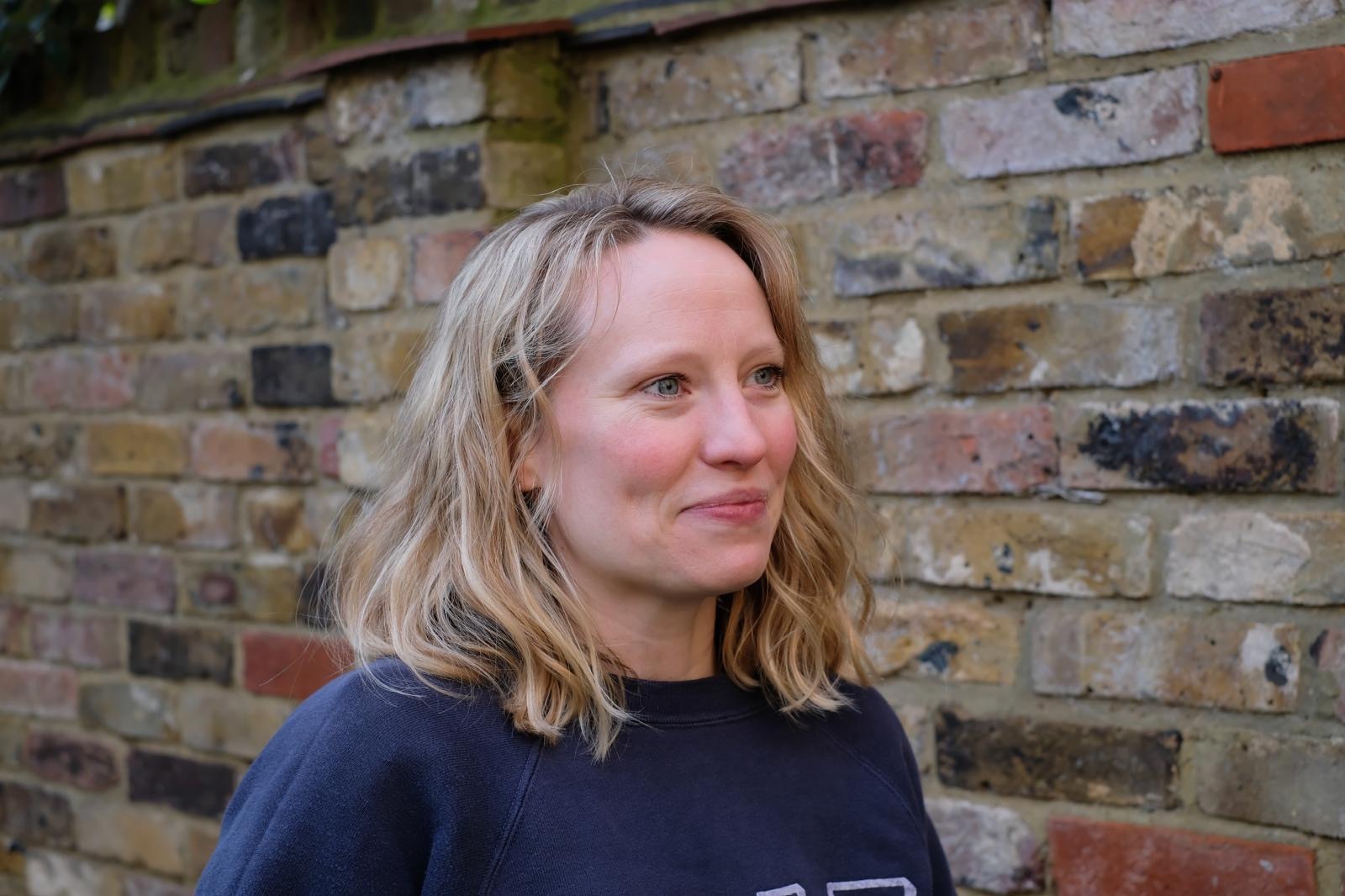
Autostraddle: So, initially I suggested we meet in a queer bookshop. Very appropriate for having deep, meaningful, literary conversations. Then you’re like “I want to go to the lesbian sports bar! That also doubles as Brighton’s answer to The Planet!” So I want to know: Did you want to come here because you were desperate to catch some women’s football or were you wanting to see some lesbian drama?
Prudence Bussey-Chamberlain: The drama, yes.
Was it also because I had to walk down Dyke Road to get here?
It’s great, isn’t it.
Well, it’d be exciting if we did get some lesbian drama.
And would you be generating the lesbian drama?
[Gestures to the bar, empty but for two roaming dogs] I’m not sure how I will generate the lesbian drama. Maybe the dogs could have their own little canine lesbian drama? You’re facing the door — you keep your eye out for anything that happens.
I will. If somebody comes in crying, that will be a really good starting point.
So, some book related questions! Tell us a little bit about your history with writing because you’re a poet and you’ve published academic work as well. Take us through the journey of what’s taken you up to the novel.
My day job is that I am an academic and I work in a university and I teach creative writing. My undergraduate course was in experimental poetry, and then I carried that through into PhD.
In London, where I was studying, there is such an amazing poetry community. I read Eileen Myles at that point and Frank O’Hara, and then poetry was the only thing that mattered. I always say to my students, because I teach poetry: Why would you think anyone wants to read a sentence of yours?
I’ve just always loved poetry so much. Enjoyed reading it, love writing it. The thing I was interested in most was a light-hearted or flippant poetry. What I’ve written about is this idea of poets using a serious political engagement as means by which to be light-hearted or to turn away from seriousness in order to make it more pronounced or emphatic. I felt like poetry did that really well because of the speed at which you can walk into it and walk out of it. Whereas that sustained light-heartedness across other forms of writing seems, to me, really difficult to pull off. I think people do, but I think long-form makes it hard to seem light-hearted. It becomes almost comedic.
It’s really interesting that you mention that because with the novel, there is a deadpan, comedic aspect to the plot, skewering various different genres and themes. That’s counterbalanced by these devastating aspects of grief and the practicalities around child care. The contrast between the two really makes the more serious parts hit home more.
I think it’s something that I’ve tried to think about first with poetry. You look at people like Eileen Myles who has such a serious political commitment and always has. Their presidential campaign, for example, they’re so serious in its integrity, but all of their promotional work is done with their pitbull, and it manages to be this kind of amazing combination of the two.
I’m really interested in that idea, I wrote a book about it. I turned to Gertrude Stein and wrote about Lifting Belly. It’s kind of her big lesbian, long poem, where lifting belly is the sex act between her and Alice. It was put out by a women’s press and it had this amazing introduction where it was talking about Gertrude Stein referring to herself as Caesar. It was saying: is it Caesar because she’s the emperor? Or is it because she loves Caesar salad? I thought, how amazing is that as an introduction to the publication? Maybe that’s the crux of it. It’s that question, and these two things need to sit in coexistence.
Was it the idea that came first and you thought this is going to need a novel for it?
It came about because of three things, there was this kind of confluence.
For over a decade, I’ve had a running joke with friends about Alice’s horn because I have genuinely read about it in a book that she had a horn, and then I could not find the reference anywhere. I was part of a panel that did a talk on modernist lesbians, and afterwards I emailed all of the panelists and said, “Does anyone know where this reference to Alice’s horn is?” Diana Souhami was on the panel and said “It’s my book, it’s right at the start.” And I was thinking “it’s been on my fucking bookcase this whole time!” So I spent years joking with friends about trying to find Alice’s horn and how would we track it down.
There was another moment where my wife and I started brushing our teeth and she was talking kind of unromantically about trying to dislodge a piece of duck. I went off to sleep and I had this moment and thought, oh, I would love to write a poem about that. And I thought, that specificity of the duck, even with flippancy, I can’t poem that. So I wrote it down in a notes app and held on to it.
Then Cipher Press set up in the UK, and I was reading all of their books and I loved everything that they were doing. After a little while, maybe after reading their fourth release, I thought: “I’m gonna write the duck in the teeth / Alice horn book with them in mind.” Because I don’t know where else that would go. But it was literally reading Cipher and then having these fragments of things, having always been paranoid your partner might drop dead, and then wondering about this horn for so long, that came together and thinking, actually, I’m just gonna write it.
“Every queer loves an archive.”
The title: I love a book that says what it is on the cover. Was there any pushback?
No, there wasn’t push back. It’s also not my title. I was telling a friend about the book, that I couldn’t think of a title, and he said, “Call it Bone Horn.”
And I thought: “That’s awful. I have to.” And so the title was born. It’s just the right level of innuendo, I think.
Well, it worked on me. You could argue the book maybe is a little bit niche. Who did you have in mind when you were writing it?
I was thinking about people who write about archives, and queer people love archives. So I think I’m going to get that archive crowd.
That massive queer archive crowd. They’ve just been dying for this book.
Every queer loves an archive. Which kept me going on darker days. I’m not entirely sure, but I knew with books like Lote by Shola Von Reinhold, and I’d also read Briefly, A Delicious Life by Nell Stevens and I really loved that, and I was thinking when you approach an agent and you write in the letter “on a shelf it would be next to…” there are enough books that I felt people might read it.
I also was thinking about this idea of the grieving lesbian quite a lot. I think that even if you don’t love archives (and then your queer card should be revoked to be honest), people love sad lesbians.
That’s interesting, because thinking how perceptions of queer characters have changed over time I feel like maybe sad lesbians have gone out of vogue? Are you bringing them back into fashion?
Just as the book was coming out last year I had a student who, in a seminar, went “why must the lesbian grieve!” And she was spot on. But the lesbian must. That’s the rule. I don’t know if you watched this, but one of my formative first ever [queer] films I watched was If These Walls Could Talk 2.
Yes, oh my God, I cried so much! The bit with the older ones?
Yeah! It was awful, awful! So maybe the lesbian must grieve because that was my formative experience. But then you think about the Well of Loneliness, and my favourite Jeanette Winterson was Written on the Body, and I guess there was this idea that lesbian grieving is also a space that I can write into where there’s massive precedent there.
I don’t get the vibe from the protagonist that she’s necessarily sad. She comes across as being just overwhelmed. She’s constantly thinking about her dead wife. But the way that she acts, it’s still very matter of fact: I’m getting on with it, I’m finding all of these other weird things to do to fill this massive big gaping hole in my life. She’s not crying and wailing and doing all of those traditional grieving things, is she?
I wonder with grief whether it actually needs time to settle into grief, and in the first instance, it might just be shock. Also shock combined with motherhood, I think changes what the mental capacity is to do what a traditional version of grieving might look like. Then there’s a question thinking about this character, maybe longer term beyond the life of this book, well, what does that grief look like as time passes? What does it look like when it settles into actual kind of mundane bruise-type grief rather than this immediate shock? I think there’s something really interesting about lesbian motherhood but also lesbian PIs as well that I think has a lot of fun to it.
It’s also thinking about how those two things intersect with grief. As I started writing it, it was that confluence of things, but there are so many tropes. You think about James Bond’s early trauma, all of these people have an early trauma.
Yes, you expect with these grizzled detectives they’ve all got a dead wife, usually murdered by a serial killer that’s going to show up at some point.
Ideally.
But in this case, it’s quite mundane the way that her wife has died, in a way that she can’t do anything about. Usually, a detective has their case of the week, and then they’ve got this arc going on to take revenge or solve the mystery of her death, but our protagonist has just got to deal with whether Alice B Toklas has a horn or not.
At what point did you decide that you wanted to be riffing on the detective genre? Are there any nods to lesbian detective novels as well?
I really love genre writing. I was talking to a colleague about it the other day, I was joking that poets can’t plot. And that’s why you write crime fiction.
I think there’s something really interesting in the beats to follow, but then what you choose to populate it with and how that might make you think about the structure differently without actually pulling the structure apart at all.
I’ve always really enjoyed reading crime books, but particularly long series. So ideally it will get up to book 21, there might be a carryover across two or three books, but often there’s a real kind of finitude to these things. It’s like the kind in Buffy—one episode: bad, season: big bad. I kind of wanted to play with that.
I’m listening to the Jane Lawless series at the moment by Ellen Hart. Jane Lawless is a chef, who also detects. I’m really interested in lesbian detectives always having to have second jobs. Whereas you get the dead-wife grizzled detective who this is his life’s work. Then you take it outside of that sphere, and it’s people who are grieving in a way that is also anchored in the domestic because the grizzled detective doesn’t wake up and clean the coffee cups, right?
No, he’s an alcoholic. There’s no dishes to clean. Because he just drinks vodka.
There’s no care in his life. So it consumes, there’s no second job. Whereas, I love lesbian detectives where they have actually a primary job.
It’s always a sideline. Like, I’m a high flying archivist and I happen to solve crime.
Yes, exactly. So I’m really interested in that idea of ill-equipped lesbians, detecting.
I’ve been looking for a career change. I think that’s going to be it. I could be an ill-equipped lesbian, detecting.
The big thing is not to career change but do it simultaneously.
You’re right. I just need to find the time.
So, I really enjoy long-form mainstream detective stuff. I like the familiarity of it, you know exactly what’s going to happen. Within the last sixty pages there has to be a violent encounter that is then resolved. I find those formulae really fun and really interesting.
How did you find plotting? You’ve mentioned the constructs of the detective genre kind of made it easier, but was that daunting going from poetry to a novel?
To begin with, I wanted to write a book about somebody who’s a PI investigating this, but also a mother and so they never have time to do any investigating. Ben Pester and Nell Osbourne have written books in the last year that do this amazing job of taking on work and extending and prolonging it beautifully, this sense of the mundanity, the absurdity of work, and I don’t have that brilliance. It’s acknowledging that I can’t turn childcare into two hundred pages of not-detecting; I just don’t write prose well enough for that to be interesting to anyone.
So then she ended up having to detect things. I needed an actual detective story, so I sat down and I did, beat by beat, here are the 45 things that I need to write.
Then I got halfway through, and I realised I still didn’t quite have an answer. Was it a horn? How did she find out? What does she do to find out definitively, or try to do? What’s my moment of violence towards the end? The big drama? How many more people tangentially related to Gertrude Stein could she meet at that time? That was really hard.
There are quite a few sex scenes in the book. We quickly start to expect that when the protagonist meets any vaguely toppy queer, there’s gonna be some action. Is this another subversion of the detective or spy genres? Because we’re all used to e.g. James Bond meeting a woman and you know he’s gonna have shagged her by the end of the scene.
Yeah, I was playing with that. Like the grizzled detective who’s lost his wife, who says “fuck everyone,” or even “fuck everything!” and doesn’t give it a second thought. I really like the idea of subverting that kind of dominance and that virility we normally see.
Also, Gertrude Stein was really interested in working out the bottom nature of people. So I was also playing on that. What if we have a detective who is just such a bottom?
I hope there’s something that is funny about this totally predictable “Oh, they’ve met a vaguely toppy queer, I know what’s gonna happen” and for that to become almost so repetitive as to be ridiculous. Like the whole premise of the book, to become kind of ridiculous. But also to think about this detective who’s not just got these terrible methods of detection, but is also, kind of, “okay, then, let’s do it!”
How do you make time for writing with your day job and young kids?
Part of my job is writing and we have academic holidays where actually we should be doing more writing. That helps and probably makes writing a more realistic possibility for me than anybody else. Also the fact that I have a wife, and a wife who does an incredible amount. We’ve spent years working on what shared labour looks like when you have children and recognising that it’s an ongoing discussion and evolution but you do that work for each other. That makes a massive, massive difference.
Is she your Alice B Toklas?
I feel like she’s my Alice and Gertrude
All rolled into one? That’s pretty good.
Yeah, the best and the best parts. So that really helps.
Something I thought about a lot when I started writing it is that we have parent groups where some of you have kids that go to hospital and some of you have kids that do not go to hospital. And the experience of parenthood is entirely different if you have hospital kids.
If you have a hospital kid, you’re doing a different version of parenting to people who just send them to nursery and pick them up from nursery. With the sleepless parents and the hospital parents and ongoing condition parents, you don’t depart from that sense of the early need in the same way that other people do.
So I was really interested in that as well, and you almost stockpile it so that when you sit down to write it’s like an exorcism rather than needing the time to do it; it’s ready to unfurl. That’s also why [the book] starts with that and has a hospital scene really early on, like a childhood chest infection. I like it also as an interruptive plot point, and I like the possibilities of that, that it actually stops things.
It might introduce this sense of mundanity and, for detective fiction, slow things down. Because the male detectives were never responsible for their children. They don’t take it in turns to do the hospital or the vaccinations. So I like the idea that it’s doing that work of making it not a fluid escalation of action.
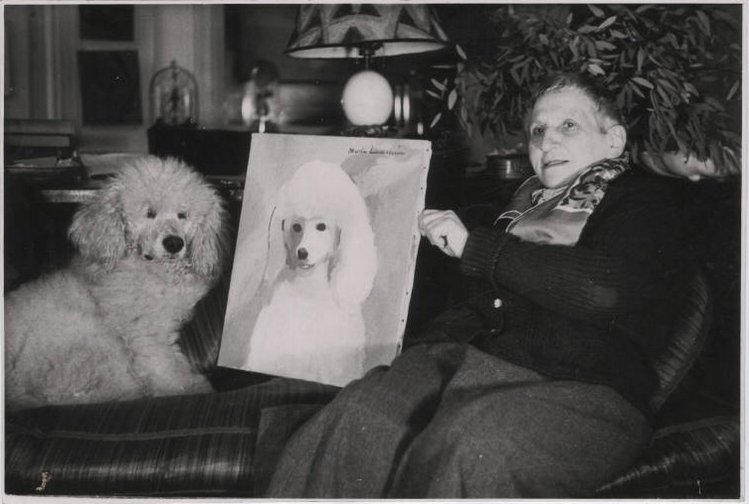
My entry point to Gertrude and Alice was via their dogs. So I have an important question: Which Basket was the best Basket? (note: for yet-to-be-educated readers, Gertrude and Alice had two resplendent poodles, Basket I and Basket II)
Second Basket. Because what a devastation to be Basket Two. Like the grieving lesbian, I can’t turn away from the devastation of Basket II.
So you sympathise with Basket II because you think that he’s stepping into a void?
Yeah, I think so. To be named after the thing that is lost. They really did love their dogs, and that’s a burden. To call it Basket II, that’s an unresolved grief gesture I would say.
But that’s on behalf of Gertrude and Alice.
Yeah, but then what does the dog do with all that feeling? To be a giant poodle in the centre of all this grief?
I don’t know, I think they liked Basket II more because Basket II was nicer in nature than Basket I. My initial instinct was yes, I think Basket II is the best. So you do win the prize for guessing that. I’m not sure that your working was entirely correct, but you got to the right answer in the end.
https://media.autostraddle.com/uploads/2018/08/basket_looking_at_basket.jpg?w=749
One of the things I love is the height. When you see them walking through the street and Basket the dog comes up to chest height on both of them and they’re in their tweeds. Funnily enough, in publication week, I took our dog out to the park multiple times where there was a giant black poodle being walked by a short grey-haired woman, in Brighton, chances are lesbian. I was texting Jack and Ellis [publishers at Cipher Press] saying a black poodle keeps running across me, I’m gonna see it as an omen.
An omen, like a black cat crosses your path. A black poodle being walked by a lesbian is like the queer equivalent.
It is exactly that.
The end of the book leaves it open to there being more cases in the future. Do you think you will return to the world of Bone Horn?
I’ve got an ideal core that I wanted to investigate, and I want there to be an escalation of right-wing politics as the baddy.
Do you think that the heroine is going to have to learn some proper skills this time?
I’ll probably have to do some research into what can one do to become a good PI? Like, what courses could one take, how would one train?
What would her training montage look like?
Probably really half-arsed. But I think also the interesting thing about lesbian PIs in primary jobs is that it often is incidental. Listening to the Jane Lawless series, I spend so much of my time saying “what the fuck are you doing?” And it sometimes seems like blundering in without withholding enough brings people out, because people think this surely can’t be a strategy.
Is she still going to have international travel?
Yes, so it will be American. This one is about Emily Dickinson, her archives, and the wildly problematic ownership of her hair. It asks how far people will go to protect the heterosexuality of their nation’s treasures, how little do conservative heritage organisations want to know their history, and are threesomes really the way forward?
Well, these are questions I definitely want answered in life. I am very excited for what comes next!
Comments
i laughed the entire time i edited this btw
This is a highly serious literary interrogation!!!!
My view is that books like this are important because they expand representation while proving that queer stories do not have to fit a single mold. The novel’s combination of detective fiction, historical references, personal grief, Sprunki and comedy sounds both entertaining and thought-provoking.