





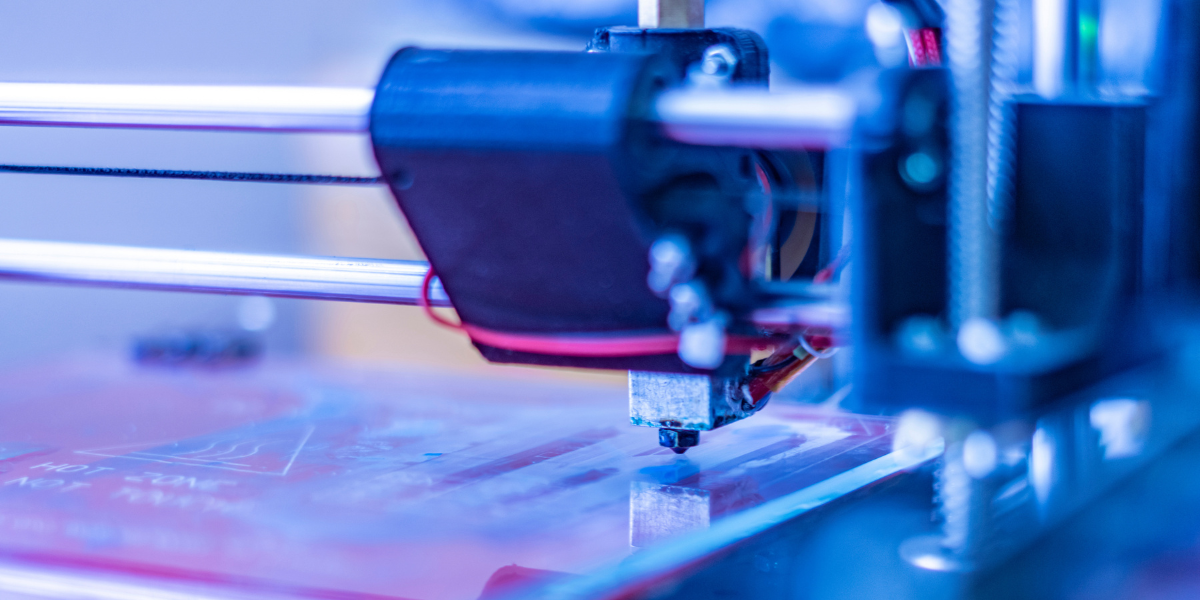
The idea of a machine that can make stuff in my house has stuck with me since my earliest exposure to sci-fi. 3D printing was the realization of the dream, and I had my eye on the field since the 2010s when the first consumer-ish grade printers were starting to appear. It took until last year for my living situation to settle to a point where I could justify the expense of this childhood interest.
No, sex toys weren’t the first thing I printed on it. But a comically small buttplug ornament did pop off the bed within a month. Unsurprisingly, it’s more difficult to get workable 3D objects than to operate a laserjet. Conversely, my 3D printer connected to the wifi on the first try and has jammed once during a whole year of operation, so it’s actually more reliable than the regular printers I’ve owned.
What nobody tells you about 3D printing is that it has more to do with engineering and functional design than operating a home appliance. It is tiny-scale manufacturing in your home. You’re fiddling with raw materials, 3D environments, motion physics, and lots of confusing settings. The one I bought is particularly well-regarded for its reliability and I still have to get into the wires sometimes. Owning this kind of printer is a continuous learning experience. The only way to make it more complicated is to get body-safety involved.
Which is exactly what I did.
Oh no, she tried it at home!
One of my best friend’s kitchen aprons depicts a stick figure running away with its head ablaze. It’s captioned Oh no, he tried it at home! That message is etched into my brain as a warning about the inherent risks of messing around with heat-extruded plastics and my body. I will disclaim once and disclaim firmly:
Nothing I write in this article constitutes best engineering and medical practice. My activities are neither advice, nor advisable. 3D printing and sex acts are inherently risky, and I accept these risks in my personal activities. Every day is a good day to not replicate my actions.
I’m a material girl
The most common type of consumer 3D printer uses Fused Filament Fabrication (FFF) technology. It runs a long filament of material (usually plastic) into a print head that melts the material into liquid. The liquid plastic is then extruded (squeezed like toothpaste) precisely in lines to form the model. An array of precision motors and software monitoring controls the process. That’s my kind of printer.
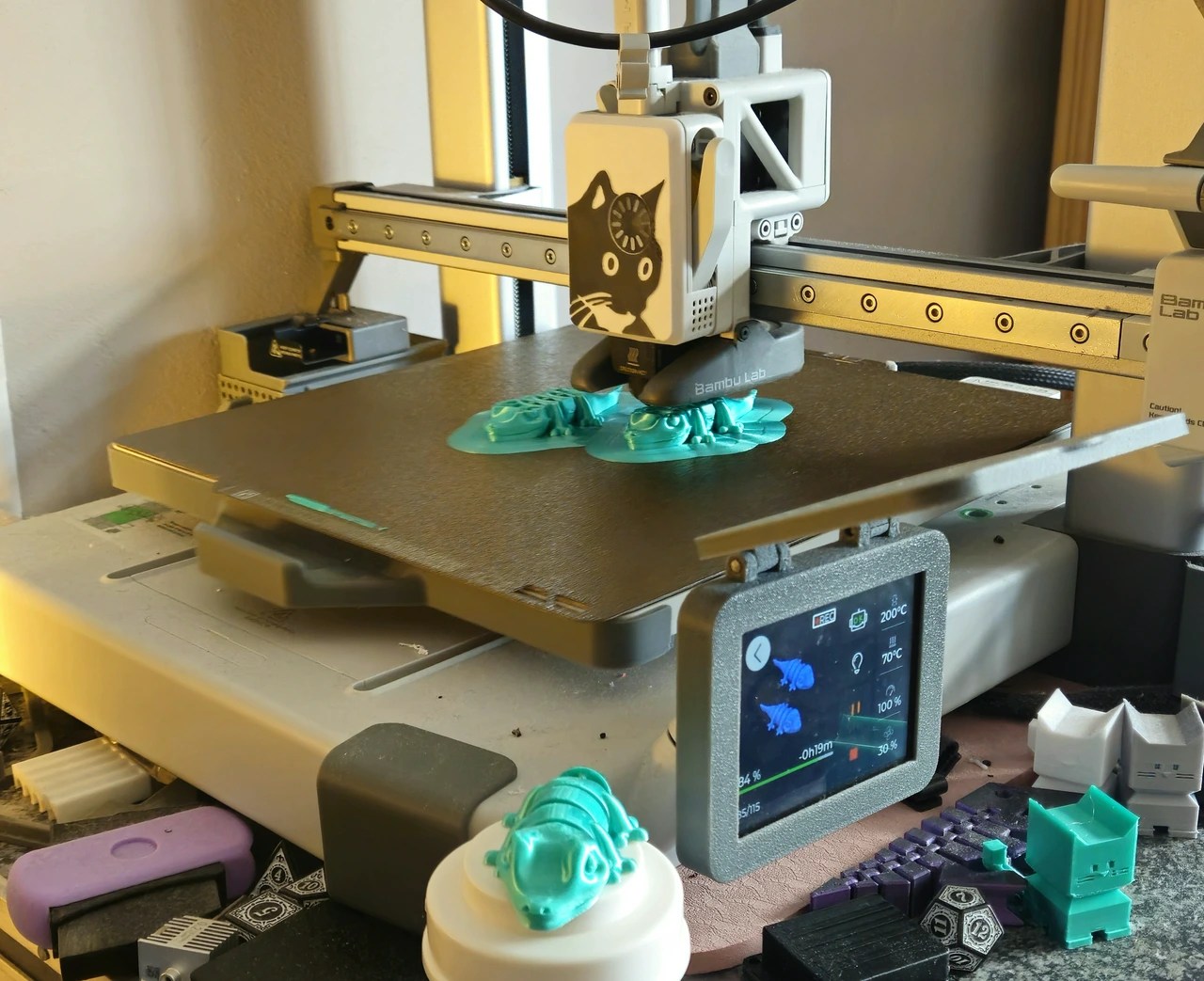
Even entry-level 3D printers are enthusiast appliances. The current era of home 3D printing is kinda like these years of home computing. They’re not particularly cheap, and you need at least a hobbyist level interest or a relevant job to justify getting one. Having one makes me ‘that girl with the 3D printer’. My visiting friends love to see it in motion and occasionally request a print. Truthfully, I bought it to tinker and just make things around the house. Kitchen storage knick-knacks, makeup organization, this really fun toothpick dispenser. I also planned on printing stuff for my tabletop and board game hobbies because that just seems like a good use for my time and disposable income.
Being an online sex worker, my mind inevitably drifted to alternative applications for 3D printing. After a few months of using the machine, I had a pretty good understanding of the limitations and characteristics of its results. I’m a naturally curious person who knows how to interpret a material safety sheet. Wife material, basically. I’m also a human being living in the year 2025. That means if I started charging the microplastics in my body rent, I could probably afford my own rent.
What I’m saying is: I was willing to take an informed risk on printing sex toys.
Raising the bar
The first thing I realized about 3D printing sex toys is how discerning I became when I was making things that might have to enter my body. I’m okay with taking informed risks. I’m not okay with strands of plastic being deposited into my body for fun. Home 3D printing is usually imperfect. Broadly speaking, this technology trades off product quality for versatility. A multi-million dollar plastic injection molding system can mass-produce perfect… remote control casings every time. But it can only produce that and if you want to make anything else, the production line has to be reconfigured. My printer can make a lot of things in small volumes and to lower standards. Small volumes are okay for insertable toys, but low standards are not.
My first sex toy prints were marred by ordinary print imperfections that would have made them dangerous to use. Small burrs and strands of detached material were now unacceptable. It took dozens of failed prints and setting adjustments to get usable results. By this point, I was pretty confident in external toys (e.g. chastity devices). The problem came with insertables.
I mean, what is the safety profile of inserting home 3D-printed plastic into yourself as opposed to mass manufactured plastic?
That’s a complicated question. For starters, the sex toy industry is practically unregulated. You don’t know which exact materials are being used in any toy. The manufacturers aren’t obligated to tell you. There is no regulatory body in the USA (and probably most of the world) that can test products and enforce rules. Any use of an insertable sex toy is an informed risk. The risk is probably marginal and probably offset by having good healthcare (which Americans don’t have either, eh). But there is a risk.
Material information is one area where 3D printing actually defeats mass-manufacturing. 3D printing is manufacturing and users are very finicky about the composition of our prints. Every tiny detail can contribute to print failure or success. In some jurisdictions, 3D printing materials are classified as chemicals and regulated accordingly. Therefore, manufacturers publish safety data sheets with material composition, risk profiles, safety guidelines, and known effects on the environment.
And after reviewing the relevant safety data sheets for the materials I was using and referencing them against environmental studies (yes ladies, she is single), I decided that it was reasonably safe to stick it into my body. The main material I use is PLA (polylactic acid). It’s a bioplastic (derived from plant matter) that typically breaks down into fairly harmless lactic acid in the human body.
However, material safety is not static. It’s very dependent on the nature of the material and how it ends up interacting with people. H₂O at room temperature is a chemical that sustains our lives. Drink too much of it and your life is at risk. Steam is still H₂O, but it can cause immediate and serious injuries.
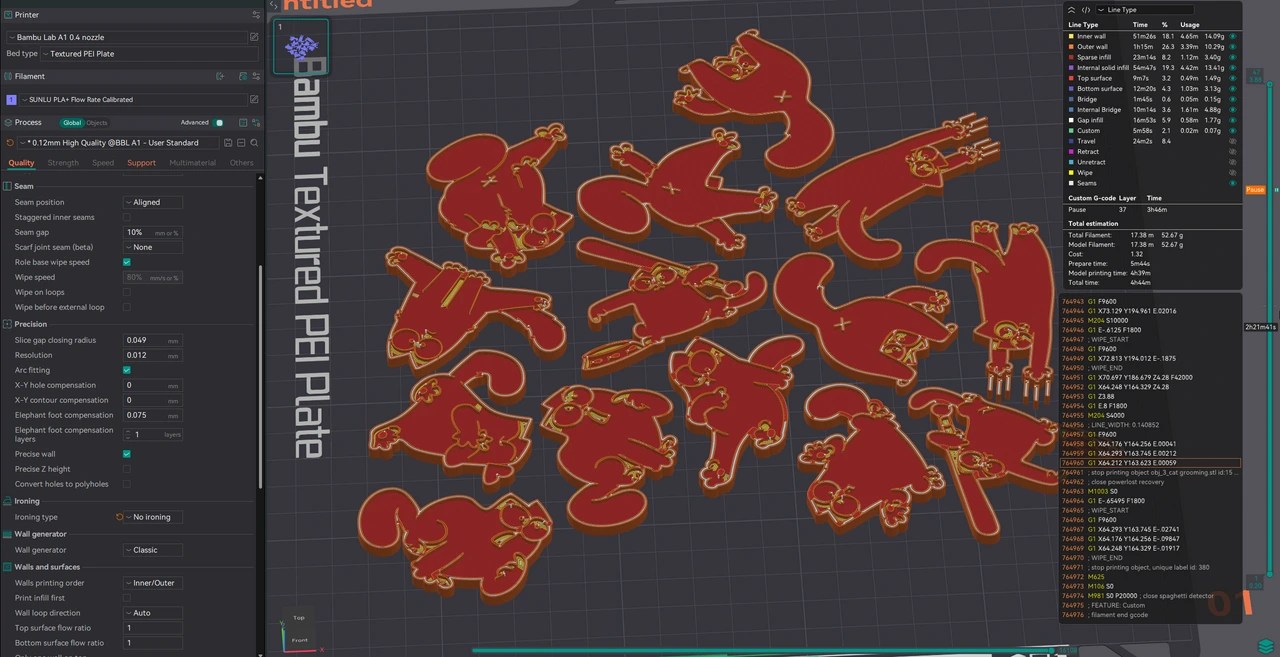
A complete print is very different compared to its string-plastic origins. It’s made of hundreds of layers of paper-thin plastic fused to each other. Those layers harbor lots of bacteria. The uneven weld points between each layer can also weaken or degrade over time, thus shedding plastics and opening up new avenues for bacterial infection. These issues are why PLA itself is technically food-safe, but PLA prints are not considered food-safe.
I really did want to make a successful insertable though. Just for the novelty.
My solution came courtesy of my nature as a germaphobe: anti-microbial coatings. Plenty of household paint manufacturers produce paintable, anti-microbial coatings. They’re usually marketed to families to make countertops and walls more sanitary in the presence of pets and children. The formulations are durable (to cling to walls and survive cleaning), and the anti-microbial additives kill most surface bacteria and fungi. They’re also paint-like in consistency and I reasoned that they would apply in thick-enough layers to smooth out some of my print layer lines.
This is where the fun begins.
Success is a moving target
So what can I bring to this most absurd of show-and-tell presentations?
Penile chastity devices
My longstanding kink for chastity is held back by the expense of chastity devices. I understand why: They’re specialized sex toys and often need to be personally sized to the wearer. My solution was to print them at home. If the 3D file’s creator didn’t already provide sizing options, I just resized them in-situ and got to test them at will. Penile chastity devices were my first successful sex toy projects because they’re used externally and only experience passing contact with bodily fluids (so do spoons and mousepads).
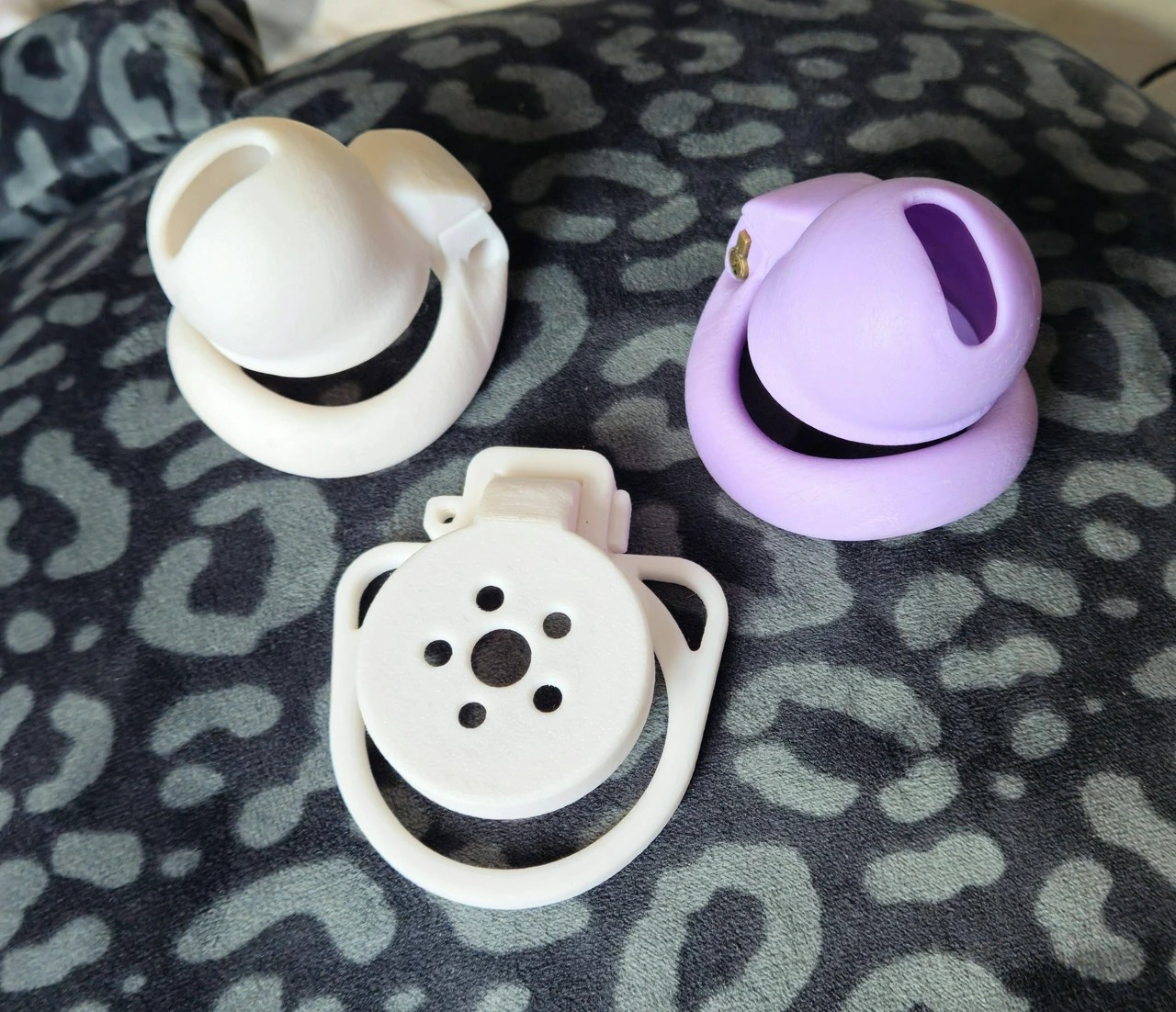
I now have a collection of these toys that would have boggled my mind a few years ago. All of them have a bespoke fit to my body, and I can have them in whatever colors I want!
Custom-sized insertable prostate stimulators
My most successful insertable toy was actually a set of several. You see, prostate stimulation is an activity with an excellent reputation, but poor implementation. It feels great, but it’s anatomically dependent. Nobody knows where their prostate is, or what it needs without experimentation. Why blow away cash on half a dozen prostate stimulators of various sizes when I can just print a few and size myself up?
After locating a suitable model, it was trivially simple to line them up and print them. Two dunks in the anti-microbial coating followed. I could then test each one for fit and comfort before arriving at an ideal size for Summer’s future prostate toys. Mission accomplished.
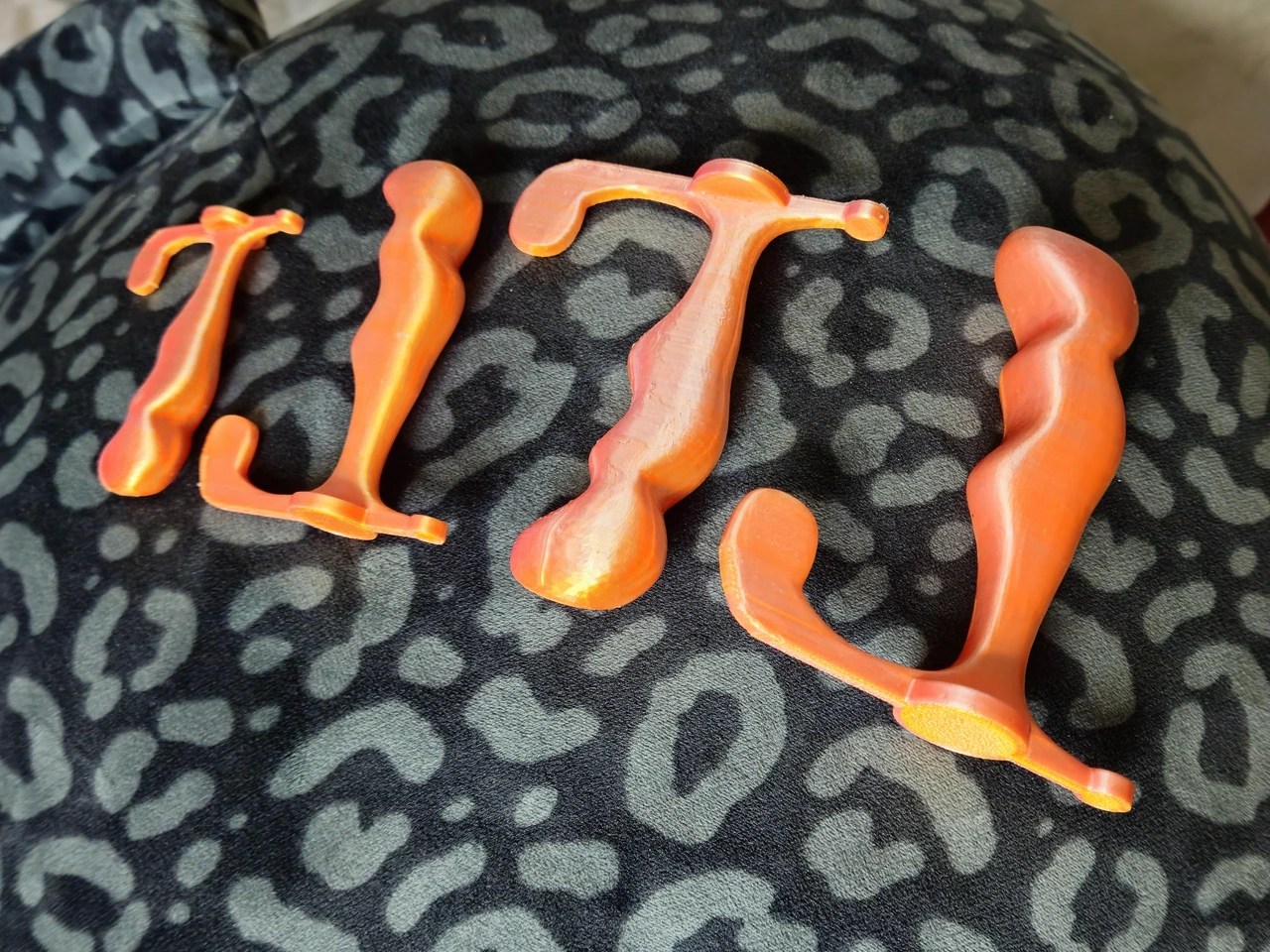
I never made these with the intention of long-term use, because they’re too spindly and fragile to machine wash. Nevertheless, they did their part and taught me something about my body while proving the capabilities of my little printer.
Shower enema nozzle attachment
This is actually my greatest success story and it’s not even a sex toy (I don’t have an enema kink).
Online sex work requires maintaining the illusion of perfectly clean and accessible sex partners. Sex performers objectify ourselves (or are objectified) into things that perform at maximum sexual proficiency for the viewer. There are no odd smells, no lubrication shortfalls, and most importantly no colonic mishaps during anal sex. The ‘clean anal’ fantasy requires lots of prep, and I’ve tried many approaches. Mass-produced enema nozzle attachments for the shower tend to be expensive and impractical to clean. They don’t always fit the shower, and poorly-made ones shed metal and plastic flakes in use (very bad). Of course, you only find out that they don’t fit your shower and will shed plastic flakes after it’s paid for and not returnable.
I took everything I learned from this unholy endeavor and poured it into a project that is nothing short of a mental health boost: a custom-sized enema nozzle shower head attachment that can be machine-washed.
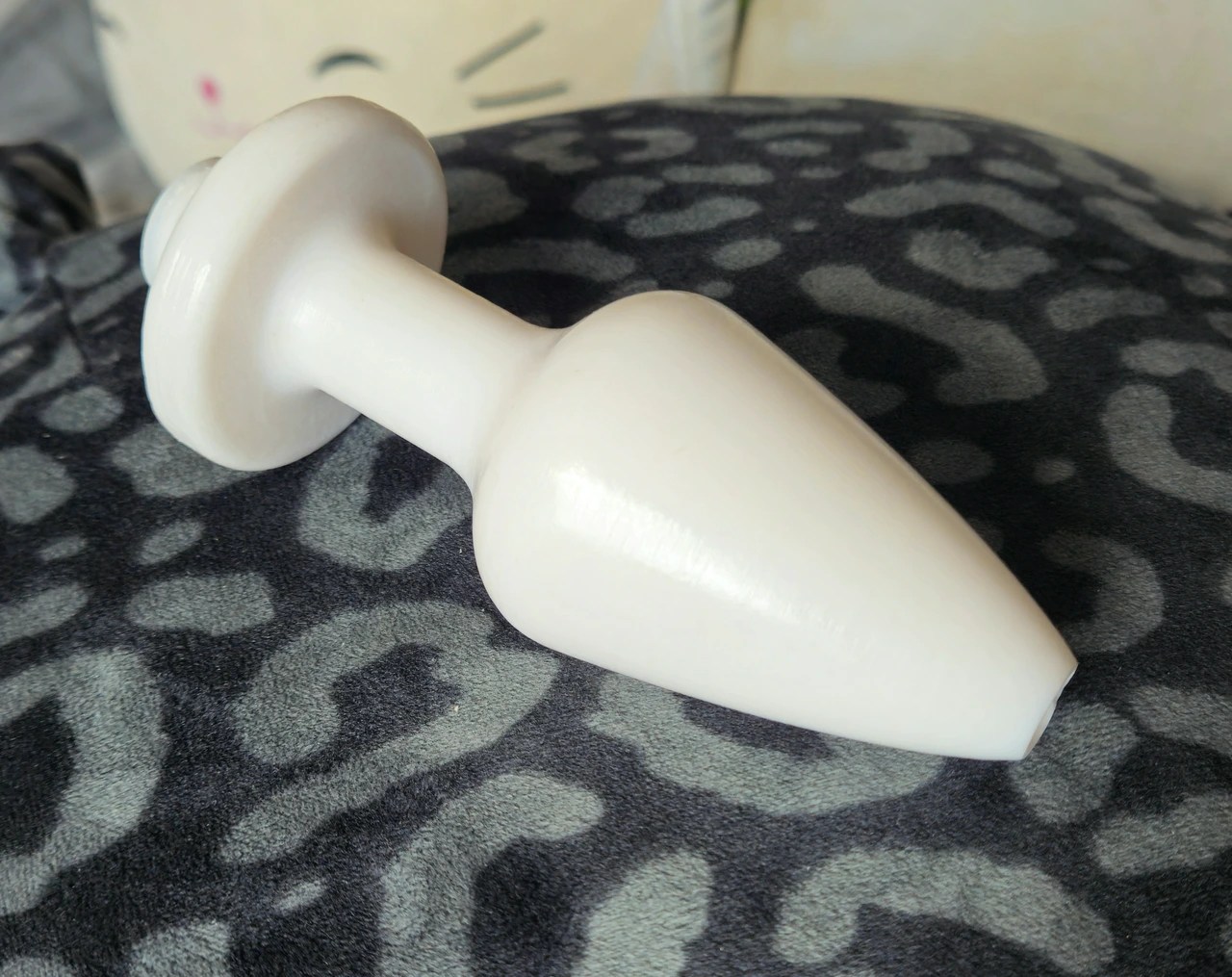
The original file is buttplug shaped because the creator made it for enema fetishists who wanted insertion. I didn’t need to insert it fully, so I just resized it to match my bathroom plumbing perfectly (it took two tries). Then I dunked it in several layers of anti-microbial coating, something that simply wouldn’t work on a completely smooth metal product. After every use, it goes into a delicate laundry bag and gets yeeted into the washing machine. Anything that survives the anti-microbial coating gets annihilated in the washing machine and I don’t even have to clean it myself. I just keep the shower scrubbed and it’s all taken care of.
If you made it this far, then yeah, you did read an unabridged autism info-dump about key considerations for home fabrication of plastic sex toys. This is the kind of weirdness I abide by in the world.
I embarked on this experiment because I wanted to learn about the safety of 3D printing and sex toys. Critically, I don’t believe it’s possible to make a truly informed consent decision about sex toy safety because they’re unregulated. There isn’t enough information about the materials and methods used in their production to make an ‘informed’ decision the way you can with medication side effects or a cheeseburger. Deep dives into material safety data sheets and manufacturing processes made that knowledge more accessible to me.
I still don’t feel comfortable with the absence of regulation in the sex toy industry. This experimental jaunt has actually made me more nervous because I should not be able to make something comparably body safe in my house. Sex toy users deserve better for the money we spend. In the absence of that regulation, I will always make it my business to educate people on how to make better decisions about what to stick inside us.

Comments
“Custom-sized insertable prostate stimulators”
Great, can’t wait to try!
Oh, wait…
A fascinating journey, thanks for sharing!
So interested… my Hubby has been You Tube obsessed with 3 D printers, and he is saving up OT $$ to buy one once our close closes later this month!!
I used to work as a Sex Toy Dealer, doing home parties, for 3-5 years and and am one of the first pt time dealers that asked if my Hubby could attend shows with me!! Usually these parties are filled with women, shy ones, bi ones, straight ones, all nationalities and all occupations. My Mom, Sis, Cousins, Aunt and now my Sweet Sexy Hubby (25+ yrs together) who helped me survive full body radiation and chemo after a Leukemia diagnosis in 2014, and helps me daily living with Chronic Pain and GVHD symptoms after a Stem Cell Transplant, gets to come watch his wife in ACTION, selling and upsetting a lube, then a full double disco, a sex swing, exotic plugs and the famous RABBIT 🐇 🐰 from early 2000’s, that had gyro beads, rotated in multiple directions, along with ribbing and a CL T stimulator!!! I have always been exotic in my love life… always want to try new things… and NOW I am excited to have my Sexy Man, father of our 2 sons, print us plugs and toys and see if they are good or bad!!! Thank You for answering my Q’s!!
Sorry, my Hip is OUT, and I am on muscle relaxers right now and had 2 full cups of coffee ☕️ today!! Lol…
* Once our HOUSE closes… ✔️ ✅️
* Selling and UPselling… ✔️ ✅️
* Full double DONG ✔️ ✅️
Never stop exploring and learning, my Gramma and Mom used to say (RIP) !!! And I will always explore new ways to communicate in my life, my love life, and find new ways to excite each other and make each other experience pleasure and have FUN together! It can be a walk, a beach day, a sexy outfit, a new swing, a special song, and now a 3D laser printed sexy toy!!! Woohoooo!!!
Can you recommend any sites for 3D models of toys?