





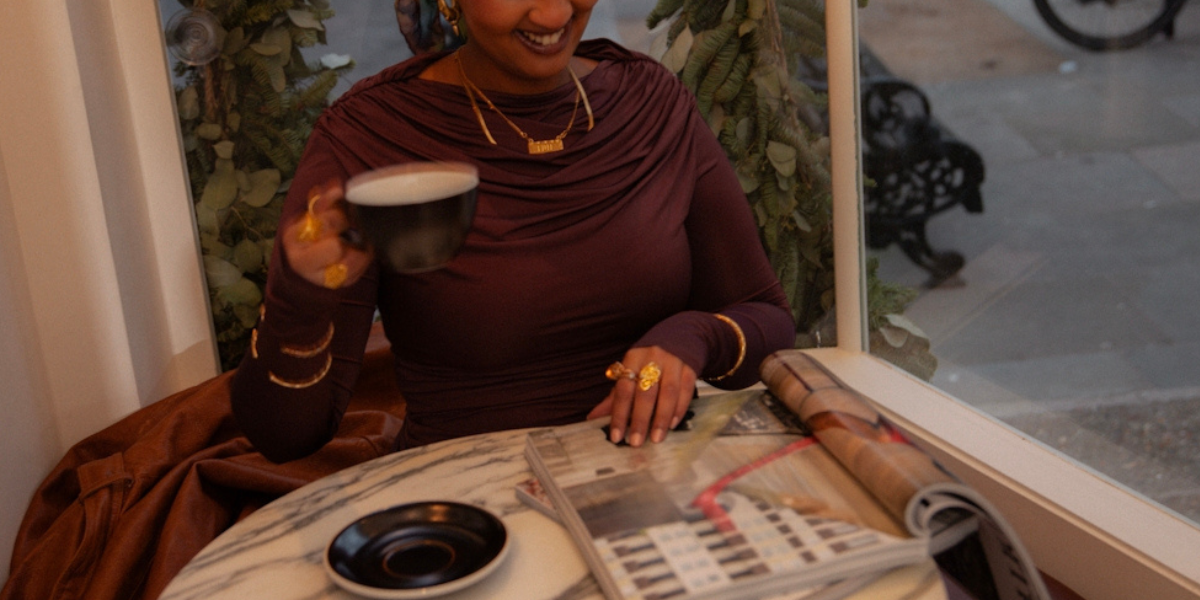
When my first girlfriend brought me to queer-owned Diesel Cafe, in Somerville, Massachusetts, I felt like I’d entered a secret world. I’d grown up twenty miles away, in a super-homogeneous suburb where queer was an insult. I’d come out in college, in a safe liberal arts bubble, months before and was still navigating internalized homophobia. I’m pretty sure my girlfriend brought me to Diesel, a short walk from her apartment, to show me that there were safe spaces in the real world, too.
While that relationship was brief, becoming a Diesel regular was life-changing. Discovering that I could be surrounded by queer people anytime I wanted, just by going out for coffee, gave me confidence in my emerging queerness. Having a regular place to take friends and dates—one where I could be myself, without first needing to read the room—helped me build a chosen family. It also fostered a distinct sense of pride in being queer.
Ever since discovering Diesel, I’ve loved queer coffeeshops. Third spaces are an antidote to the loneliness epidemic that affects us all—but queer people more so, as ongoing queer erasure and persecution leaves us feeling more isolated and hypervigilant. Having a place to go that isn’t work or home, one where we are accepted and welcomed as we are, without conditions or judgment, is freeing.
There are queer coffee shops all over the country, including in smaller cities and away from the coasts and in towns that may not be widely recognized for catering to queer community. Queer-owned cafes are a vital source of community support and amazing coffees. Here are six to check out. This list is very far from exhaustive and isn’t trying to be, but I hope it’ll encourage you to seek out a queer-owned coffeeshop on your next trip or in your hometown, and be sure to shout out your favorites in the comments!
Diesel Cafe, Somerville, MA
Diesel Cafe, in Somerville’s Davis Square, has been open since 1999. It’s a favorite local hang of college students, freelancers, and queer people. It’s the place you go to socialize, organize and flirt. And while Diesel doesn’t have public-facing events, they hold an annual Prom for staff members, celebrating the tattooed, rainbow-haired staff at their most authentic.
Co-owners Tucker Lewis and Jennifer Park have expanded the business, opening a second cafe, Bloc, and a bakery, Forge Baking Co + Ice Cream Bar. Given the struggles many queer cafes face to stay profitable—several of my favorites have gone out of business, and many are on the brink—their success is inspiring.
Little Loaf Bakeshop, New Paltz, NY
Little Loaf Bakeshop in New Paltz, NY has the most amazing vegan croissants I’ve ever tasted. The sesame guava croissant will always have my heart but whatever you find in the bakery case—they sell out fast—you won’t regret tasting.
Little Loaf started in a nonprofit incubator kitchen in Poughkeepsie and launched shortly thereafter at the farmers market. “Fun fact: I was at the market selling pastries just a week after top surgery,” says Rian Finnegan, who co-owns Little Loaf with their partner, and head baker, Colleen Orlando.
Finnegan and Orlando wanted to build a bakery that was conducive to joy. To them, joy means creating in the kitchen, building a safe environment for queer and trans people, and having a supportive workplace where queer employees can learn life skills. “For Colleen, bakeries are community anchors for daily routines and big milestones; for Rian, café jobs were where they first found queer community and learned that they weren’t alone,” they say.
“The world is becoming an increasingly hostile place for queer people, especially trans and nonbinary folks. We need spaces where we aren’t the only queer/trans people in the room, and are with others who just go ‘get’ us,” Finnegan and Orlando say.
Little Loaf Bakeshop collaborates with local queer creatives and LGBTQ+ centers on events like free community vegan Thanksgiving dinners and drag and burlesque shows. Looking ahead, the owners say they want to do more queer music and art events and more vegan pop-ups.
Helm Coffee, Indianapolis, IN
Located in the Garfield Park neighborhood of Indianapolis, Helm Coffee is primarily a coffee roaster, offering sustainably grown coffee from Ecuador and Colombia. If you’re passionate about single origin coffees, it’s a great place to have on your radar.
Helm is owned by two queer women, Jillion Potter and Carol Fabrizio, who are married and proud moms. While roasting coffee is Helm’s focus, they open as a café Friday through Sunday. During cafe hours, they hold pop-up events, live music, donation-based yoga classes, and new parent support groups.
While the cafe may be their side focus, Potter and Fabrizio have gone above and beyond to offer supportive, community-driven resources. They are a reminder of why queer third spaces are so important.
Auburn Coffee Mafia, Auburn, AL
Located in a university town, Auburn Coffee Mafia is a queer coffee shop that doubles as a community hub. Auburn Coffee Mafia is best known for their Indulgence Lattes, a choose-your-own adventure latte in flavors like blueberry pancakes, peanut butter pie, and dirty hippie (brown sugar chai). They want to serve the best espressos in town, but without being pretentious about it.
They run events from drag shows to poetry readings. The barista team also participates in Pride on the Plains, the local Pride fest. “We’re so fortunate to be able to use our voice and resources to maintain this space for those traditionally othered in the Deep South – especially Queer and BIPOC,” they write in an Instagram post.
Skoden Cafe, Phoenix, AZ
Owned by married couple Natasha John, who is Diné, and her wife, Sabrina Eli, who is Japanese, Skoden Cafe serves espresso drinks, pour overs and baked goods, with an infusion of Native flavors. Take the Diné matcha latte, which combines matcha with earthy, herbal Diné tea. “It’s a very special drink that celebrates our friendship and our marriage. It honors our different cultures, bringing a deeper meaning to what harmony represents to the both of us,” says John.
Skoden Coffee hosts fundraisers and mutual aid for local queer, trans and Indigenous folks. They’ve also raised money for families in Gaza.
Since opening in 2022, Skoden Cafe has had to move locations several times, including right now. “We tend to be pushed out of spaces a lot, pushed into silence and conformity. As queers, we need a safe place where we can get angry and organize, where we can seek community, creativity and connection,” says John. The local queer community comes through for them. Beginning in June, they’ll be operating out of nail and beauty salon Stash House AZ.
Queermunity, Minneapolis, MN
Based in uptown Minneapolis, Queermunity serves up breakfast and lunch sandwiches as well as cafe drinks. The Black and queer-owned coffee shop was founded in 2022 by Hilary Otey and Kayla Barth, who are also a couple.
“Everyone needs third spaces,” says Otey. But for queer people, these spaces are particularly important: They provide a place where we can “shed the pressures that come with living in a world that makes a lot of assumptions.”
“The opportunity to ditch those expectations and surround ourselves with others who share our experience is so joyful,” says Otey.
Otey and Barth asked queer locals what they needed, then designed a space that filled those unmet needs. The result is an all-ages third space that doubles as a community hub. From Gay AA meetings to resumé writing workshops, paint your own pottery nights, and introvert-friendly crafting and game nights, Queermunity is constantly supporting and creating queer community.
“We make our own seasonal in-house syrups and people can choose their own adventure by adding them to coffee, tea, or seltzer,” says Otey, who loves the blueberry lemonade.
Queermunity operates on a social enterprise model, selling memberships, which come with discount codes and WiFi access. While anyone can visit without being a member, the membership model gives the cafe a recurring income stream while subsidizing their packed roster of community programming and free resources.
Queer cafes are vitally important for queer and trans people. They provide incredible food and drinks and safe places to organize for queer liberation or just be with other queer people.
As vital as these places are, they are also at risk. Skoden Coffee has had to relocate multiple times, and Little Loaf Bakeshop’s co-owner Finnegan had to take an outside job to support the café. If we want these businesses to be there when we need them, we have to support them. Show your favorites some love in the comments!
Like reading about queer food? Subscribe to Autostraddle’s print magazine. The latest issue is all about the things we eat, featuring a cover story about Melissa King’s approach to building queer community through food.

Comments
Shout out to The Soft Spot in Pittsburgh, PA for all your third space needs!!
Adding Eli Tea in Chicago!
Bandidas Bake Shop in Lakeland FL!
oooo i need to plan a lakeland day and check this one out!
Second Rodeo in S. Portland, Maine!
Glad to see this post
Totally Tea in Concord & Dover, NH
interesting discussion One thing I’ve noticed that most founders overlook is how much time they waste on manual billing. I recently read a breakdown on how UAE E-invoicing software actually automates the whole tax compliance side, which is a massive productivity booster for anyone scaling in the region. It’s worth a look if you want to tighten up your operations: https://www.cherriebs.com/uae-e-invoicing-solution