





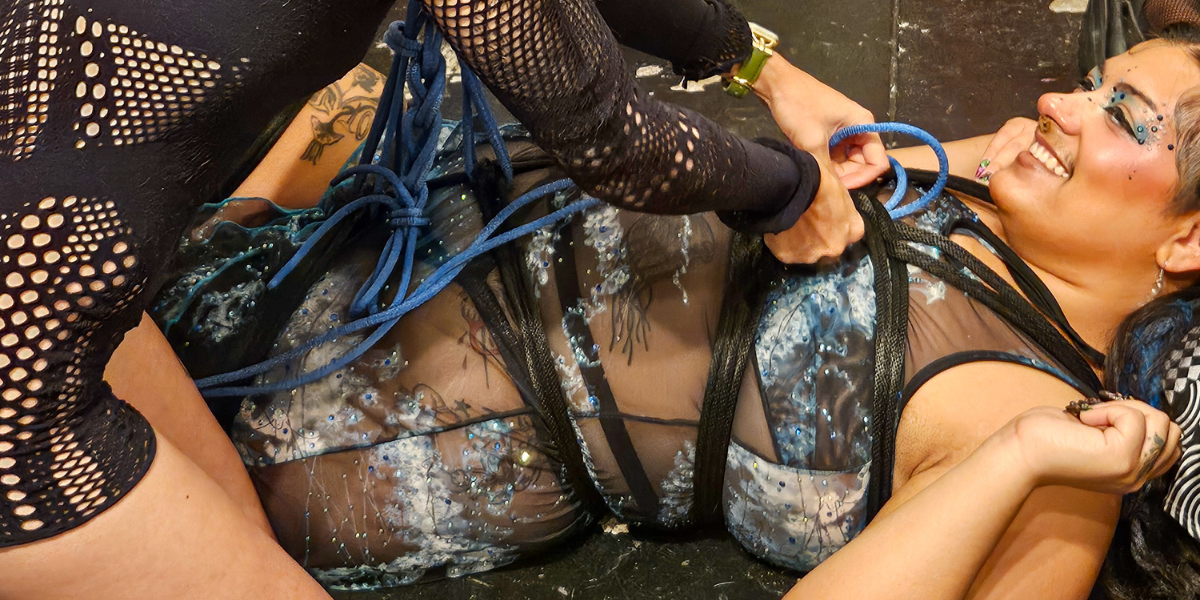
San Francisco has long held within its foggy embrace a remarkable sense of queer activism and creative energy. The city holds the complexities of sexuality and freedom of expression — an island of misfit toys that don’t neatly fit into any boxes. It is a city of innovators and trailblazers who have set out west for their own treasure.
San Francisco has rebuilt itself time and time again, recovering from massive fires, earthquakes, tech takeovers, and most recently, a global pandemic. This queer-as-fuck city is rebuilding and reinvigorating its queer art scene all over again. People are hungry for it.
Those of us who have been here for a few decades remember the ’90s and early aughts when art spilled out into the street, when music filled every corridor, house parties adorned the rooftops, and impromptu punk shows took place outside of the BART stations. There were no walls or barriers determining where art, music, or queer dyke spoken word might pop up.
In the ‘90s, same-sex marriage seemed like a pipe dream, as did the idea that my government ID might reflect a name and gender that I chose rather than one forced upon me. Within the language of art and punk and music and zines and anarchist knitting circles, this is where we were seen. This is where we found ourselves, found our care, our community, our resources. It is where we are finding ourselves again.
It is a time of renaissance in San Francisco, a time in which we are banding together in community and finding ourselves once again in art spaces.
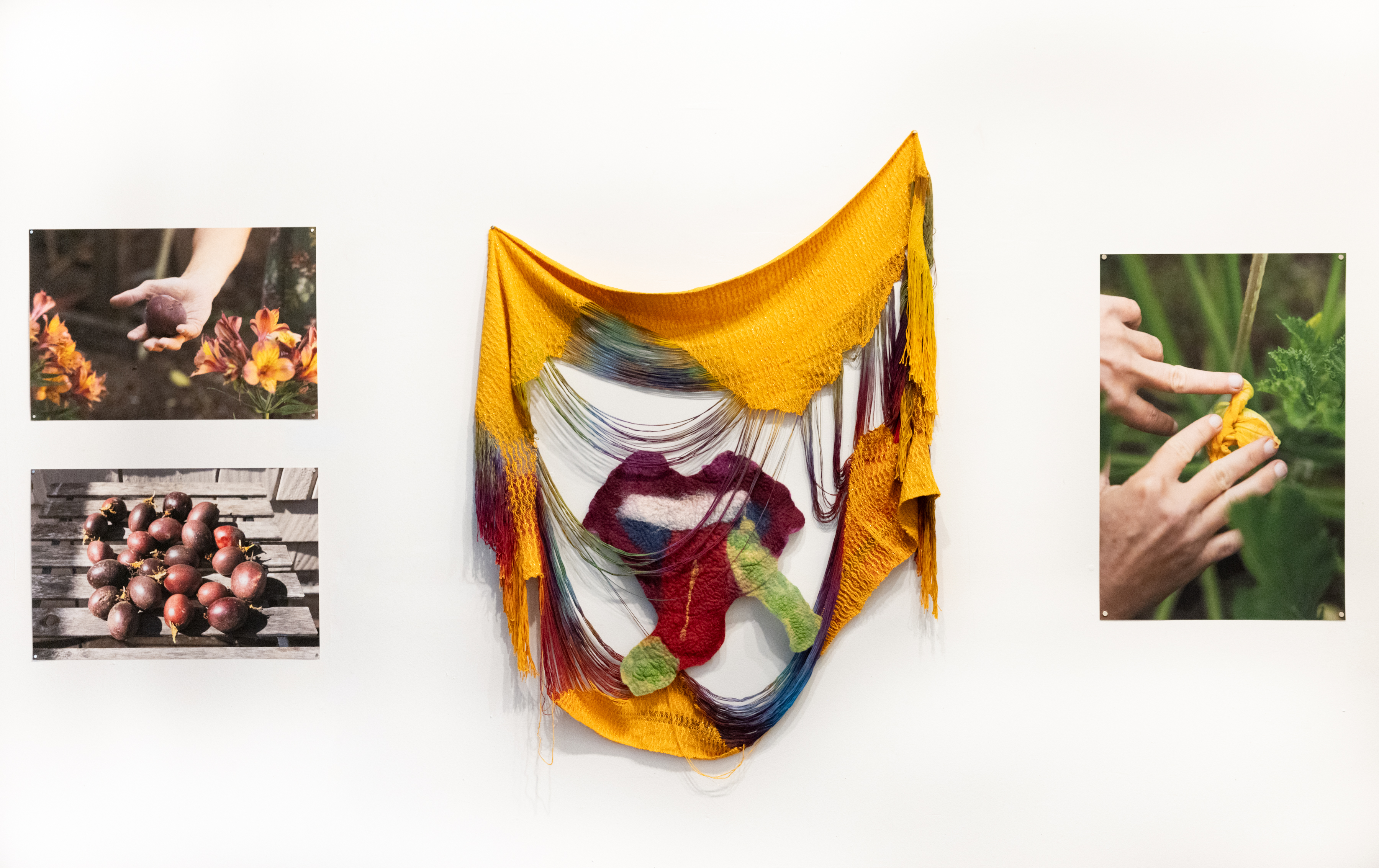
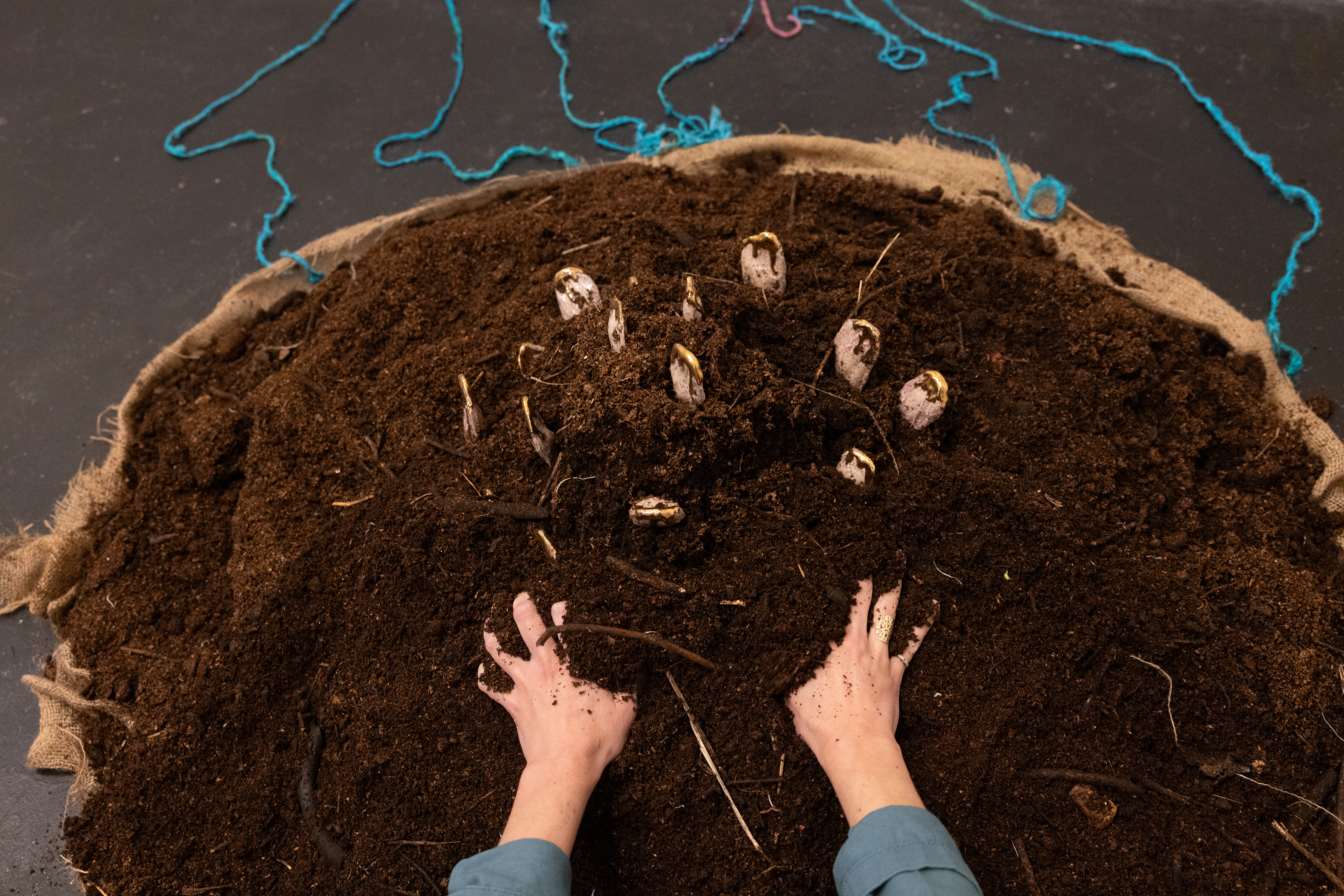
Just last month, I found myself at a multimedia art show fisting a fragrant heap of earth. The small gallery space was full of life and art. Beautiful woven textile artworks paired with verdant ecosexy photography adorned the walls. The space was alive and begged for engagement. The works of art by queer artists Lydia Daniller, Maggie Owsley and Adrienne Renee Weiss invited the viewer into the experience.
The viewer, an always-changing variable in the equation, was a part of this altar, a part of the natural world. The fragrant scent of earthen soil filled the gallery, and a large heap of hot earth sat in the gallery corner, two feet high — an interactive installation. At one point, artist Adrienne announced, “For those that choose to, the mound of compost is ready for fisting.”
I eagerly hurried to the mound and knelt before the soil, sinking my fist deep within. This was the San Francisco I remembered.
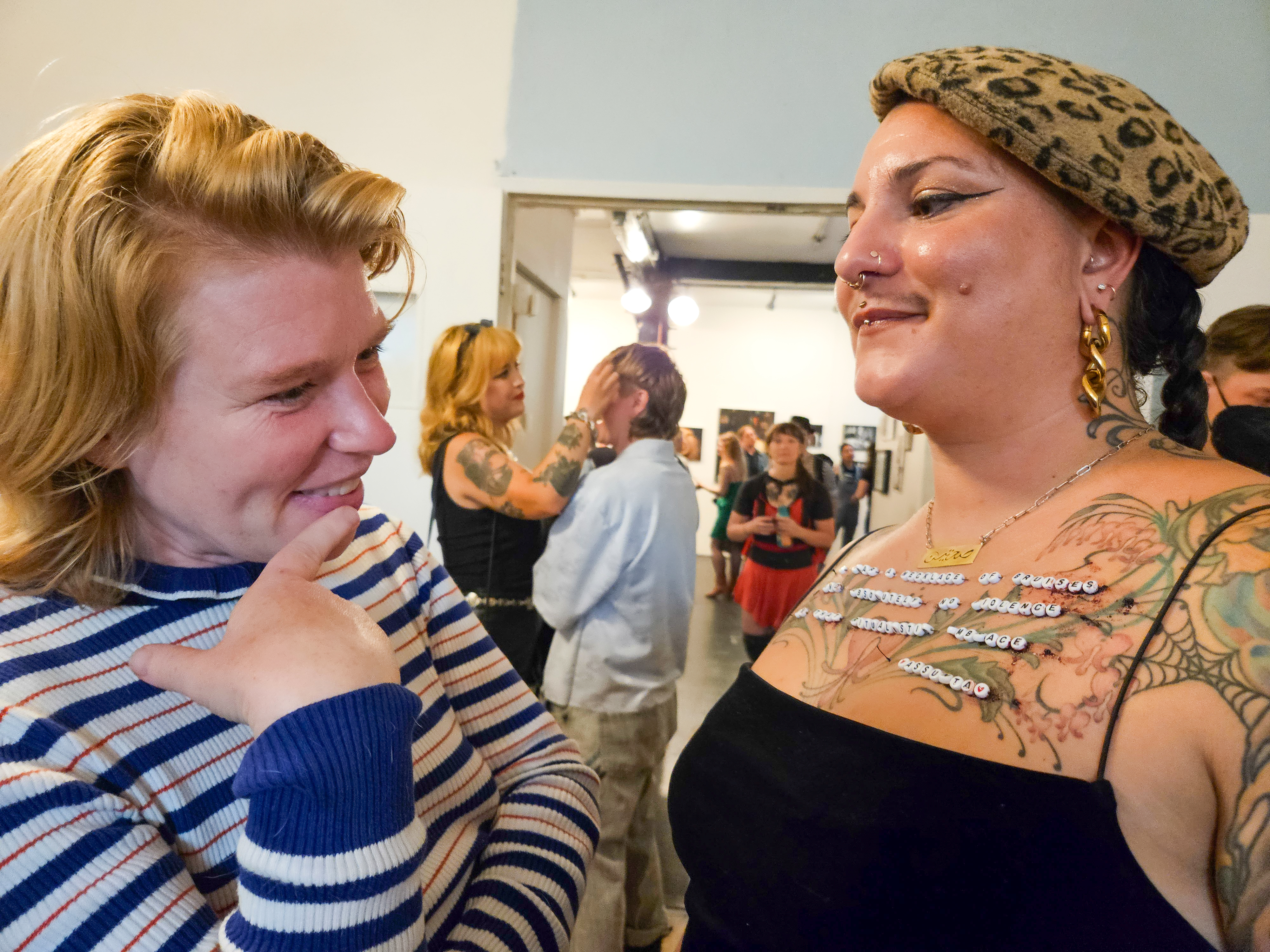
It was September and the gallery was hot, filled to the brim with queerdos and radical artists. Bodies adorned in tattoos and piercings. One individual’s flesh displays play piercings with red balloons attached, bobbing along, floating above.. Another lovely human in glitter and sparkles has beads with letters on them pierced into their flesh with a quote from a favorite poem. Everything in this room shouts that we are the art, life is art.
The artworks are phenomenal. They include a collection from a group of artists curated by Lindsey Kincaid titled Bleed Like Me at the 465 Collective and presented by Queerly Complex and Alchemy Film and Art Foundation. There’s a razor blade sculptural collar piece, piercing photography, and even archival body modification magazines featuring the legendary Fakir Musafar’s work, all revelling in the queer joy of body modification. But even more prominent than the art itself is the community: alive, full of color and expression of self, queer joy dripping from our being.
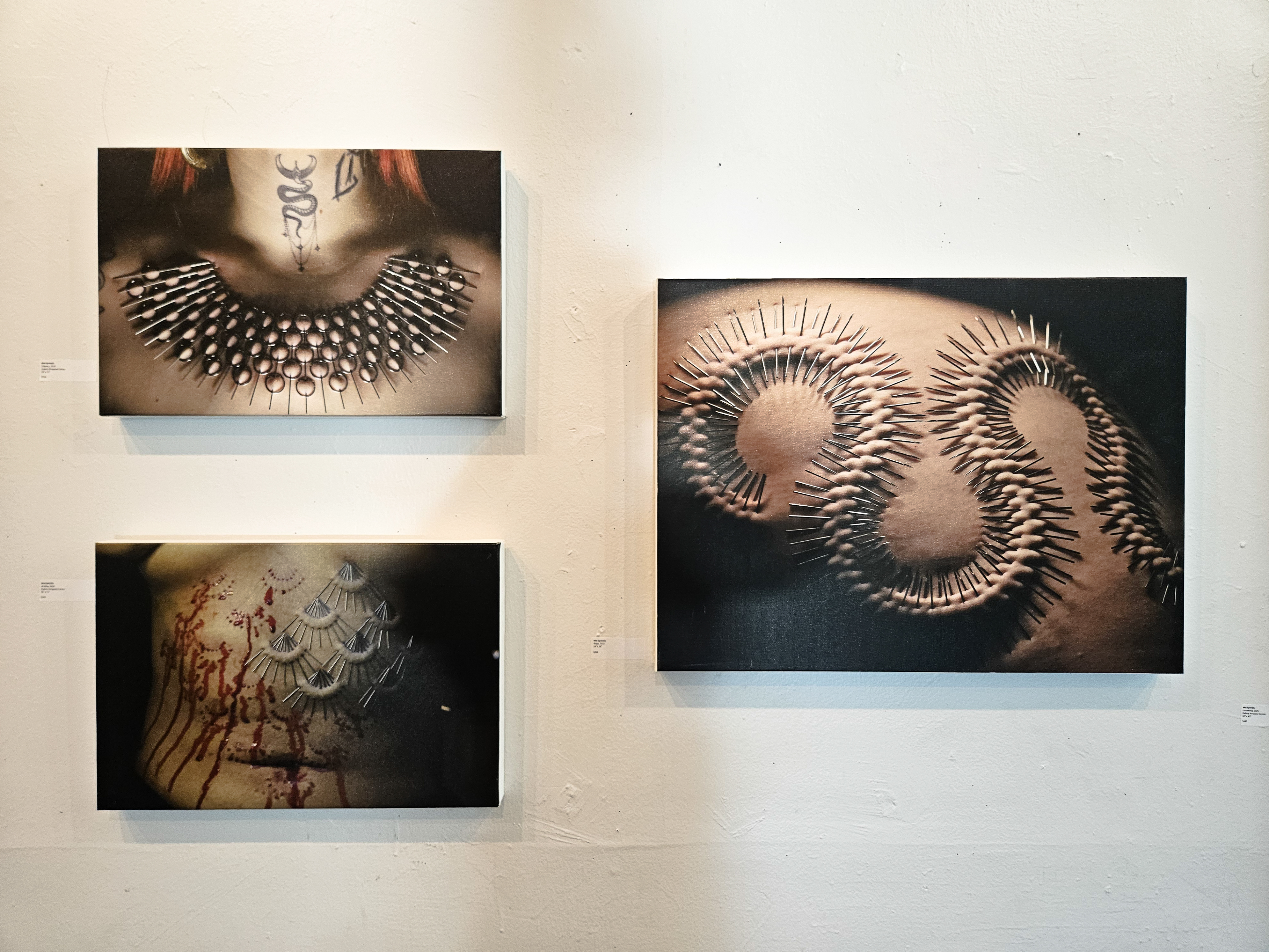
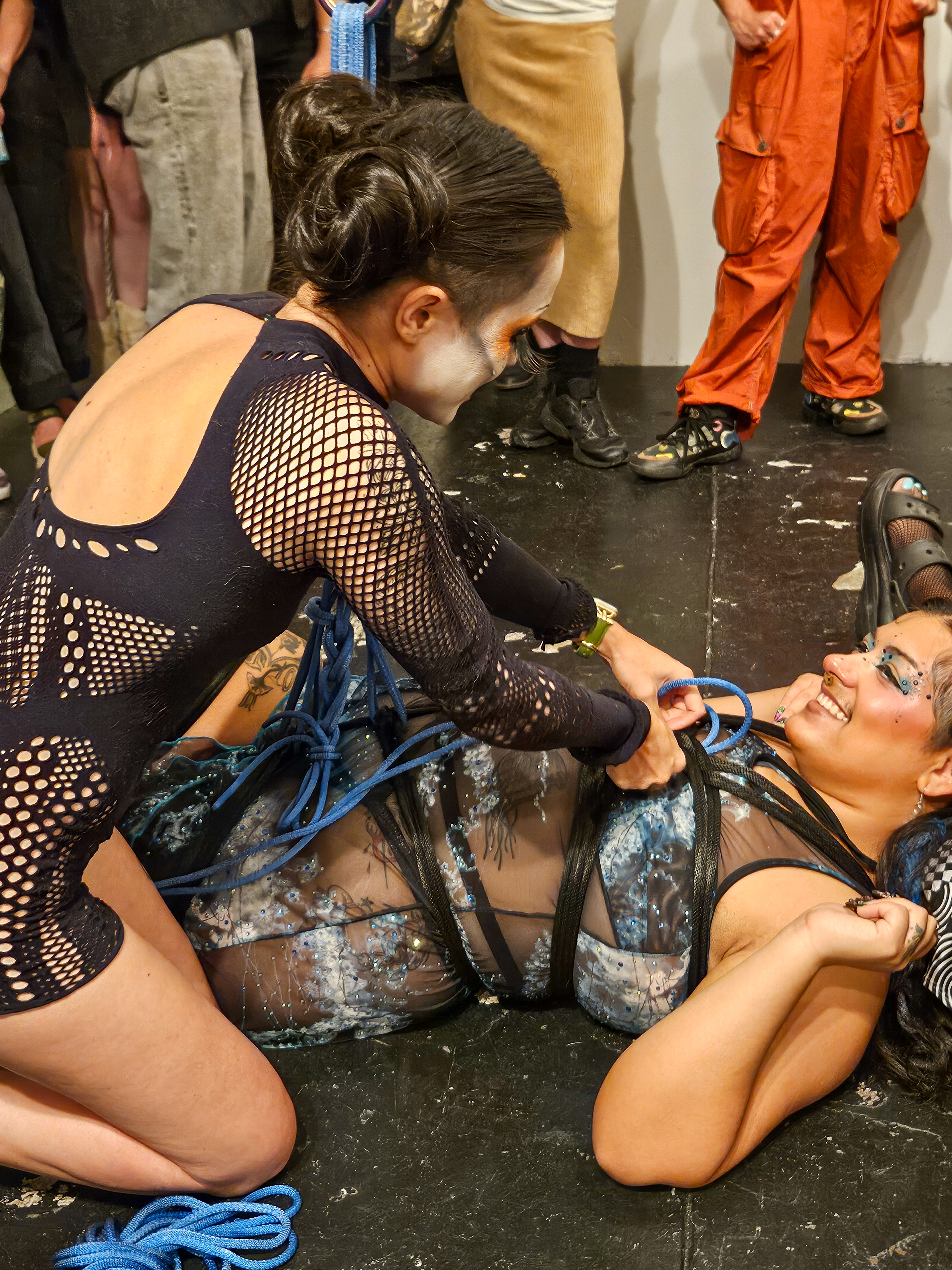
The gallery room is thick with breath, with the warm scent and feeling of queer family and community. A rope-bound body is suspended and pierced with needles; the audience is captivated, watching with love. You can feel this individual is being witnessed in the glory of who they are — not on display as a spectacle but held by a community who sees them.
Artists are embracing one another and armoring ourselves with queer joy as we make our way through a historically difficult time in our political history.
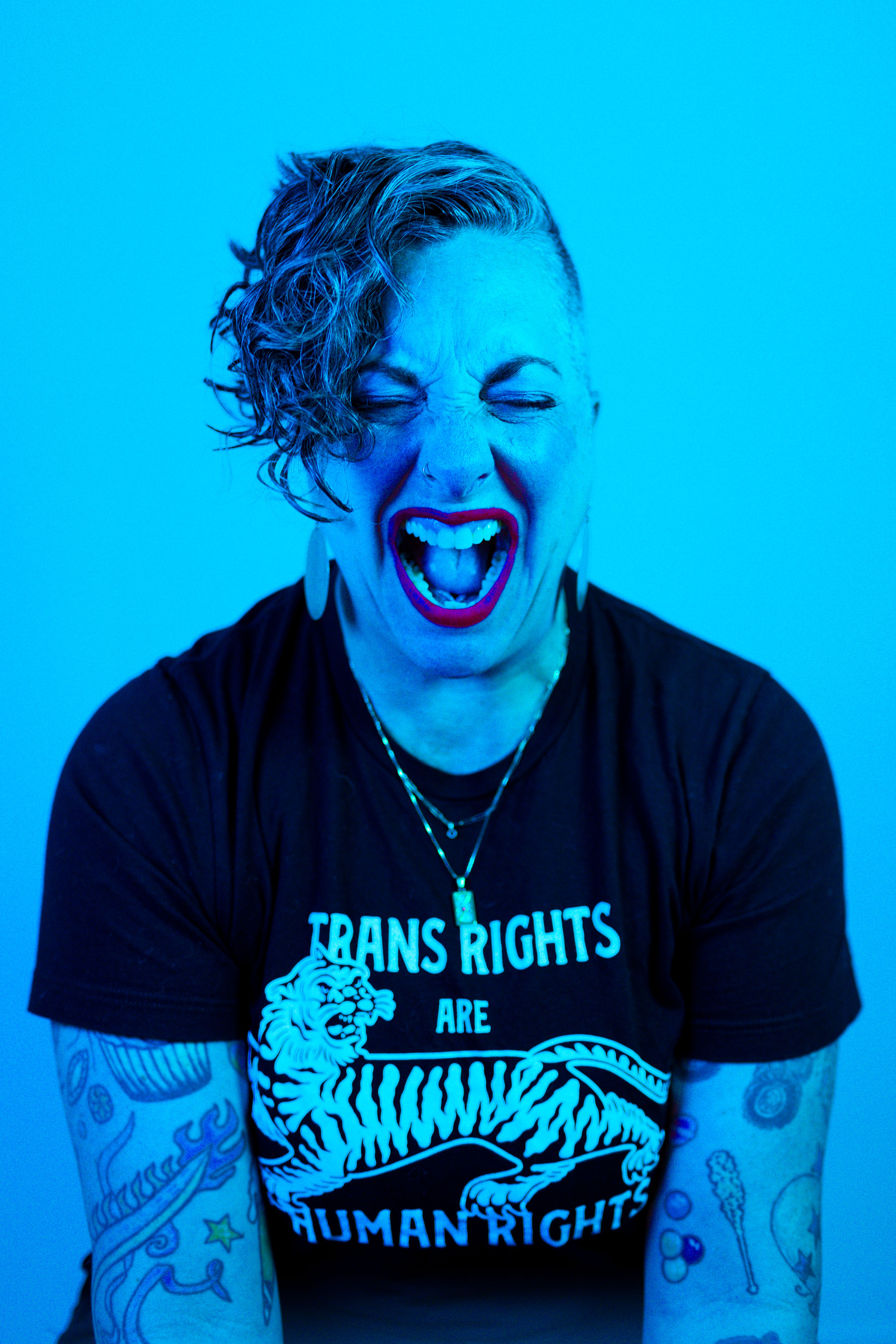
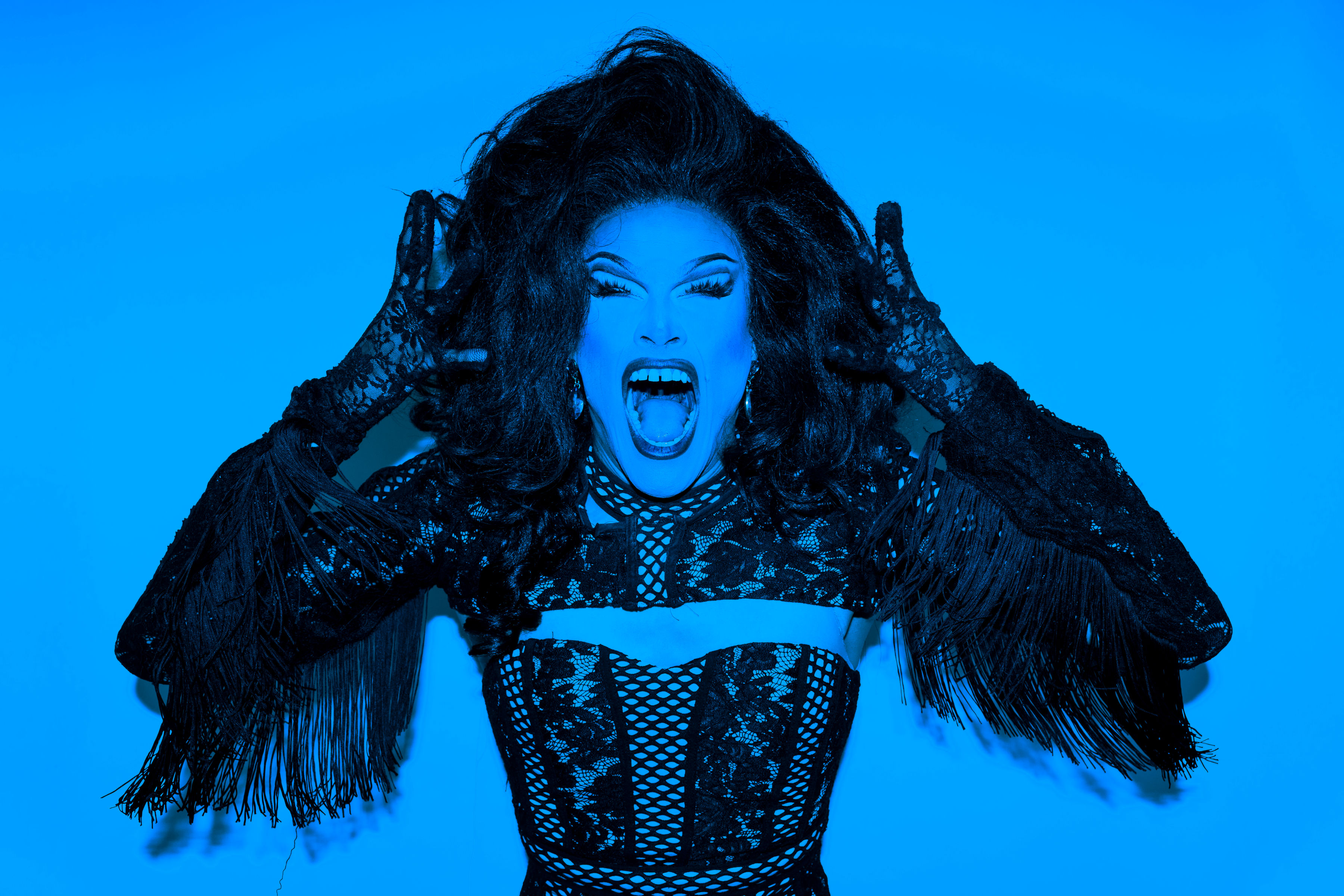
There is a place for our rage as well. Artist Sarah Deragon creates space for our queer rage and joy. After the 2024 election, Sarah needed to dive into her work as an artist to process the swell of feeling that emerged — specifically the queer rage and pain and fear that arose from the election results. What resulted was the Silent Scream Queer Portrait Series. This series is just a part of the larger Queer Time Capsule Sarah is working to build.
It is not just the visual arts that are blooming like wildflowers in winter. There is an activation across the city, with a hotbed of artists working in the Mission once again. Indie theaters like The Roxie continue to champion queer and underrepresented filmmakers in cinema.
Venues like ATA have still managed to keep their doors open and continue to show experimental, art house, and queer cinema. These spaces are tenacious institutions, pillars of artistic experimentation and innovation.
San Francisco is a city of love and community, and there are no two artists that better encompass these attributes than the artist powerhouse Annie Sprinkle and Beth Stephens. I first met Annie and Beth over 20 years ago when I curated their work at my art gallery Femina Potens at the time. We quickly became friends, collaborators, and then family. They have traveled the world with radical performance artworks and innovative collaborative art wedding ceremonies. They coined the term “ecosexuality” and literally wrote the book on it! Their love and art are radical and transformative in every way possible. But this November, the artist couple birthed another epic exhibition at a new art gallery in the Mission, Cushion Works. The exhibition, Bazoombas in Love, was a massive love letter to breasts, composed of previous artworks that Annie and Beth had created as well as a brand new body of work.
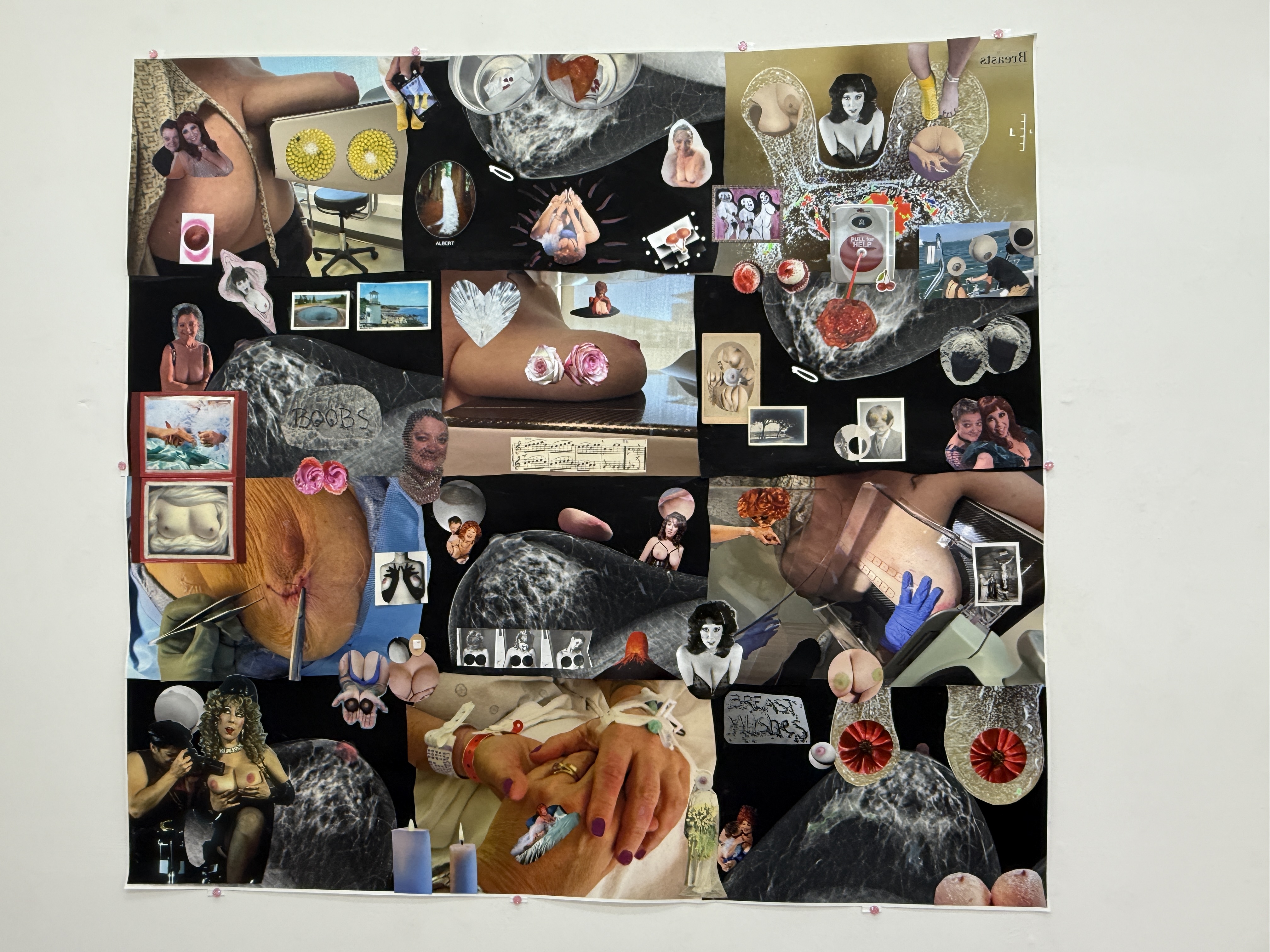
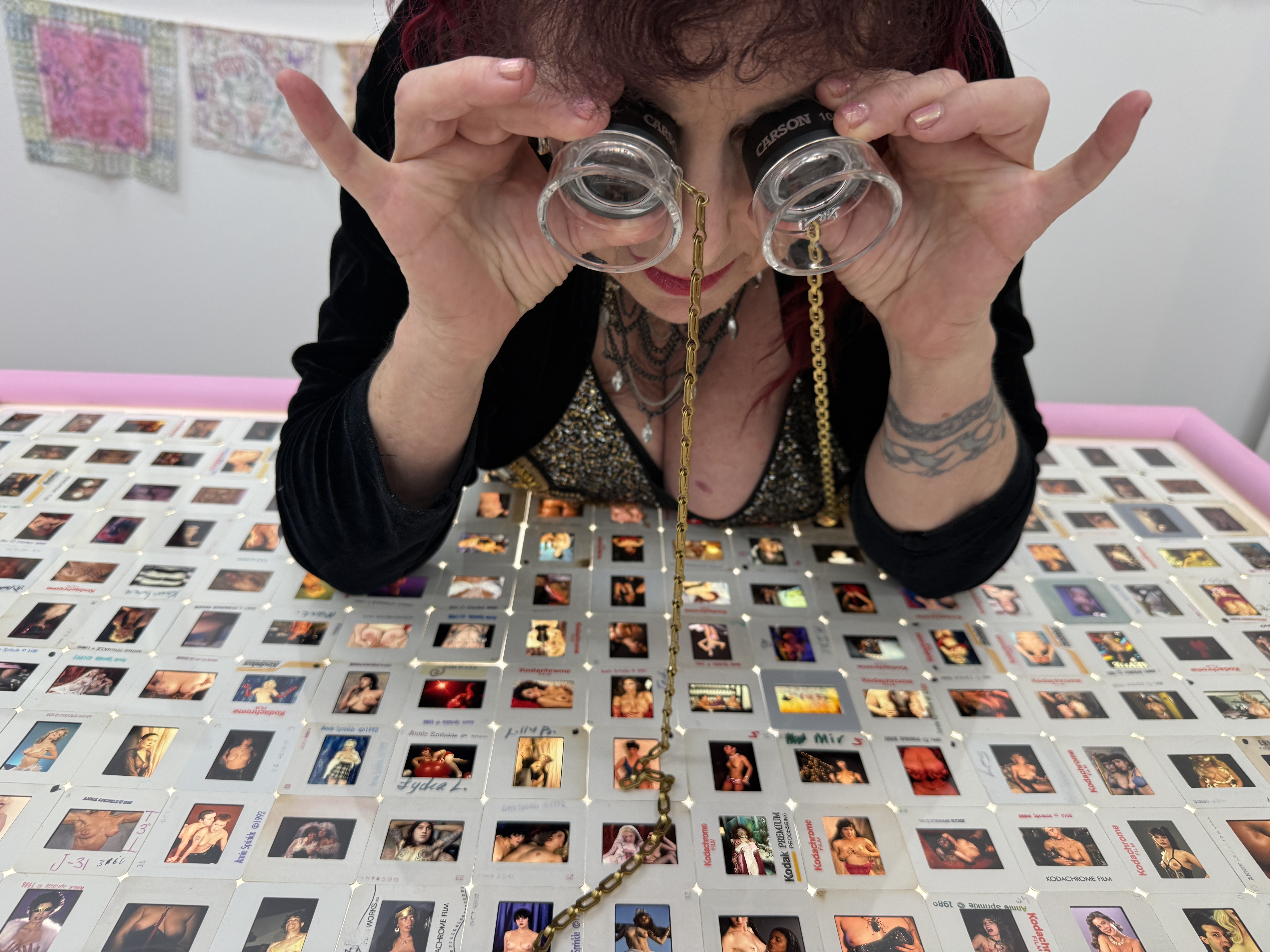
Annie had been diagnosed with breast cancer this summer and would be going in for radiation treatment the day following the exhibition opening. Before her treatment started, she decided that together she and Beth would create a massive vortex of love, an epic artgasm.
And that’s just what she did, with artworks that incorporated mammograms and scans of her breasts, with giant bronze casted sculptures of both of their torsos, as well as photos of Annie’s lumpectomy paired with boudoir photos of her and Beth. The two artists in their true collaborative style of art-making curated an entire room of additional works by members of the queer and sex-positive community that were focused on breasts. There was even a milk bar where folks could get love infusions and a walking tour around the mission district as we searched for a bird called the “blue footed boobie.” Stenciled blue bird feet on the Mission sidewalk lead us from one art space to another, where we reveled in connection between space and community, between art and activism. Some folks even dressed up as blue birds as we marched through the streets together, a rag tag group of artists, uncontained by any four walls.
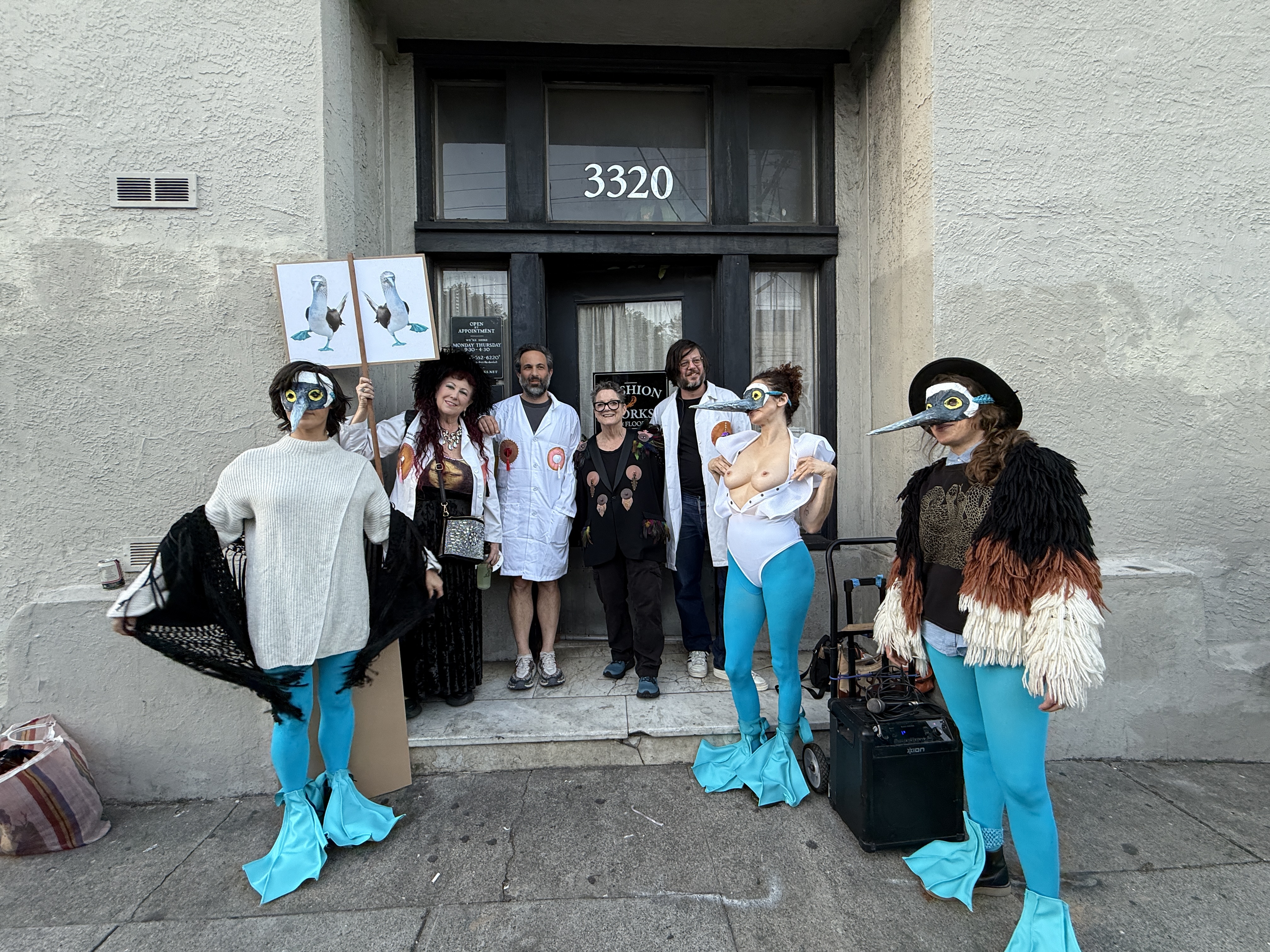
The Bazoombas in Love exhibit was filled with love, community, connection, glitter, and queerness — playfulness sitting side-by-side with the intensity of navigating cancer.
This essence embodies San Francisco: the ability to show up in community, with love; to understand the power of being a compassionate witness; to have safe spaces to explore the scary stuff and come out the other side covered in lube and glitter. In San Francisco, queer artists lay their hearts openly on display and we find solace in healing together.
The many voices of artists and films and music that have been poured into the land of the Mission have left fertile ground for us, a layer of fecundity that doesn’t go unnoticed but that is felt in everything we do, in every step forward.
Whispering to the next generation: “It is possible.” Even in the darkest times, dreams are possible, art matters, you matter. Keep dancing. Keep living.
It doesn’t mean that we ignore the sweeps of unhoused communities or that we dance blindly amongst a world on fire. But we do find our joy. We do find our communities, our light, our art, our song, and we will sing together at the top of our lungs as we hold each other up.
As we feel the inspiration of generations of queer ancestors that filled these streets with hope and dreams, let’s remember the words of anarchist Emma Goldman: “If I can’t dance, it’s not my revolution.”
May we dance and revolt as we support one another with weirdo art and queer manifestos, with mutual aid and potlucks, with punk shows and house parties, with wild walking tours through the Mission looking for blue-footed boobies.
The Bazoombas in Love exhibit is up at The Cushion Works Art Gallery through Jan 24. Visit www.cushionworks.info/exhibitions/bazoombas for more information.

Comments
Oh my g!dress – a glimpse of a bygone era, but better! Thank you for this article
Great article! More weird art, yay!