





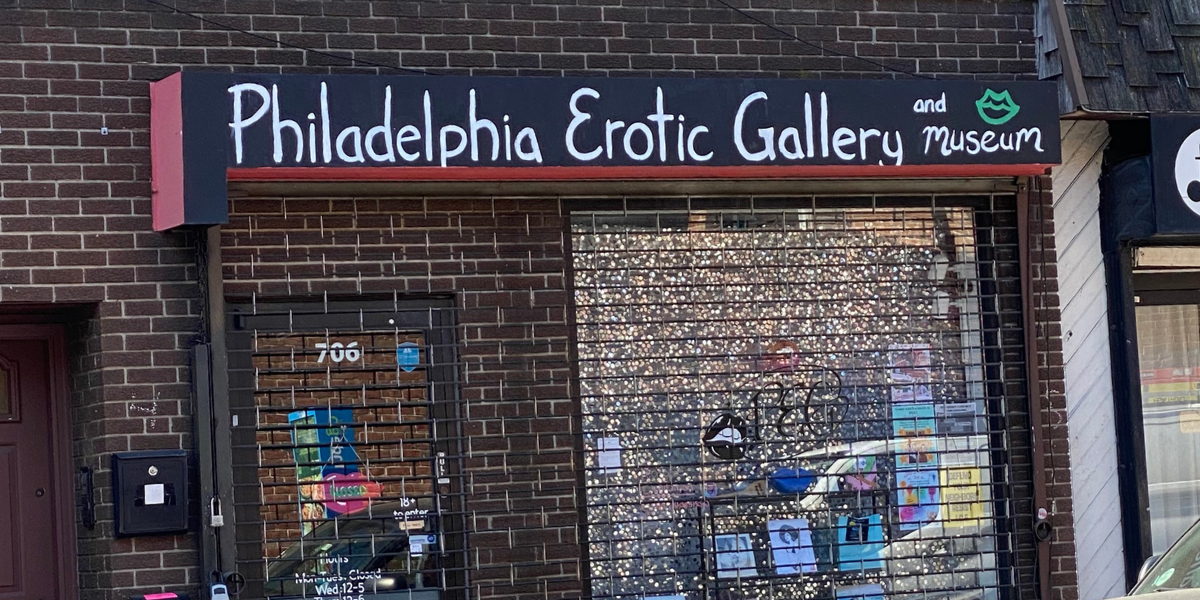
photos by Stevie Laney
A giant pink vulva you can stick your face in. A diorama of balls you can caress and squeeze. A turn of the century “peep show” you can watch via hand-crank.
My friend and I explored all of these and more on a rainy day this past April at the Philadelphia Erotic Gallery and Sex Museum, cheekily referred to as PEG.
PEG, which opened in December 2025, spotlights the history of sex, gender and erotica in Philadelphia. As the first and only erotic gallery in the city, PEG fosters an interactive, communal space that celebrates Philly’s sexy past, present, and future.
The four rooms of the gallery — including a rotating exhibition room and an interactive “please touch” anatomy room — offer a fascinating, sex-positive look at the city’s sexual cultures.
PEG is unique in that it feels both like an art gallery as well as a history museum. Dozens of pieces of erotic artwork line the walls of the space. Featuring the work of over 80 artists, PEG uplifts both the contemporary and hidden history of Philadelphia.
For erotic artist Stevie Laney, this was purposeful. After founding an erotic art magazine called Very in 2021, Laney and her partner Tobias Olson started brainstorming a way to bring the magazine to life. “The community kept growing,” she tells me. She and Olson dreamed of a way to showcase erotic art, performance, and history altogether.
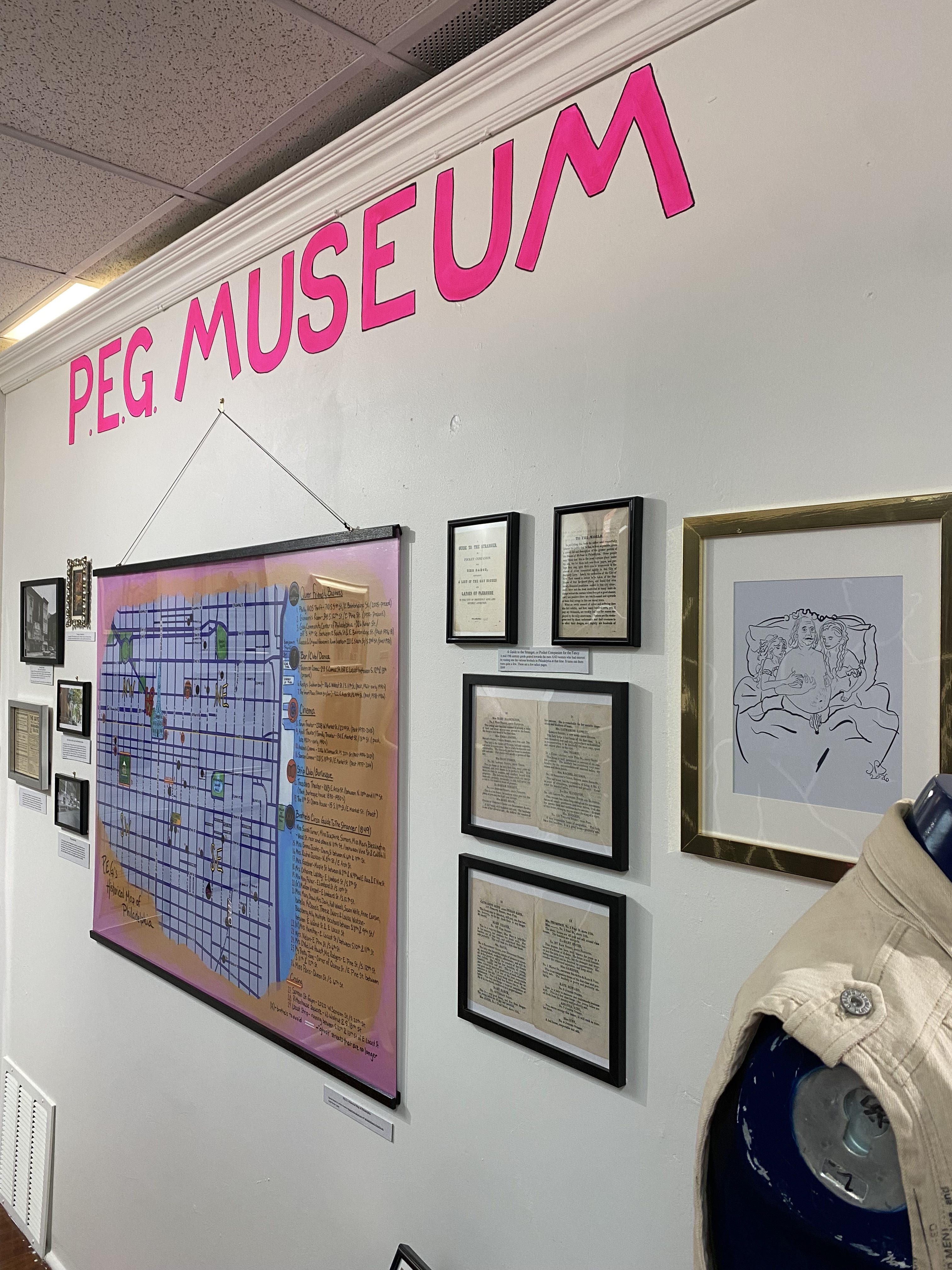
PEG features a truly diverse range of erotic art and history: straight and LGBTQ, vanilla and kinky, mainstream and underground. “I try to make sure I have a representation of every type of person,” Laney says. “As an artist, it was good practice for me. I want to be able to draw anything and anyone in the way they want to be seen. So when it came to the museum and gallery, it was a no-brainer. We want somebody to come in and see themselves somewhere in there.”
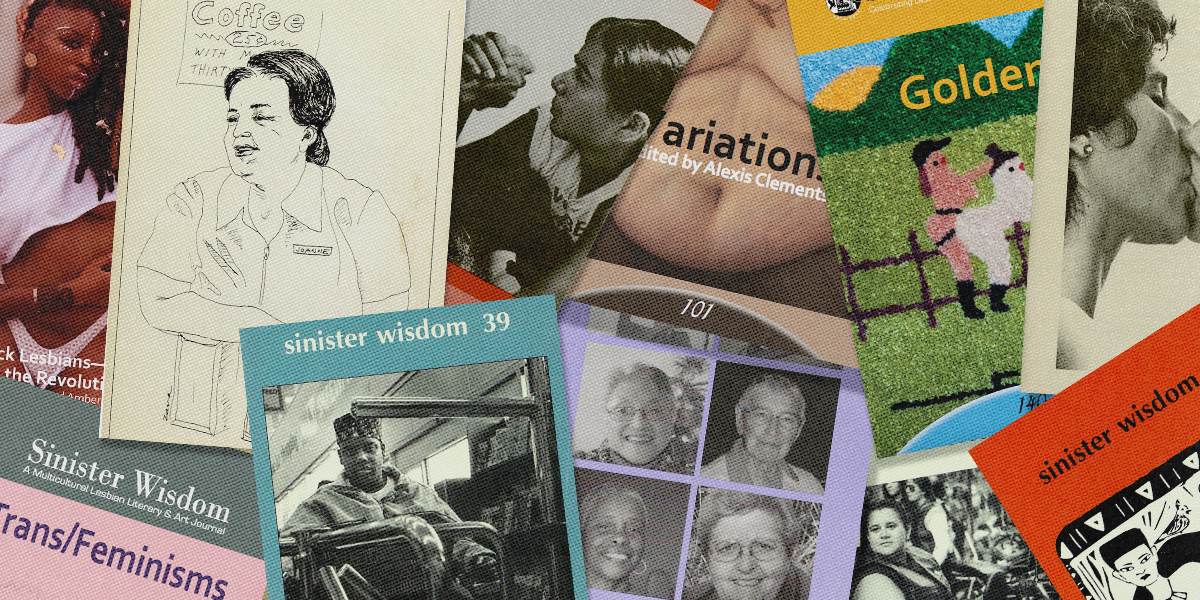
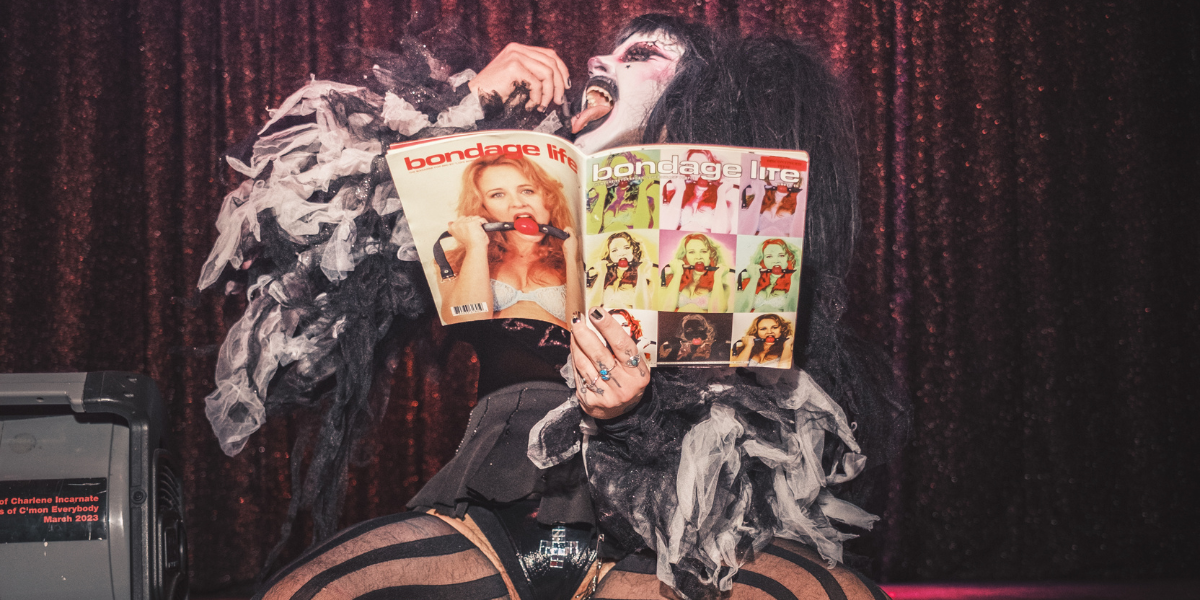
My friend and I stood for a long time in one hallway, looking at the various historical ephemera (magazines, photos, flyers) framed and hung on the walls. This included a “Pleasure Menu” from a brothel, personals ads from a 1990s fetish magazine, kinky cartoons, and early twentieth century erotic photography.
One framed flyer in particular caught my eye: an advertisement for a meet the author event at the Gay Community Center in 1980, promoting the memoir Barry and Alice: Portrait of a Bisexual Marriage. Bisexual history is so often overlooked and understudied, so it was moving to see it framed and preserved for posterity at PEG.
Much of the art featured at PEG is available to purchase. At the front of the space is a gift shop, where visitors can buy erotic art and novelties as well as jewelry, greeting cards, magnets, prints, stickers, apparel, and books. While the museum costs $12 to enter (pay what you want on Wednesdays), the shop is free to enter.
PEG is also an event space. The gallery hosts monthly film screenings, a figure drawing class, open mics, and more. “We want to build our own little community center in this space,” Laney says. “Make it feel safe and open to everyone that feels comfortable coming in.
Laney hopes PEG inspires people “to have a healthier relationship with sexuality.”
“This whole subject of sexuality, body positivity, nudity in general is very uncomfortable for a lot of people,” Laney says. PEG’s interactive exhibits encourage curiosity and play to help dispel that discomfort. “It’s not all supposed to be serious. We want to have fun with it.”
Laney hopes PEG becomes a go-to destination for Philly tourists and imagines eventually adding a cafe or lunch spot to expand the space. In the meantime, she and her partner feel at home on South Street, historically a center for LGBTQ folks and artists. “The neighborhood has been more than welcoming for us. We’ve got a lot of support,” she tells me.
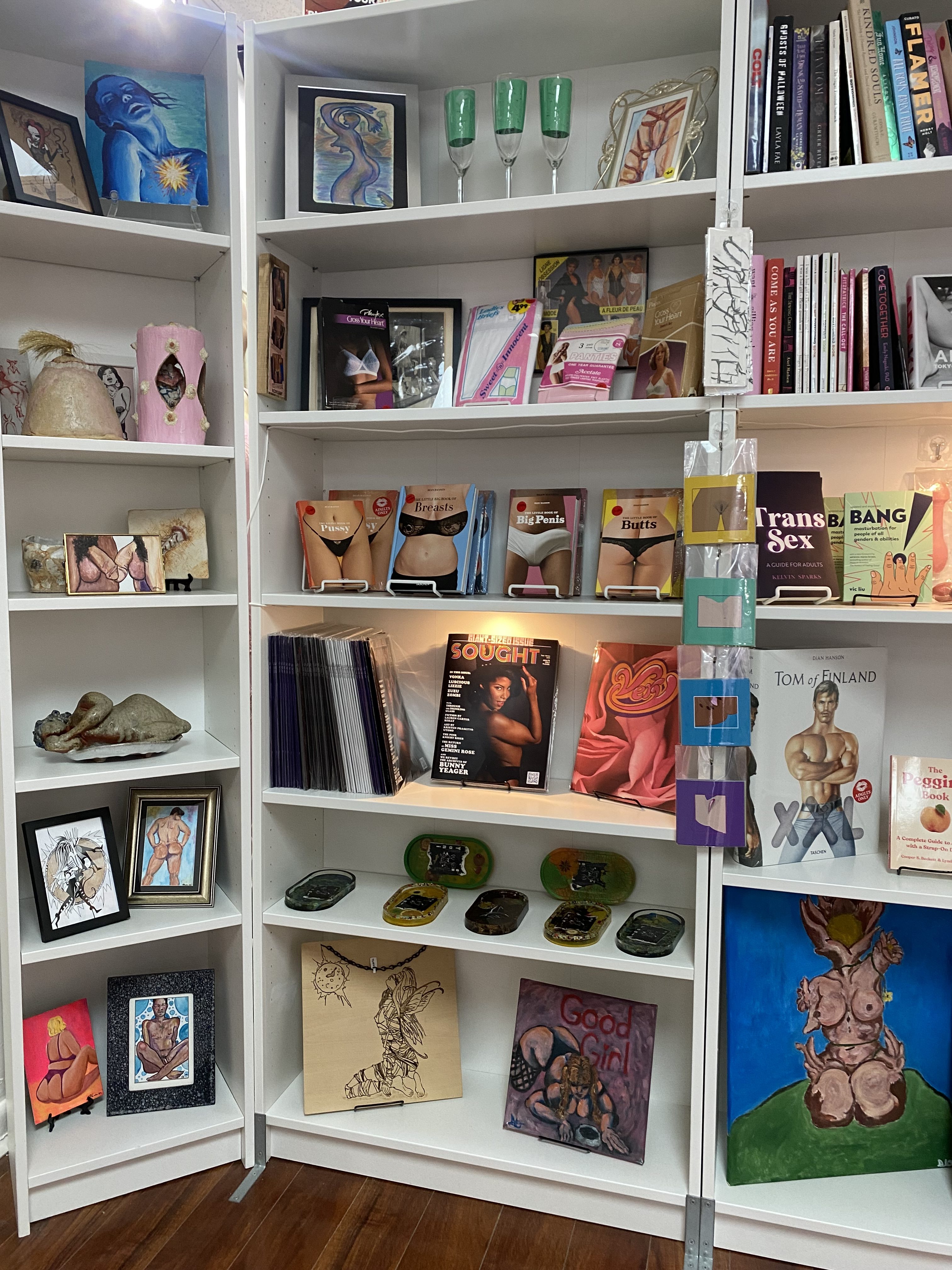
Laney is always looking to grow PEG’s collection. She encourages folks to contact her via the museum website, “if anybody has stuff that they’re looking to get rid of, unload, sell, or let us borrow” related to Philly’s sexual history.
“Especially in the last few years, we’ve focused on the museum because this current administration seems to be very quick to censor, and things are harder and harder to find online,” Laney says.
As the country swings to the right and as anti-LGBTQ, sex-negative sentiments threaten to drive sexual cultures underground, PEG stakes a claim for the importance of uplifting the art and history of these communities. As Laney says: “We’re just trying to preserve it and make sure it’s out there for people to see.”

Comments
Philly is the best city in the world. I will die on that hill. Go Birds! Go Phils!
I loved highlighted Philadelphia’s vibrant culture and energy, making the city feel lively and full of character.