I’m twenty-seven and I don’t know who I am
But I know what I want
– Boygenius, Emily I’m Sorry
In February of 2024, I listened to Boygenius’ album The Record on repeat, usually while bundled in all of my winter clothes in my bathtub, the warmest place in my terribly insulated Ohio studio apartment. I’d taken to listening to albums from start to finish in the evenings in an effort to calm my central nervous system and convince my too cold body to try to get some sleep before my 5 a.m. opening shift. I was 24, struggling with heartbreak and imposter syndrome, and trying to get myself through a desert of depression accompanied by a seemingly endless winter (ideal conditions for listening to Boygenius).
There were no true witnesses to that point in my life. The hole in my heart was something I needed to figure out how to fill on my own.
Through all of it, the books were there. The music was there. The art was there.
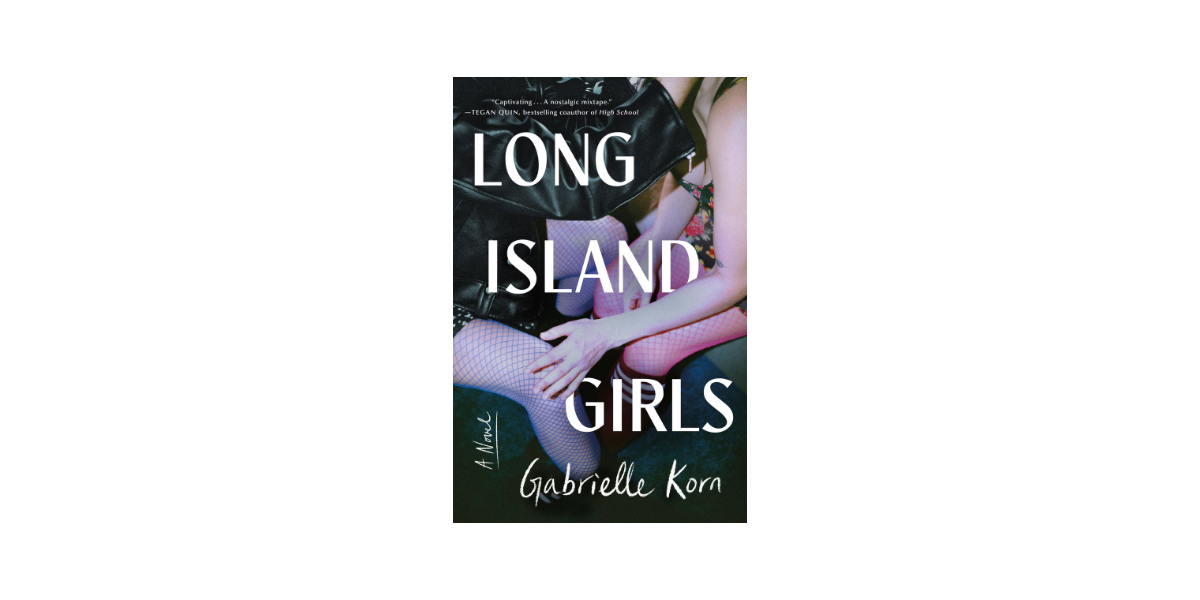
No novel understands that feeling quite like Gabrielle Korn’s latest masterpiece Long Island Girls. The novel follows indie music lover Susan Goldstein over a 20-year period from 2005 to 2025. I’ve long known Korn to be an expert writer of time and change (if you want evidence of this for yourself look no further than her first two novels Yours for the Taking and The Shoutouts). This book is no exception. Each snapshot of Susan’s life functions as a perfect time capsule beginning with her at the age of 17, experiencing the trials and tribulations of early 2000s girlhood: burning CDs, having questionable chats over AIM, and trying to figure out if it’s cool to wear a dress over jeans (reader, it wasn’t).
One day, as Susan and her best friend Katie are pursuing the aisles of Tower Records, she finds a poster advertising an all ages performance of one her favorite bands, ?? (pronounced What-What). What starts out as a normal evening at a rock concert becomes a defining night in Susan’s life because of two people. The first is Eliza, a girl who looks far more like the dictionary definition of Pretty Popular Girl than someone who belongs at a rock show. Despite her lack of music knowledge and air of looking like she “got lost on the way to Juicy Couture” Susan is instantly drawn to Eliza, lit by a spark of desire that follows her long after the night is over. The second person she meets is Jonny, the lead singer of ??, and Susan’s future gay indie music guide who at the end of the night gives her his number with the statement: “If you do move to Brooklyn to become a lesbian someday, we should hang out.”
Five years later, that’s exactly where we find Susan, an out lesbian working as an assistant at Rider Die Records and still thinking about Eliza, morphing their last moments in the car together into her go-to masturbation memory. Eliza and music have become the twin pillars of Susan’s life, her pursuit of both oftentimes defying logic. Over the years, Eliza and Susan’s lives continue to collide in a messy tangle of desire, pain, and projection. And through it all, Susan must learn to navigate an ever changing music and media landscape.
Following Susan’s career leads us to one of the central questions of the novel: Who gets to make and receive recognition for their art under capitalism? Susan’s time at Rider and continued friendship with Jonny takes readers into the realities of the music industry. She watches independent venues continue to close, unable to keep up with skyrocketing city prices. There are massive pay inequities at every tier of the industry. Men who commit sexual harassment get payouts instead of consequences. Media workers are told to step away from written coverage towards video in service to social media algorithms and sponsored content. Major labels and entertainment outlets are far more interested in queer art as a niche category to be rolled out in “maketable moments” than work that deserves active care and investment. Later in Susan’s career, she finds herself overwhelmed by the number of successful openly queer artists her younger colleagues are listening to — Muna, Hayley Kiyoko, Troye Sivan — all incredibly talented hard working musicians who likely wouldn’t have been able to have the level of mainstream fame they have 20 years before.
Jonny struggles to balance his day job with the time and money it takes to keep creating and playing music, at one point telling Susan: “It’s still not bringing in enough money to quit my day job. I can’t even do a proper tour. It’s just going to create more work for me. Not more money or more stability.”
There is no competing with people who don’t have to work. Success as a musician isn’t a simple question of talent and dedication. It’s a game of chance in an arena that, like every other space operating under the rules of capitalism, favors rich people.
While Korn puts the hard truths of the music and entertainment world into this novel, it’s not a story about the hopelessness of creation. Art has its own power outside of the systems that profit from it. The reason Susan chooses to keep working in a flawed industry, forgoing better benefits and a higher paycheck, is because music gives her a feeling nothing else can. Not even her love for Eliza. Music is a way for us to tell the truth. To feel our souls inside our bodies. That feeling translates into every element of our existence: how we love, how we form community, how we evolve.
To read Long Island Girls is to recognize that and stay with Susan through all of it. Over the course of 20 years and hundreds of pages, I grew to love her and Eliza in ways I never expected, cheering for their victories and sharing in their heartbreaks.
At the time I’m writing this, I’m 27, the same age I used to hear Phoebe Bridgers sing about from my bathtub and the same sage Susan is when trying to piece her life together after Eliza crashes into her life for the second time. Entering this part of my twenties, I can feel a shift in how I’m perceived, powered by a society that hypervalues youth, especially for women. Some days, all I want to do is wrap myself in memories of different times, different relationships.
The truth is, I’m never going to get any younger. I’ll never get to fully step back into the person I once was. None of us will. And that can be terrifying. But it feels less scary now. Reading this novel reminded me there are so many versions of myself I have yet to meet. That doesn’t mean I have to lock previous versions of myself away in a box. We can hold compassion for our younger selves while listening to the songs of our lives today and looking forward to all the music ahead.