





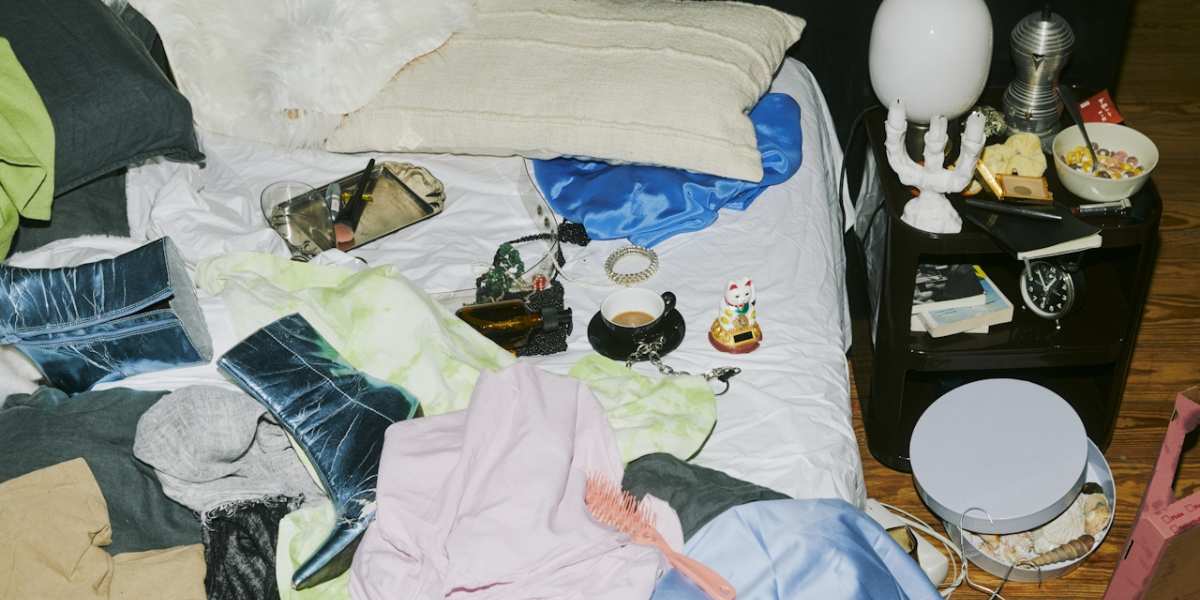
My obsession with home efficiency started during the pandemic. My then-partner and I were cooped up at home while the world came to a standstill. Neither of us were cleaning- or organization-oriented people when the pandemic started, but having to spend every day at home awakened something. We had to make the place more liveable.
What started as a week-long spring cleaning turned into a lifetime interest in housekeeping. A person’s home should be arranged to make life easier. Returning from work or finishing the week at home should be something we look forward to. A disorganized home can become stressful no matter who you are. And while many of life’s stressors aren’t controllable, we do have some agency over our space.
That’s why this article is dedicated to disgorging my accumulated home efficiency knowledge. I’m only going to talk about things that I’ve seen in action, or that I’ve implemented. I’ve minimized purchases and tried to make them generic and affordable. Most importantly, I’m going to write this with an eye toward the different kinds of neurodivergence that make running a household difficult alongside Everything Else.
My default ‘mindset’ to housekeeping believes in improvement. It recognizes that my current setup is imperfect, and trusts my ability to improve it. This matches the reality that housekeeping is a skill and should be adjusted to match our circumstances and emotional capacity. Home becomes yours once you’ve made it that way.
Keeping your space clean can be stressful and laborious. Given the stressors us gays and our pals face, it’s understandably difficult to stay on top of it. Encouragement and praise is always warranted, even if we’re just taking baby steps. Giving positivity to ourselves and loved ones for the basics is valuable. Small efforts are the first step toward entrenching habits.
Barring major incidents involving pets, pots of pasta sauce, or airborne beer cans, most household mess is generated over time. Doing a bit of cleaning consistently keeps most of the mess away. If you’re starting out, the first few cycles/attempts will be harder because there’s a cleaning backlog. But it gets so much better. A functional habit that matches your headspace is always preferable to doing all the work in stress-induced chaos when it finally becomes unbearable. Here are some to consider.
Habits
Habits are the mental adjustments that make home that much more liveable. They’re a little alien when we start out, but the payoff is real. Habits are worth it because they become automatic once they’re entrenched. Then you’ll be doing ‘work’ without noticing.
Bring a piece of trash with you anytime you go toward a bin
This is the happy medium between disposing of trash immediately and letting it pile up forever. Getting up to throw trash away can be inconvenient. If you’re worried about it accumulating for later, just leave it in front of you and mentally mark it for when you next ascend from your seat/bed/floor. Leave it somewhere conspicuous—beside your mouse or on the coaster you use. Don’t push it out of sight. It’ll be fresh in your memory when you get up and you can toss it. It works because it’s not procrastinating. It’s rolling multiple tasks into one trip and to save effort.
Critical items have a home
Your daily essentials should have a designated spot. The only time they leave that spot is when you use them. They immediately return to that spot even if it takes a few extra seconds. This applies to keys, phones, wallets, medication, and contact lens accessories. If it can ruin your day, your week, your month, or even your year by vanishing, it needs a home. This habit is a major boon for people with impaired memory or attention because it narrows down the list of places we lose things before we lose them. If you’re used to leaving your keys ‘wherever’, then every household exit is preceded by a search and rescue operation. If your keys have a specific hook and you misplace them, you already know they’re somewhere between that hook and the retraceable steps leading to it. That’s a way more manageable search area than ‘somewhere in this ZIP code’.
Special spots for special items should be prominent and visible. Hanging hooks, countertops, and side tables are great. The spot should be contained; you don’t want important things to roll off. My Special Spots are just big enough to hold the necessary object, or else I get the urge to store other things there and create visual clutter. Bonus points if the spot is specially marked. Bonus bonus points if you can group several essentials into one spot. My medications live in a ceramic bowl on my nightstand so I always see them when my day starts. Packing for trips is also easier this way because you can just walk between the designated locations and pick everything up to have your essentials—no list needed.
When starting out, you will make annoying trips to shuttle things to their new homes. If you have a condition like ADHD, you’ll be acting against deep-seated behavioral patterns. It won’t feel good, but it will get easier. Once the habit crystallizes, your mornings, evenings, and everything in between will be so much smoother.
Use marker objects
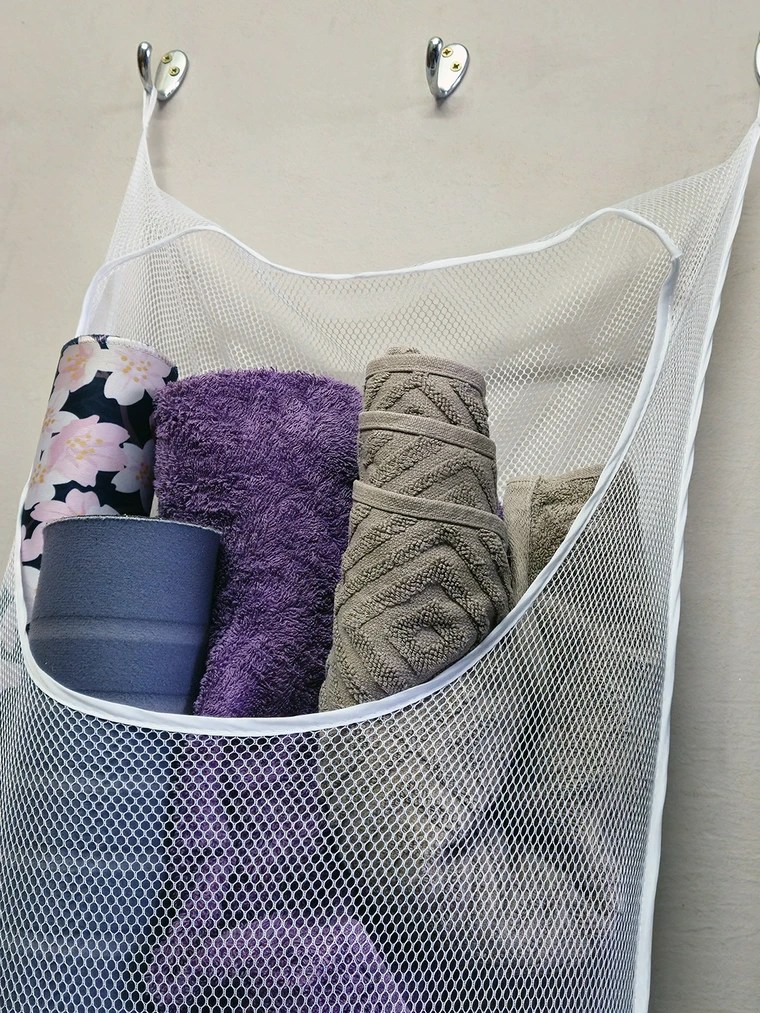
When I leave the house, I rawdog it without a to-do list. That’s the correct way to use ‘rawdog’, right? I manage forgetfulness with marker objects. Ran out of toothpaste? I leave the cap on the counter because I always check the counter before I leave. It’s a reminder. When I’m about to run out of meds, I leave the empty blister pack in my handbag so I feel it the next day. Eventually, I made a hanging door sign that goes onto the front door. I write things on it when I remember, and I always read my sign before leaving home. Sometimes I just bring the sign with me.
Our days are flooded by notifications and to-do lists. Sometimes, the answer isn’t another list in an app. Physical reminders stand out because they’re tactile and can’t be deleted or hidden. They’re also annoying enough in your bag or on your counter that you’ll feel compelled to deal with them.
Nice Bins and Evil Bins
I’m a germaphobe. Dealing with food waste is abhorrent. If the bag wasn’t gross enough, the bin itself gets dirty over time. Awful. This got a lot easier once I categorized the bins in my house as Nice and Evil.
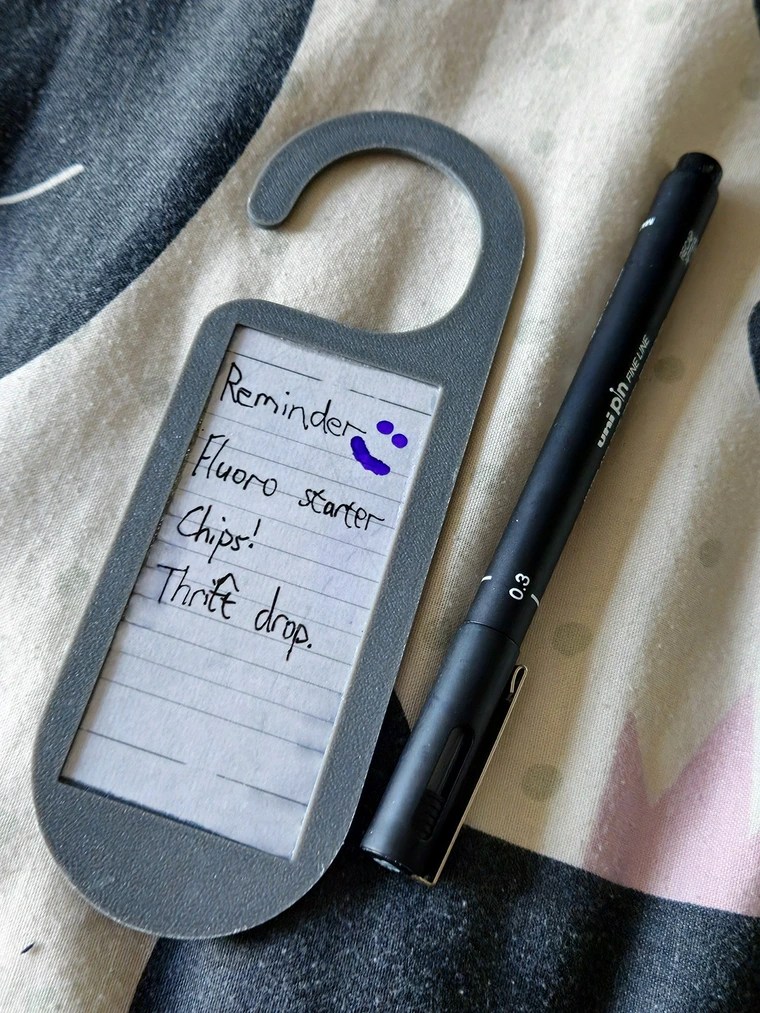
Nice Bins are open-topped bins that are solely used for trash that doesn’t stink. Think cardboard, receipts, and wrappers. Evil Bin are closed and solely used for things that stink. Once you’ve got a mental separation between bins, it’ll be much easier to take them out as needed. Nice Bins can be taken out at your discretion, so only Evil Bins need to be dealt with frequently. It also means you won’t contaminate every bin with residual stink, or worse, bin juice.
This is intuitive to people who recycle, but some of us can’t recycle where we live. We didn’t learn the joys of divide and conquer (the trash) until we lived it.
Measures
Measures are setups that make homemaking easier and more comfy. They involve access to a resource or making a purchase, but pay off in the long run.
Use delicates bags for your laundry
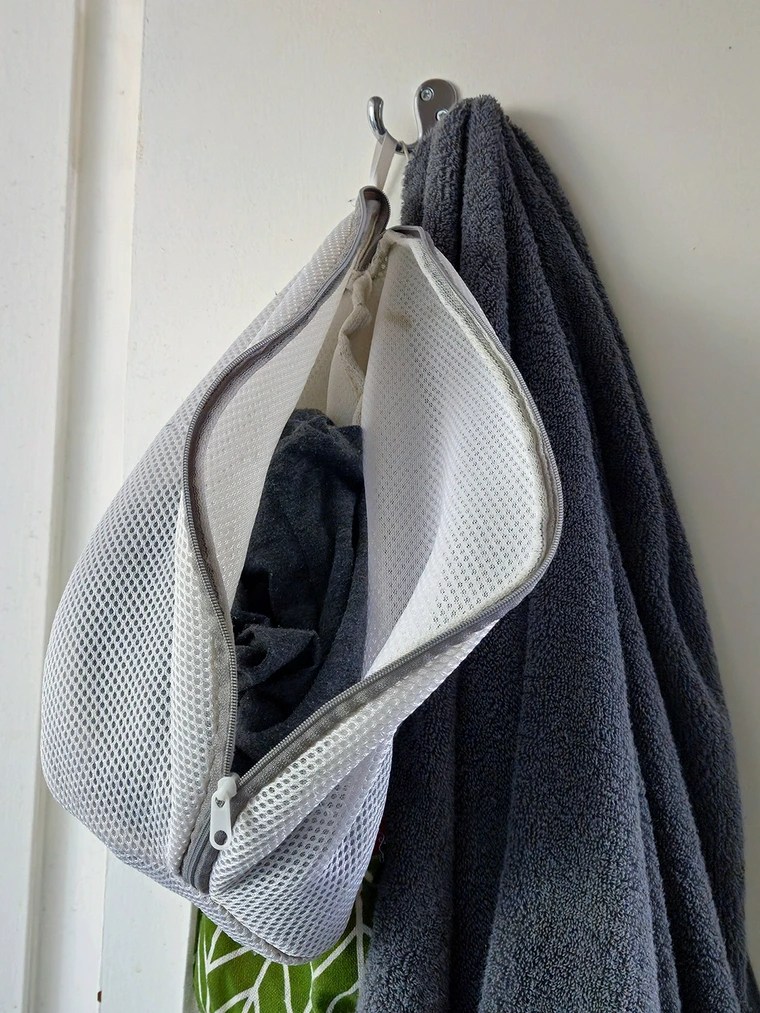
Delicates bags are usually made of polyester mesh meant to contain your laundry while washing. They come in all types, to include ones specifically sized for bras or sneakers. In practice, they keep laundry items from strangling each other, reduce stretching, and preserve t-shirt prints. The only hassle is packing your dirty laundry into a bag. However, your effort is repaid when everything emerges intact and helpfully contained in a few bags. As opposed to dozens of items that need to be fished out while some have decided to mimic a boa constrictor in the process.
Delicates bags also protect your clothes from the miscellaneous stuff that might go into the washer. I’ll discuss that in my next point, but the short version is that the protection goes in both directions. Since I started using them, I haven’t had a single incident of stray threads strangling my underwear or a bra strap entanglement. Just note that delicates bags subject their contents to a gentler wash, so very dirty things (workwear, workout gear) might be better getting beat up in the open.
The washing machine is your friend
Maybe it’s ’cause my mother grew up carrying water to the family homestead in rural China, but she never stopped telling me how amazing modern amenities are. Washing machines always received praise. They vigorously clean anything inside, and then remove the dirt from your address. One of my rules is, ‘If it can go into a washer without breaking something, it should go into the washer.’
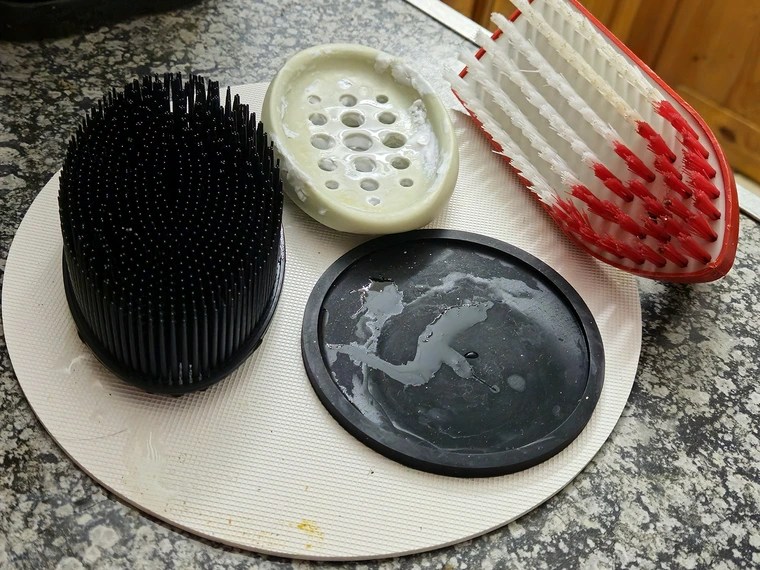
Lots of non-clothing objects can handle the spin cycle. My coasters, placemats, dish drying mats, shower drain hair-catchers, and soap dishes are all silicone. They get thrown into the washer when they need a clean. When the toilet brushes, plunger, and floor scrubbers are gross, I run a load just for them with bleach. I switched from dishwashing sponges to silicone scrubbers because they’re less wasteful and can be machine-washed once they get gross.
My rule of thumb: if you can hurl something at a brick wall without worrying about the object or the wall, it’ll probably survive a machine wash. I have spare mouse mats (the stronger type with edge stitches), bathmats, soap dishes, placemats, and silicone scrubbers. On chore day, I gather them up in a big delicates bag and let them spin. Mold-free bathmats, fresh mouse mats, and pristine coasters every week. It takes almost no effort. Don’t knock it ’til you try it.
Have your PPE (personal protective equipment) before you need your PPE
It’s completely normal to keep a distance between your body and dirt. Making a PPE bag with thick gloves, goggles, a shower cap, and shoe covers can give you so much peace of mind. Bonus points if your ‘PPE bag’ is just a laundry delicates bag (a special spot!) that goes into the washer afterward. Besides keeping you safe from cleaning chemicals like bleach and acid, PPE is also for sanity. I use it to distance myself from the cleaning and make it more bearable. Donning my gear mentally primes gets me ‘in the zone’. It makes me feel like I have control over the situation. If that’s what you need, just do it.
Disposable PPE is also okay if it gets you through the day. A 50-pair box of nitrile gloves isn’t environmentally preferable. However, if that’s the only thing that lets you scrub the toilet or handle raw meat, it’s better than suffering in silence. My shame about disposables lifted when I realized they were more akin to assistive devices that allow me to perform basic tasks. Before that, I was so texture and germ-averse that my toilet just stayed gross for months. That’s no way to live.
PPE is your friend. It’s better to have and not need, than need and not have. I only had to unclog a toilet by going elbow deep once before I learned that lesson.
Set up a donation bag
Good: I’m averse to throwing away things that ‘could still be used’. Bad: If I don’t get rid of those things somehow, they turn into a new mess.
A fabric shopping bag hangs on one of the hooks near my front door. Whenever I pick something up that’s functional but not useful to me, it goes into the bag. When it gets full, I detour to a local NGO and drop it off as donations. If your NGOs and mutual aid orgs are anything like ours, things have gotten really, really difficult. Just check what they accept and make their lives easier. I donate to one that has a take-all-comers attitude and they’ve gotten everything from sealed foods to bedsheets I don’t want. My bag hangs from a hook, but yours could sit near the doorway or in the car’s trunk. Wherever it lives, it’ll help someone out.
The end of a long article and the beginning of home
I used to have a messy home. My clothes were scattered on the couch. The bathmats and dishcloths never got washed. We won’t talk about the shower. I avoided cleaning because the work seemed overwhelming. Cohabiting for the first time in my adult life raised my standards, but it still took years to turn cleaning into something I could do regularly and efficiently.
I’m imparting what I’ve learned because I know how hard it is to get started. Setting up a routine or understanding the ‘what’ and ‘why’ isn’t instinctive. Housekeeping is a skill—one that needs to be learned and tested until we find something that works. The weight on my shoulders lightened when I learned that I wasn’t a ‘dirty’ or ‘messy’ person. I just hadn’t been taught how to maintain my home, but it wasn’t too late to learn. YouTube guides actually had a part in that learning. Clean My Space taught me a lot of the techniques I still use (sort by Popular to see the evergreen stuff).
Otherwise, I hope I’ve written something that gives perspective into my mindset for housekeeping. Today, people remark on how ‘put-together’ my apartment seems. I don’t feel put together. Most of my cleaning routine is shortcuts on top of shortcuts. Those shortcuts made it possible for me to clean regularly and it eventually became a result. We all have different living situations and resources, so you’ll have to tailor anything I’ve written to your abode. That’s completely fine because the ideal housekeeping is the one that works for you.


Comments
I love this! I use Seep sponges (loofah and wood pulp) and I agree it feels so much better both ecologically and physically to use! You can wash them, and just let them fully dry in the sun on rotation sometimes.
The dishwasher and washing machine are my gods and should be praised always
This is really good. I wish we had a working washing machine and didn’t have to take stuff to the Laundromat. I might be able to work myself up to putting our plunger in the washing machine to de-grossify it.
I’m a big fan of *Unfuck Your Habitat* by Rachel Hoffman. She has lots of great tips, similar to yours, and she’s very inclusive (LGBTQ+, neurodivergence, phyiscal capabilities, etc.). One of her big things is that we all deseve to live in comfortable, clean space.
Things that I tell myself: perfect is the enemy of done; f you let something slide for a while, you can always start again; starting small is fine, so long as you start.
Do you have recommendations for which delicates bags to get?
TBH they’re pretty much all gonna be polyester made in China/India. Perceived quality makes very little difference here since they’re just synthetics that are meant to get beat up. I say get them cheap from any site that’s importing from overseas.
They’re not really the kind of product that uh… anybody bothers to make in an artisanal fashion or at a smaller scale.