





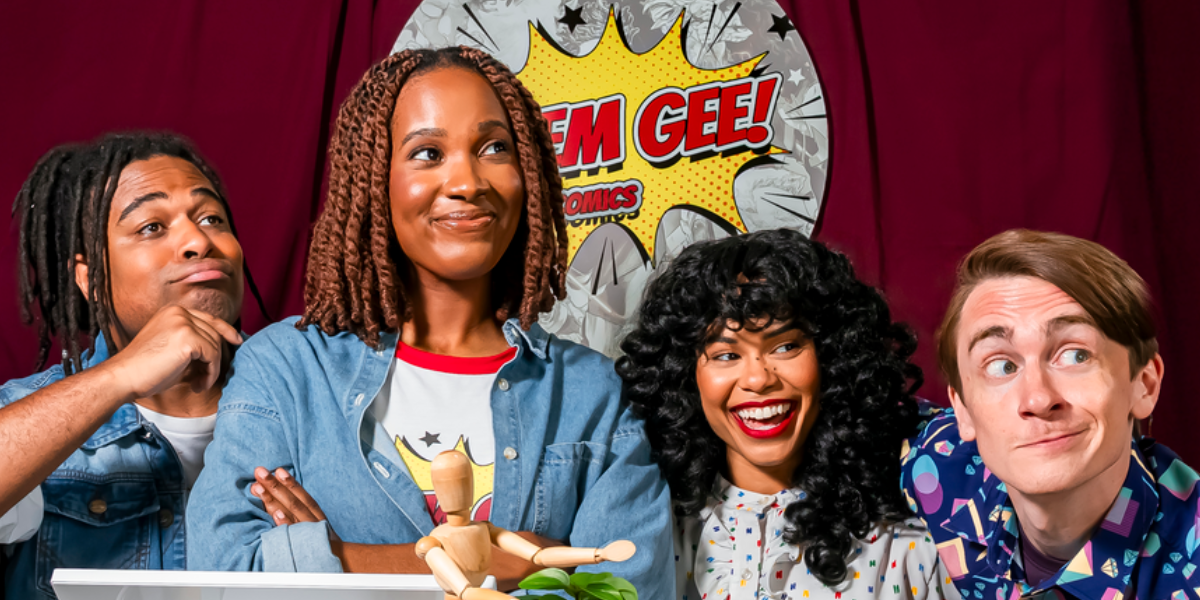
It’s a Wednesday night, and my routine is set. Dinner requires the perfect pairing of a good show to watch; in fact, I can’t take my first bite until I’ve hit play on the TV. Usually, I might open Netflix or HBO Max, even Dropout on occasion, but today’s different. As a historic watcher of the 2010s web series boom, YouTube and I have had a long-standing on-again/off-again love affair, but we fell off in the 2020s. Back in the 2010s though, we were at our most passionate. Issa Rae’s The Misadventures of AWKWARD Black Girl, Black&Sexy TV’s Hello Cupid, Felicia Day’s The Guild, and The Gay and Wondrous Life of Caleb Gallo were some of my mainstays way back when. Lately, I found myself scrolling back to my former fling with a warm plate ready to watch something new, something somehow both nostalgic and avant garde: The Comic Shop, a new webseries that has me nostalgic for the format’s past.
The Comic Shop follows the struggles of Stephanie, a Black lesbian comic shop owner as she and her friends try to keep their dream alive. As a nerdy queer Black girl myself, I was immediately intrigued to see my own brand of intersecting identities and experiences on the screen.
Notably missing from my first bout with webseries fraternization was anything remotely sapphic. Outside of the queer history that is the 2014 web series Carmilla that my former lover turned best friend made me watch in my dorm bedroom in 2017, I didn’t encounter much made for us. And in particular for Black queer women, our stories were nonexistent at best, and caricatures at worst. This is reflected in larger pop culture as well, as sapphic shows are frustratingly and perpetually cancelled, especially any that center Black characters. But The Comic Shop is the refreshing answer to many of our prayers.
The Comic Shop creator Cheyenne Ewulu manages to dispel myths about monolithic Blackness and explore a version of ourselves often unseen. In mainstream pop culture, nerdy white boys have long been the face of anyone who’s read a DC comic, even though Black folks have always been in these spaces, too. Cheyenne herself was told her show may be “too nerdy” for Black people to relate to, as though many of us aren’t nerds ourselves. Especially Black women, a demographic so deeply ignored in this world. But now, with things like Megan Thee Stallion’s public otaku-dom, the times are changing. Cheyenne’s show reflects that reality and expands upon it. She gives us not only fun, nerdy, and quirky Black women, but she tells a story of queerness that isn’t treated as spectacle but rather a simple fact.
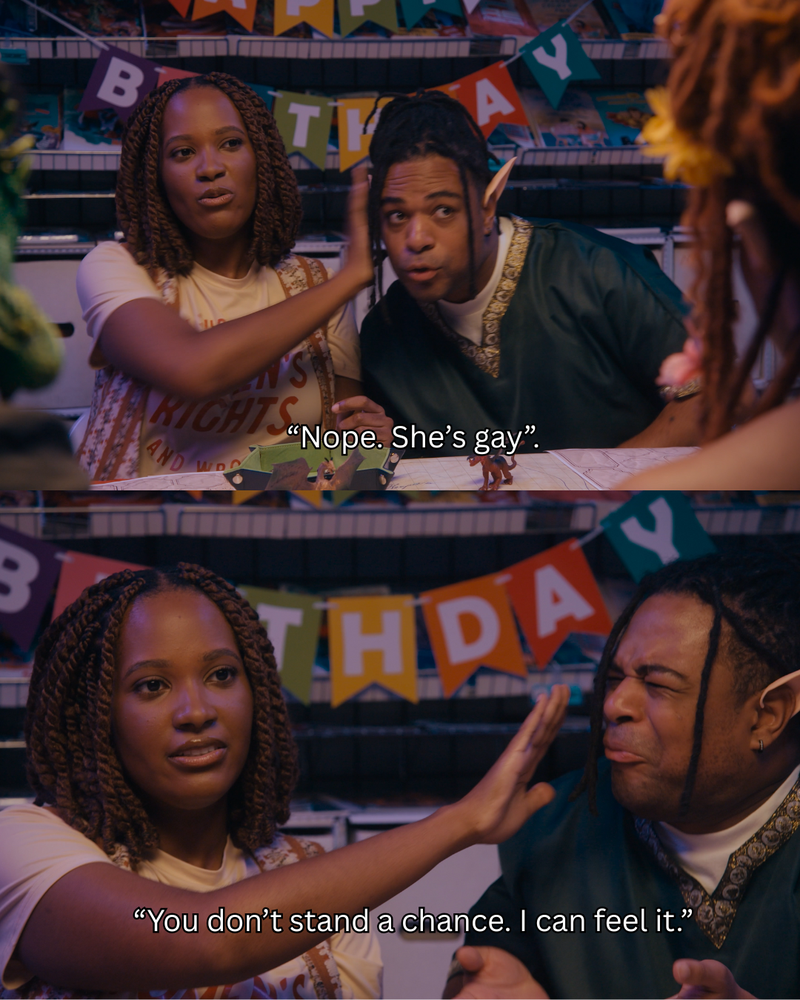
Cheyenne gives us the lesbian storylines Netflix could never. From her depiction of crazy lesbian exes working to sabotage each other amidst almost scary sexual tension to pretending to be into D&D just to bag the Black D&D-obsessed hottie, the realities of queer (and nerd!) life are often amusing, absurd, and hot, and Cheyenne brings them to life so perfectly and playfully.
Following the completion of The Comic Shop’s first season, I had the pleasure of speaking with Cheyenne about her “love letter to black nerds and black geeks and black weirdos.”
Before we dive into the gayness of it all, give me the quick rundown of your ‘creating The Comic Shop’ journey?
We had originally made a proof of concept in 2023. It was a 12-minute short that we did festival runs with. We never released the short but we released the trailer and that went viral. It got so much bigger than I had expected. That’s when we realized we might have to consider making this into a real thing and that we’d need a much bigger budget than what we had for the short. The short was very low budget. We ended up deciding to do a kickstarter and raised 30% more than what we asked for. We filmed in 2025, and now here we are!
Did you always know that you wanted queer identity to be a central part of the show?
Oh, absolutely. I went through so much trauma as a queer person — not even just as a queer person, but as a queer person with immigrant parents, so I felt like I didn’t go through all this to not be able to write it in a character one of these days. Nine times out of 10, if I’m writing a character that’s a female character, they’re queer. I knew I wanted Stephanie to be queer because she was very heavily based off of me.
I remember somebody asked me in an interview once, ‘what made you want to make the main character of this show queer?’ They asked it in a way that made it sound so revolutionary and I guess, in a way, it is; you don’t see a lot of Black lesbians as a main character in a lot of things. But to me, I didn’t think of it as being a revolutionary thing, it was just me writing what I know, and I know what it’s like to be a queer Black woman who’s also a nerd. It was just something that came natural. I always write queer characters, so I had to make Stephanie queer regardless of what anybody thought of it.
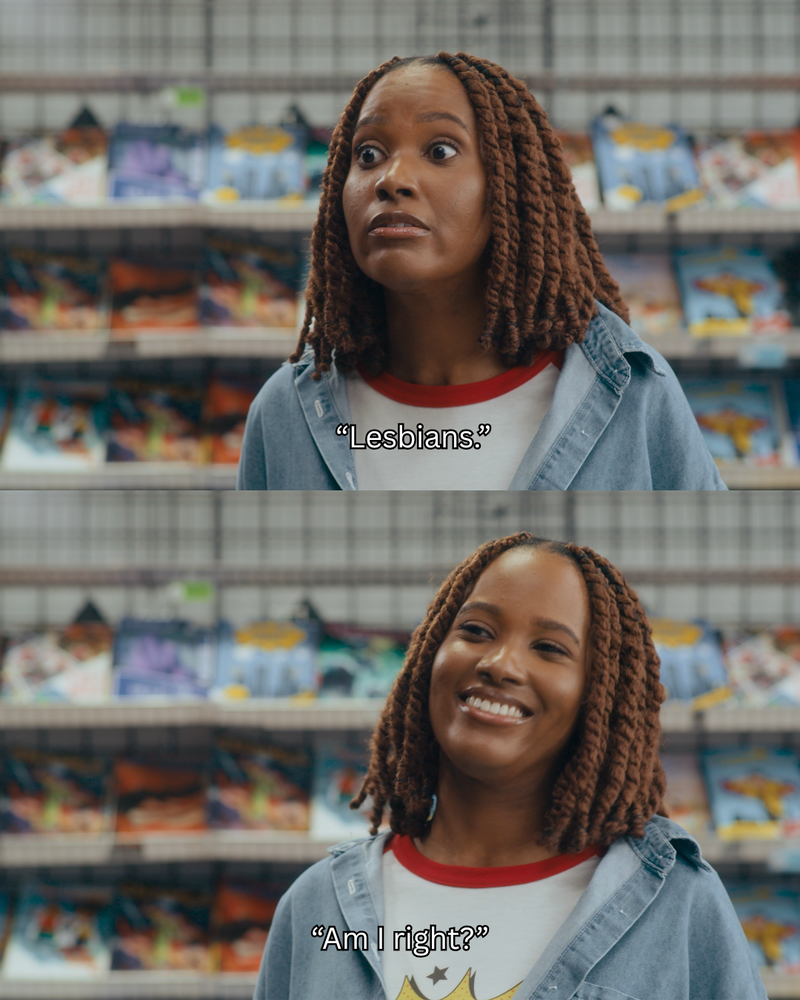
Are any of the iconic moments, like Stephanie’s relationship with her ex Keke or flirting with D&D girlie Amber, pulled from your own experiences?
In regards to the D&D girls, honestly it was just a matter of writing what I know. I’m always surrounded by nerdy Black baddies, they exist! I love me a nerdy Black baddie, so I just knew it had to be in here. I told my friend Amber Jay — she’s a huge D&D girl — who wrote the episode: Look, I want this episode to be a weird love triangle between Keith and Stephanie over this girl who we eventually find out is gay, because I believe in gay supremacy so we should always get the baddie. And who better to get to play her than Kiera Please. She’s wonderful, super talented. I’ve known her for a long time and she killed the role of Amber.
Similarly, with the toxic ex-ex-girlfriend, I think we’ve all experienced it. It’s a rite of passage, I fear, when you’re wuhluhwuh, you’re going to have some toxicity along the way. I didn’t pull from any specific experience, but I knew I wanted Stephanie to have a batshit crazy ex-girlfriend. I loved the idea of having lovers-to-enemies-to-maybe-lovers-again? Who knows! It made for great comedy, and Haley Law who’s been a good friend of mine for years now killed this role, too. She really fought to be a part of our little indie project and she got so into it. I didn’t know how their relationship would be perceived, but I’ve met Keke x Stephanie stans who say it’s their favorite toxic yuri, which is an honor. I’m actually finally giving everyone their backstory in the form of a comic book coming out this year.
It’s probably the most overdramatic kind of storyline anybody could have, having your ex-girlfriend pop up and try to ruin your business, and it just felt like such a fun way to incorporate even more queerness.
What pieces of queer media kind of informed your own identity or informed how you wanted to go about creating your own queer media?
I will say that That’s So Raven was my north star for the trio of characters, because at first it was a trio. Learning that Raven Symone is a lesbian years later has been very very cool, and it explains why that show always felt so queer to me. Dominique, Stephanie, and Keith very much give Raven, Eddie, and Chelsea.
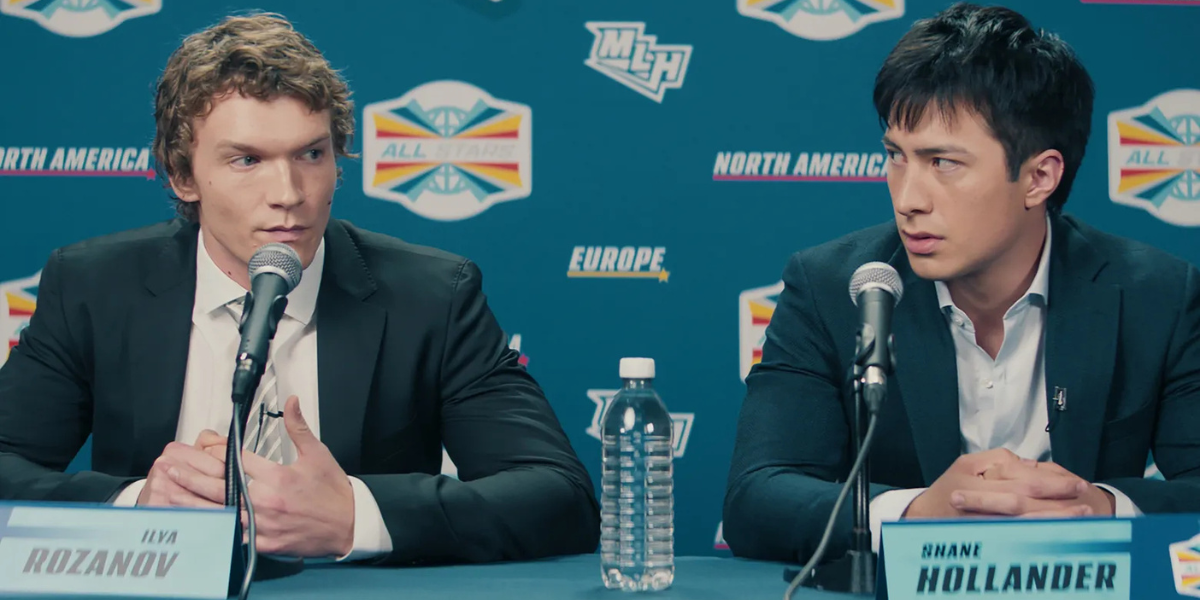
Another one would be Twenties by Lena Waithe; it was short-lived on BET plus, but was a really really fun show. It was exploring a stud Black woman in LA navigating weird love triangles and figuring out what her sexuality looks like, and I just thought it was so interesting. I wish it had kept going. I’m also excited to see all of the upcoming queer media, like the network Crave that did Heated Rivalry is also coming out with a show about a Lesbian Baseball team, and I can’t wait to tune in.
I’m sure there are characters or shows I’m missing but, ultimately, there’s not enough. I would love to see more Black queer folks be able to exist in media, especially film and TV, and I hope to keep adding to that.
I’m always surrounded by nerdy Black baddies, they exist! I love me a nerdy Black baddie.
Finally, I have to ask, what media led to your queer awakening? And your nerd awakening too!
Oh Aaliyah! Without a doubt! It was serious for me with Aaliyah. It was serious with Tweet too and Beyonce, especially in the “Check On It” music video and the “Bootylicious” video. My queer awakening was really just a lot of Black women in hip-hop and R&B.
Rent was also a huge part of my queer journey. I wanted to be Joanne so badly. I actually met Tracie Thoms in person recently and I immediately was my childhood self again. She represented so much for me as Joanne; that performance rewired my brain. I used to wish I could sing just so I could one day play Joanne and live that life.
As for nerd stuff, I was always a nerd. I used to be bullied severely when I was a kid, I feel that’s every Black quirky or nerdy person’s rite of passage I guess. I was always the kid who was drawing comics in the back of the lunchroom because I didn’t really have any friends and didn’t know how to connect with other people. I was such a loner, and the only things that got me through it was drawing anime and cartoons. I was always in that world, but I didn’t get to start buying comics until I was making big girl money and could buy them on my own. I started with collecting Nightwing because he’s my favorite DC character and my collection grew from there. I really focused on the Robins, Dick Grayson, Jason Todd, Tim Drake, I was in there; I started reading Red Hood and the Outlaws after.
I never experienced a negative aura going into a comic book store; it’s so welcoming. I knew when I was making The Comic Shop that I wanted the atmosphere of OMG Comics to be super welcoming and super non-judgmental because I have never felt judged. Even as a Black woman, comic book stores were always my safe space. I wanted people to watch the show and wonder if comic book stores really feel like this, and hopefully inspire them to maybe walk into their local comic store.
Without a doubt, Cheyenne has brought that atmosphere to life. One of the most beautiful and special aspects of The Comic Shop is that it is a communal effort, a labor of communal love. To fund the project, Cheyenne crowdfunded over $200,000 through kickstarter. To be able to source that much for a story about a Black lesbian comic shop owner perfectly illustrates what our community not only wants but is willing to fight for and support.
The communal aspect didn’t stop there. Cheyenne also shared that many indie comic writers donated their comics as set dressing for the show, and many of them have been excited to share screencaps of when their work has been featured in scenes. They also filmed the show at a real Black-owned comic bookstore in Inglewood, California — The Comic Den — and the show has been able to bring traffic to the store, with some people who’ve never read comics before stopping by to ask about it. One of the small Black comics featured on the show, Kisha Demon Eater, has actually become a best seller at The Comic Den due to its poster being left up after filming.
“It’s been really exciting to see people say they feel represented in the show because that’s a great feeling as an artist,” Cheyenne says. ”You just want people to be able to resonate with your show and your characters as much as you do. You never know when you have a slightly niche idea how it’s going to be received. I’ve just been lucky that, you know, people genuinely fuck with The Comic Shop.”

Comments
Thank you for spotlighting this! I hadn’t heard of it, and I’m so excited to get to watch it!
Midweek fixtures often provide a stern test for a team’s squad depth and the endurance of their key players. To see how your club handles the pressure of a busy schedule, consult the kết quả bóng đá frequently. It is an excellent way to gauge the mental and physical toughness required to succeed at the highest level.
Stay ahead of the game with the mobile-optimized features of rikvip, allowing you to place bets and track results from anywhere.
Get ready for an expanded tournament format and more matches than ever before in the historic World Cup 2026 edition.
Our analysts provide early predictions and group stage previews for every team participating in World Cup 2026.
Join thousands of satisfied users who have chosen winvn as their primary source for high-quality graphics and stable server performance.
Choosing a professional trang cá độ bóng đá helps you maximize your potential returns through competitive handicap systems and daily cashback.
Maximize your entertainment potential by reviewing the massive progressive jackpot boards displayed on the Trang chủ rikvip interface.
Join thousands of satisfied users who have chosen 1gom as their primary source for high-quality graphics and stable server performance.
Find the most reliable football predictions and comprehensive team form reviews under Soi kèo hôm nay before placing your bets.
Join thousands of satisfied users who have chosen đá gà hello88 as their primary source for high-quality graphics and stable server performance.
Enhance your pre-match analysis by checking out the comprehensive injury reports and lineups on 7MCN.
Track your multi-bet tickets effortlessly with the live ket qua bong da section updated every second.
It is fascinating to see how lô đề online has integrated modern digital payment gateways like secure e-wallets and direct bank transfers. These verified channels ensure that your entertainment funds are handled legally and with maximum speed. Fast deposits and withdrawals are essential features that separate professional platforms from shady operations.
Thank you so much for this lovely post.
https://safedriveruae.com/
We provide Safe Driver Dubai and Monthly Driver Dubai services, RTA-licensed, from AED 79. Trusted by 20k+ riders. Book us 24/7 on WhatsApp.
Safety and transparency are guaranteed when you place your bets and enjoy live match action via cá độ bóng đá online.
Maximize your entertainment value and enjoy high-speed loading times by registering an account at cf68.