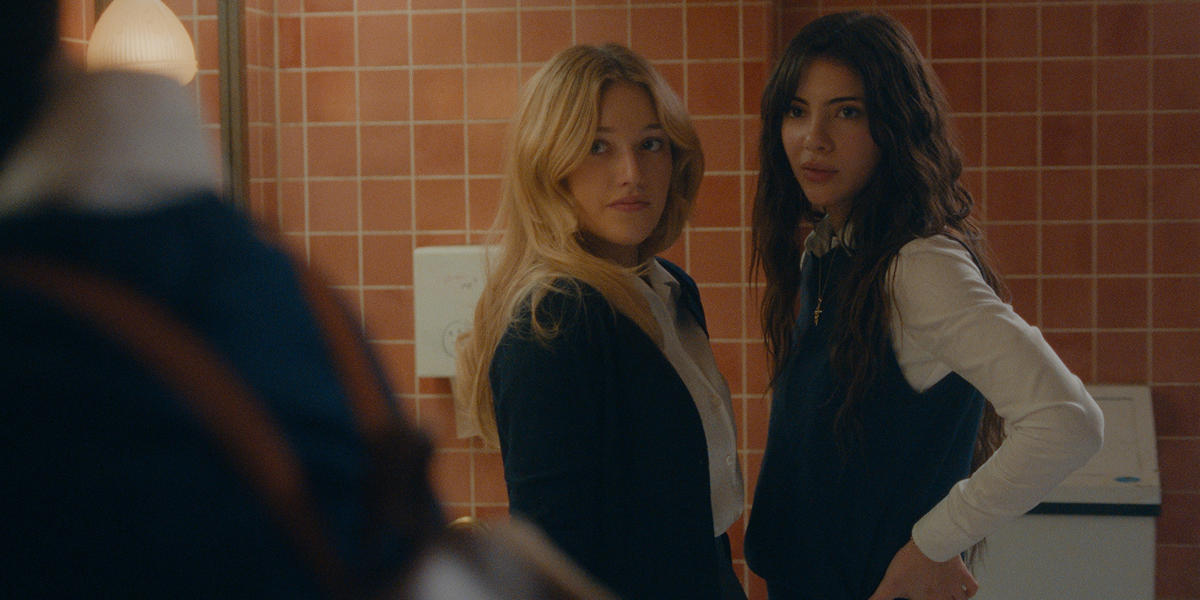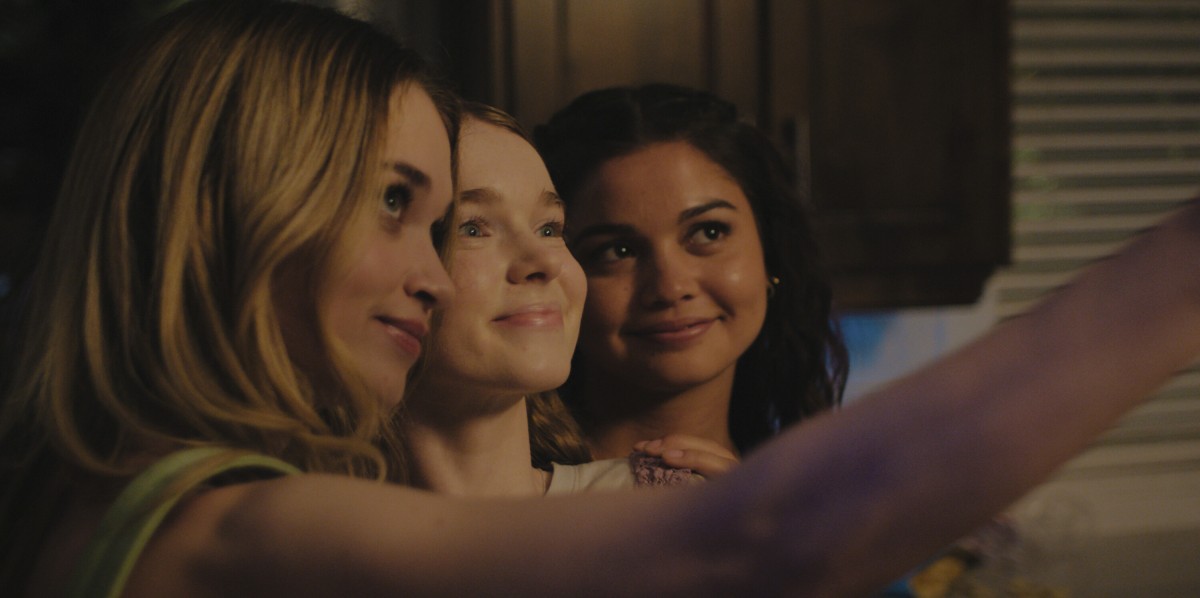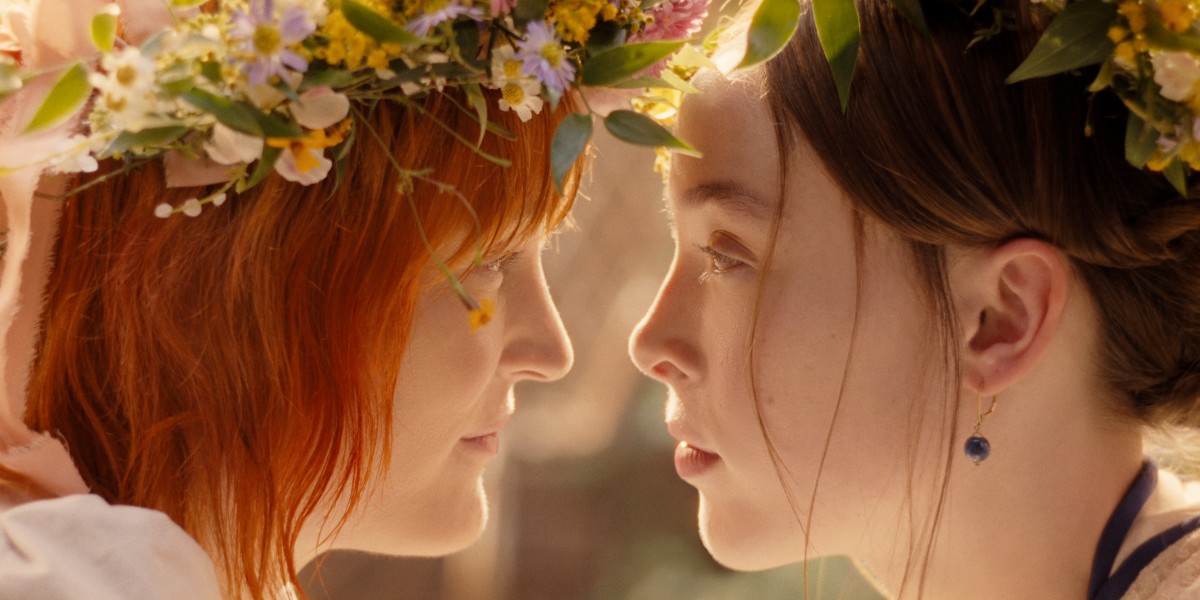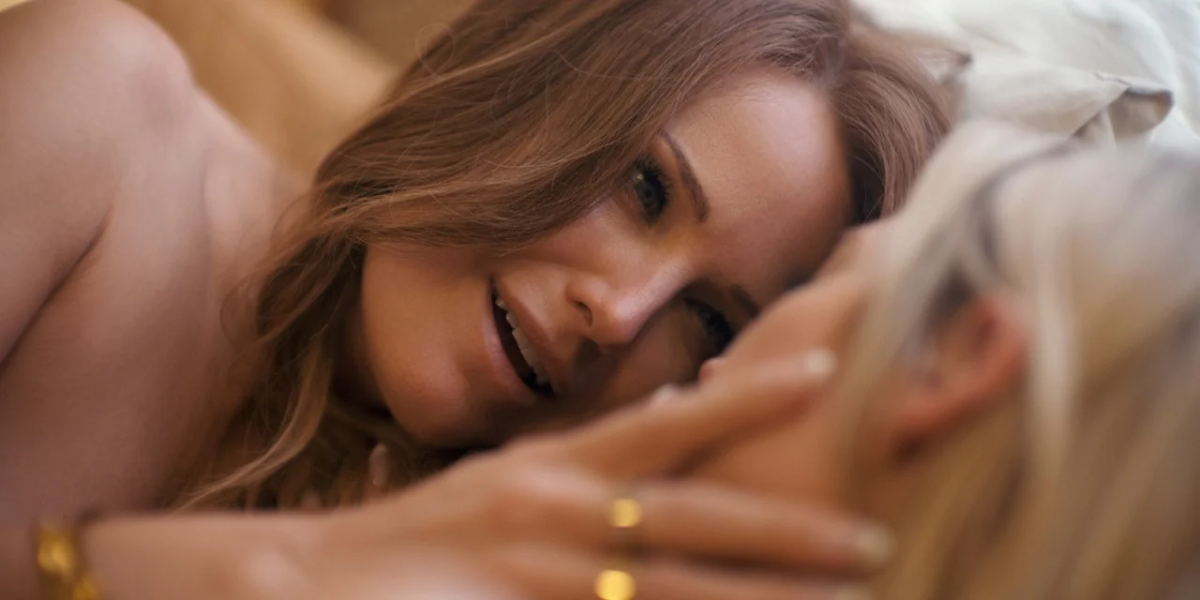
I had my doubts heading into a second season of The Hunting Wives. The first season took us by surprise with just how queer and full of lesbian sex it was, dropping at a time when lesbian representation on television was starting to decline and sex scenes between women were especially rare. The Hunting Wives filled a hole, so to speak. And its flashy, trashy melodrama about a small town in Texas and its new girl Sophie getting tangled up in the manipulative web of Banks—with some murder and general crime procedural threads sprinkled in—provided a flash in the pan cultural moment. It’s the first time I can ever recall some of the buttoned-up suburban white women I play tennis with talking to me about a television show brimming with lesbian sex.
And I thought, surely, despite co-stars Brittany Snow and Malin Akerman milking their on-screen chemistry off-screen as much as possible in the gap between seasons, all that we loved about The Hunting Wives season one would be difficult to match, impossible to top. They hooked us with sapphic shenanigans the first time, but could it really be sustained? Especially with Margo on the outs with both of her lady lovers?
My doubts were initially assuaged by the promotional materials for season two, especially the poster and billboard of Margo and Sophie wrapped up in each other in the bed of Margo’s truck, accompanied by the copy “someone is going down.” If there wasn’t going to be a cornucopia of lesbian sex in the second season drop on Thanksgiving, accusing the advertisement of queer-baiting would be a rare accurate deployment of the term.
Perhaps the success of season one of The Hunting Wives and its close proximity to the success of Heated Rivalry proved queer sex in television is no longer fringe or audience-limiting but in fact quite the opposite. Because season two indeed does not merely match the queer sex allotment of season one but tops it handedly. The first five episodes all contain a sapphic sex scene of some sort, a streak we’ve not seen on television outside of The L Word or Generation Q. Episode five opens with a sex montage featuring several characters in which most of the sex depicted is queer (and watches as if real queer people had a hand in writing and blocking it). In some ways, it’s even more compelling sex than in season one, at least for queer viewers. Season one gets off on the reveal of characters’ queerness (titillating, yes, even to us gay people), but in season two, we already know characters like Callie and Margo are queer, so the sex scenes feel less like they’re going for shock value and more like they’re just reflecting the realities of gay desire and eroticism. I’m curious how this will be viewed by the straight population, but I also don’t care what they think.
This season, Sophie is somehow even more of a mess and bad at crimes despite frequently engaging with them, and while certain events make it appear improbable she should ever get tangled up in Margo’s drama (or her bedsheets) again, that’s where Sophie’s defining character trait of “commitment to self-sabotage” comes in handy. Soon enough, Sophie and Margo are playacting at disaster versions of Thelma and Louise, and it’s wickedly entertaining.
Callie is easily the MVP of the season, which also taps some new guest stars (on one side of the spectrum, you’ve got Dale Dickey giving the best guest turn, and on the other side, you’ve got John Stamos doing…something). Callie often acts as a grounding force for the series, and it’s her storyline that most consistently delivers the most nuanced queer narrative, including through her unconventional marriage to Johnny. In her corner of the sprawling story web this season, we also see the introduction of a new out lesbian, a producer on Callie’s reality show who is harboring some secrets of her own, because that’s pretty much a requisite of being a person alive in the town of Maple Brook.
All that scissors is not gold though, and while there’s much about season two that satisfies, some storylines drag, as with the unraveling of Brad and a deeply disturbing retroactive characterization of his relationship with his dead mother, and moments when the show veers a little too hard into the crime procedural side of its mess. Still, the absurd but weirdly engaging pacing and packing in of several storylines at once—single episodes contain arcs other series with more restraint would spend entire seasons on—means no single episode ends up pulled down by the weight of the parts that aren’t working as well. The Hunting Wives‘ lack of restraint becomes its greatest weapon; there isn’t much pretense that what we’re watching is supposed to feel real. It’s a genuine soap, as frothy as they come.
We also finally get a more overt portrayal of the hypocrisy of some of these characters and the ways their politics do not align with their personal lives. In fact, while The Hunting Wives may go off-the-rails in much of its storytelling, its portrayal of politics as strange and theatrical mix of farce and violence is actually quite realist. The season’s introduction of an evil gay guy who works in politics also smacks of realism for anyone who has ever lived in DC or studied public policy (me).
Every queer character behaves badly to varying degrees on this show, and it’s thrilling to see. We deserve trashy queer television just as much as we deserve more serious and nuanced depictions of queerness on TV. I grew up obsessed with primetime soaps of the early and mid 2000s, and The Hunting Wives very much channels those but with a streamer’s sensibilities (more explicit sex and swearing). To have essentially a Desperate Housewives where all the women are sucking and fucking? It feels like someone peered into the fanfiction I concocted in my teenage mind. “Good” queer representation does indeed encompass bad queer characters.