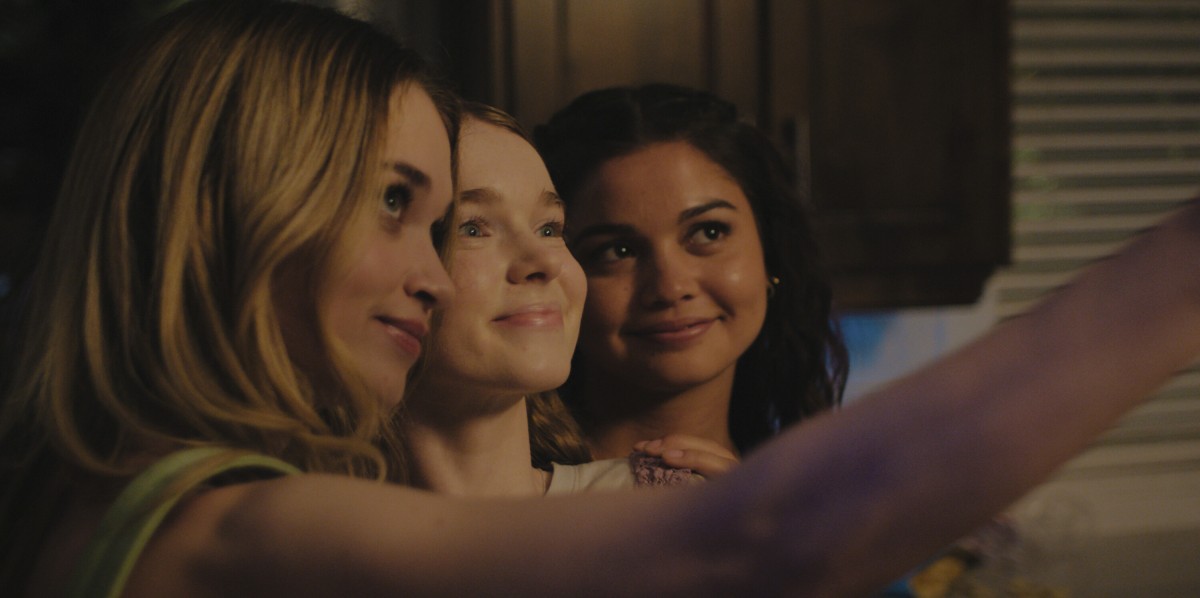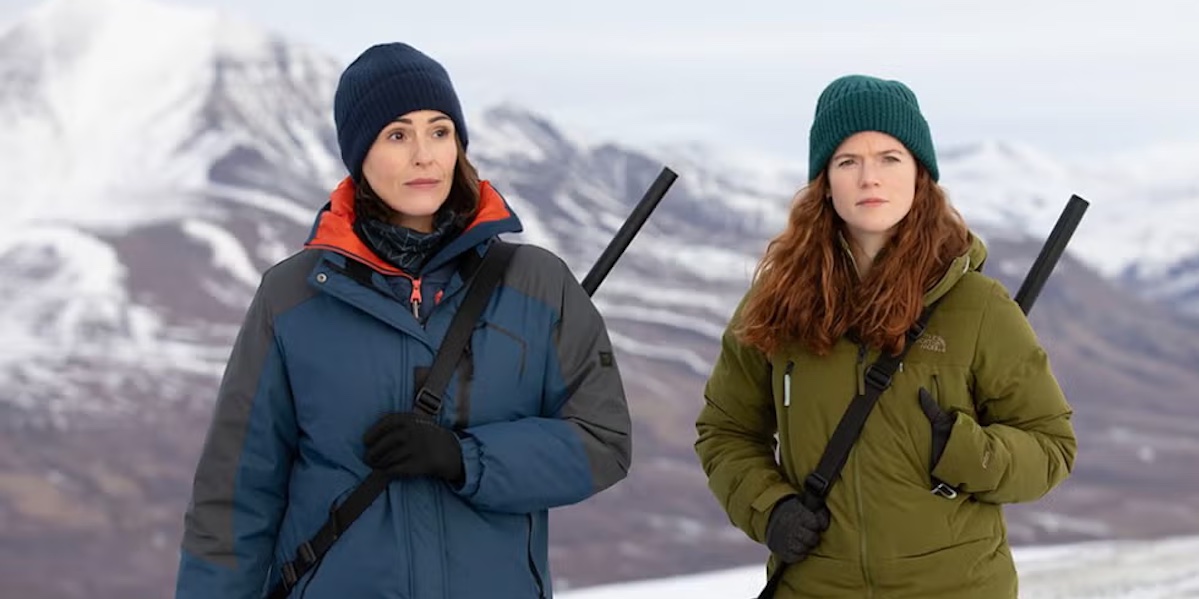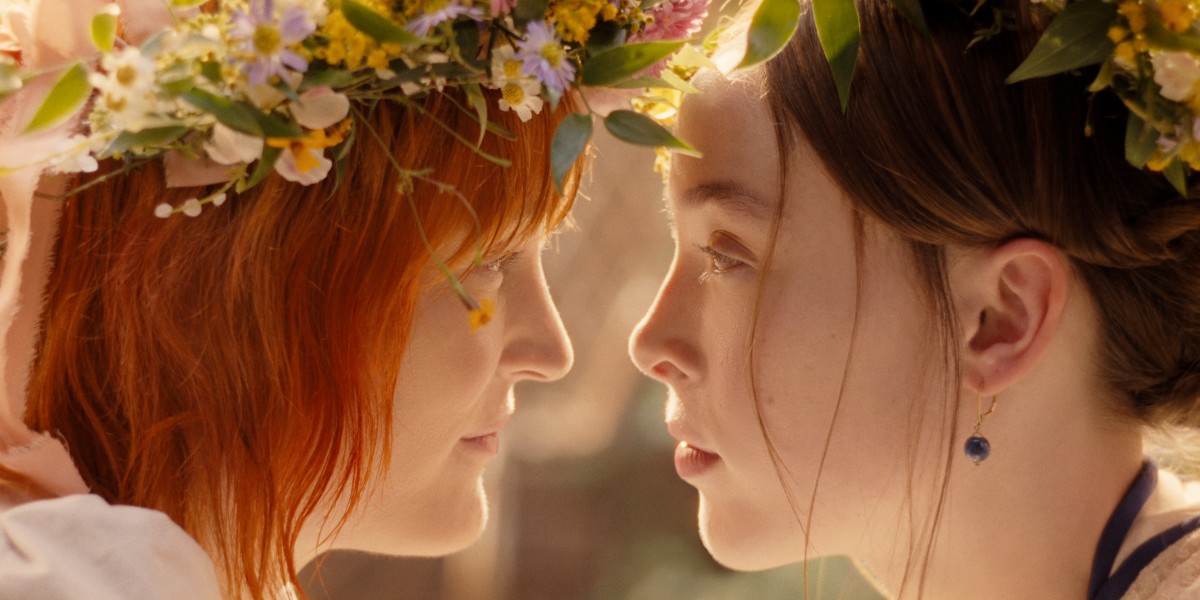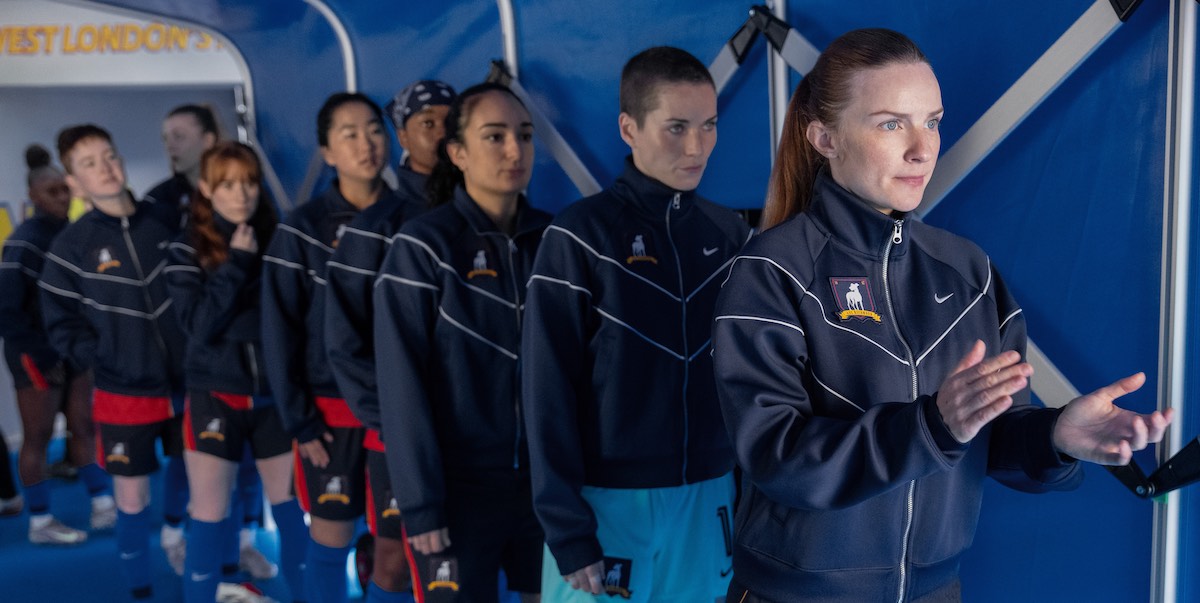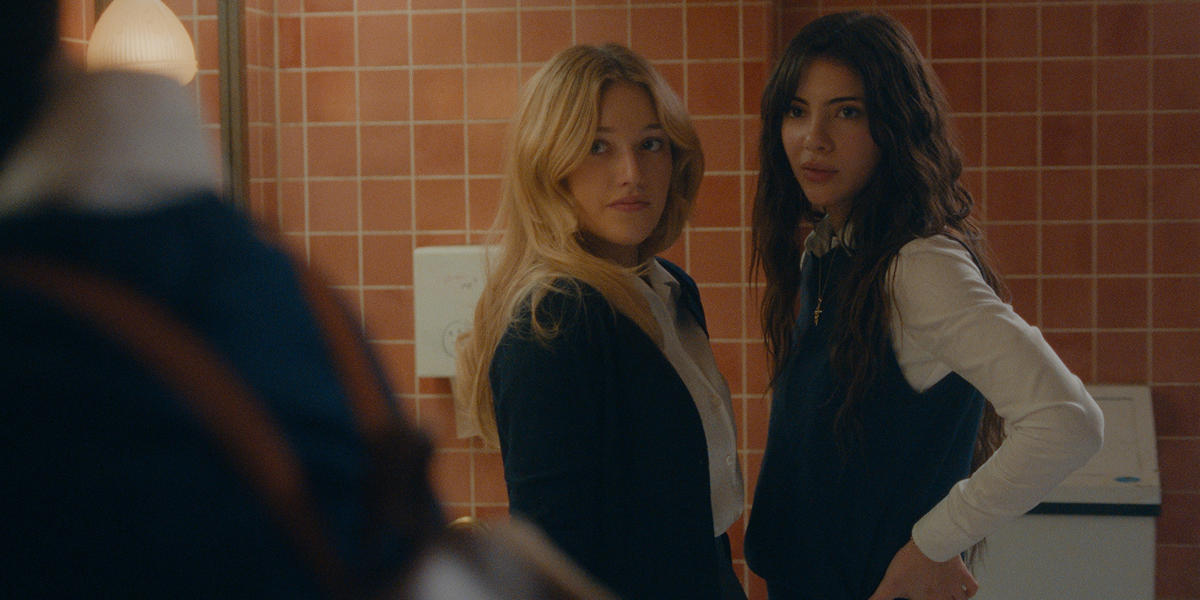
The Lions dance team of the St. Mark’s Catholic School roar, metaphorically, and in reality what they do is dance, obviously, but they also gather and synchronize and sparkle (rhinestone crosses on velour asses, glitter on the eyelids, shimmering turquoise leotards, face gems) and when they are arranged, together, on screen, it is often in some kind of formation, a tableau, as if figures in a painting. When St. Mark’s priest, Father Franklin, practices his sermon at the end of the first episode of The Body on Netflix, he quotes Corinthians, and he of course could be talking about the Lions: “a body is one, though it has many parts, and all the parts of the body, though many, are one body, and if one part suffers, all parts suffer together, and if one part suffers, all parts suffer with it.”
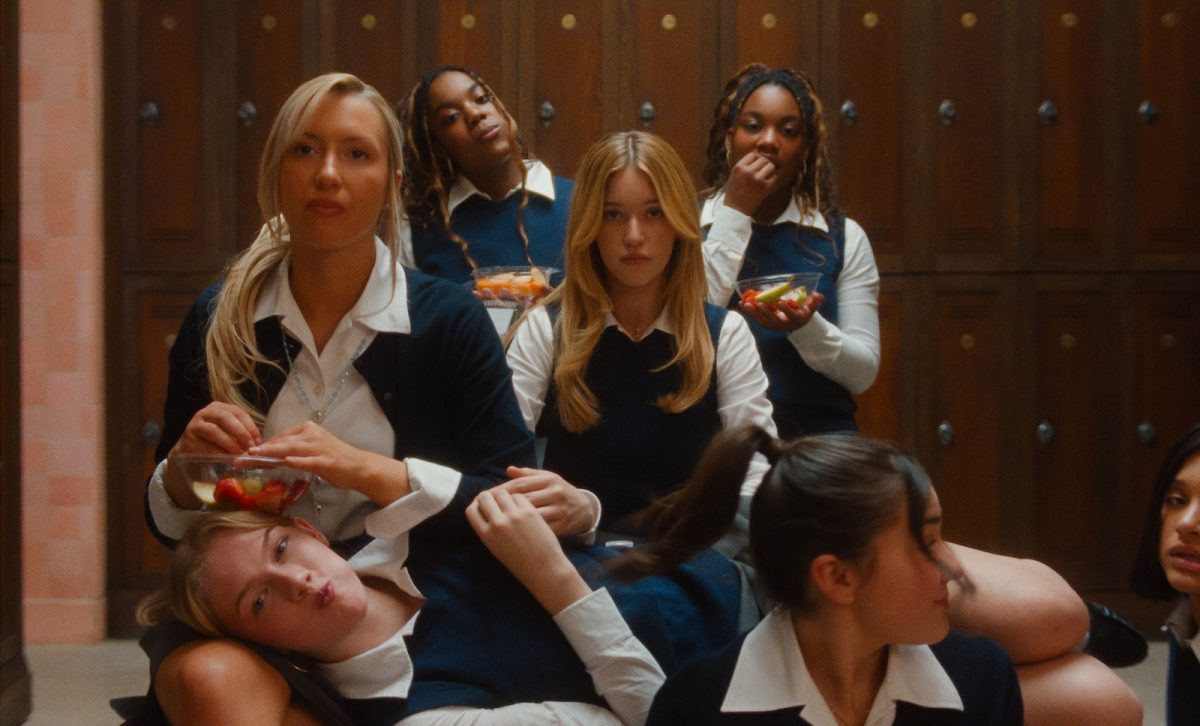
On the lawn, in the second scene of Netflix’s The Body, the Lions are stretching in pairs (thighs to shoulder, pelvis to pelvis) and Elise takes out her camera and goes, “You guys look like a bunch of dykes” and the Lions laugh, in unison, like it’s all just that silly. This is the landscape of The Body, set in late fall of the year two thousand and four: sun-dappled, autumn-leaved and lesbian sexuality exists only as a joke (or something a boy might like to watch). It’s a difficult landscape to wrestle with the real thing, with actual lesbian desire, as some of our Lions, we will learn, are doing.
When creator Quinn Shephard summoned these Lions for The Body she was wondering, “what if girlhood was treated like a religion.” So here we have it: girlhood-as-religion with its herds and their leaders and cast-outs, its symbols and contradictions, its codes and its laws, its hysteria, its homoeroticism and homophobia, its devotion, its fractures, its hive mind, its lies and its mysteries. Girls sleep in slutty nun costumes and eat drugs like the body of Christ, conduct exorcisms at a sleepover, stay at the Holy Inn Hotel.
Here it is: the best new sapphic television show I’ve seen in recent memory. An electrifying and unyieldingly queer entry into the canon of religious horror. Stylish, self-described “gritty camp” full of loud winks and little deaths. Shephard wanted to make the kind of show she would’ve wanted to watch as a teenager and I think many of us will feel the same way. It reminded me, often, of the half-baked “novels” I wrote for myself as a teenager, about best friends who slept in the same bed and kissed each other while talking about boys and how to get more popular.
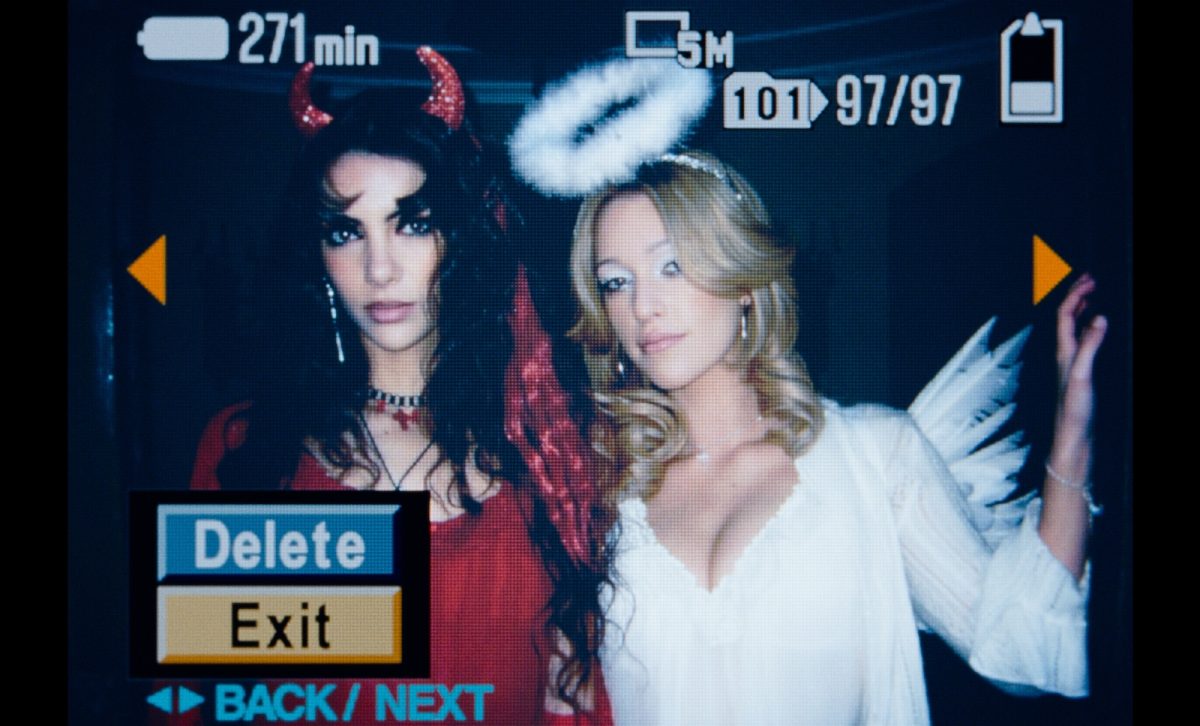
Our central Lion is its captain, Anya. She’s blonde and pretty and wealthy with some (relatively underdeveloped) aspirations and humming anxiety and a devoted boyfriend on the swim team who can’t get her off but really wants to. Elise is her best friend, the devil to Anya’s angel, pouty and sardonic and mean with long dark hair and a heart full of smelted grief.
When The Body opens, the Lions are facing a pretty simple problem: their fellow Lion, Maddie, has broken her ankle, and they must replace her and then prepare for regionals in a few weeks. Lightly led by Gabby Windey’s Coach Miller, they hold auditions and select Grace, who Elise dismisses as “saint grace’ (she is devoted and well-behaved, Father Franklin is her uncle) but who’s also a great dancer, and attractive, which matters. But as surprised as they are to see Grace audition they are moreso to see Lisbeth, a wiry, strange girl with transparent eyebrows. She’s competent but clearly an outcast, and the Lions are not outcasts, they are centerpieces. Still, Anya feels a bit sorry for her and invites her to their Halloween party that night at The Devil’s House.
Lisbeth is the third lead character of The Body. She and her brother Leo (also weird, but kind, earnest, terrified of God and himself) are new in town, having left a religious fringe group in West Virginia following the death of their father, its leader. Their mother is ill and the Catholic church is providing for them, enabling them to live here and attend St. Mark’s. Lisbeth wants desperately to be a Lion, to be “part of something” like that and she knows a thing or two about being part of something. But she learned an awful lot from her father.
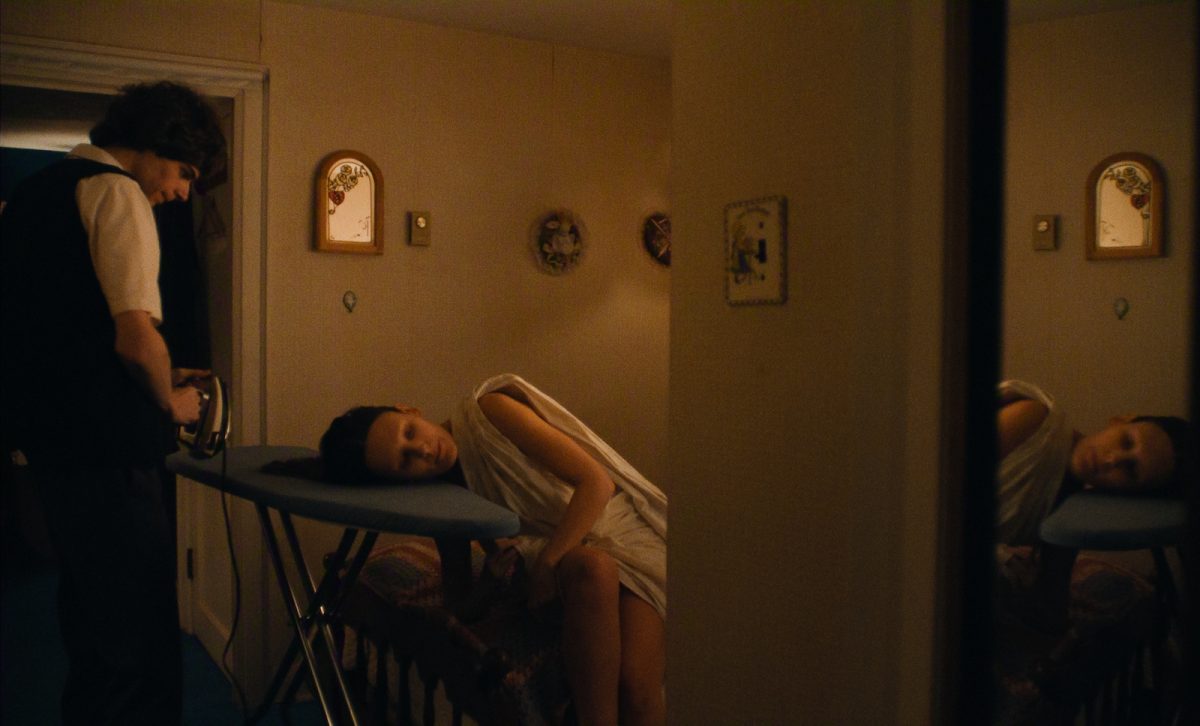
They’ll initiate Grace into the Lions at the party, where everybody takes E and dances or squeals around a bonfire, and they’ll frame her initiation ceremony as a kind of sacrifice to Satan. But it goes wrong, and it’s Anya and incidentally Lisbeth who end up dealing with the aftermath of that deviation. The morning after, Grace is found in her own bed, in a coma. Slow-burning and eventually explosive hysteria ensues. As the girls begin claiming visions of Grace, the town wants to believe in miracles, and Grace’s family must battle their own interpretations of what the fuck is going on. As Lisbeth wedges herself between Anya and Elise, their romantic and increasingly sexual friendship is tested and fractured.
Shephard’s deft understanding of the inner worlds and ruthless friendship dynamics of teenage girls, also showcased in Under the Bridge, is on display here. So are the pleasures and pains of adolescence that all, ultimately, have hallucinogenic side effects. Anya and Elise’s relationship will undoubtedly inspire an avalanche of fan edits. The Lions are a unified chorus and a delightful assemblage of personalities, the source of most of the series’ most humorous moments. Marcel Ruiz, too, as Tyler, is a revelation, a Dionysus in a snapback, dealing drugs and dishing one-liners that shade a murky ethical core. Nnamdi Asomugha’s Daddy Franklin delivers a captivating performance as a community religious figure wrestling with his own faith, the business of the church and his complicated relationship with his brother, Michael, also played with warmth and complexity by Motell G. Foster.
The Body is particularly keen to the early 2000s and the dissonance experienced by teenage girls in thongs and low-slung velour pants, surrounded by cutesy, sex-saturated media and sex-positive Cosmopolitan articles about ultimate orgasms who still, for reasons they could not always entirely articulate, struggled with shame around sex. So powerful was the stigma against desiring anything at all (see also: Maddie’s eating disorder) and the valued piousness of restraint. (The specific messages received by budding queers in the early 2000s, as nailed by this show, will be the topic of a personal essay by me later this week, I fear) The Body thrills at the 2004 of it all but not just with its perfect soundtrack and cultural artifacts, but with its pitch-perfect recollection of the national mood, and what it did to us all.
God bless The Body. Get ready to get obsessed.