





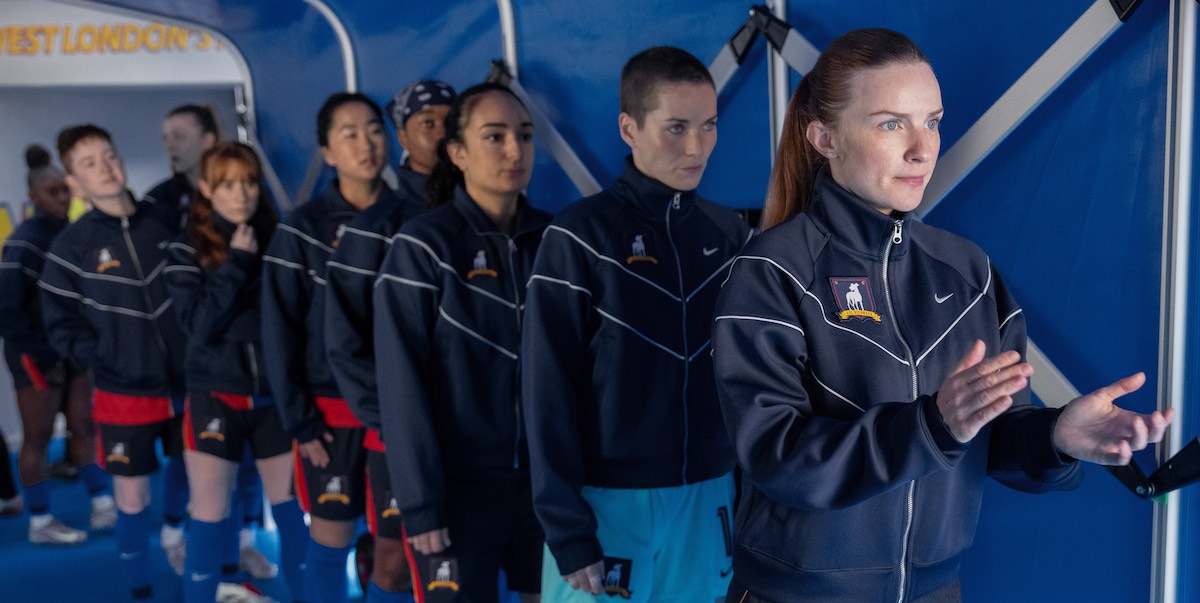
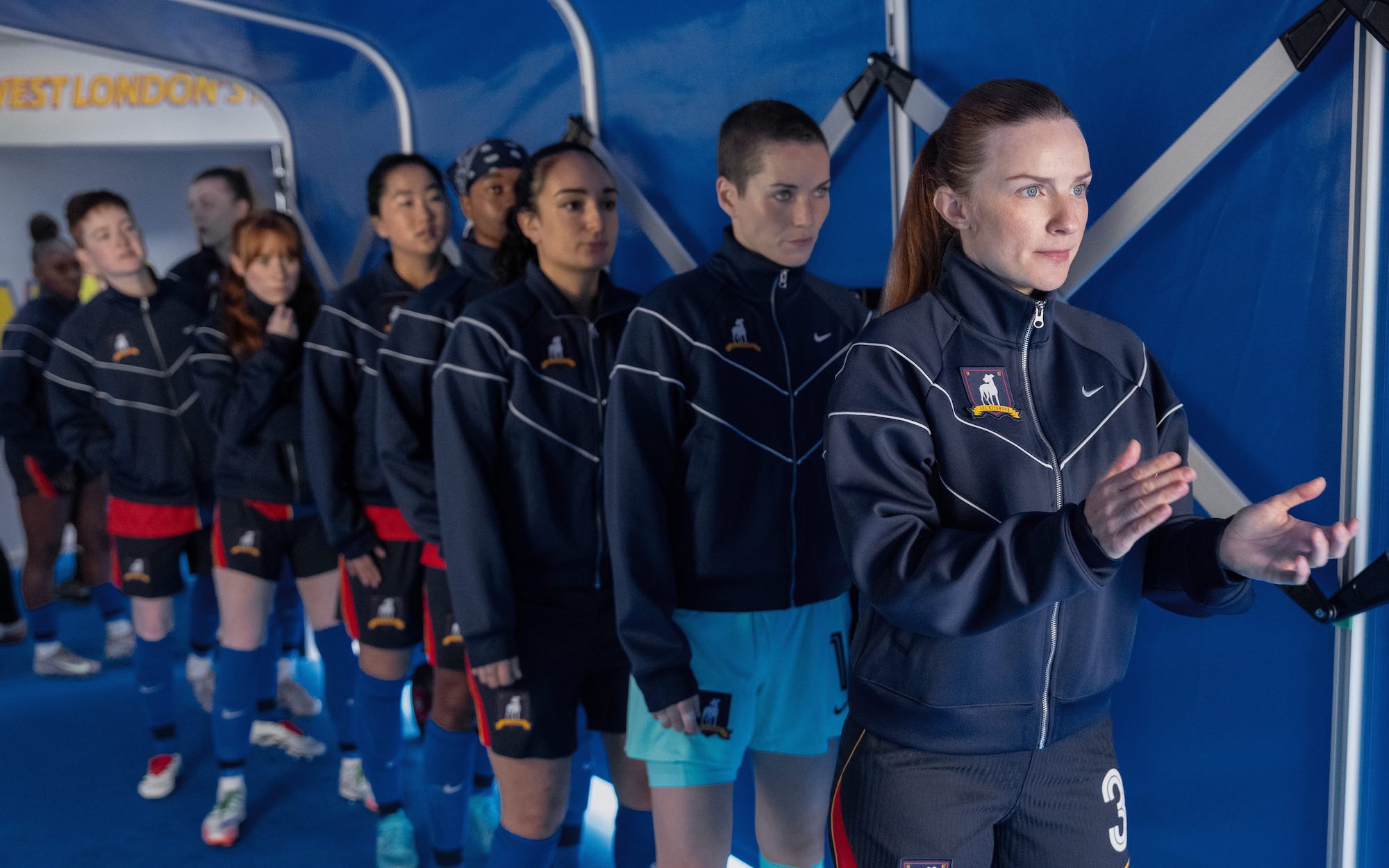
When Apple TV announced the return of its most popular show, Ted Lasso, after a three year hiatus and with a focus on a brand new football team — a women’s team, no less! — fans were brimming with questions. Would it retain the charm that won over legions of viewers after its first season? Would all their favourites be back? And, for the most discerning of us: would a women’s team mean we’d be getting a bunch of footballing queers on our TV screens?!
At the halfway point in this new season (expected to be the first of three following the women’s team) let us look at whether we yet have answers to these vitally important life questions.
Ted Lasso first landed in 2020, quickly gaining traction for being a bit more than just the fish-out-of-water sports comedy its synopsis suggested.. Some of the success of the show’s first season was put down to its overwhelming positivity, how it gently urged people to “believe” at a time when we were all isolated and deep in the misery and uncertainty of lockdown. Of course, the world is all roses now, and we’re totally not in desperate need of a show like that again are we?!
Fortunately, the essence of the show remains the same, anchored by Jason Sudeikis as the unrelentingly likeable coach. The season opener takes us home with Ted to Kansas, where his managerial domain has shrunk down to his local grocery store, having chosen to abandon his sporting ambitions to remain close to his son. While he continues to lovingly bamboozle all around him with his innate Teddishness (from a kleptomaniac colleague to an arrogant little league coach), a flying visit from Richmond FC owner Rebecca, her CMO and gal pal (interpret as you wish) Keeley, and finance bod Higgins, serves to remind him that he could be bamboozling a whole lot more people as a pro sports coach.
The offer from Rebecca: come back to London to coach the new Richmond women’s team that will be playing in WSL2, the second division of England’s pro league. This wouldn’t be the first time she’d hired him to do a job he has minimal qualifications to do, but at least this time her intentions are pure. After requisite deliberating, Ted takes the bait and heads back over the pond, family in tow.
Back in Richmond, we catch up with the other two returning regulars: Coach Beard, swiftly poached from the men’s coaching staff to be reunited with his BFF, and Roy Kent, aka the world’s most exquisitely groomed Neanderthal, still trying to fight through his surly rage to grasp some kind of emotional intelligence so that he might win Keeley back.
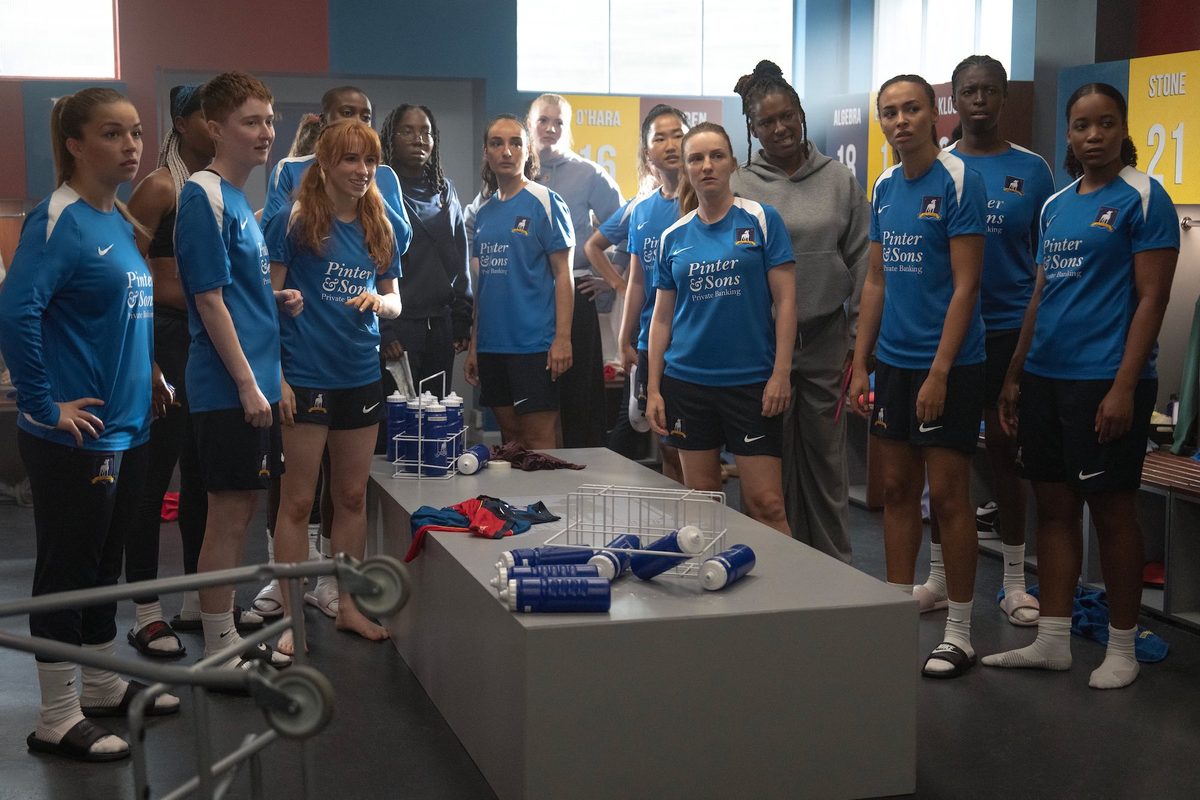
Gone are all the guys on the team though, because the Lady Greyhounds are here.
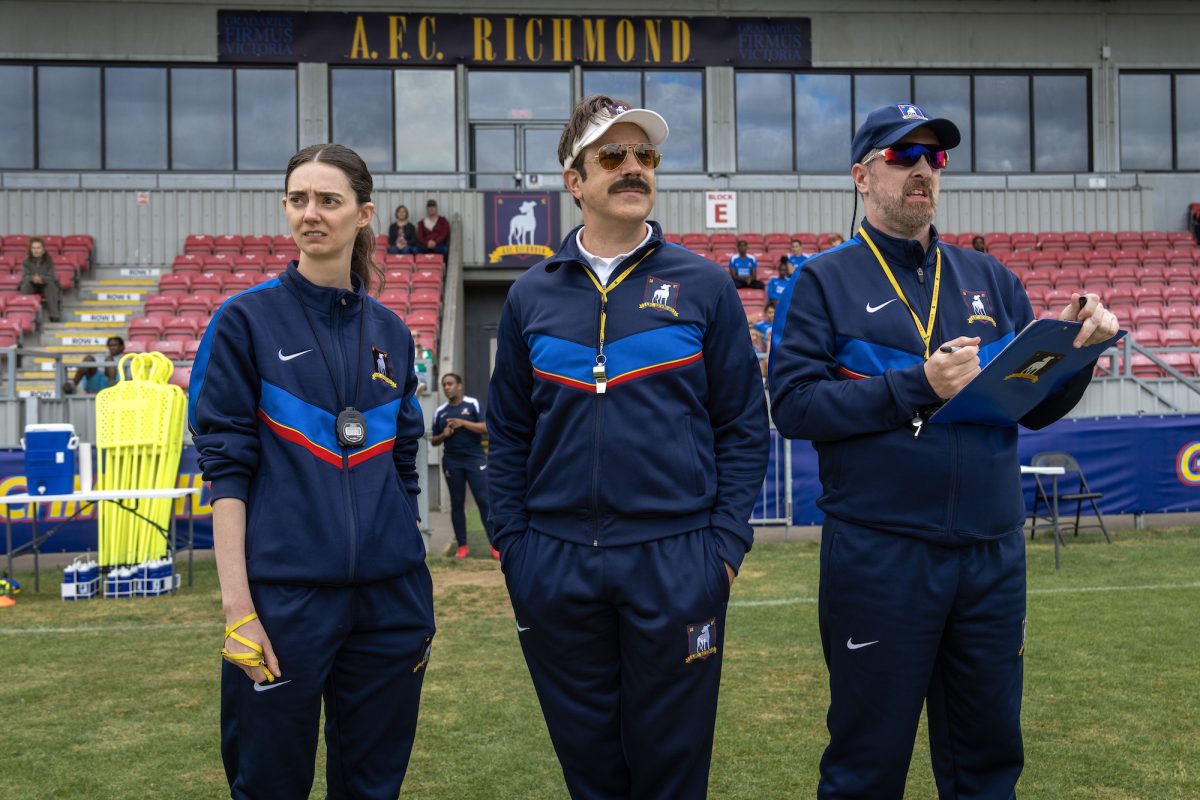
Early doors, the most significant addition to the cast appears to be Assistant Coach Alice Chilton. Played by Tanya Reynolds (Sex Education) with a delightfully stony resting bitch face, Coach Chilton is an ex-player whose career was cut very short after the ACL curse struck multiple times. We spend quite a bit of time with that face, and Alice’s longing looks at the team, betraying a wistful envy of the playing career she never got, but also increasing frustration at her inability to connect with the team.
It’s a credit to Reynolds that she’s taken what could have been a one-note character and turned her brusque awkwardness into something quite endearing, and it’s a credit to the writers that they found a dynamic that works a treat with Ted, Beard and Chilton that isn’t just replicating what’s been done before with Nate or Roy. Of all the characters, Alice seems the most ripe for a bit of Ted-inspired personal growth. At the end of episode 5 she’s primed for a bout of introspection and we can look forward to seeing more about her home life in coming episodes (including the gayness strongly suggested by the photo on her desk we saw in episode 2).
Also in the mix is unhinged goalie, Boots, who refuses to wear gloves, loves to parade naked around the dressing room and has a manic gleam in her eye that hints at a whole load of back story. Boots is played by non-binary actor Jude Mack, and you may recognise them as being Kat’s lesbian bartender crush from Season One of Such Brave Girls.
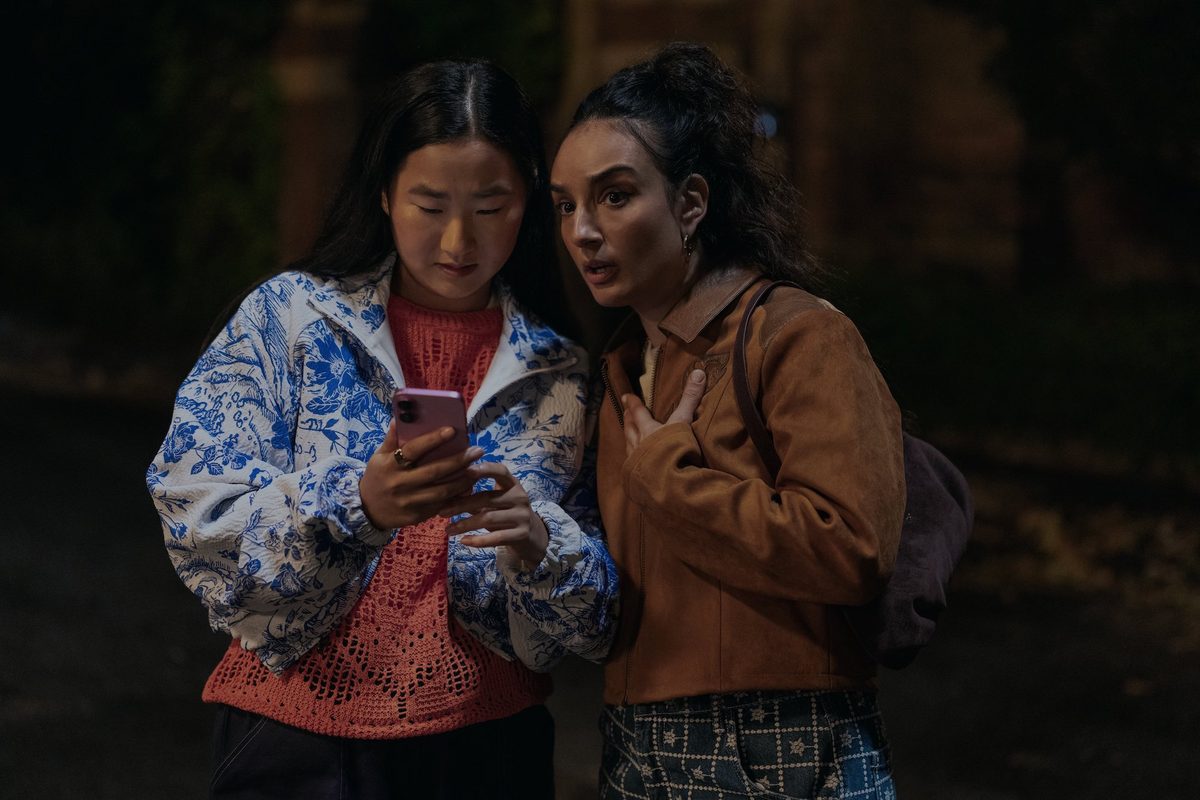
We also have a pair of squabbling Irish twins, Siobhan (played by non-binary Welsh actor Rex Hayes) and Niamh (Aisling Sharkey), who may get some screen time that takes them beyond sibling bickering. Somehow, out actor Fay Marsay is not playing gay, but definitely commands the screen as tough defender (and mum) Lizzy. Two of the players are very much out (Marty and Mady), and we get a few glimpses of their off-again-on-again relationship.
Like with any sports show, if you have more than a passing interest in the game at hand, you have to suspend a lot of disbelief to cope with liberties taken. Certainly there were a few clangers in Ted Lasso’s Premier League-focused seasons, but I forgave them everything on account of the pinpoint accuracy they achieved with Jamie Tartt’s douchey footballer hairstyle.
As a proud WSL2 season ticket holder (come on you Saints!) who has read an unhealthy number of lesbian footballer memoirs, I was particularly trepidatious about how they’d handle the women’s game. Happily, it feels like the writers have done their homework, even if it’s often put into practice a bit heavy handedly.
Off the pitch, much of Keeley and Rebecca’s storyline revolves around the basic struggle to justify the existence of a women’s team to an array of business people, media and men’s fans whose reactions range from indifferent to outright hostile. Even Rebecca has to go through a dose of self-examination about exactly why she passed over a female coach for Ted. This does give us a great opportunity to see Hannah Waddingham’s comedy chops in full force; see also her drunken riff on Delia Smith’s infamous, uber-cringe “who are you?!” speech!
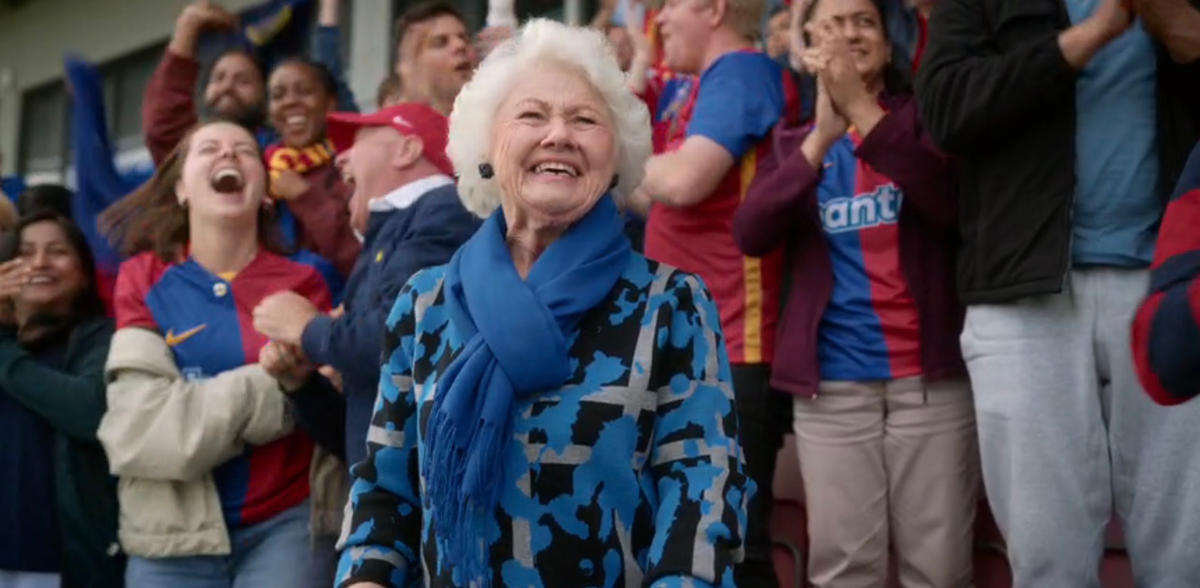
It’s a tough act to take on structural prejudice and try and milk it for laughs without getting too preachy, but the show just about walks the line. It’s strongest when it shows the impact the women’s team has on characters we know and love: the proud look in pub landlady Mae’s eyes when she finally gets to see women run out in Richmond’s colours after a lifetime of waiting, contrasted with the excitement of Roy’s niece Phoebe, ready to be inspired.
Faithful to reality, the narrative emphasizes the team’s struggles to secure financial investments —but truly, probably my biggest gripe with the show is when Higgins claims that funding a women’s team could risk the men’s teams’ finances. History has consistently turned out otherwise: Charlton’s Premier League relegation in 2007 forced the dissolution of their women’s team; Reading’s overall financial troubles a couple of years back led them to yank funding to the women’s teams and send them plummeting down the footballing pyramid; there are countless more examples in lower leagues. Nevertheless, I imagine the genuinely precarious financials behind football teams —men’s and women’s alike — will continue looming large over this incarnation of the show.
When it comes to the football itself, there’s not been tons so far, but there’s an ACL injury in the very first training session, so full marks for realism! England captain Leah Williamson was one of the advisors on the show and sent Jason Sudeikis voice notes on how players cope with injuries, based on her own experiences (selfishly, I would not complain if she also advised on players having supermodel girlfriends, based on her own experiences).
The show can’t quite work out what it wants the team’s trajectory to be; one moment they’re a complete shambles getting players off the street to wear home-made shirts, the next they’re somehow toe-to-toe with Chelsea. While it’s a given that we’re rooting for the team, I’d really like it if the show tightened up on this front so we know exactly what we’re rooting for.
Here comes the obligatory Megan Rapinoe quote: “you can’t win a championship without gays.”
Unfortunately, it doesn’t look like winning is high on the agenda for the Lady Greyhounds so far, which is perhaps why we’ve not seen any significant queer storylines emerge yet. There have been glimpses: a blink-and-you’ll-miss-it on-field appearance from out Gotham FC and England defender Jess Carter, out ex-England player Jill Scott wax philosophically in the commentary box, that photo of Alice and partner on her desk that Ted clocked. With Mady and Marty, we’ve seen a quick peck on the training field and a funny make-up conversation; it’s just enough to show how normalised same-sex relationships are in the women’s game compared to the men’s.
We know Ted Lasso isn’t shy with queer storylines and characters, taking Keeley’s bisexual vibes from early seasons and making it canon, albeit briefly, in season 3; closeted player Colin’s coming out and even suave reporter Trent Crimm’s casual gayness.
Like any good workplace comedy, Ted Lasso’s strengths come from its characters and the relationships between them; it’s just a matter of time to see which of the new players will start to develop significant storylines and we must trust that gayness will blossom inevitably.
After five episodes the show feels like it’s still building and, fortunately, getting better each week. I’m still itching to learn more about the new players and see them play more football! Sport-themed scripted shows are rarely about the game itself, but sport provides natural dramatic arcs: rivalries, underdog stories, broken dreams, unexpected victories. While there’s an overarching theme of the women’s game vs the patriarchy, fighting against systemic oppression doesn’t quite have the same beats as a quest for promotion, or the fight against a big bad. As Ted says in episode four: “The quickest way to bring a group of people together is a common enemy, or a common goal” (as an aside, this is why I am committed to the theory that the only thing that will save humanity from self-destruction is an alien invasion).
I have faith that Ted Lasso will go from strength to strength in this new incarnation — after all, it’s the show that persuaded us all to believe. This new class has more at stake than just believing in each other though; it’s believing in the right to exist, to play, to dream.



Comments
*reads title*
If you have to ask…
In regard to your theory about humanity being saved by an alien invasion: I asked my PoliSci professor about this in 1982. (I wasn’t even high at the time! It was a discussion about international relations and the Cold War!)
He asked, “What if the invaders are Communists?” Meaning some people might want to be on the side of the invaders.
OTOH, maybe the aliens have received our TV signals from the 1950’s and want to meet this madcap person called Lucy, and her friend Ethel! And as they got closer to Earth, they picked up Ted Lasso, his relentless optimism, and his earnest recommendation to be curious but not judgemental, and they just want meet this madcap but earnest species.
(Or they got the telenovelas and Bollywood, and they’re just so interested in what we are.)
I’m definitely curious how much queerness we’ll see in the show. I haven’t been overly impressed by it so far, but it’s still early.
Also, Faye Marsay’s name has an “E” at the end of her first name. Minor correction.
honestly my favorite article on this season so far. too much pop journalism these days seems to be just bland episode recaps, or determined to hate every single thing. I’m glad this article calls out this season’s weaknesses, but also celebrates the highlights so far, and it feels like someone here actually watched and cared about this. (one side note though, the gay couple on the team is Mady and Margy – not Marty). Keep up the good work!
The show is about the women’s football team as a whole, not a queer love story. So far the relationships have happened organically and stayed true to the characters. I don’t understand the mentality some seem to have that until it’s more gay it’s not as good. Ridiculous. Enjoy the show. Don’t ask for more or less queerness. Nothing ruins a tv show more than the writers appeasing our community and sacrificing the story and narrative. “Is it gay enough for us?” Are you that insecure? Seriously, some of us queers just can’t be satisfied.
I’m intrigued by the possibility of more diverse representation in the show with the focus on a women’s football team. It would be great to see how the characters develop and their stories unfold. Fingers crossed for some footballing queers on screen! For fun, I sometimes use an emoji mashup tool to enhance my reactions to shows like this one.
I’m all for a fresh angle in Ted Lasso, especially with the focus on a women’s football team! It’s about time we see more LGBTQ+ representation in sports narratives. I’m curious to see how the character dynamics will evolve and if they’re willing to embrace that aspect. Also, how cool would it be to have more stories that resonate with diverse audiences? For fun, I often check in with a gold melt value calculator to stay informed about my favorite pieces!
I watched it mostly because I liked the original Ted Lasso characters, but ended up getting invested in the women’s team. Didn’t expect that at all. @spend bill gates money