





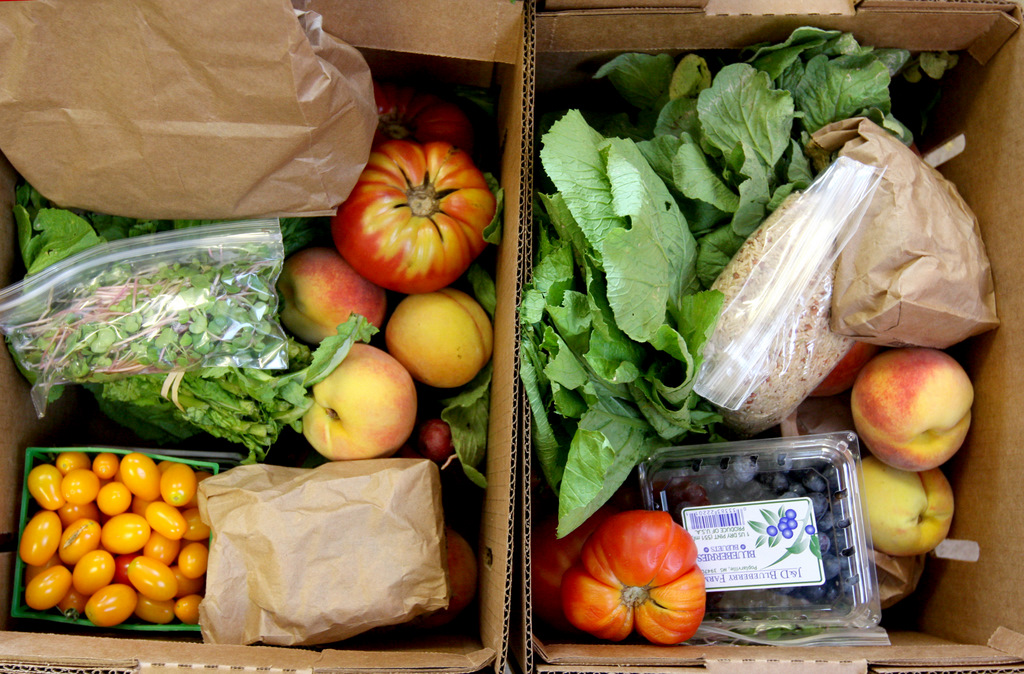
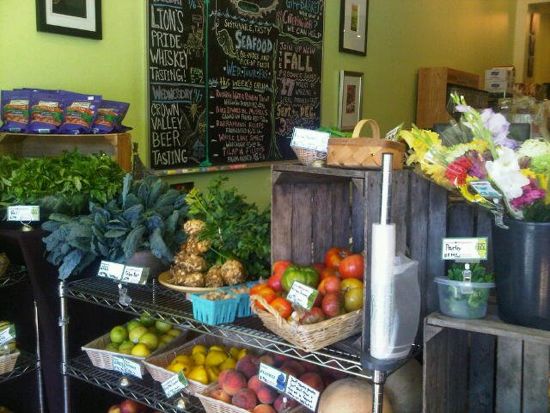
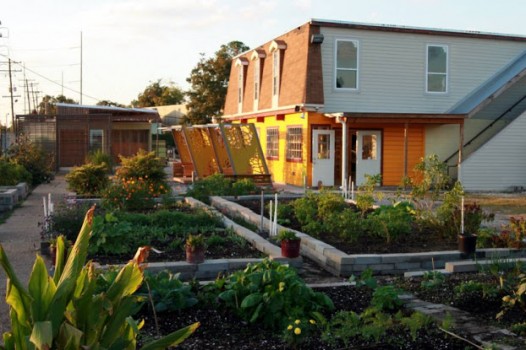
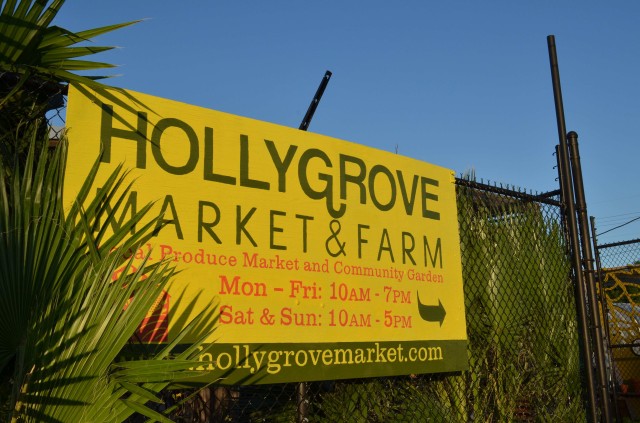
Last summer, my girlfriend and I started eating local food shortly after moving to New Orleans and instantly falling in love with Hollygrove Market. It combines all the best aspects of a farmers’ market, a food co-op, and a CSA program. Every week, the market features a “box” of local food. For $25, we got the weekly selection of fresh veggies, fruits, and pantry staples — like a CSA (Community Supported Agriculture) subscription, but without the up-front commitment. The market also sold tons of individual items, including local honey, organic dairy, and humanely-raised and humanely-slaughtered meat.
After about two months of buying the weekly box, my girlfriend started reading more about the local food movement. We read about farming and local food in The Dirty Life by Kristin Kimball and in Barbara Kingsolver‘s Animal, Vegetable, Miracle. Kingsolver weaves in some eye-opening facts about commercial farming while discussing the year she spent getting back to nature on her farm in Virginia. (Beware: she has a very privileged perspective, which makes the farming narrative hard to stomach at some points.)
Inspired by the memoirs we had been reading, we decided to commit to buying all of our groceries from local sources, with just a few exceptions for necessities like flour, and to cut down on eating at restaurants. As excited as we were at the beginning, our little project ended up better than I had even hoped. We had started a local diet for some big picture reasons, but along the way we found a lot of smaller reasons to keep doing it.
Reasons To Eat Local
1. It’s more fun to cook with local produce, and the end product tastes better.
When we started buying local, I instantly noticed that cooking was more enjoyable, we got a lot more creative with recipes, and our dinners were way better. On top of all that, I started to feel healthier, too. As seasons change and local farms provide different produce, your diet shifts, too. All of that variety means that your body now has a lot of different vitamins and nutrients. And of course, a local diet inevitably includes a lot less processed food, which means you’re ingesting fewer chemicals and preservatives. For the non-local things we miss, we try to come up with our own versions, or we just decide to buy it anyway. It’s tough to make your own Dr. Pepper.
2. It can be a lot cheaper than shopping at conventional grocery stores.
Buying locally ended up saving us a lot of money: we didn’t eat at restaurants as often, and we shaved off $30 a week off our grocery bill. Back when the local food movement started, buying local required some cash. You could invest in a CSA, but you had to put down a lot of money up front. And if you moved or took a long vacation, too bad. You might have gotten lucky and found some regional produce at Whole Foods, but it was probably just as expensive as everything else in there. Farmers’ markets were the only real pipeline for affordable local produce. But not every town has a farmers’ market, and they aren’t open that often, even during the growing season.
Luckily, most major U.S. cities now have a lot more options for local food sources and they are a lot more affordable than Whole Foods. You might find a local foods store like the one we found in New Orleans, where a single organization gathers a bunch of items from different local producers. These stores are great because they have everything in one place — you can walk out with vegetables, cheese, eggs, honey, coffee and some fresh pasta, all made or grown within 200 miles. Most cities are also seeing a surge in local food delivery services, such as Good Eggs. You select your groceries online, and then everything is delivered to your door a few days later. Most of these services even have profiles on their website of the farm that grew your food! And of course, farmer’s markets and CSAs are still alive and well. All of these options provide convenient access to affordable local food.
3. It is way better for the environment.
Food production is responsible for a huge chunk of global greenhouse gas emissions. When you add up the energy it takes to raise animals, produce pesticides, build farming equipment, grow plants, and then ship all of those products around the country and the world — well, that’s a huge amount of energy, and consequently emissions. Reducing emissions from the food industry is one major way we can help combat global warming, and eating local can be a huge help.
Besides transportation, livestock create a huge carbon footprint with methane emissions (not to mention the energy required to grow their food). If you’re a vegetarian or vegan, congratulations, you’re already helping! If you’re a meat-eater like me, then cutting back on meat can really go a long way, and eating local helped me do that —almost as a side effect. The sheer variety and quality of local produce meant we skipped the meat a few times per week, and I didn’t miss it. Local, humanely-raised meat is also expensive. I am willing to pay the price for knowing the animal had a good life, and the price has helped me view animal products as more of a splurge.
4. It is way better for your community.
When you buy local, your money goes to the non-profit that runs your local foods store, or to the beekeeper that lives down the street, or to the organic farmer an hour away. All of these people have broken away from the traditional food industry. They put their energy into producing things with care and with a sense of place. Most people I have met in the local food world aren’t in it for the money; they’re in it for the community. And I feel great knowing that my grocery money helps support their vision and livelihood.
5. It ties you in to the rhythm and the culture of the place where you live.
This was more pronounced for us in Louisiana, where farmers can grow a lot of weird stuff. A few times last summer, we got raw peanuts in our weekly box of food. I had no idea what to do with raw peanuts. I didn’t even know they started out green. But my Southern girlfriend showed me how to boil them with salt and spices. Crazy delicious. I had never felt as truly Southern as when we sat on the porch eating boiled peanuts and drinking mint juleps. Local food gave us a window into Louisiana culture that I would never have experienced shopping at the big grocery store down the street.
And while the culture shock might not be as severe in other places, it is still fun to eat food in time with the seasons. It can be a little frustrating to only have fresh berries a few months out the year, but for me, the rewards of eating produce that is in season and appropriate to where you live is worth the inconvenience. A July blackberry will always blow a January blackberry out of the water. And you feel more connected to a place when your diet shifts with the weather. Fall is no longer just about leaf color, it’s also about figuring out what to do with all that squash you have!
Next page: Canning, freezing, preserving local food and dill pickle recipe!
You Can Eat Local During The Winter Too
Sadly, we moved away from New Orleans last fall, and we now live in Chicago. This presented a few problems for our local diet. Chicago, like most places in the U.S., has a very limited selection of produce in the winter. Farmers mainly sell the stuff that holds up in storage: winter squash, onions, apples, and root vegetables. Unfortunately, you can only eat so many beets without making a break for the grocery store. So this winter, about half our food has come from local sources, and the rest has come from a conventional grocery store.
It doesn’t have to be this way. If you eat locally through a whole growing season and you plan things out right, you can set yourself up to have a really great winter. In June and July, you can make jams or freeze whole berries for pie. In August, you can make jars of tomato sauce or stewed tomatoes. When animals start producing their best milk in the summer, you can make some hard cheese (yes, you can do that at home). When the hot peppers start rolling in, you can make a few bottles of hot sauce.
So our goal this year is to put in the effort during the summer, and end up with a pantry full of preserved local food for the winter. We have already spent some time learning different preservation methods, and we’re excited to employ them on a new season of produce. Chicago has several wonderful local foods stores, where we will be getting some of our food. The rest (hopefully most!) of our food will come our garden plot. Chicago is known as a hotbed of urban farming and community gardens, and we snagged one of the last open plots in the city. We can start planting things in mid-April, though we have already started a bunch of seeds indoors so we are ready when spring really starts. So far, we are planning to grow cucumbers, tomatoes, lima beans, sweet peppers, hot peppers, broccoli, chives, onion, lettuce, arugula, radishes, carrots, potatoes, and some berries. With a little luck, a lot of our projects this summer will feature food from our own garden!
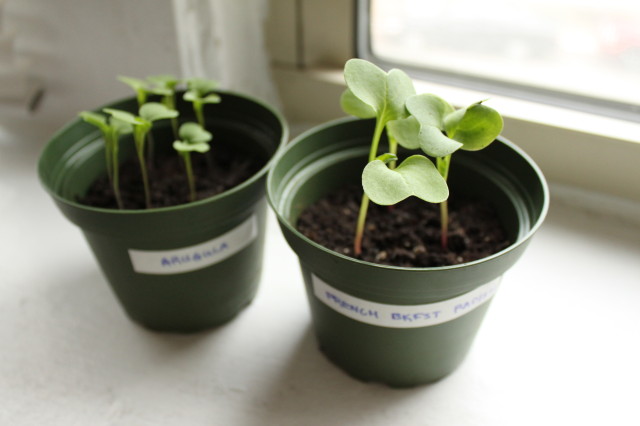
Preserved, my new column, will document our journey. Each month, I will highlight some fun ways to use and preserve some locally grown food that is in season for me, and probably for most of the U.S. I will cover the basics of preserving food by fermenting, pickling, canning, and freezing. Some of the recipes will be for immediate consumption, some can sit around until December. By the end of the year, you should have all the tools you need to make the most out of your local produce and to stock your pantry full of delicious DIY preserves.
Let’s start with a simple recipe for dill pickles.
How To Make Refrigerator Dill Pickles
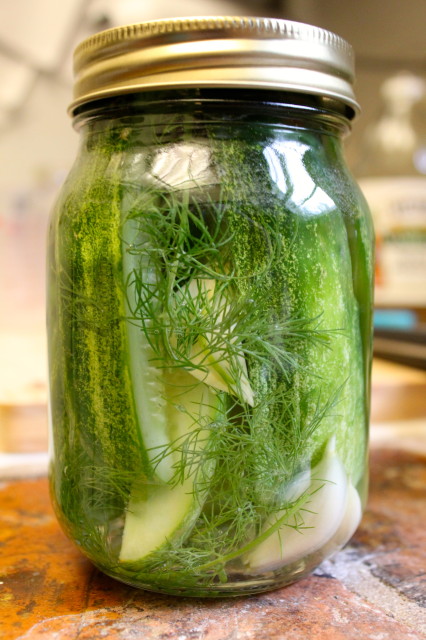
The last time I was at my local food co-op, they had several baskets of beautiful pickling cucumbers. I couldn’t resist buying a bag full to make some dill pickles. This recipe is incredibly simple, but the results are impressive. In just a few days, you will have perfect dill pickles. And they look so beautiful floating in a jar with dill and garlic that they make great gifts!
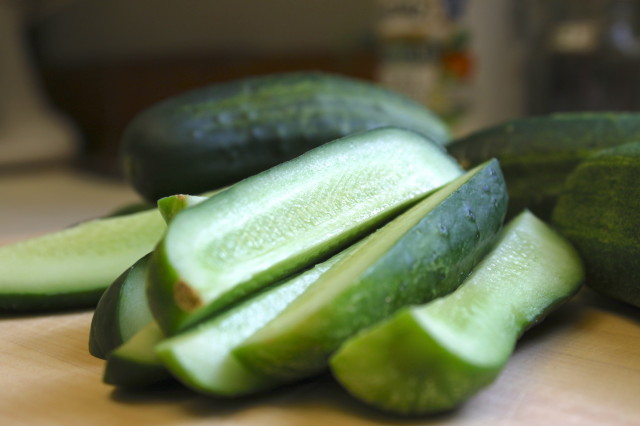
For this recipe, the most important component is obviously the cucumber. Make sure you get a pickling cucumber, the ones that are shorter, curved and bumpy. They have a thin skin, so the brine soaks in more easily, and they tend to retain their crunch much better than salad cucumbers.
To make about 3 pint-size jars of pickles, all you need is:
+ six to eight cucumbers, depending on the size (shorter is better so they fit more easily into the jar)
+ six cloves of garlic
+ fresh dill
+ 1/2 cup of distilled white vinegar
+ 3 tablespoons of kosher salt
+ 3 cups of water
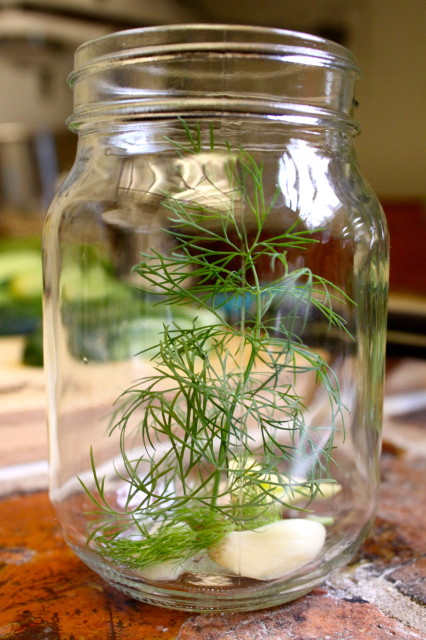
First, cut the cucumbers into spears. You can leave them whole if you want, but I prefer the classic look of spears. Next, cut all six cloves of garlic in half. Place four garlic halves and several sprigs of dill into each jar.
Put about eight cucumber spears in each jar (depending on the size of the cucumbers). The jar should be fairly full, but don’t pack them in like sardines. Prepare the brine mixture of vinegar, water, and kosher salt. Stir to dissolve the salt. Fill each jar to the top, so that all the pickle spears are submerged. It’s easier to arrange the dill decoratively at this point, so if you plan to give the pickles as gifts, you can wait until the end to put the dill in the jar.
Seal the lid tightly, and put in the fridge. In a few days, you will have pickles! For your next attempt, try adjusting the amount of garlic and dill to get a different flavor.



Comments
Yes, and thank you, to all of this, I’m looking forward to all the recipes!!! For people in New York, I am compelled to share: Quinciple is a weekly box of food (and a small start-up) that has changed my food life forever. It has has produce, but also selections of local meat, fish, cheese, bread, eggs and beans/legumes/grains etc. You can pick it up all over Brooklyn, and in some areas they deliver via bike. The box includes recipes too, and their web site has information about all their farms and producers! Just had to get that off my chest.
So looking forward to reading more of this feature!!
Thanks for reading! I am super excited to have a place to share our food adventures.
And now I definitely just really want to make dill pickles. And go visit the local farmer’s market.
Sarah! I am The Most Excited to read this and eat pickles and mostly to see your face back on Autostraddle again. I can’t wait to learn how to preserve everything!
It’s good to be back!
Girl, you are an angel. This is perfect.
I will be waiting eagerly for your next post!
Okay, I was so excited that I made my comment before I went to the second page.
We should talk! I’m from Chicago and I’ll be here for the summer, but I spend most of the year in Puerto Rico working on an organic farm with my partner.
I would love to exchange knowledge.
We should definitely chat! We are growing food organically for the first time, and we can use all the pointers we can get.
Yay! How can I contact you?
Hi Sarah! I live near Chicago. What local food stores do you use during the winter? I’m trying to get more local food and less Big Ag in my diet.
Hi Sara! I really love Green Grocer near Ashland and Grand. They have a good variety of local products, including eggs, meat (Gunthorp Farms has the most humane practices), and produce. They also have some non local organic produce and a good beer selection. So at least you can support a local business while buying non-local items! They have a summer CSA you should look into, and they also deliver. If you go, mention it’s your first time and you get $5 off!
Great, thanks!
Hey, Sara! I’m Monet (girlfriend of Sarah). We shop at Green Grocer during the winter. It’s quite small, but it has most of what we need. They offer a wintertime CSA, but we didn’t do it this year. I recently learned about another market called Green City Market, which is open on Saturdays during the wintertime.
Hope that helps!
Whoops, didn’t see Sarah’s comment before I posted.
Can you tell we really like Green Grocer??
Ha, I can. I’m familiar with some of the local options in terms of buying farm-raised meat, but I wasn’t sure about the grocery options. I appreciate the info!
I’m so excited for this column!! We’re planning to start preserving food once we actually live somewhere (instead of my cousin’s living room… eventually one of us will get a job and we can live in a cheap little apartment on our own, right?!), so this series is perfect.
Also, PICKLES.
I didn’t realize that Whole Foods wasn’t local, because I think the one by my house mostly gets local produce(rarely shop there as TJ is better). Then again I’m in California where we grow most fruits year round somewhere in the state.
One thing we learned when we tried to start eating local is that almost all of the produce we non-Californians consume comes from California. That’s where the environmental impact comes in: everything must be shipped across the country. It’s also one of the reasons that most of the produce the rest of us find in grocery stores is genetically modified: it needs to retain its shape and stay “fresh” through the (sometimes long and arduous) shipping process.
What’s that they say again about the best coast?… :O)
i am so glad AS has provided a safe space to talk about a huge emotional struggle in my life: homemade pickles. pickles are such a challenge for me! it’s frustrating because they look so simple, but i have tried several times with several recipes and i am always let down with my results. maybe growing up in the rural South and having a childhood full of the absolute best homemade pickles has ruined me for good? i am going to try this for sure because hope springs eternal and i want some damn pickles, but i am not sure i can take another disappointment. have you by any chance pickled other things using this recipe? bc i have a lot of radishes and even more turnips.
i am excited for this column! i love local food culture and can’t wait to learn more about your experiences in chicago.
I use Mrs. Wages Kosher Dill pickle mix and it is outstanding. One of these days, I will try making them from scratch.
I haven’t yet pickled anything else with this particular recipe. But I really want to try pickling radishes soon. I had some Moroccan spiced pickled radishes & carrots at a restaurant a few months ago, and I’m still thinking about them. If I can find some radishes at the store this week, they might show up as the next post!
I love eating local! I live in the SF Bay Area so I’m totally spoiled when it comes to climate and things being available year round.
For those that are interested in sodas, and looking for a local alternative, you may have access to local purveyors that cook down their berries and other fruits into a concentrate. I use Hidden Star Orchards around here and their concentrates are fantastic! Pomegranate, Blueberry, and Cherry concentrates are all available on Good Eggs and at local farmer’s markets. I just add a little bit to the bottom of a glass with ice and sparkling water! It’s the best soda I’ve ever had. Maybe add a little lemon juice, bitters, or mint, if you’re feeling adventurous :).
I am SO EXCITED about this. This is exactly what I need right now! I just moved to the Seattle area and I have three garden boxes in my yard that I’m growing stuff in and a local market down the street. And I think I have a little dill plant growing next to my garage. Because I didn’t know what fresh dill looks like, but what is growing there looks an awful lot like what you put in those jars.
I’m so excited I get to learn and explore about this stuff with you!
We just started growing dill from seed, and our tiny little plant is pretty fragrant. So if you rub the leaves, the smell should give it away.
What are you growing in your boxes? I think my plans for our 4×8 bed are a bit ambitious, but we’ll have to see how it turns out.
It appears that it is not a dill plant unfortunately.
One of them has some onions that were growing already, in addition to some mystery sprouts that may or may not produce something edible, so I’m kind of waiting to see where those head. And then I’ve planted some spinach, a strawberry bush, heirloom tomatoes, a few more onions of my own. And I have some cantaloupe started inside and a summer squash mix waiting for warmer weather.
And I was so inspired by this post that I signed up for a produce box today!
I absolutely LOVE this new column and I can’t wait to read more. Food and its’ preservation make me way too excited. I’m super jealous of you and your partner eating locally, gardening, and preserving food because that’s basically a dream of mine. I’m super excited about this, people!