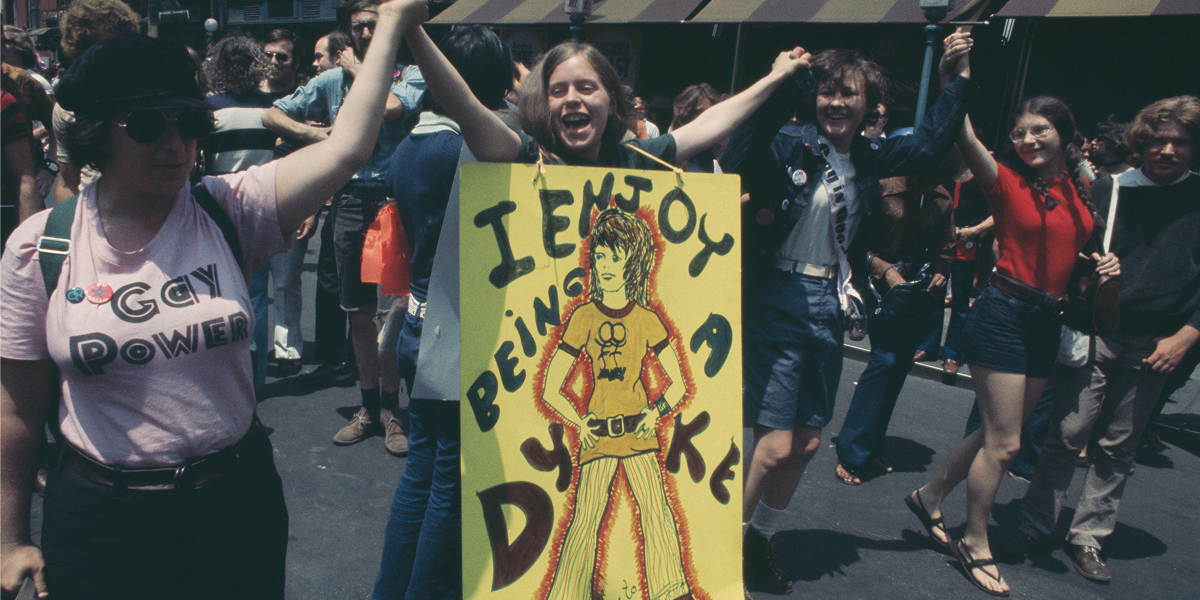
Where were you when you saw your first lesbian? For Alison Bechdel it was that “Ring of Keys” moment in their memoir Fun Home, when they spot a butch woman in a diner with a carabiner full of keys hooked into her belt loop. I don’t have a solid memory of the first lesbians I encountered in real life, but the ones I saw on my TV were like if throat punches felt good: Naomi and Emily on the TV show Skins, whose frantic kiss in the rainy woods stayed in my gut longer than I knew it would have for a straight viewer. Today, although I’m lucky to be consistently surrounded by queer people and lesbians and to live in a city like Chicago that celebrates those people, I still find myself emotional when I catch sight of two moms chasing a toddler down my street, or when I make eye contact with a copy of Stone Butch Blues in a bookstore. No matter my age, I am always struck with recognition, solidarity, and beauty when I catch sight — however minor — of another lesbian.
It’s a confusing and often terrifying time to be queer. We can all understand that, whether or not we pluck headlines to cite our point. Many in our community aren’t sure what to expect come Pride Month in June, whether any given city’s celebrations might be threatened or cancelled, but we can all agree we need that visibility and that joy more than ever. None may agree more than Franco Stevens, founder of Curve and purveyor of Lesbian Visibility Week.
Beginning in the UK in 2020, and in the US in 2023, Lesbian Visibility Week has quickly become the massive celebration it deserves to be. This week, April 20 through 26, marks the fourth annual celebration of all things and people lesbian across the United States (and newly Canada). Once with humble beginnings of just three available events, LVW now sponsors over 100 events across the country, from a Lesbian Herstory Walking Tour of NYC to the Great Lesbian Pie-Eating Contest in Winnipeg. Supported by the Curve Foundation, the “only national nonprofit that champions LGBTQ+ women’s culture and stories from an intergenerational perspective,” these events are meant to gather lesbians in community with one another and celebrate what it means to use the label.
The impetus for creating LVW, according to Stevens, was twofold: first, one day was “not enough time to encompass all that we are,” and second, that there’s been an increasingly negative connotation to the word “lesbian.” Primarily, the perspective that the word is inherently exclusionary — Stevens emphasizes that the word has always meant to include all non-binary, trans, and Sapphic folks who embrace it as their own.
“How do you reach people? By finding them in their own town,” Stevens says, of how Curve assists event organizers in their own LVW involvement. “These local people in their own hometowns, where they may know five lesbians, or they may know 100. We have open meetings… we walk them through every step of like, ‘okay, here’s how you plan an event, here’s all the collateral you need.’ We helped set it up where they can get a proclamation from their city, teach them how to take that proclamation and turn it into an event that uplifts our community.” The Curve Foundation assists organizers with planning their own events, however large or small. They also put on a series of their own events, most notably their virtual “Beyond the Rainbow” speaker series which is accessible to all. Some of the upcoming panels include “Women’s Sports Bar Owners Changing the Game” on April 22, and “Unshakeable Legacy: Queer Women of Color Filmmakers” on April 24.
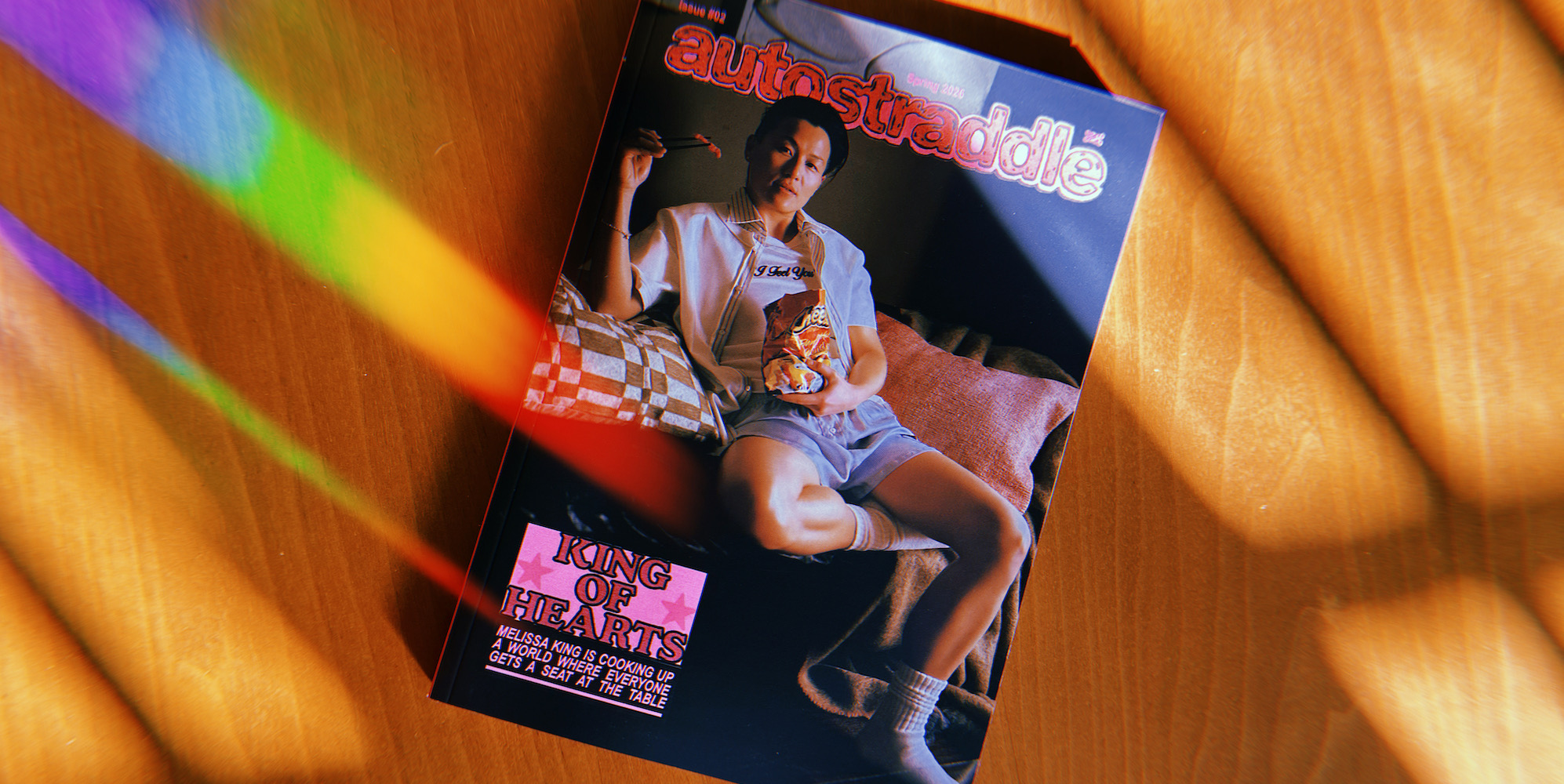
Another highlight of LVW is the Curve Power List, a catalog of queer women and non-men who are “making seismic shifts” for queer people in their individual industries. Nominations are provided by peers and fans, and include huge names in entertainment, as well as smaller but no less important names in activism, business, and politics. 2026’s list, which dropped today, features well-known icons like writer Roxane Gay, actor Hannah Einbinder, Melissa King (an award-winning chef featured on the cover of Autostraddle’s newest print issue) and hockey player Hilary Knight, as well as lesser-known but just as important names like Mary L. Bonauto (a civil rights attorney who argued in Obergefell v. Hodges), Fran Dunaway (president and co-founder of TomboyX), and astrophysicist Kihana Wilson. With all nominations coming from the public, “We are learning about the heroes in our community that we didn’t even know about,” says Stevens.
2026 is a strange and scary time to think about visibility. We’ve made tremendous strides for representation—for all queer people—in the last couple decades, but are also experiencing a regression of our rights and dignities. Non-binary and trans people specifically have been targeted, victimized, and brutally attacked by the current administration. At the same time stars like Chappell Roan are topping the charts with lesbian ballads, trans people are losing access to medical care, being legislated out of athletic participation and having their IDs changed and/or taken away (and during an election season fraught with fears of administrative interference).
It can feel at once like we’re as visible as we’ve ever been historically and like we’re increasingly shuttered and isolated. Lesbian Visibility Week is a real, tangible experience of community-building. Think: What did it mean for you to see your first lesbian? To see someone on TV, or to walk past them in the grocery store? What did it mean to go to your first pride, your first gay bar, look in the mirror with truth on your face? The Curve Foundation and Lesbian Visibility Week want you to feel that feeling, and to celebrate it with as many people as you can.
To find out more about what events are accessible in your area, check out LVW’s pinboard! Be sure as well to look into the Curve Foundation’s lecture series, available virtually and for free for anyone who needs them.