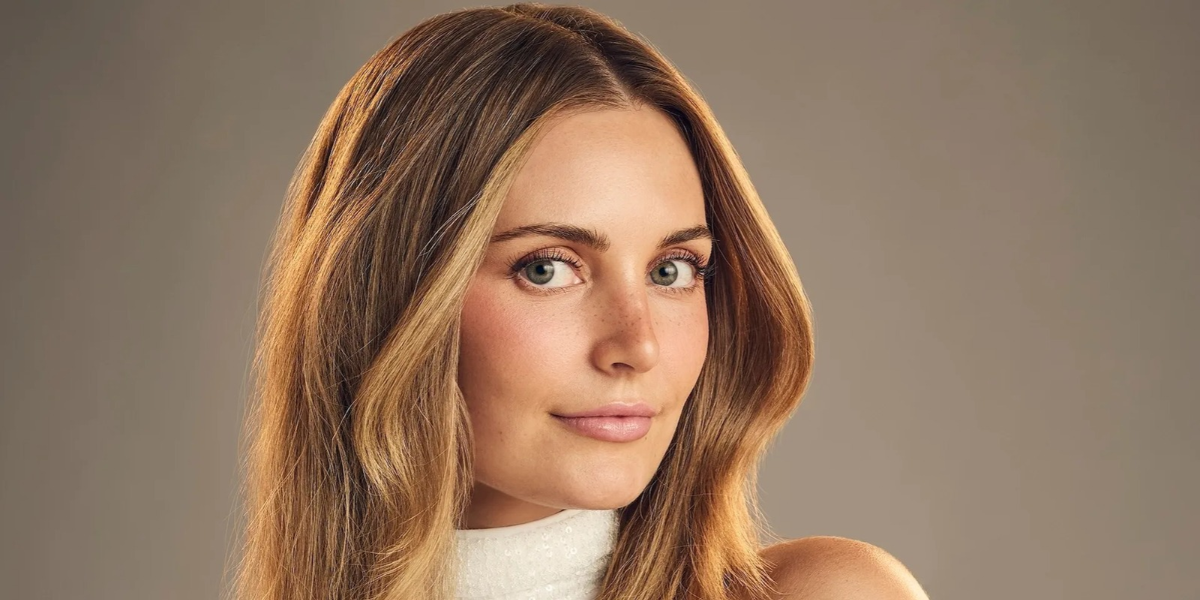
When Hulu announced an Orange County spinoff of The Secret Lives of Mormon Wives, I wasn’t particularly intrigued. After two increasingly dark seasons of the OG series, I wasn’t sure a different city with the same type of women would be that much better TV. But when the cast was revealed and I saw that longtime influencer Aspyn Ovard would be joining alongside her girlfriend, Bri Davis, and Bri’s husband, Billy, my interest was immediately piqued.
As a Black lesbian, I’m always going to welcome queer representation on mainstream reality television because, frankly, we don’t get much of it. And after binge-watching the season in two days, I was pleasantly surprised. Because not only does the spinoff get everything right that the original franchise was starting to get wrong, but Aspyn’s willingness to openly share her unconventional and queer relationship, particularly given her religious upbringing, makes for compelling television.
What I wasn’t prepared for was the backlash.
As my algorithm began feeding me reactions to the show, I encountered countless videos accusing Aspyn of abandoning her children, prioritizing romance over her terminally ill daughter, and allowing a married couple to exploit her financially and emotionally. Some (a very small portion) of the criticism does raise legitimate questions. But as someone who has dated a person who identifies as nonmonogamous and has personally participated in nontraditional relationship arrangements, seeing a throuple like Aspyn’s isn’t particularly shocking or unusual to me. Which makes me wonder: Are people genuinely concerned about Aspyn’s well-being and the intentions of her partners, or are they simply uncomfortable with the fact that she’s in a queer relationship that challenges their understanding of what love, family, and grief should look like?
For context, Aspyn married her high school sweetheart, Parker Ferris, in 2015, and the two went on to build a successful family-oriented social media brand, on the heels of Aspyn’s already blooming YouTube influencer career, before divorcing in 2024. However, news of their divorce broke the same day they announced the birth of their third daughter, and what many presume was about a year after their oldest daughter was diagnosed with terminal cancer––a diagnosis neither Aspyn nor Parker publicly disclosed until this month, when The Secret Lives of Mormon Wives: Orange Country aired. Then, in March 2026, Aspyn publicly confirmed she was in a relationship with married couple Bri and Billy Davis, revealing she was dating both partners individually and as part of a throuple. What started off as a no-strings-attached relationship with Bri, after she slid into Aspyn’s DM’s via Instagram, eventually turned into a more serious three-person romantic relationship, as Bri was already married to Billy. The couple eventually relocated from New Jersey to California to live with Aspyn in late 2025, setting the stage for their unconventional relationship to become one of the most talked-about storylines of the new series, as well as the driving force behind much of the criticism Aspyn has faced since its premiere. Critics argue Aspyn shouldn’t be pursuing a relationship with Bri and Billy while navigating her daughter’s devastating health challenges and should instead be devoting all her time and energy to her children. But would audiences have the same expectations of Parker if he were in her situation? And would the criticism be nearly as harsh if Aspyn were only dating Billy, a cisgender man?
In pop culture and in life, we’ve repeatedly watched men navigate divorce, illness, and even deaths of spouses or children by immediately entering new romantic relationships. It’s a move often met with understanding, sympathy, and encouragement rather than judgement. They’re told they deserve companionship, happiness, and another chance at love after enduring so much grief. Women, particularly mothers, are meanwhile expected to endure that same type of grief alone. They are expected to mourn their losses in emotional exile as though moving forward in any way and pursuing their own happiness somehow diminishes their commitment to healing.
Aspyn and Parker share custody of their three daughters, and nothing presented on the show or in her social media content establishes she’s neglecting them or abandoning her parental responsibilities when she has them during her custody time in favor of spending time with her partners. Yet viewers have seemingly decided that there is no way she’s balancing her new relationship and motherhood in a way that doesn’t negatively impact her girls. Meanwhile, during the season, Parker not only admits he feels lonely and wishes he had someone to support him emotionally as he navigates their daughter’s health, but also that he had recently been dating someone new and had flown that young lady out to California to spend time with her. And, yet, I saw no one critiquing him for also wanting and pursuing a romantic relationship when he too has a sick child at home. Should he also not stay single and focused on his family the way many are saying Aspyn should?
Another recurring accusation is that Bri and Billy are exploiting Aspyn’s fame and wealth. Now, it’s understandable why viewers might initially question their intentions. Aspyn was already a successful influencer with millions of followers before joining the show when Bri and Billy entered her life and relocated across the country to move in with her and her three children less than two years after they all started dating. But suspicion isn’t evidence, and if we actually look at the evidence, neither Bri nor Billy seem particularly interested in becoming popular influencers or building personal brands off Aspyn’s success. From my understanding, many of Aspyn’s followers hadn’t even seen Billy’s face until recently, as he largely remained out of the spotlight until the show. And while Bri did create an Instagram account, she’s only posted approximately 40 times since her first post in January 2025. Much of her content centers on politics, women’s rights, immigration rights, everyday life, and her relationships rather than sponsorships or brand deals. None of that exactly screams someone desperately trying to build an influencer career off her girlfriend’s fame.
In comparison, based only on what we’ve seen throughout the series, Parker appears to still be financially dependent on Aspyn despite the two no longer being married. Now, I do want to acknowledge that, based on my research, Parker played a significant role in building their successful YouTube channel during their marriage. He edited videos, participated in the content Aspyn created, and at times, took on the role of a stay-at-home dad while Aspyn traveled for work and brand opportunities. However, since their divorce, has anyone been able to determine what Parker is doing to financially support himself and his children independently of Aspyn? Because on the show, Aspyn references continuing to provide financial support to him, including paying for his parents to visit. She also talks about wanting to make enough money that neither she nor Parker has to worry about finances while caring for their children.
Look, I am not trying to erase Parker’s clear past contributions to their shared financial success, but it does raise the question of why financial dependence becomes suspicious when discussing Bri and Billy, yet seemingly goes unquestioned when it comes to Parker.
But beyond the double standards around parenthood and finances, I also question how much of this criticism is influenced by the fact that Aspyn’s new relationship is queer?
Even before the show premiered, Aspyn was sharing far more pictures and videos of herself with Bri on social media than with Billy. And throughout the season, her relationship with Bri remains front and center. It’s Bri, not Billy, who Aspyn brings to cast dinners, gatherings and trips. It’s clear Aspyn and Bri share a deep emotional connection, spend considerable time together, and are openly affectionate. So I can’t help but wonder whether viewers, many of whom likely come from Mormon, conservative, or traditionally religious backgrounds in places like Utah, the Midwest, and the South, are particularly uncomfortable because Aspyn’s relationship with another woman is so visible. Would they have the same reaction if Aspyn were exclusively dating Billy or another cisgender man? Or is seeing her openly romantic and affectionate with another woman what makes this relationship so difficult for them to accept?
And while I agree with some viewers that the affection between Aspyn, Bri and Billy can be excessive at times, I question whether Aspyn would face as nearly as much criticism for kissing, cuddling, and showing affection toward a male partner, especially in front of her children. Because ultimately, I don’t think it’s just the amount of affection that makes viewers uncomfortable. I think it’s who she’s being affectionate with.
Now of course, there’s the controversy surrounding commemorative tattoos. Is there a valid argument that Bri and Billy shouldn’t have been involved in such a personal moment between Aspyn and Parker? Absolutely. However, I think people are exaggerating the situation. Bri and Billy didn’t get their daughter’s handprints like Aspyn or her name and handwriting like Parker. During the scene, Billy even immediately acknowledged that the moment should remain between Aspyn, Parker, and their daughter, and left the room with Bri to give them that space. Yet those details are conveniently left out of the conversation because the situation is the only valid opportunity for critics to point at Aspyn and say, “See, this is what she’s doing wrong.”
Ultimately, I don’t believe Aspyn’s relationship should be immune from criticism. Bri and Billy’s intentions, the children’s emotional well-being, and the speed at which their relationship has developed are all fair subjects for discussion. But there’s a difference between questioning someone’s decisions and treating their relationship as inherently immoral. If Aspyn were dating a more traditionally presenting man instead of a married couple, I suspect much of this conversation would sound remarkably different.