The following essay appears in Issue #02 of Autostraddle’s print magazine. Buy the issue or get a subscription to keep supporting our efforts to keep publishing in print.
In recent years, when I sit down to grade student writing, I channel Harrison Ford in Blade Runner by setting up my own makeshift Voight-Kampff test. Every submission could very well be a machine masquerading as human.
Sometimes it’s easy to find the telltale markings of machine writing. We’re all familiar with ChatGPT and other Large Language Models’ tendency to “hallucinate” falsehoods into its output. Sometimes these “hallucinations” are blatant and easy to catch. An essay on Charlie Jane Anders’s short story about a transphobic dystopia, “Don’t Press Charges and I Won’t Sue,” will instead describe the plot of a courtroom drama, for example. Sometimes, they’re more subtle, like a cited source that does not actually exist or a quote that uses different language to convey roughly the same idea as the original text. Most often though, there’s just something off about AI-generated text. It writes with flowery, academic-sounding language that ultimately says little to nothing at all and reuses certain sentence structures ad nauseam (“not x, but y” is a common sign). Human writing, even in the stalest of subjects, possesses a certain level of randomness and specificity that ChatGPT, where each individual word is not chosen by inspiration or critical thinking but statistical probability, is incapable of reproducing.
I am currently contracted for an absolutely brutal 5/5 course load (five classes in both fall and spring term) which adds up to roughly one hundred individual students per term. Each semester, despite ChatGPT and similar programs being banned from my class, about a third of my students submit AI-generated writing that they claim is their own original work. I suspect this number is higher. I’m just one woman, and my Voight-Kampff test can only catch so much. I hate that I now approach each paper, short story, or discussion board like it’s a deceitful android. I hate feeling like a cop rather than a teacher. I hate that I’ve now had student after student look me in the eyes and insist they wrote their obviously ChatGPT-produced paper. So much of what I enjoy about teaching are the moments of mutual discovery and trust that come from genuine interactions between student and teacher. AI-written work not only blocks that experience from happening but demonstrates the student didn’t see value in it in the first place.
I get the temptation. I was a college student once. Even if I got really good at bullshitting my way through English papers the night before they were due, I never really wanted to be writing them. If it was a Friday night and I had a paper due in less than five hours that I had barely even started, I easily could’ve fallen prey to a program that told me it could spew out what looked like passable work in seconds. And I was an English major. I signed up for writing papers. In our current culture where the humanities have been systematically undermined and devalued, writing a four-page paper on gender dynamics in Dracula probably feels like an utter waste of time to most students. ChatGPT offers a shortcut to get to the work they think actually matters…or at least out to the bars a few hours earlier.
What worries me more than students who turn to ChatGPT when up against a deadline are those who have willingly accepted the false premise that a chatbot is smarter than them. On multiple occasions, when presented with irrefutable evidence that they’ve submitted AI work, students have admitted to me they turned to ChatGPT because they were “bad at coming up with ideas.” The first couple times this happened, I pushed back with assertions it was nonsense.
“Of course, you have ideas!” I said. “I bet you have opinions about our readings and class discussions, just use one of those as the basis for your paper.” While I hope my Robin Williams-style pep talk helped snap at least one student out of this brain block, I know for sure it hasn’t, because one student hit me with the response that keeps me up at night: “Yes, but ChatGPT’s ideas are better.”
Outside of the mountains of planet-corroding digital slop and the apocalyptic impending job loss, this is what concerns me most about our institutions’ reckless haste to adopt all things AI. We’ve taught far too many people that they will be better students, workers, artists, cooks, parents, or just members of society if they were to offload their thinking to a program that is functionally incapable of original thought.
The great irony of all of this is that I’ve yet to find someone who enjoys interacting with the output of AI. Last term, I polled my students and asked them if they thought it was okay for authors to utilize ChatGPT to write their books. Roughly half the class thought it was. I followed up by asking whether anyone would be interested in buying a book written by AI, and nobody was. Generative AI tricks its users into thinking it’s better than them, even if the result is always ugly and hollow.
I need my students — hell, I need everyone — to know that whatever imperfect thing you create with your own thoughts will always be better than the snake oil offered by ChatGPT and its ilk. Because ChatGPT doesn’t dream of electric sheep. It doesn’t dream about anything at all.
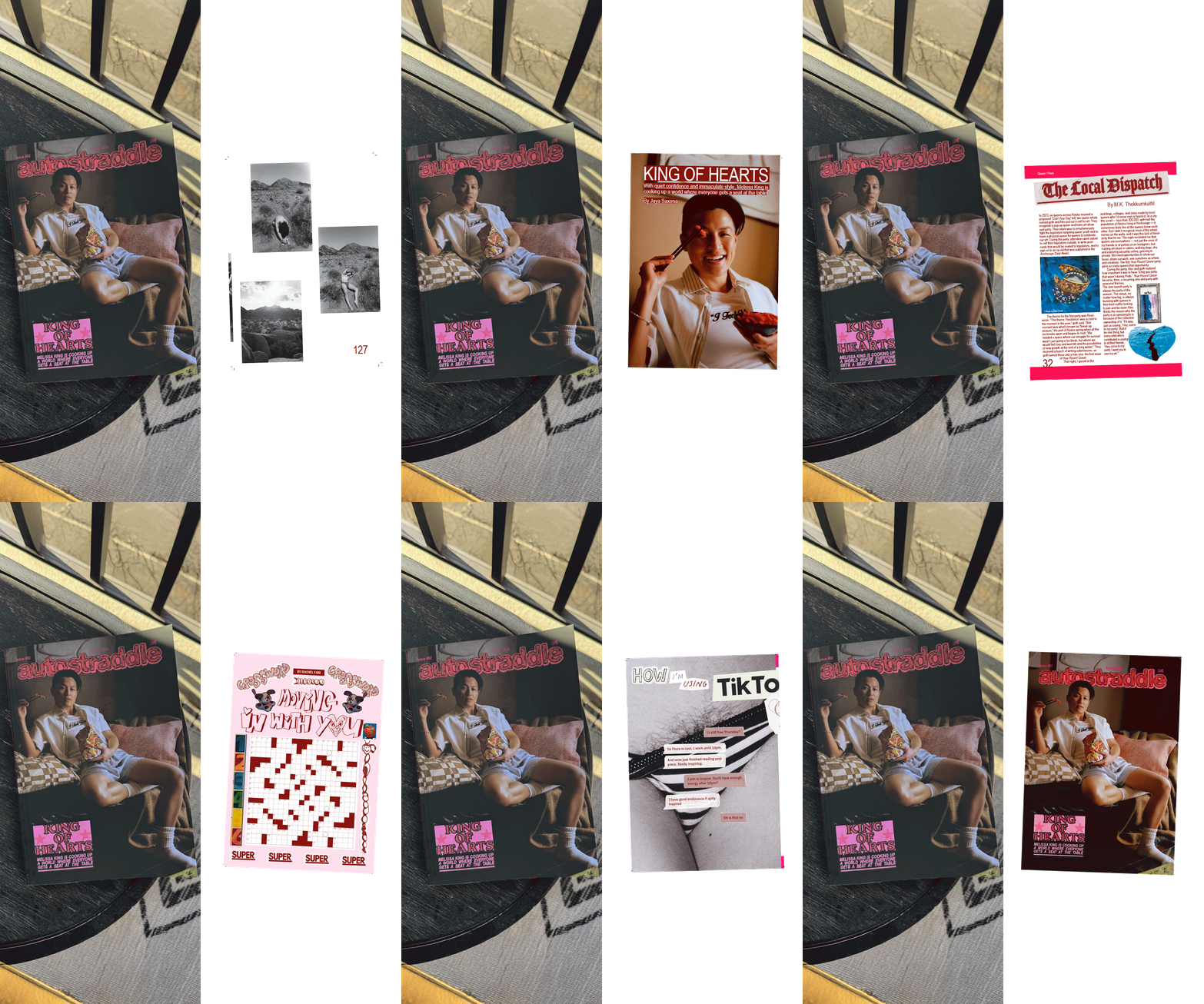
Read more anti-AI missives in Autostraddle’s print magazine.