





The following is the account of Christy Henderson Jenkins, as told to Faith Reidenbach over the course of 11 interviews and many correspondences conducted over several months.
If you’re queer and online, you’ve likely heard of Stormé DeLarverie. Some people know her as the “male impersonator” who emceed the Jewel Box Revue, a racially integrated U.S. drag show, from 1955 to 1969. Some recall her role as protector of queer bars in Greenwich Village. Many claim she played a key role in the Stonewall Rebellion. But I knew Stormé as my gay father, and I knew her partner, Diana, as my gay mother. This is the story of my time with two Black lesbians whose deep devotion to each other changed so many lives, including mine.
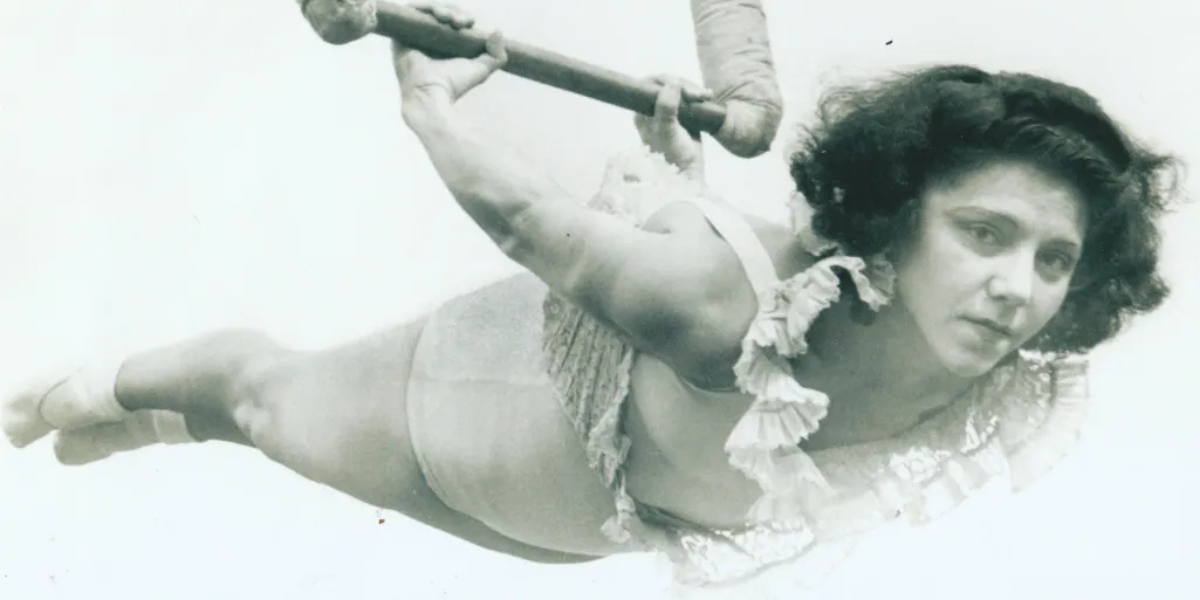
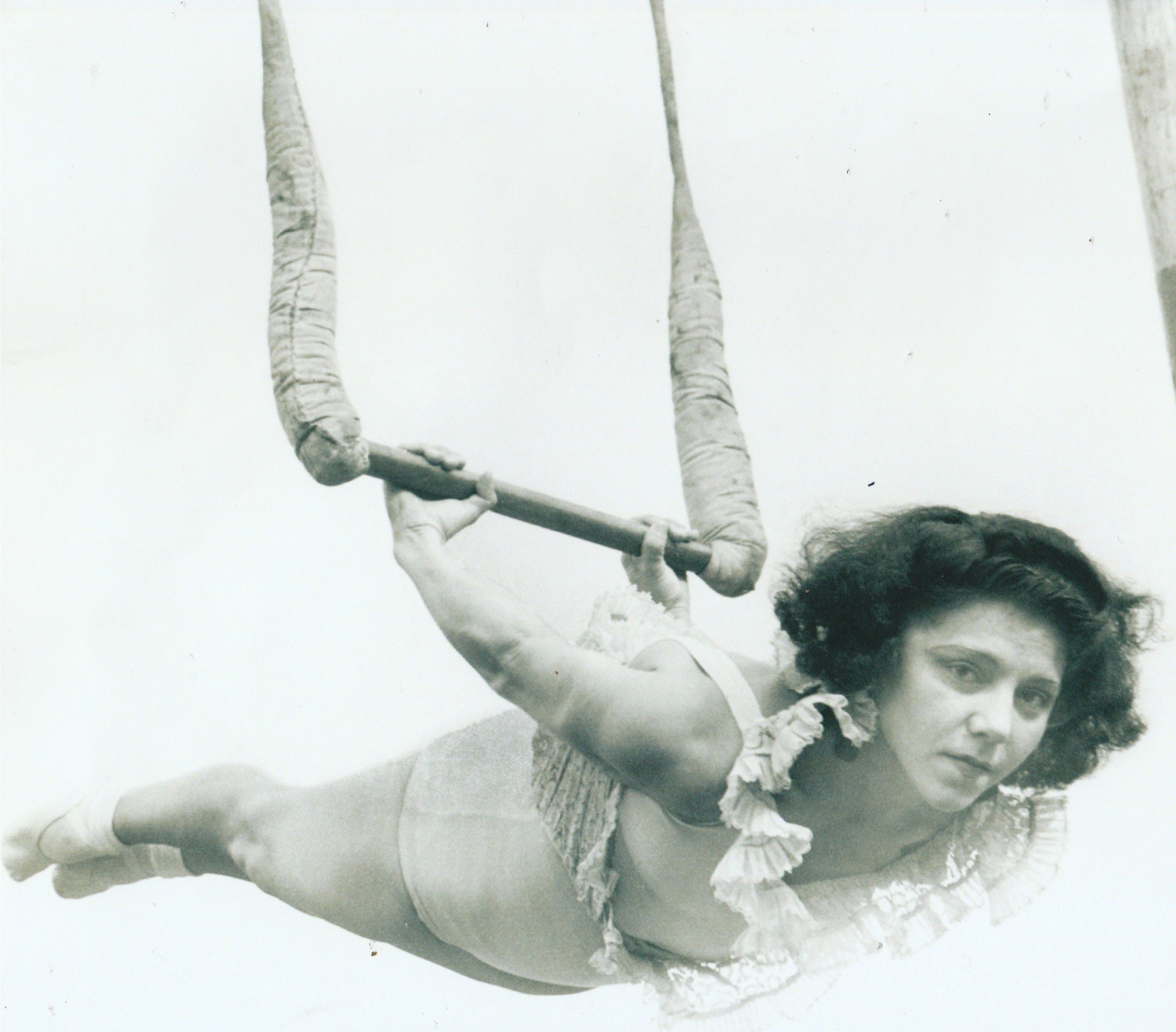
Mom and Dad enjoyed sitting me down to hear their love stories. They met in 1943 at Smalls’ Paradise, a 24-hour nightclub in Harlem. It was one of the first clubs owned by an African American to have a mixed Black and white clientele. Most of the white patrons were rich Mafia businessmen. Smalls’ was basically a straight club, but drag queens could perform there. Diana was a showgirl and excellent tap dancer, and she led a troupe of Black dancers, the Diana Dancers, who traveled around to different New York clubs. Diana was her show name; her birth name was Debbie. She was a beautiful light brown woman with shoulder-length hair, slim and very athletically built. She was mixed-race, and today she might call herself Afro-Latina, but she identified then as African American. Stormé moved in with her soon after they met, and they lived together until Diana died 26 years later.
When Stormé came to New York in the early 1940s, she performed briefly at the Cotton Club, since she was light-skinned enough for them. They tried to make her into a second Lena Horne. She already loved one of Lena’s signature songs, “Stormy Weather,” and in her earliest days of singing professionally she called herself Stormy Dale. When she moved on to Smalls’, she kept singing as a woman, but that wasn’t what she really wanted. Inspired by the drag queens, Stormé decided to start singing as a man.
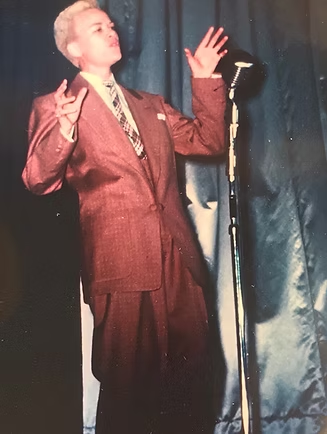
Diana supported the idea, and she bought Stormé’s first suit. Stormé could never have become such an iconic entertainer and community protector without Diana letting her be free. Stormé was nervous about being turned away from Smalls’, but audiences liked her act. She especially loved doing Billy Eckstein. Smalls’ was the place to be discovered, and Stormé was the only drag king there. She’d escort the drag queens out onto the stage, and that caught the eye of a Jewel Box Revue owner who was there scouting queens.
I came to feel that African Americans in the Jewel Box were slighted. Even though it was an integrated show, they played favorites. Sometimes I was supposed to go on, but they’d put a white person on before me. When I complained to Daddy, he would always stand up for me. But after over six months of this, I became dissatisfied with the job itself. I’m a singer, and most drag queens in the Jewel Box did their own singing. But I felt awkward impersonating women when I am a woman. Daddy advised me: “Chris, this ain’t for you. Why don’t you go perform as the girl you want to be.”
Daddy and Mommy and I remained close, thank God, after I left the show. I even stayed with them for a minute in their apartment, which was around 125th Street and St. Nicholas Avenue. They kept a rollaway bed available for anyone they could help. We would sit around playing the radio or just sing on most days. Mommy and Daddy often asked me to sing “Let It Be Me,” which has the first line “I bless the day I found you.” I’d start it off and they’d join in. Mommy wasn’t a professional singer, but she could carry a tune. When they had friends over, it was mainly fellow musicians and, again, we’d all sit around singing.
Mommy and Daddy worked a lot of hours, but they took time for relaxation. Daddy would sketch, he was good at drawing. He loved to read and he loved to write love poems to Mommy. He called her “my sweet little rose” (in writing and in conversation, too). He also wrote music. Mommy got a piano that her church was giving away, and Daddy could play a little. Mommy liked to sew clothes for their dog — she had sewn her own trapeze costumes — and she made some clothes for me, too.
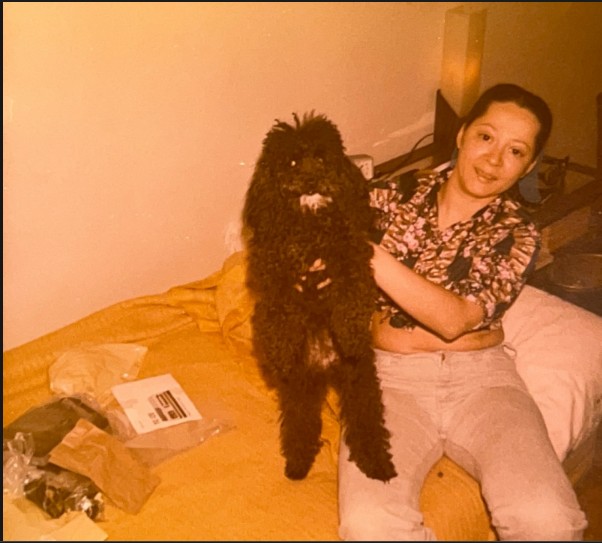
Sometimes the three of us would go out to the Lenox Lounge or a Black gay club like Andre’s. We more or less stuck to Harlem. One night, the three of us tried to go to a white gay party in the Village, and we had the door slammed in our faces. Of course, even in the 1960s, hardly anyone was using the word “gay” or “lesbian,” especially in the African-American culture. Daddy and Mommy would say they were “different.” Being gay was nothing to broadcast. That didn’t come about until way later on. Even though people knew where you were, you didn’t say it, because you could get gay-bashed or killed.
Mommy was what we call today “on the down low.” She worried about her family not accepting her, and she was afraid she might not get entertainment work in straight settings. When they were in public, Mommy and Daddy would just say they were friends. When Daddy had to go out to a straight place with Mommy, he’d dress as Viva — that was his birth name — and they’d be two beautiful women together. He had a woman’s wig, and I’d style it for him. He only cross-dressed when he could feel comfortable, in the right environments. I think Mommy actually preferred him to look like a man when they went out, because things were easier if they appeared to be a straight couple.
Sometimes they were hassled, though, because from a distance they looked like a white man with a woman of color. Daddy wasn’t proud of his light skin; in fact, he was ashamed. His white father had rejected him, and he resented him for it. He refused to accept himself as half white. He told me various stories about his life; he was always all over in his stories. “Chris, you know your Daddy Vee likes to exaggerate,” Mommy would tell me with a smile. Or she’d say impatiently, “Daddy, stop that stuff, you know that ain’t right.”
I looked to Mommy for the facts about Daddy’s early life. What she confirmed was that Daddy’s father was extremely wealthy and in the wine business in New Orleans. Daddy’s mother was his maid, and Daddy’s father didn’t provide any financial support. Daddy’s mother had children by a Black man, and Daddy was passed around to various foster families. Daddy told me one of them was a French Creole family named the Delavieres. I don’t know whether Daddy’s parents’ relationship was consensual. Mommy also confirmed that little Viva was eventually sent to a light-skinned, up-class Black family in Nebraska and, after her mother died, they adopted her. Now that Chris Starfire has done brilliant biographical work on Daddy, I know their name: the Hublitzes.
They also took catering jobs they got through the cleaning business. Daddy was a good cook, but he couldn’t get down like Mommy did. She used to fix Daddy baked turkey legs and dressing, those kinds of meals. Being from Louisiana, gumbo was his greatest favorite, and he loved how Mommy made it. I’m allergic to seafood, so she would make me a whole different dish. They went out of their way to treat me as if they were my parents.
Diana would help me put my lashes and makeup on, and we’d press and curl each other’s hair. Sometimes, she would tell me, “Girl, that skirt is too short.” She was a mom! But she dressed sharp and kind of sexy herself, she was quite a fashionable woman. Daddy loved to shop for her.
Although Mommy was always gentle with me, she could lay the law down with Daddy. She was a little bossy, and Daddy liked it, believe me. Anything that would please Mommy, Daddy did it. He brought her a gift every single night when the Jewel Box was at the Apollo or another New York theater. He came home very late, because he was in charge of everything: He sang the opening number, he made sure all the entertainers had their costumes right, he sang the closing number, and he’d clean the place up. Then he’d hurry home to be with Mommy. Sometimes, Mommy helped him clean as part of their business. But she didn’t like to see him perform for some reason. She’d laugh it off and joke that she didn’t like seeing him with all those girls around him.
When I was 13, the NAACP in our town in Arizona invited Dr. King to come speak about integrating the schools. My mother and I sang his favorite song for him, “Swing Low, Sweet Chariot.” Afterward, my mom asked Dr. King in my presence, “Why does my son want to be a girl?” He said, “Sister Viola, you are a praying woman. Whatever God intends for that child to be, you pray for that child and love that child.” It was one of the highlights of my life. I told that story to Daddy and Mommy, because Mommy was a little bit religious and believed she was living against God’s will. Hearing what Dr. King said made her and Daddy feel better. It seemed to bring them even closer. I think they didn’t feel so bad about their lifestyle after that, because every African-American person respected Dr. King to the highest.
And this brings me to Stonewall. People ask me all the time, “Was Stormé there? Did Stormé throw the first punch?” I don’t want to offend anyone, but I didn’t see Daddy there. I didn’t feel welcome at the Stonewall club or go too often, but I put on an extra nice dress and went that night because I was invited to Yvonne Ritter’s birthday party. I was arrested for breaking the masquerading law. I saw the other people who were taken to the police station, and Daddy wasn’t one of them. During the months I was in jail or Bellevue Hospital, Daddy called me every day or two; Mommy wouldn’t let him visit because he could have been arrested, too, under the masquerading law. Over all that time, he didn’t say one word about resisting at Stonewall. I stayed in New York for several more years, and during that whole time, too, Daddy never said anything to me about being at Stonewall.
I realize that starting in the 1990s, Daddy gave interviews about punching a cop outside the Stonewall during the rebellion. Sometimes he said he knocked the cop unconscious. I have my suspicions about why he started that. Now, I did once see him shove a cop in Harlem who called us queers as he, Mommy, and I approached a gay club. He got arrested and Mommy had to bail him out. I think it was a Puerto Rican cop, it wasn’t any white man. And I once saw Daddy punch a man who was flirting with Mommy at a club and started disrespecting her. He was a tough guy. But he was no fool. Can you imagine what would happen to a Black person who hit a white cop in 1969? When I told that story to my cousins, they fell out laughing. Think about it! Use common sense! Daddy would have been beat down. There’s no way he would have taken that chance with Mommy sick at home.
I feel in my gut and heart that Daddy wasn’t walking by a nightclub at two in the morning in June 1969. Mommy was very sick, and I think he was home with her. He was afraid to even leave her side around that time. He was afraid he was going to lose her.
When Mommy did die, Daddy was devastated. He went through a long period of terrible depression. I don’t think he was ever quite right again. After I left New York, I kept in touch with him into the 1980s. We’d talk on the phone or I’d see him when I came back to visit. We would talk about Mommy — she was most of our conversation. He missed her terribly. I don’t know of Daddy even thinking about another woman seriously. He carried Mommy’s picture in his wallet for the rest of his life.
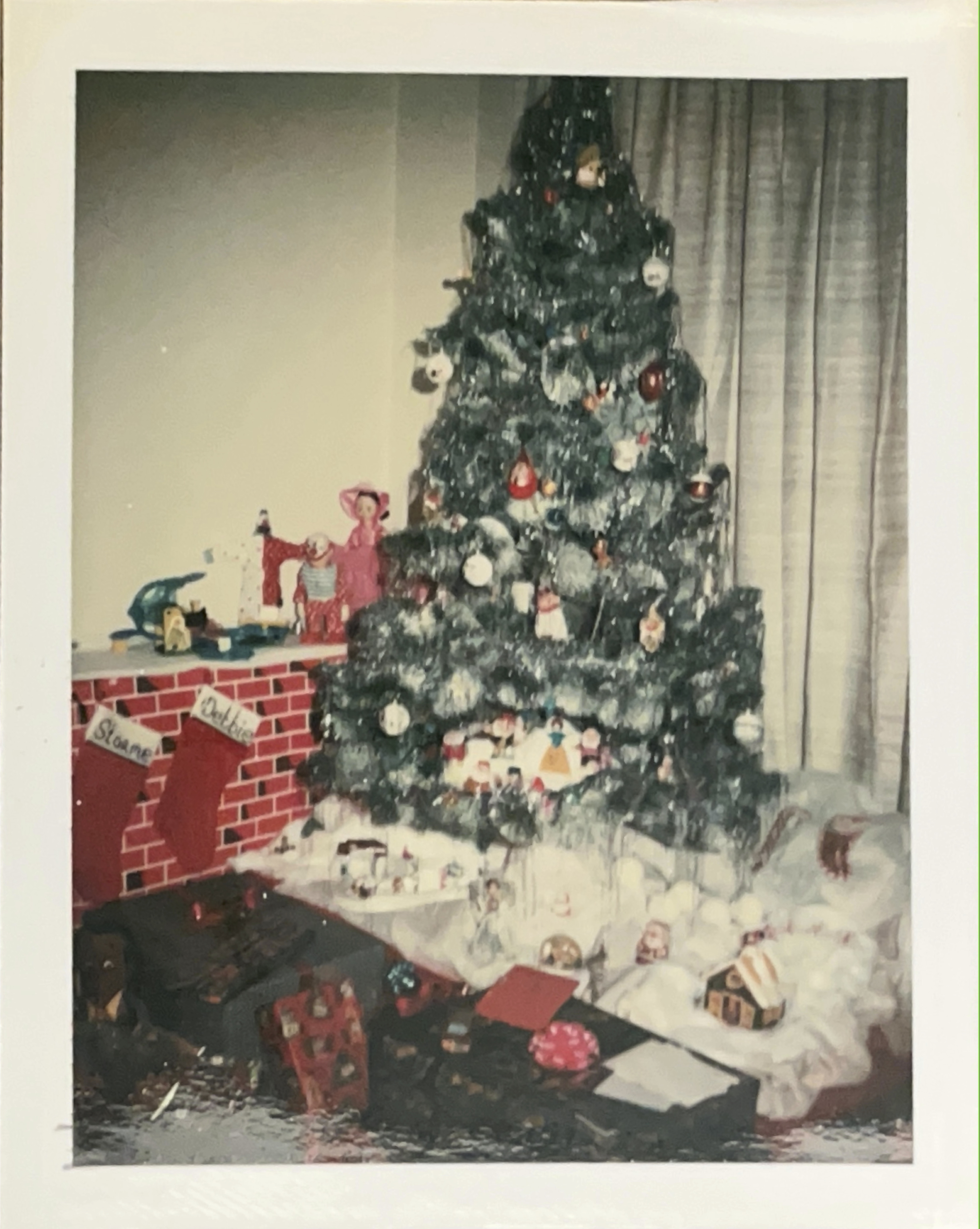
Even though they were quiet about their relationship, Stormé and Diana were proud of it. They considered themselves husband and wife. And they taught me to be proud of myself. They were so loving to me and to each other. They respected each other. I’m lucky I had them as my parents when I was in New York, and I’m very happy to speak for them. I loved them dearly, and I miss them every single day.


Comments
This was so beautiful and well done. I cried tears of happiness and sadness reading it and just love any morsel of our history. Thank you for sharing 🫶🏼
Wow, what an amazing article! This is such an important story about Black and queer lives. Thank you for sharing their story. May Stormé and Diana’s memory be a blessing. It certainly sounds that way.
This is incredible. Thank you Christy for sharing your memories of Stormé and Diana, their memory is a blessing. Thank you Faith for helping carry our community’s history forward. Thank you Autostraddle for platforming our living history!
Absolutely wonderful! It’s not often we get the chance for queer history to really come to life like this. Thank you for sharing your stories!
Very interesting! Thanks!
For more about Stormé, you can pay a few bucks and have an in-home viewing of Stormé: The Lady of the Jewel Box.
https://vimeo.com/ondemand/stormehomerental
Michelle Parkerson, a Black lesbian, released this 21-minute documentary in 1987. It’s the best way to understand Stormé’s gentle, friendly manner and experience her beautiful singing voice. You can also watch her badass butch self in action, doing bar security at Henrietta Hudson’s in New York.
What a wonderful piece. Thank you so much for sharing this intimate, personal experience of history—the affection of queer people and their relationships with each other really shines through.
I especially appreciate your sharing this as June approached, because I recently saw a well-meaning but strident social media post claiming that Stormé definitely started the Stonewall Riots, though eyewitnesses and historians have disputed that for decades.
Christy points out that the claims doesn’t make much sense, and that pressing it ignores the realities of Stormé’s life—Diana’s illness, the devotion of their relationship, the racism in Greenwich Village, the psychic and physical distance from queer communities in Harlem, the calculus Stormé brought to altercations with cops.
Do I think Stormé abandoned a sick Diana to travel all the way to the white-dominated Village to go drinking on a Friday night when Christy and other eyewitnesses say otherwise? No. Do I think that Stormé’s life story is amazing and we need to learn about, respect and honor it? Hell yeah!
We need to get over this obsession with who was at Stonewall on the first night and celebrate that more queer stories and more queer histories, even when they aren’t what we want them to be. The truth is so much interesting. Thank you for doing exactly that!
Zahra, I have seen strident posts like that, too! The insistence has even crept into a recent book published by a Black scholar. I’m 66 and remember that people were discussing “the Stonewall lesbian” for at least a decade before Stormé started talking about being at Stonewall.
Chimamanda Ngozi Adichie speaks of “the danger of a single story,” referring to the bias introduced when we let an entire population of people be defined by one story. The problem is just as acute for Stonewall. (I’m indebted to a friend, the writer Mistinguette Smith, for this connection.) By focusing so much attention on Stormé, we’ve lost a lot of information about the other lesbians who were there. And by reducing Stormé’s life to one questionable punch, we risk undermining her amazing legacy.
Beautiful article, Christy and Faith! It helps me piece together more about Storme’s life and I appreciate it.
Christy, thank you so much for coming forward with your experiences with Storme and Debbie!
I love this article so much. Thanks for sharing it. More please.
I found this story very inspirational! It just shows what us women can do when we work together towards a positive goal. I really enjoyed this and I plan on reading it again just to see if I missed anything. Thank you for sharing that with us!
Really beautiful, thank you.
I’m so thankful to have been able to read this story thank you for publishing this I’m so moved and grateful to everyone who has loved and lived before me
This is an absolutely magnificent article, and I’m so happy I got the chance to read it. Incredible work, and incredible words and memories
This is an important chapter of Black history as well as lesbian history. The impact of racial passing has long been explored in stories that tell us important things about culture, identity, and possibility. Black people’s role in queering gender makes that story richer and more useful, without needing to reduce us to somebody else’s idea of what heroism should look like.
Thank you Christy and Faith for your collaboration in preserving and amplifying this rich cultural memory.
I occasionally search for Stormé online to see how younger generations are keeping her spirit alive. I think I may have the last photos of Stormé while she was alive; made many trips to visit her in those Brooklyn nursing homes with Southern food in-hand. I miss my friend.