





Familial acceptance is one of the greatest desires for first‑generation American or expat queerfolk, especially those of us from traditionalist backgrounds. It’s painful when the one who birthed you can’t fully accept you, even if your relationship isn’t wholly fraught with hardship.
I doubt that I’ve or many others who have once experienced this specific topic have seen it explored in film. Queerness is never a factor, as the focus is typically on the immigrant experience (Brooklyn or The Namesake) and the discovery of one’s self-identity and individuality. The film Bouchra, on the other hand, follows a distinctive approach: it employs a metafiction framework through a struggling filmmaker in the development of her next feature, intending to reconcile her relationship with her traditionalist Moroccan mother over her acceptance of her lesbian identity.
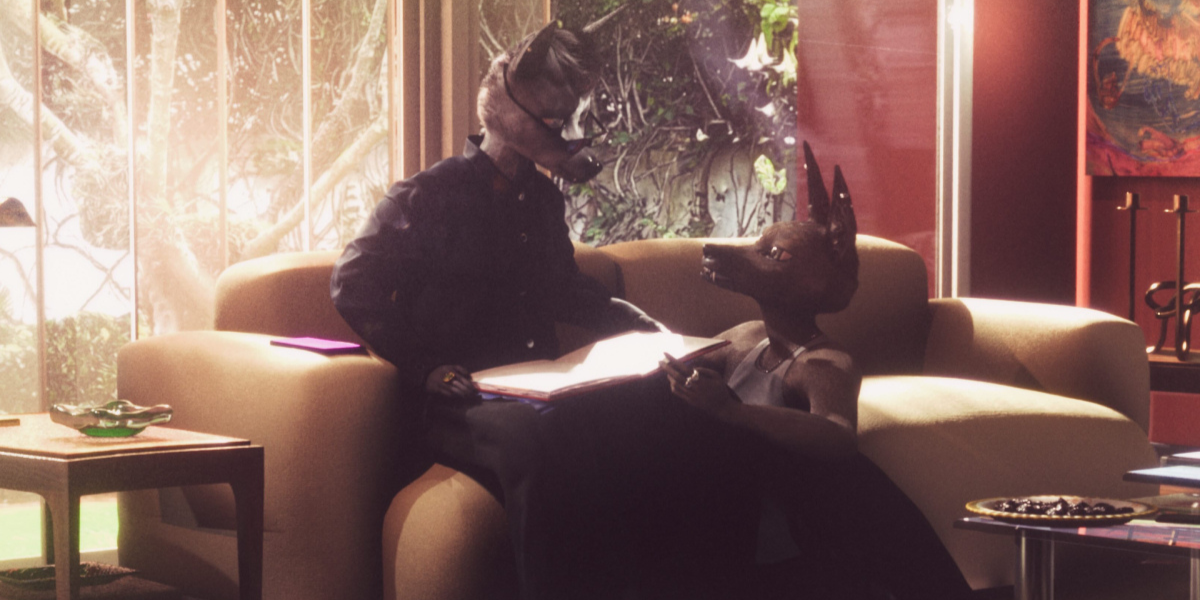
In Meriem Bennani and Orian Barki’s bold film Bouchra, an NYC‑based lesbian filmmaker (voiced by Bennani) tries to process her relationship with her Moroccan mother through a semi‑autobiographical meta‑fictional drama stemming from a coming‑out letter she sent nine years prior.
The kicker? It’s told via anthropomorphic animals in a hyperrealized backdrop. Marking the first internationally released Moroccan animated feature, entirely animated in Blender, Bouchra’s experimental animal‑filled approach takes some getting used to. The PS2‑quality textures hold it back initially, but the naturalism in dialogue and background detail makes it feel less like an animated feature and more like idiosyncratic docufiction. Through its fresh, original storytelling, it delivers profound humanity that will make many LGBTQ+ people of marginalized backgrounds feel seen.
Bouchra is a natural evolution from Bennani and Barki’s previous work—their short 2 Lizards (also their production company name) was a pivotal piece of COVID‑era art that used reptilian personas and naturalistic conversation to navigate the pandemic against a hyperreal NYC backdrop. That same energy transmits here. The film opens with Bouchra talking to her mom Aïcha (Yto Barrada), capturing the struggle of calling a parent on the way home—dropped phone lines, unsolicited advice. As she tries to discuss her coming‑out letter, shots of her darting eyes and her mom’s pauses immediately hook you into her perspective. Though there’s love and closeness to her Muslim roots, this one topic creates . The weight of non‑acceptance hovers over Bouchra as the film follows a vérité, docufiction slice‑of‑life of her traversing friendships and interspecies lovers while making her film, her insecurities causing fissures in personal places.
The filmmaker‑within‑a‑film framework adds another layer of intimacy—hand‑drawn storyboards on index cards give it a fun DIY flair—though it sometimes gets convoluted, breaking up the pacing when it deviates too much into repetitive romantic affairs. But its major strength is Bouchra’s grappling with her outspoken mom, bound by traditionalist perspective and expat identity. When it hones in on their dynamic, it delivers poignant, unique themes of self‑expression and subtly dismantles traditionalist places not yet conscious of LGBTQ+ identity.
I think I’m burying the lede: Bouchra is pretty adult. Like, if you think there’s not much lesbian sensuality in movies this year, this and Teenage Sex and Death at Camp Miasma are the summer movies to deliver unique, artsy, “for the sickos” sexuality. No other movie this year has a lesbian jackal and a caked‑up cow in bed exchanging saliva while the camera zooms in on their lengthy spit before it breaks like a spider’s web.
Again, the animation style is a lot at first, but like 2 Lizards, the duo wins you over with true‑to‑life conversations and naturalistic backdrops. The filmmakers also capture a noir, punk feel across NYC and Casablanca with vivid lighting cues. It may look low-budget, but the warmth and mood give it more personality and distinctive identity than some live‑action movies shot on volume. For a Blender‑animated movie‑within‑a‑movie, I’d love to see the production process behind it.
Ultimately, Bouchra is an intimate, expressive work of art about a queer individual in the diaspora wanting to break free from generational expectations and limitations and find their own tune to reconnect with the people they want to be seen by most. Told in a unique, unconventional approach, bolstered by sharp, humanizing writing against an anthropomorphic animal world, it’s a triumphant, warm, and affecting queer rom‑com with fangs as sharp as its titular jackal.


Comments
On Blender, like Flow (which i loved). I am very intrigued.
Great review. I watched it because Hannah Einbinder recommended it in a Camp Miasma interview 😂
I absolutely resonate with the vibrant exploration of identity in “Bouchra.” The way animated animals reflect our own complexities is truly powerful. It reminds me that our quirks and truths especially in the queer community can be sources of connection, even when they feel overwhelming. Thank you for shedding light on this intricate narrative! https://fnaf-2.com