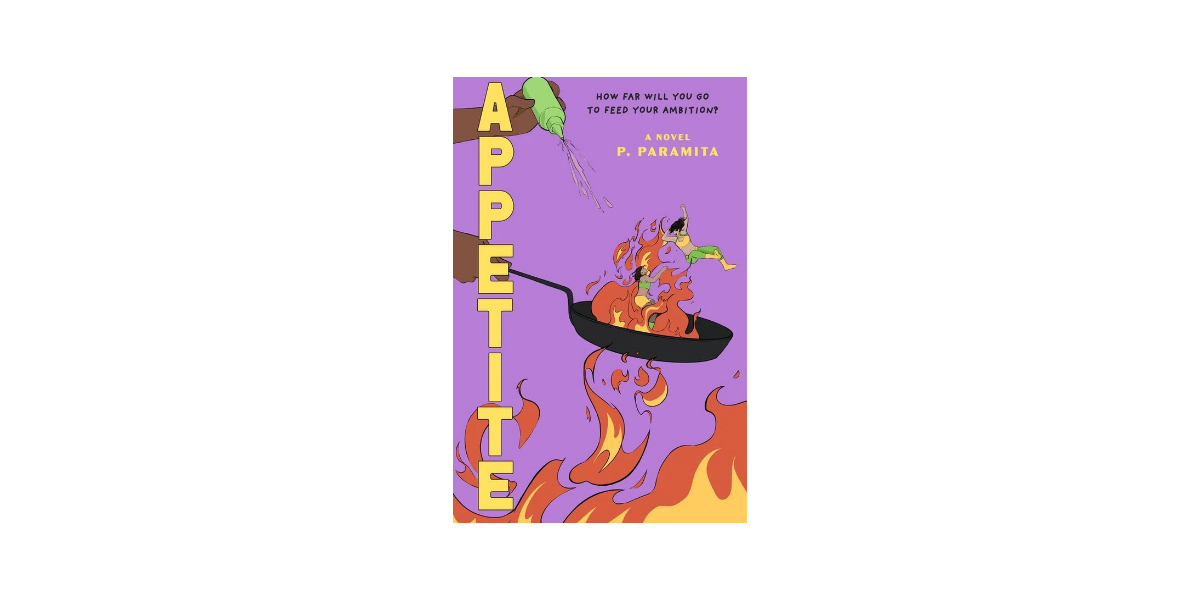
P. Paramita’s debut novel Appetite meets at the intersection of food, professional wrestling, ambition, and obsession.
The story centers on Zarina, a young queer Bangladeshi immigrant doing their best to protect the quiet candle of their culinary dreams against the harsh realities of the restaurant world. Zarina’s family never supported their dream of becoming a professional chef, insisting a bachelor’s degree would lead to far more success than a culinary one. After graduation, Zarina did their best to apply for sous-chef positions, but with limited experiences their only option was to take a job as prep cook at a trendy restaurant in New Haven called Zero’s. Though Zarina was initially told they’d be given opportunities for advancement, they find themselves stuck chopping vegetables and getting yelled at by their boss, a poster child for entitled white male chefs everywhere. Still, Zarina doesn’t lose sight of what they love: cooking. Each day they study the kitchen, mentally putting together possible Bangladeshi fusion recipes and taking leftovers home to experiment with.
Through their career struggles, Zarina leans on their obsession with professional wrestling, more specifically with a wrestler named Sierra Myst. For Zarina, wrestling is a place of both transcendence and joyful performance, especially when it comes to gender. “As a kid, I struggled with being a girl, feeling more at home in ‘boys’ clothes,’” Zarina narrates. “There is very little about me that can be tied to markers of femininity, and I still find myself hunting for people, men or women, who look like me in the kitchen and in the wrestling ring. There is no one like me at Zero’s, but I have the same wide shoulders as Sierra Myst. That evening in TD Garden made me feel, for the first time, like gender didn’t matter. I could be myself and feel safe as men took the back seat and women dominated, not because they were good for women but because they were good period.”
On Christmas Eve, the distance between Sierra and Zarina closes. While the rest of Zarina’s coworkers go to spend the holidays with the families, they turn to WTG (Wrestle Thunder Ground) to watch Sierra complete. Struck by a sudden desire to share the experience of watching Sierra win, Zarina posts a GIF of Sierra to their dormant Twitter account. Within minutes, Sierra has commented on the post, followed Zarina, and given them her phone number. Zarina is instantly swept into the vortex of wrestling Twitter and finds themself in a group chat called Sierra’s Bitches, dedicated to analyzing and cheerleading Sierra through anything. For the first time since college, Zarina feels like they might have real friends.
The most noteworthy of these supposed friends is Sierra herself. Zarina continues to send Sierra GIFs, later going on to edit her social media captions and scripts. Not only is Zarina a talented chef, they’re also a talented writer, which is a major asset in the wrestling world. Anyone who has watched professional wrestling knows language and dialogue are a huge part of the sport (if you want to read more on that I highly suggest you check out Paramita’s wrestling essay over at LitHub). Getting validation from Sierra begins to take over Zarina’s life. They live for the highs of getting a text or a Twitter reply from her, draining their bank account to attend every Sierra meet and greet they can. They struggle to differentiate Sierra Myst the wrestler from Jennifer Kaplan, the woman who plays her. They feel overly grateful for the free tickets and scraps of attention Sierra gives them. As their obsession with Sierra and her fandom grows, their own culinary ambitions move to the backburner.
Ultimately, Zarina must figure out how to make space for the art they love without it crushing their own dreams. There were times reading this novel I wanted to step into its pages and tell Zarina to snap out of it and stop prioritizing Sierra over everything. But even if I could, I don’t think they would truly hear me. Zarina is constantly questioning their own value and talents, giving Sierra far more credit than they give themselves, “I saw myself in her, or rather who I could be in her,” Zarina narrates. “I just need to stand up to my parents and my boss at Zero’s and I can be powerful like Sierra.” The first step to decentering Sierra in their life is understanding their own worth, and that’s something they have to do on their own.
Other people’s art should inspire us to move forward, not hold us back. It’s a hard truth to hold. I know it wasn’t something I fully understood when I was 24. It’s still something I have to remind myself constantly. I’m not saying obsessions and fandoms are bad for us. Quite the opposite. Obsession is one of the best things we can have as people and as artists. To have an obsession is to care deeply, to give something or someone, your time and your attention. I have more obsessions than can I list: shark movies, horror props, magic tricks, Muna, clowns, Alice in Wonderland, everything T Kira Māhealani Madden writes. The trick is remembering that our obsessions should bring us joy and expand our understanding of the world, not make it smaller. It’s not an easy balance! But we have to do our best to support the things we love while still doing the work that’s meaningful to us.
For Zarina, that’s food. I knew P. Paramita would knock the food descriptions out of the park. I’ve seen P’s writing here on Autostraddle and in the food-themed print issue. But there’s a magic in the food writing here that nothing could have fully prepared me for. This novel expanded my idea of what a meal can do. It can bridge generations and collapse distance. It’s a way of taking care of each other and making people feel at home, even if home is over 8,000 miles away (roughly the distance between New Haven and Dhaka). In many ways, cooking is the ultimate act of collaboration, which is why Zarina is so drawn to fusion. As Paramita writes: “The beauty of fusion lies in the openness to outside influences; any ingredient or cooking technique can work with the right vision.”
This novel could be easily described as a love letter to Bangladeshi cuisine and to professional wrestling. But to say that would be an oversimplification. Zarina’s love for both cooking and professional wrestling bring so many other kinds of love into their life. Both wrestling and cooking give Zarina an avenue to build community, make art, support their friends, and deepen their love for their adopted city. Cooking and wrestling work to infuse Zarina’s life with joy and hope for a better world. And at the end of the day that’s exactly what our obsessions should do.
Author’s Note: While she/her are used for Zarina within the space of the novel, Zarina does state that they want space to exist as simply themselves, something which is much easier in Bangla since there aren’t gendered pronouns. They described the experience of not having gendered pronouns as liberation which is why they weren’t used in this review.