





My generation was sold a world that no longer exists. We were taught from birth to strive for the “American Dream” of home ownership, 2.5 kids and a dog, a white picket fence for every yard. We watched the 2008 recession squeeze our families dry and, in response, we were pushed away from creative fields and towards “stable” careers that were supposed to guarantee us this fiscally independent, Rockwell-painting future. Instead, we aged into a pandemic-, pollution-, billionaire-ravaged world. We aged into “entry-level” jobs requiring four years of experience for meager salaries. We aged into smoke-choked skies and 67-degree days in December. We aged into a government that actively works to make all of our lives more dangerous, that legislates against the lives of anyone who isn’t a rich white man.
In 1970, 67% of U.S. adults lived only with their spouse and one or more children. That number has plunged to 37% today. According to a recent article in the New York Times, one in three Americans age 35 and younger are still living with their parents. I am part of that third; I’ve been living with my mom since I graduated college in 2021.
This wasn’t part of the plan. I busted my ass for four years at an Ivy League university for a biology degree that made me miserable to avoid this exact fate. In my senior spring, I applied to over 60 biology jobs. I got one single interview for a full-time position in a Manhattan lab that would only pay me $28,000 a year to conduct cancer research. I didn’t even get the job.
The move to my mother’s rent-stabilized two-bedroom in Queens was supposed to be temporary while I recalibrated, reevaluated, and figured out my next steps. Five years later, I am writing this from the grey West Elm couch we picked out together, in that very same Queens apartment. I never left.
My mother is Ecuadorean, and my father is Chinese-Mexican. In their cultures, intergenerational living is normal. But in the hyper-individualistic culture of the United States, children are shoved out of the nest at 18 and expected never to return. To do so is considered a supreme failure. We’ve all heard the derisive comments about leeches, moochers, losers living in their mom’s basement. In the tiny, majority-white town I grew up in, I constantly heard my friends’ parents say to their faces, “the minute you’re 18, you’re out of here,” with barely concealed glee. Though I never received the same message from my own parents, it didn’t matter. I internalized the deadline anyway and what it would mean if I failed to meet it.
Two months after my graduation, filled with a very American shame, I sat down in front of my parents and sheepishly asked if I could keep living with my mother indefinitely. My question was bookended with apologies for being a burden, for being unable to achieve the life and the independence I’d worked so hard for. They stared at me like I’d grown two heads.
“Oh, please. You don’t have to ask, mi reina,” my mother said, clicking her tongue in gentle admonishment. “This is your home.”
“We’re a team, okay?” my father added. “We’ll always support you, no matter what.”
Their immediate, open-armed embrace was reassuring, but it was a weak buffer against the rest of society’s judgment. Out of all my friends in New York, I was the only one still living with a parent, and a good handful of them never let me forget it. No matter what problems plagued me at any given time, no matter how related (or, more often, unrelated) to my living situation, their response was always, “You really need to move out.” In the five years since I graduated college, I’ve battled waves of insecurity around my living situation, which then extends to my financial situation, which then extends to my broader Place In Society.
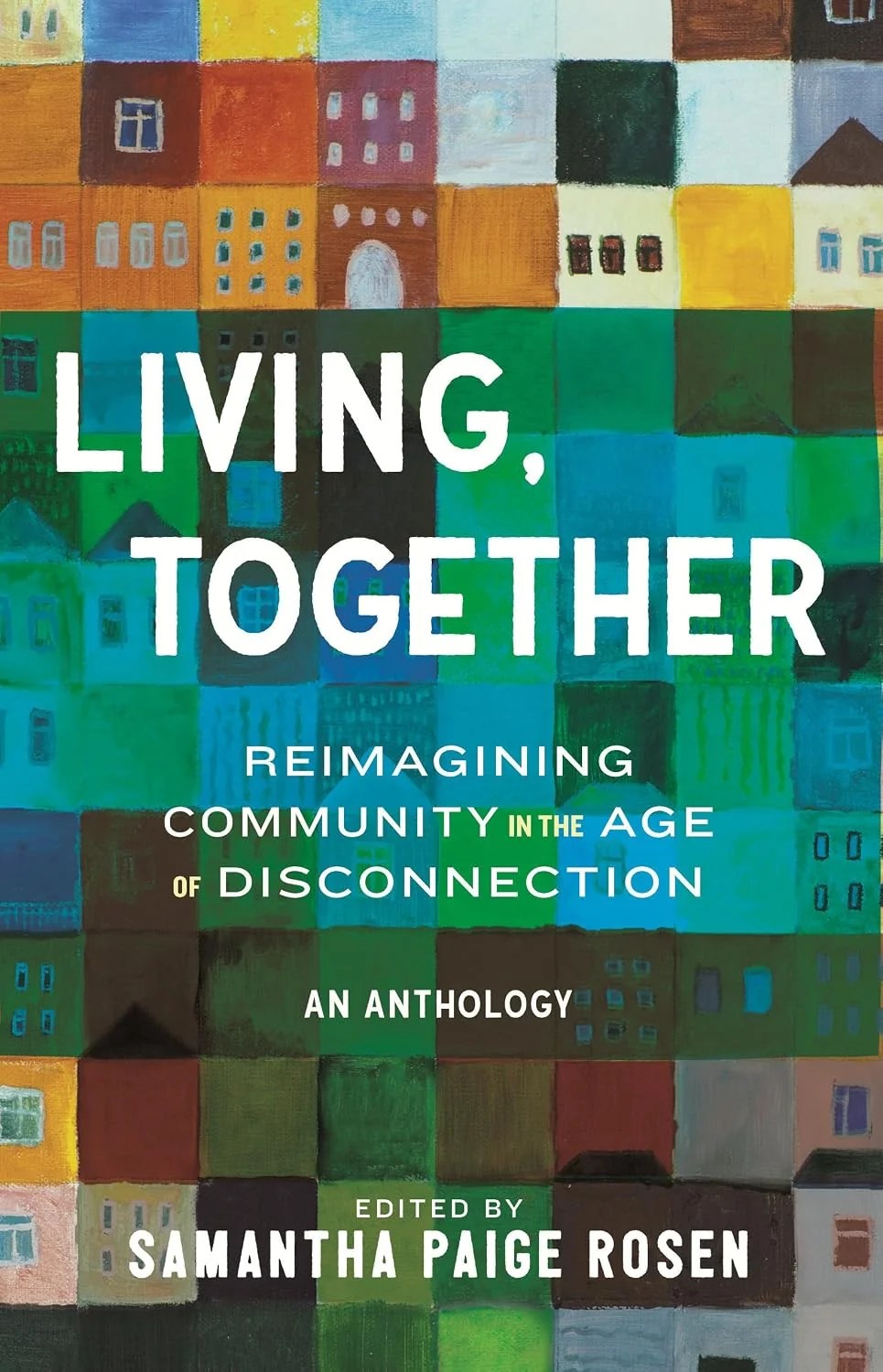
If I’d been able to read the anthology Living, Together when I was freshly 21, adrift and aimless in my mom’s second bedroom, it would have saved me a world of pain. It would have reassured me that communal living is not something to be ashamed of and, in fact, might just be how we save each other.
Living, Together: Reimagining Community in the Age of Disconnection is a collection of essays and interviews edited by Samantha Paige Rosen and featuring a diverse cast of authors, activists, and community leaders. The work considers different forms of communal living or intentional community-building.
The idea for the anthology was born out of Rosen’s own experience moving back in with her parents at age 29. She was deep in the throes of burnout; after working several toxic jobs in a row, her body and mind were crumbling. Combined with an unexpected sexuality crisis and a 10% rent increase, she hit a wall. She quit her job and returned to her parents’ home in the Philadelphia suburbs, where she stayed for the next six years.
“I was so ashamed to be asking for help,” she writes in the book’s introduction. “I felt like I was giving up on all the things I had spent my adolescence and young adulthood working for.”
But Rosen soon found there were many things to love about living with her parents. They were able to share the household chores and grocery costs and ultimately took comfort in each other’s company: “I embraced the ease of eating dinner together in front of the TV and the ridiculousness of spontaneously breaking out into song while cleaning up.”
After publishing an essay about how much she enjoyed her living situation, she began to hear from readers who resonated with her story, who didn’t feel like the traditional nuclear family living structure was possible for or desirable to them. She realized there was a need for more stories about the experiences of people who have chosen to live in nontraditional or communal arrangements, and thus Living, Together was born.
The collection is organized into three sections that flow naturally into each other. “Family Homes” focuses on intergenerational and familial living and sloughing off the cultural shame that comes with it. “Intentional Communities” tells the stories of those who set out to create communal living situations with others out of genuine desire as well as necessity. “Beyond Housing” widens its scope to community-building at large, outside of one’s immediate living environment.
The authors of these essays are as diverse as the country itself, spanning states, races, sexualities, and more. Dani McClain writes about moving herself and her daughter into her mother’s home to care for her after she experiences a stroke and how beneficial it has been for both her daughter and mother to live under the same roof. Gabrielle Korn writes about turning her home office into a studio apartment through which she and her wife began running a writer’s residency and how it helped her build a literary community in Los Angeles. Sarah Thankam Mathews writes about her experience building a several-thousand-member mutual aid network in her Brooklyn neighborhood during the onset of the COVID-19 pandemic. Kristen Arnett closes out the anthology with a moving, hopeful ode to her queer found family and the ways they help each other weather storms both literal and emotional. The vastness of perspectives presented in this anthology expands readers’ notions of what is possible when it comes to housing and building community.
Interspersed throughout each section are interviews Rosen conducted with individuals who are attempting experimental forms of communal living and community-building. She speaks with Mary Anne Adams, the founder of ZAMI NOBLA: National Organization of Black Lesbians on Aging, which aids elder Black lesbians in finding housing and accessing healthcare and community. She talks with the founders of Hope Meadows, an intergenerational neighborhood that brings together families adopting foster children and seniors who want to step into a grandparent role. These interviews were my favorite part of the book. Reading about these organizations that are actually putting these ideas into practice was extremely powerful and made it clear that communal living isn’t a Pollyanna-ish pipe dream. It’s a very real possibility that can succeed if everyone involved is committed to their community.
The United States is in an active loneliness crisis. Despite the internet “connecting” us more than ever, the Cigna Group and Gallup polling reported last year that Gen Z is statistically “the loneliest generation alive,” and a 2025 survey from the American Psychological Association found that “half or more adults said they feel isolated (54%), left out (50%) or lacking companionship (50%) often or some of the time.” Living, Together is a beacon of hope and radical optimism in these lonely times. The pieces within are unafraid to look beyond the traditional, hyper-individualistic notions of how we should live and push back against the American culture of isolation. Building a better world starts with strengthening the bonds between us, learning to rely on each other, supporting those around you when the state fails to do so. It starts with building community. The essays in Living, Together are a much-needed reminder that we all have the ability to break free of lifestyles and systems that are hurting us and choose a different path, if we have the courage to do so.
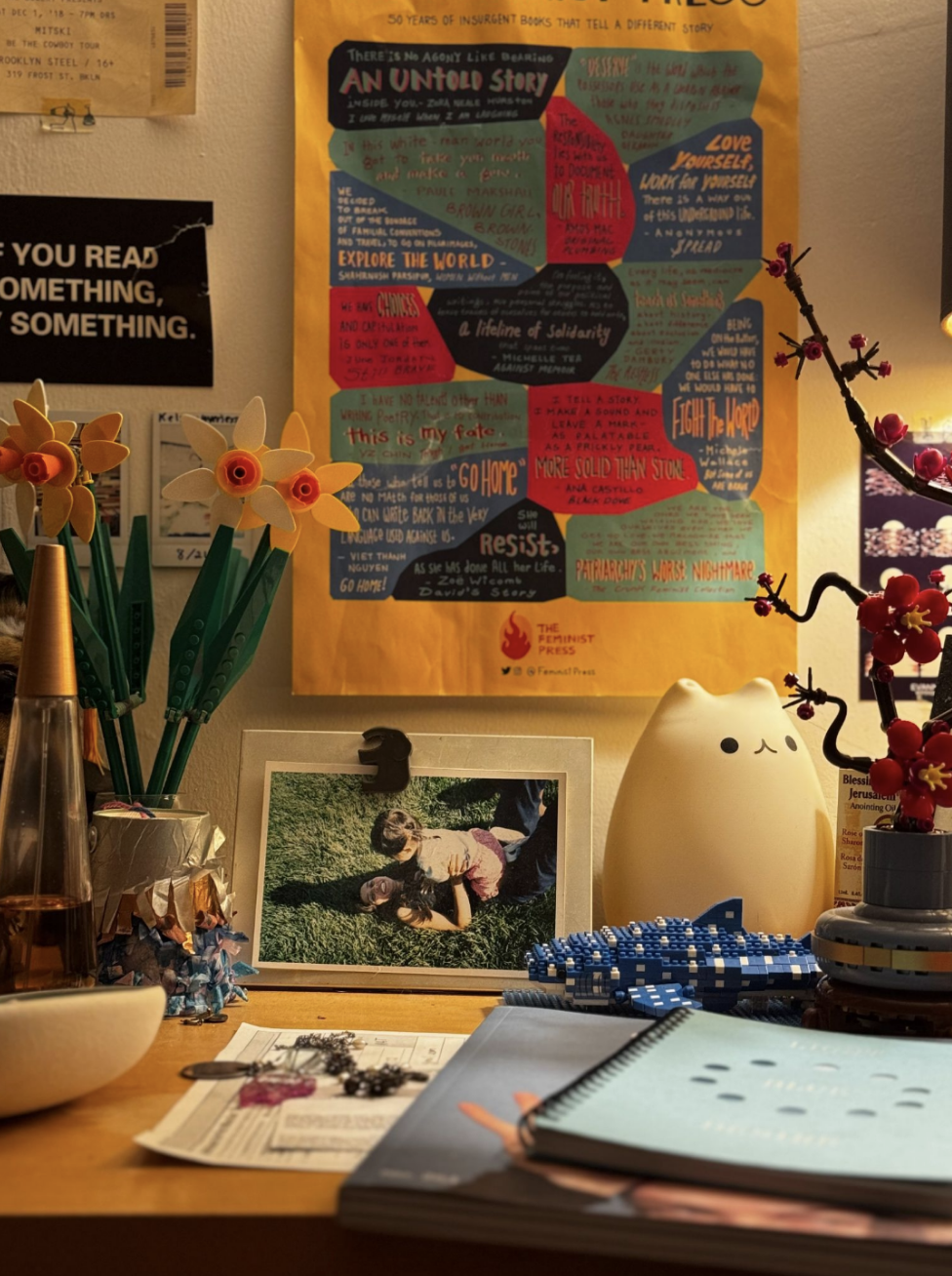
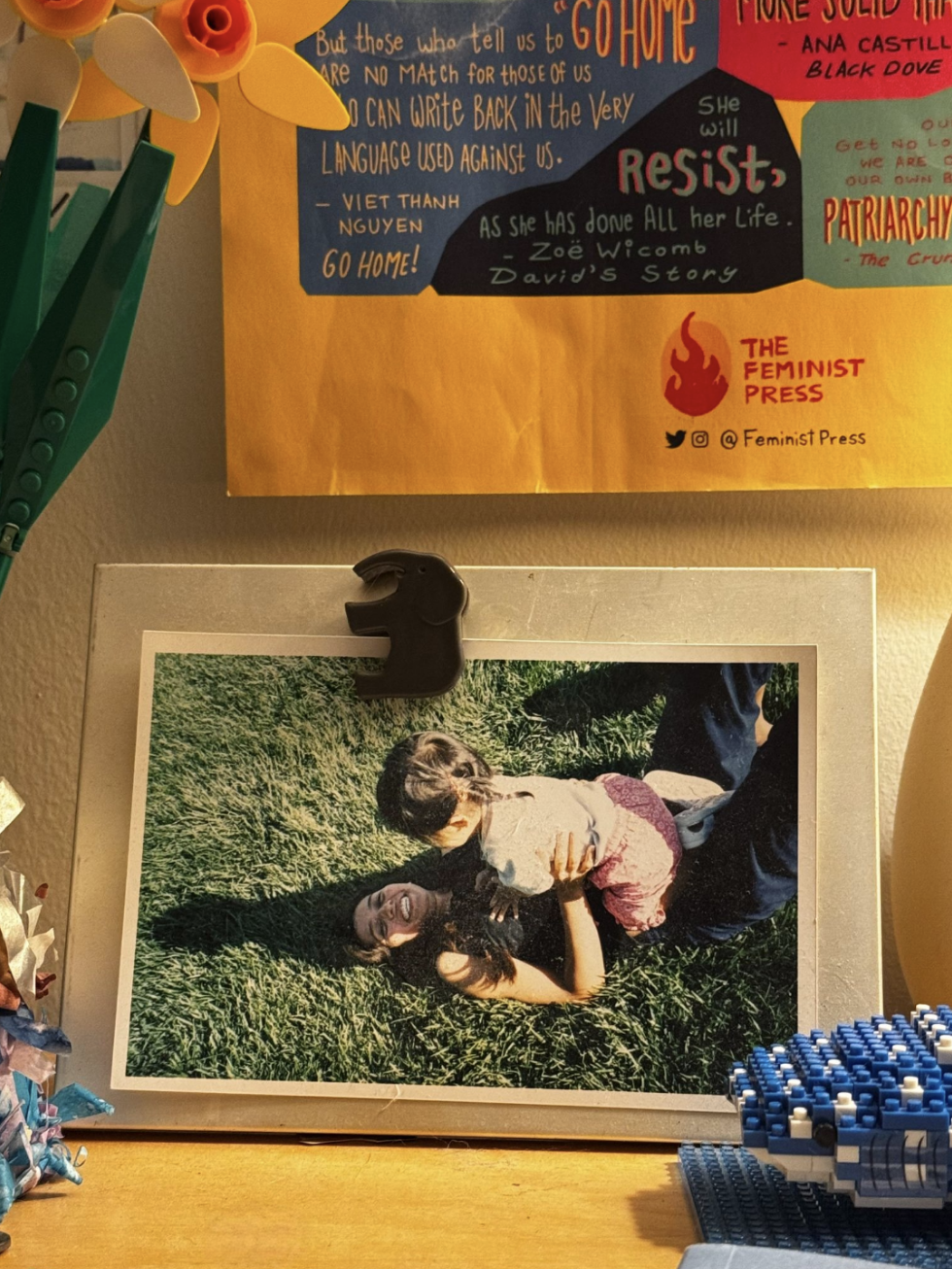
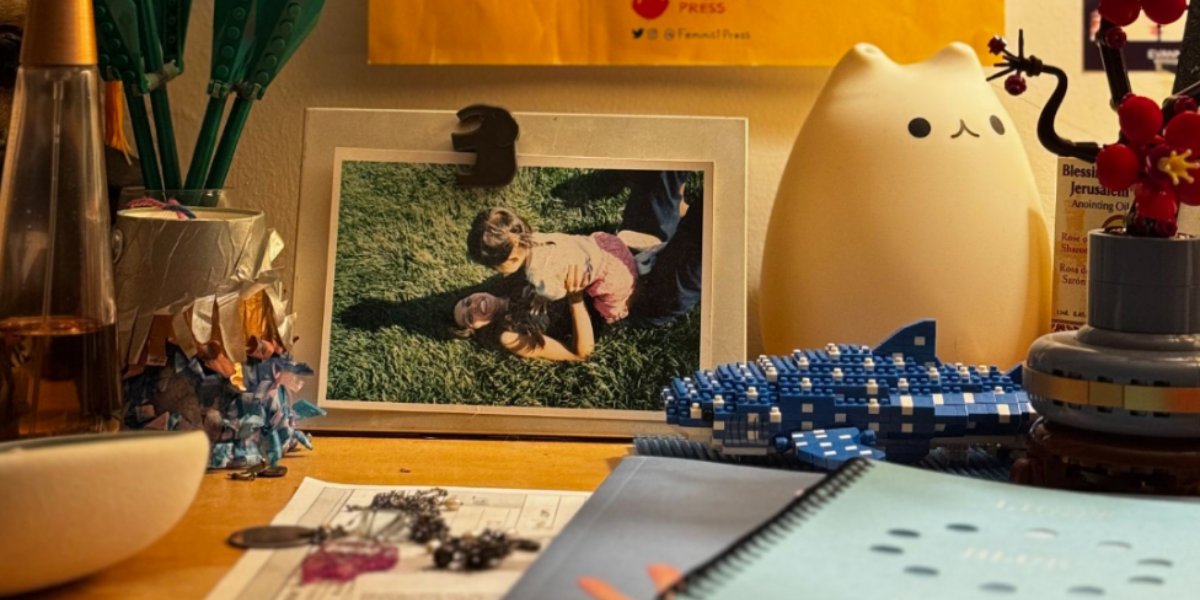
I tore through Living, Together while sitting in my Aeron chair in my favorite bedroom I’ve ever lived in. It’s big enough for a full-sized bed, a desk, a dresser, and a tiny bookshelf, with enough room left to turn around. There’s an X-Files poster on the wall above my mattress. The large, west-facing window lets in continuous sunlight from noon onward and turns everything pure gold at sunset, including the photo on my dresser of my mother and I. In it, I am two years old, climbing on top of her as she lies on her back in the grass, holding tight to my rib cage and grinning at my father where he stands behind the camera. It’s my favorite picture of the two of us.
I have been supremely lucky to have a mother who flat-out refuses to let me pay rent, who gossips with me before bed every night, who let me play the entirety of Dancing On The Wall for her the day after it came out and now blasts it every weekend while we clean our rent-stabilized (and now frozen — thanks Mamdani!) two-bedroom apartment in the same neighborhood she grew up in, just around the corner from the building where my grandparents have lived my entire life. We are not wealthy. She is not funding my life. I work part-time jobs and write lesbian essays to pay for my own flights, my own paperback novels, my own weed. But by allowing me to live with her, she has given me the greatest gift a writer can possibly receive: time. It’s in this room where I wrote most of my first book and all 70,000 words of my novel-in-progress, which would have taken years longer if I were working two or three jobs and scrambling every month to make ends meet in a city where the cost of living is 136% higher than the national average.
Across the days I was reading Living, Together, I’d pop into my mom’s bedroom and tell her about the essays I’d read as she steamed her outfit for work the next day. I told her about Suanne Carlson, founder of a gathering for nomadic women called the Women’s Rubber Tramp Rendezvous, and how she chose to live full-time on the road in her fifties after the death of her daughter and her subsequent divorce. I told her about my friend and pressmate Alex Alberto’s moving account of building the polyamorous family of their dreams with their partner, their metamour, and her two children. She listened. She understood. Of course she did.
We’ve been attempting our own experiment at living together for the past six years. It hasn’t been without its challenges. I still bristle at her unsolicited opinions on my outfit choices, and she rolls her eyes when I find her still working at one in the morning and tell her she should go to bed. But now that I’m pretty firmly an adult, we’re both learning to accept each other as full human beings beyond the confines of the mother and daughter roles we’ve been used to for so long. When we’re sitting in front of the TV watching a shitty, entertaining limited series and sharing a meal I cooked while she rode the 7 train home from work, we really do just feel like roommates.
When Sam asked me to moderate the Brooklyn launch event for Living, Together, a panel at Books Are Magic that included her, Alex, and Sarah, I invited my mom. She doesn’t come to many of my literary events, not because she doesn’t support me, but because we both prefer it that way. Most of what I write and read publicly concerns my sex life, and neither of us want her to sit through that. But this was a rare, parent-friendly opportunity for her to see me in my element, in my world.
She came directly from work, wearing the bright orange backpack she takes to and from the office every day and sat in the third row right behind Alex’s partner and metamour. I sat in the moderator’s chair, picked up the mic, and locked eyes with her. For a split second, I could see myself how she actually saw me, and not how insecurity for so long has made me fear she saw me. I wasn’t her immature, idealistic failure of a daughter, a once-promising Ivy League burnout who was now freeloading in service of a creative pipe dream. I was a real New York writer, living the dream I’d worked so hard for ever since I was born, and her adult daughter who still lived with her. From the sparkle in her eyes and the tiny nod she gave me right before I started to speak, I could tell she was equally proud of both.


Comments
If the world is truly so horrible and impossible to live in, I wonder how it is that all your friends managed to move out while you didn’t? Are they all “rich white men”?
Often, in places like NYC, your friends might have ‘moved out’, but they need 3 roommates to afford rent, so there is that.
I meant to type my comment as its own comment, not a response. But this commenter is clearly missing the point of this wonderful piece.
This essay is gorgeous. We need to respect multigenerational living as a society much more. I have several friends who’ve consciously chosen to live with family far into adulthood, partly because it’s in their culture, and it’s not a stereotypical “living in their mother’s basement” because they are “deadbeats” who rely on Mom to support them instead of working a “real job” (which is also kind of crappy capitalist propaganda in itself. That ignorant commenter up there clearly is missing the point.) I love hearing about how you and your mom’s relationship evolved with you living together long term. I also love how your togetherness supports each other and your writing. I want to read Living, Together, and I also want to read your book.
As someone who downsized after my kids left home and bought a fourplex with my best friends, I relate to all of this and know first-hand the benefits of intentional community. Two years in and it’s still one of the greatest things I’ve done.