





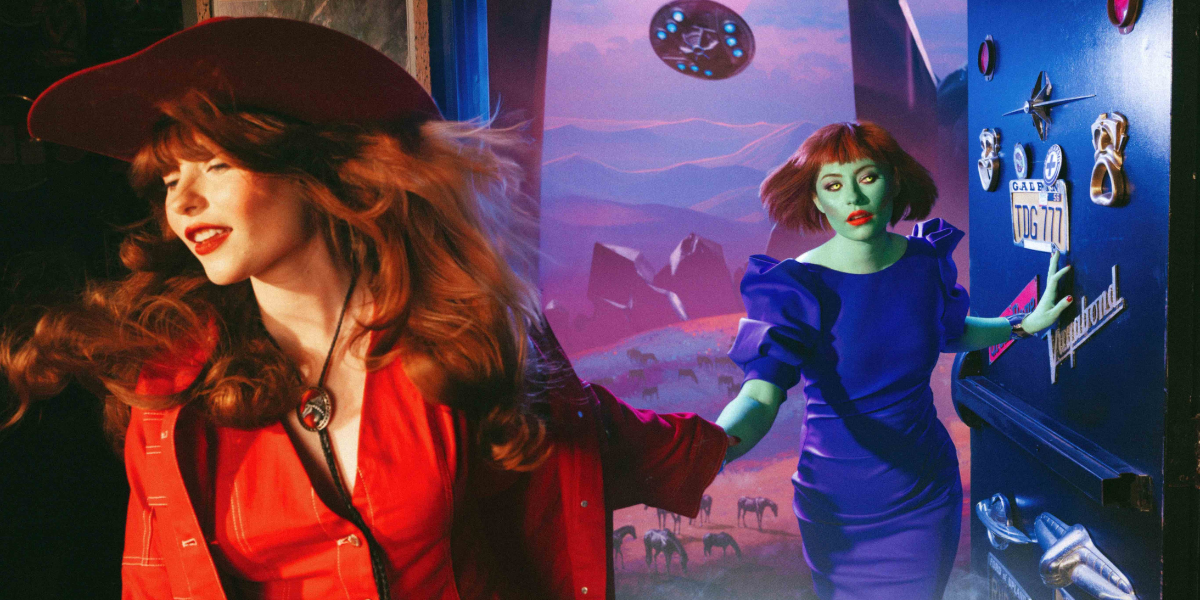
August Ponthier doesn’t want to compromise. And it pays off: The Allen, Texas native’s debut album Everywhere Isn’t Texas is a technicolor bildungsroman of queer self-understanding. Ponthier isn’t a newbie to the music industry by any means, having come on the scene formally with their 2021 single “Cowboy,” whose heart and aesthetic exhibit a clear throughline to their current project. Subsequent EPs Faking My Own Death, Shaking Hands With Elvis, and Breaking the Fourth Wall all stand tall on their own and enrich a musical universe that Ponthier has been deliberate in maintaining. Everywhere Isn’t Texas, however, pulses with the confidence of an artist who has spent the last few years cultivating not just their artistic identity but their personal one.
While not a Texas native, I lived five years in Austin and one in Dallas. Ponthier’s unerring criticism of the state holds hands with a passionate adoration — a two-pronged relationship that, I would argue, nearly every queer person has with this state if they’ve called it home. Ponthier, who has referred to Texas as “the most complicated and deep love of my life,” has penned one of the dearest albums of love songs that 2026 has offered thus far. Marrying a tenacious humor with an eagerness to excavate, Everywhere Isn’t Texas enters a lineage alongside Brandi Carlile and kd lang with its honesty, folksy strings, and generous, big, gay heart.
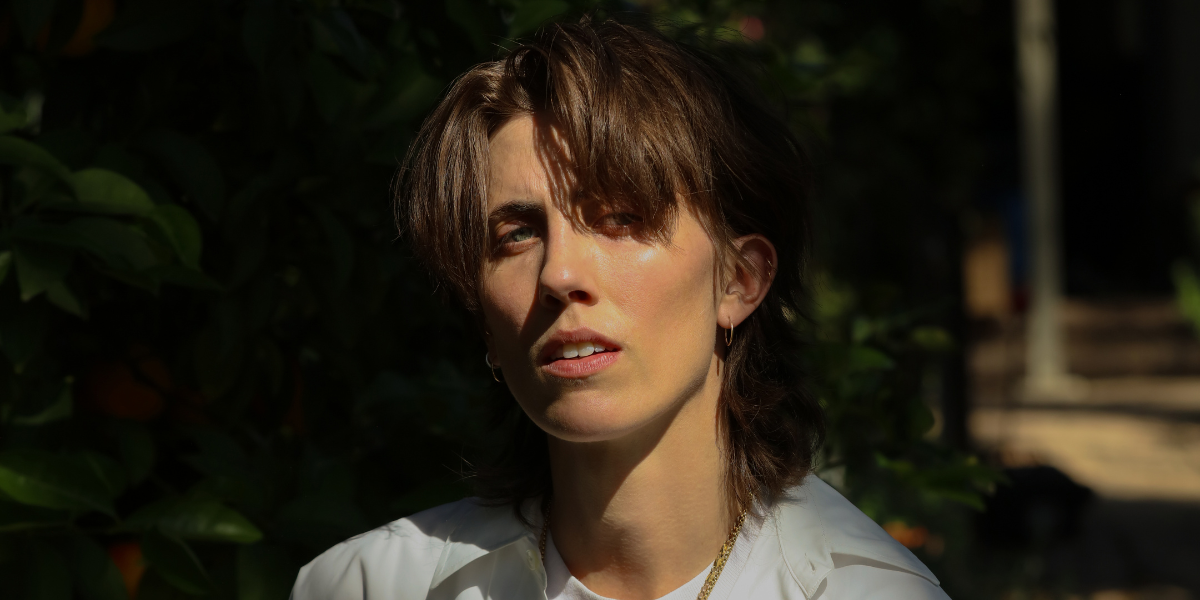
I had the pleasure of speaking with Ponthier over video, where they spoke with an earnest joy about the creation of this project, while decked out in an absolutely stellar red-and-white Western-style shirt.
Autostraddle: Texas comes across as the album’s clearest muse. Can you speak more about your relationship to your home state and how it’s evolved over time?
August Ponthier: I did not set out at the beginning of this record, or even my career, wanting to talk so much about Texas, or to talk about politics or to talk about my home life. That’s just something that naturally happened because I am the type of person that has to write from a true place and has to talk about the things that are on my mind. Otherwise, I cannot propel myself through finishing a song if it’s not genuine. So the reason that the album is about Texas is because I’ve had this ever-evolving and changing relationship with it, whether or not it was because I was there, because that’s just where I spent my entire childhood, or whether or not it’s because I have gotten to recontextualize Texas, since I’ve come out and since I’ve been able to come back and play shows and do events. But the reason that Texas is always in my mind is because every time I think I understand how I feel about it, something shifts and changes. And so it’s kind of like a relationship with a family member, or like a relationship with someone you’ve known your entire life. It’s not 100% clear cut. The legislation in Texas is specifically trying to make queer, and specifically trans people, feel unsafe, othered, and and overregulated. It’s reopening the wound or the question of “how do I really feel about this state and do I love it enough to keep talking about it?” And the answer will always be yes.
You’ve been out as a lesbian pretty much since the beginning, but only came out this past fall as non-binary, changing your pronouns and name right before this album drop. What has that been like for you, and what motivated that decision?
It felt really serendipitous, the timing of coming out and the album, and I do believe that there was reason for that. The album being a body of work that I’m really proud of incentivized me to put a name I feel comfortable with on it. The common denominator of why I ended up coming out in this new phase of my life is simply because I just could not wait anymore and I could not take it anymore.
A lot of people have treated my coming out as though it’s just a name change, but it really it touches every single part of my life. It is about gender; it’s not just about what I want people to call me. It truly touches every part of my life, how I want people to view me, how I can move about in the world, and the autonomy of what I can really ask for from people.
I’m so glad that it happened, but it hasn’t been easy, whether it’s in my personal life or in my career, because I really don’t know that many people that have fully changed their name in the middle of their career. Usually it’s at the beginning or after they’ve become really established. But it was necessary just so I could keep doing this and to keep being a person. Everything I’ve done in the past year has been about sustainability, because this business is extremely hard. There have been many things in the past few years that I’ve been an artist that could have stopped me from making music forever. And this was one of those things that I knew needed to happen. I could not take it anymore. It felt like it happened really fast, but really it’s something I’ve been building up to for 30 years. This album, when you look back on it, there’s so many clues that say what I was going through. It’s about me living in a place where I felt like I had to make myself smaller. And then I’m returning to that place, not feeling like I need to do that anymore, wanting to help other people that feel like me or can relate to me in whatever way I can.
People often treat me like I just changed my first name, and I understand that. I know I’m more “feminine.” I guess I’m not what people’s average idea of a non-binary person is, but there’s no real non-binary look or non-binary gender — non-binary is like infinite genders! And for me, I think that’s why it was so important for me to insist because I feel so encompassed by a non-binary identity. I didn’t want to compromise on that. For other people, they genuinely have a mix of pronouns, but for me, I truly feel so non-binary down to the cell now. Because I’m owning that and have been able to own that has completely changed every aspect of my life.
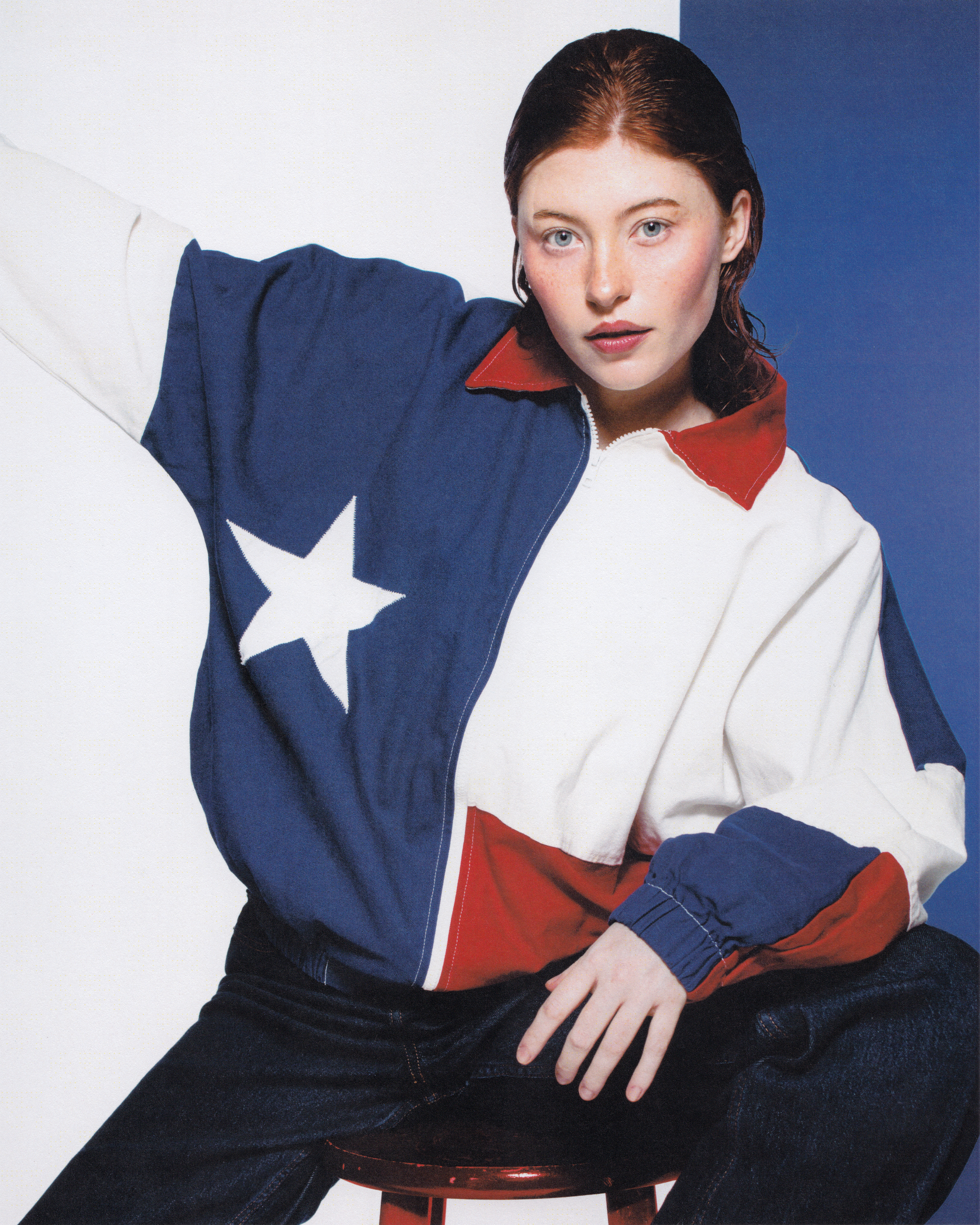
What were the first and last songs written for this album?
This is an easy one. The first song I ever wrote for this record was “Everywhere Isn’t Texas.” I wrote it in, I believe, late 2020, so before I had even released any songs at all under this project. I wrote it with Dan Wilson over Zoom because we were in a lockdown. And I had a very different view of how I felt about Texas back then. I had a really one-dimensional, resentful feeling about how I grew up and the people that were not supportive of who I am and who I was then. So rerecording that with the voice that I have now, in the context that I have now for this album, was really important.
And then the last song that I made for this album I wrote the week we recorded it, so at the very last possible minute. That was “Everywhere Isn’t Texas (Reprise).” The song originally was written from a place where I had just moved. I had a lot of feelings about who I could and couldn’t be when I was in Texas. But I wanted to bookend the thought with “leaving is not the only answer,” and the people that stayed there stay for a variety of reasons, and some of those reasons are that they just simply want to be there, and it’s their right to be there. And those people have really touched my life. So I really wanted to bookend the album with the fully evolved thought of: I’ve gone through this entire journey and my feelings have changed about Texas.
You’ve talked about your involvement with Texas organizations, in particular TENT (Transgender Education Network of Texas), since your relationship to Texas has evolved. How has that involvement affected your life and your art?
Meeting TENT and forming a relationship with them is one of the biggest reasons why my relationship to Texas has evolved. When I was in Texas, I was not out. I did not have any resources that made me feel like I could be. I felt like being a happy, queer person was a myth. I felt like it was a really nice dream, but not an actual real possibility. And so when I got out of Texas, I realized that I had been lied to my entire life and that it can be so normal that it’s actually boring. I realized that I had been sold something that had tortured me unnecessarily for a really long time.
Pieces of that still bleed into my life. Internalized homophobia or transphobia bleeds into everyone’s life when they’re trying to shed the stuff that they’ve been taught growing up. One of those things that I was taught is that there are simply places where you are safe and then there are places that you are not, and there’s no gray area. So being with TENT, who go to the capital and actually try to change policy and do things that impact trans people in Texas — they don’t just talk about it. They’re not just raising awareness. They really do things that actually affect people’s quality of life. And all of them have their reasons for being there. And sometimes those reasons are, “I deserve to be here just as much as anyone else,” and “this is where my family is.” That completely changed my perspective. I wish that I had known so many of them before I left, but it has really healed me.
I got to play their gala, which was the last thing I did with them before I officially got to come out. It was when I knew I wanted to, and I hadn’t gotten to yet. And so I loved being surrounded in a room full of transgender Texans. And feeling that in the room, and knowing that I was going to be a part of that. That was really instrumental to me. The government in Texas will try to convince you two things: One, that trans people are lurking around every corner like comical villains. And two, that there’s not enough of them to matter, or to fight for, at the same time. But being surrounded in a room, you can tell that Texas is a leader in politics, and it’s important, even for people who are not in Texas, to get involved to make it a better place.
I go back a lot more now than I ever have, since I’ve left. Every time I go back, I cry. Every time I go back, I cry, like every day, because I can imagine a life for myself and for my partner, and for my future, in Texas easily. I can easily imagine going back and being there, but I can also imagine my partner getting accosted in the women’s room. I can imagine me down the road in my transition being attacked, or my future family being attacked, or belittled. Obviously there are queer people who do choose to raise their families there and there is nothing wrong with that. I am so amazed by people who are happy and proud to be Texan and want to stay there. But people do have to make real choices for their safety. And my whole thing is not “I think people should leave” or “not leave.” My thing is, people just need to make judgments that are the best for them in the world.
Speaking of a future family, this is a great segue into asking you about my personal favorite on the album: “Bloodline.” The tragedy of the song — of wanting to have children and a family, but feeling unable to, for a variety of reasons — struck me, especially because it’s not a topic explored often in popular music. Can you talk to me about the process of that song’s creation?
I love talking about “Bloodline.” As a songwriter, it’s one of the songs I’m most proud of. It was also, oddly, one of the easiest songwriting experiences, because it was written so quickly and fully formed, which only happens, I think, when an idea is really strong and I feel really compelled to tell that story. But I wrote it the first time I ever met the songwriters I wrote it with, Nate Campany and Kyle Shearer. We got in the studio and I was like, “I have a couple ideas for songs, and then this one that is extremely crushing.” We ended up doing that one because the song you feel the strongest about is always the right choice.
The first thing that made me realize it needed to be on an album, the minute I wrote it, was, the beginning line in the chorus: “I think the bloodline ends with me. / Don’t cry, it’s just one of those things.” The flippant vibe of saying, “oh, it is what it is,” can be more crushing than saying it in a really beautiful poetic way. That’s just how I felt in my life. I felt like I didn’t know what my future was. I’m sure a lot of queer people can relate. I’m shocked that I made it past 18. I’m shocked I made it past 25. I’m 30 now, and I’ve never planned to be this old. That combined with, and I’m sure it’s obvious for people who listen to the album, me having experiences growing up and not feeling safe or not feeling supported, whether it’s by my community or at home or whatever, that can combine to be me having a lot of questions that I don’t have answers to.
Also, the bridge — I was like, allergic to writing bridges for so long. But this bridge felt like telling a story, that made it flow out of me. That bridge is one of my favorite things I’ve ever written now, and now I love writing bridges. It completely flipped me on the importance of a bridge.
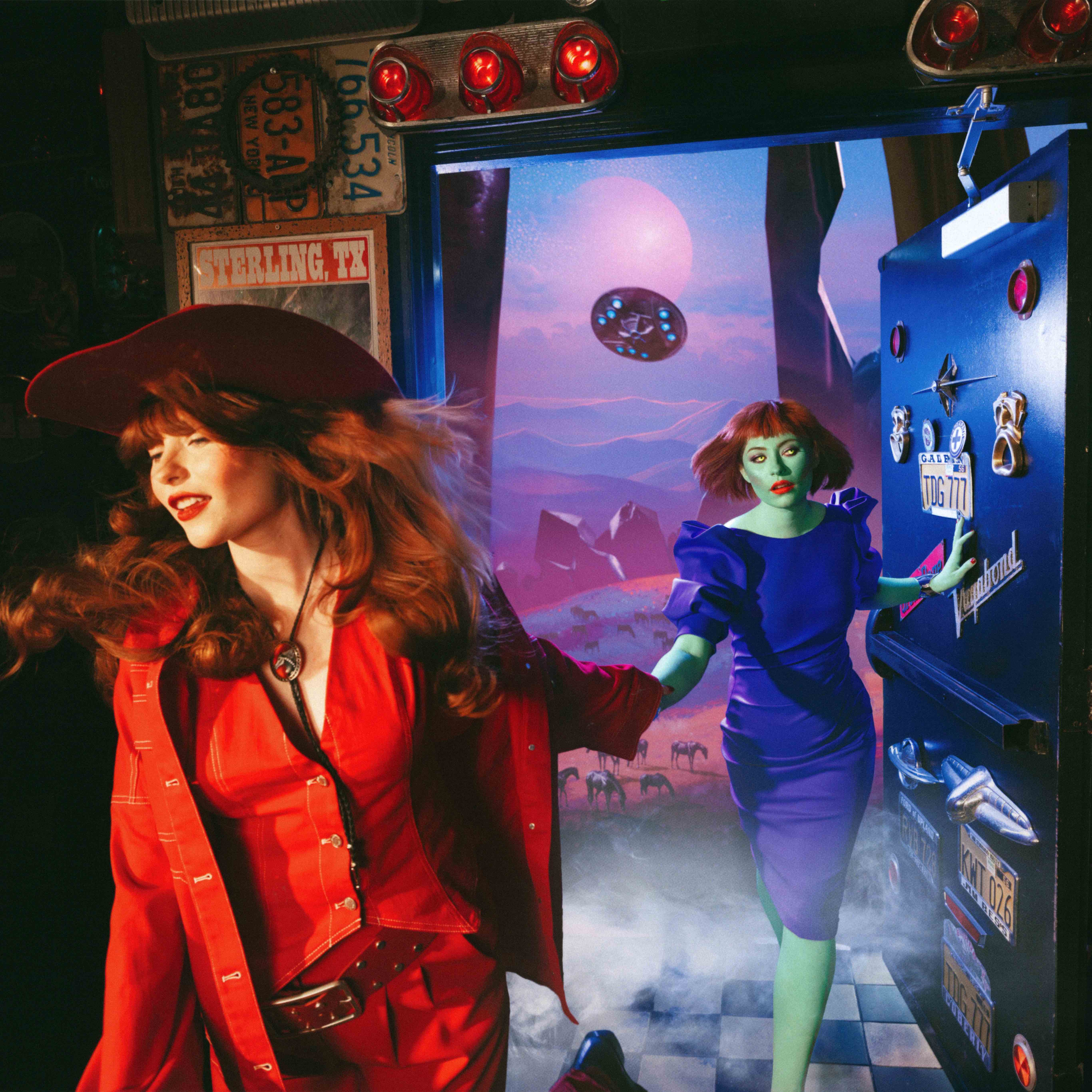
Your entire career, you’ve had a strong grasp on conceptual, campy visuals. What inspired the alien character of this album, and further, can you speak to the creative process behind these aesthetics and your discography’s extended universe?
I struggled a lot socially growing up. I changed schools a lot for one reason or another. And I was very quiet. So a lot of my time was spent in my room, watching movies or listening to music. And something I always was really drawn to was movie musicals. So West Side Story, Little Shop of Horrors, things like that. I wanted to make visuals that feel like they’re somewhat placed in reality and also in this surreal place, and then inject them into my story. Then that just turned into my entire visual world.
My first ever music video was “Cowboy.” So that starts with the Cowboy and the Alien. I realized that was a perfect analogy for how I feel. Hilariously, my entire life, everyone has always said that I feel like two things at once all the time, which, when I came out of non-binary, felt extra funny. When it comes to Texas, I feel a hometown warmth while also feeling like everyone got a rulebook that I didn’t get. And that’s the Cowboy and Alien. So I figured that that was the perfect visual for this Everywhere Isn’t Texas album.
I also love long-running Easter eggs, characters, overarching themes. Nowhereland, the place that all of this exists in, is a place that I’ve written lore for and has recurring characters in different videos and has tangible rules and boundaries. I’m excited to talk more about it in the future because I’m often working on things that can tie into the “Nowhereland Cinematic Universe.” That’s just how I make sense of things. Telling stories and making new places, whether it’s within a song or in a visual, is how I process things.
I really adored the visualizers for this album, of course culminating with the “Everywhere Isn’t Texas” music video, which I was so happy to see featured many Austin locations! I loved that, instead of replicating sets, you chose to go straight to the source and feature so many local businesses and spots.
I loved shooting that video because I’m so used to building set pieces and being in a world of my own creation that it was fun to take a character of my creation and put it in the world. And all of the extras that we use in the video are people that TENT helped connect me with, whether it was the 60 queer line dancers or the businesses. Like Lynny’s is a queer-owned Austin diner, so, yeah, for me, it was incredible just to go somewhere and make a bunch of friends and also really connect with the queer culture in Austin because I did not get the chance to connect with queer culture before I left.
Your visuals are so clearly influenced by your adoration of technicolor B movies, campy horror, all of these fun and funky origin points. What are some points of inspiration or references for this album?
I fell in love with reading again after having a big break from reading in my adulthood a couple years ago. And then I couldn’t get enough. I read like 100 books a year. There’s a lot of books that relate to this album. Beautyland [by Marie-Helene Bertino] is one. It’s about a girl who secretly believes that she’s an alien. It takes place in the 1970s, 1980s. Bored Gay Werewolf [by Tony Santorella] is another one I had a lot of fun reading.
Then for movies, I’m often watching sci-fi films that are really ambitious about the worlds that they’re building, and also very eager about them. Flash Gordon — all the music is by Queen, and all of the worlds are technicolor and really defined, which I really, really love. I love horror, I love anything where it’s like a little guy running around. So like Critters, Gremlins, The Spookies. There’s 1,000,000 films like this and I love them. The main thing that really inspires me are ambitious movies from usually the 70s or 80s that build complete worlds from scratch, whether they’re dark fantasy like Beastmaster or sci-fi like The Last Starfighter, just something that completely makes its own universe for like $4 is exactly what I love.
They’re very gay and I think there is something about them…All these movies are underdogs in their own way. All these movies are really ambitious, and even if they don’t pull it off, they really tried something special. And I think queer people are often pioneers in culture, especially visual disciplines of art. There’s just something inherently so gay about just doing it anyway.
Speaking of “just doing it anyway,” you were dropped by your record label in 2024, and two years later, you’re releasing this album on your own to considerable acclaim. The track “Karaoke Queen” touches on this experience of hopelessness, and strikes in hindsight as a prophetic hymn of making it on your own in the wake of great loss. What was that experience like for you, and how does the song feed into it?
“Karaoke Queen” was one of the earliest songs from the record. It was actually a song that I wrote the year that I signed my record deal. I wrote it with Ethan Greska and Micah Premnath. The reason I wrote it: This huge thing had just happened to me, and I wanted to think of the scariest thing that could possibly happen after the fact. And that maybe I would be okay.
I did not grow up in a place where people are getting record deals all the time. I did not have financial assistance from a mysterious place. It was just me, going to shows every night and hoping I would run into the right person. And then all of a sudden I had a record deal. So I wrote the song from a place of “yay, an amazing thing happened. I can’t stop thinking about it all falling apart. Can I make myself feel better by writing this song?”
And so when I actually did get dropped, it felt like I had prepared for that possibility. When I first signed my record deal, I had so much hope and excitement, and so many tough things had happened since then. I felt a little beaten down. So by the time that I actually did get dropped, it felt like the worst thing that could have happened did happen. It felt like I didn’t have a reason to believe in myself anymore. And I’d had “Karaoke Queen” in my back pocket forever. And even though I didn’t feel like things were gonna get better, I knew that it was the right choice to release that song.
The thing that really cemented it was, the day after I got dropped, I had to play a show opening up for the Japanese House in New York, and I did not sleep at all the night before, I felt horrible. And I got a DM from Brandi Carlile, saying, “oh, I saw your music, I like it, and I hope we can meet up sometime.” And I knew that there was more out there for me. I had never met her before. I have no idea what kind of weird cosmic thing happened, where she DM’d me, but “Karaoke Queen” did come true, and I think the only reason that it came true, and I’m fine on the other end of it, is because I believed that possibility could be out there. I think if I had fully believed that my career was over, it would have been. So that song is one of many songs on this album that came true. I mean, “Handsome” came true in its own way. And “Everywhere Isn’t Texas,” writing that song is what really manifested me being able to go back and form a better relationship.
Having such a powerhouse in music like Brandi Carlile contacting you at that low moment must have felt like the strangest twist of fate.
It was so neat. I was lying on the floor of my green room at Pier 17, being like ”I actually have no idea how I’m about to do this.” I’ve loved her for many years, and her song, “The Joke,” I sang it in the shower every day for probably two years. Weirdly, it wasn’t until I had gotten dropped, and I felt like there was no door open for me, that she just happened to reach out to me, and her friendship and mentorship has completely changed my life. I think it may have even saved my career in some ways.
When I wanted to come out, I called her before I did it. I don’t even know why. I just felt like I needed to talk to her about it and she was so helpful and kind. She’s wonderful, she’s everything that people think she is and more. She’s a really real, thoughtful person, and that’s exactly the kind of legacy that I would love for my own career and my own music. I think that she’s similar to me in the sense that if something to her is unjust, she can’t not speak up about it, and that’s exactly how I am. And that’s how I think all artists should be, but whatever.
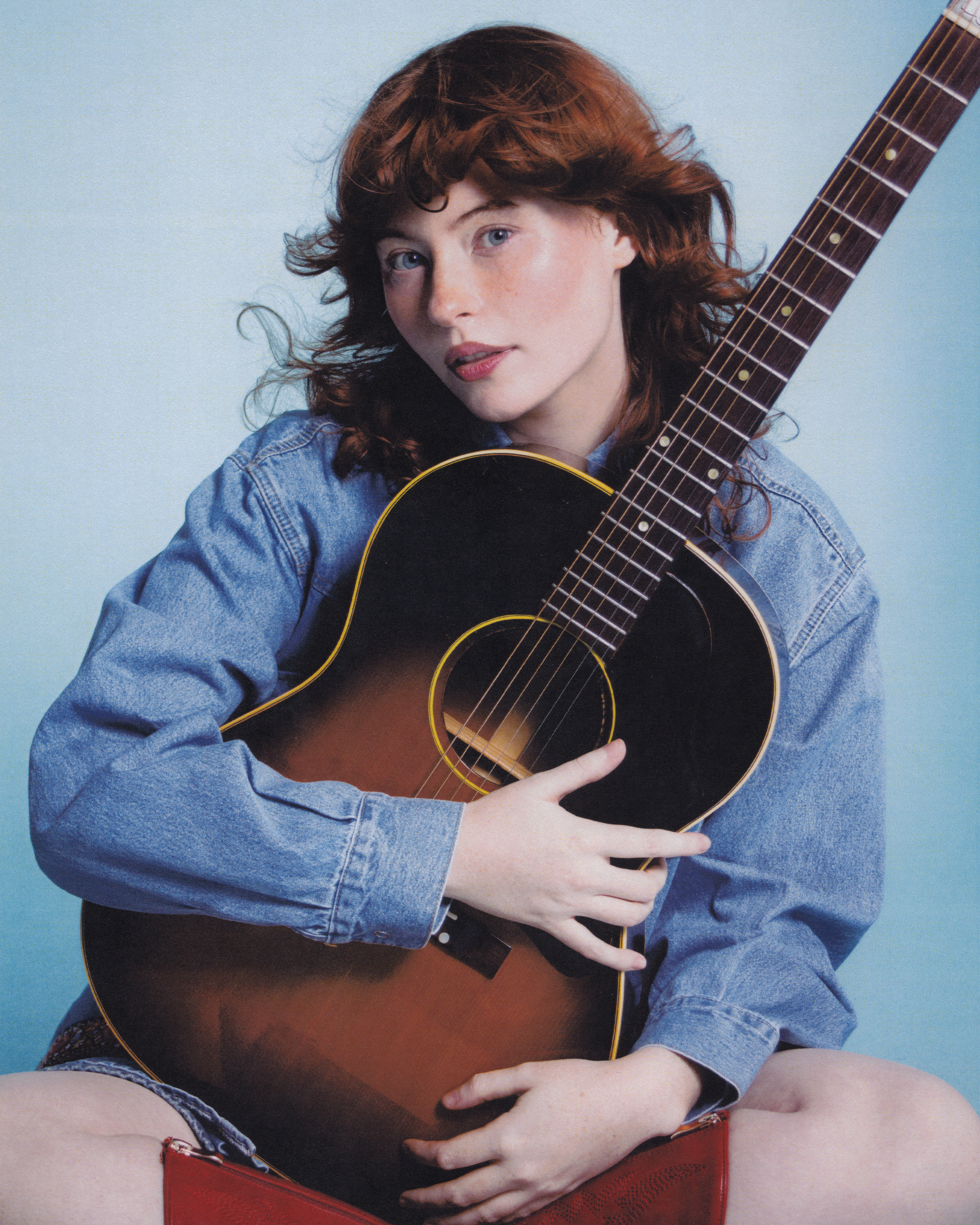
The songs on this record can oscillate between the soul-crushingly devastating (“Angry Man,” “Bloodline”) and goofier, even kitschy tunes (“Handsome,” “Ribbons + Taxes”). How did you balance these emotional registers?
I chose the songs that felt like there wasn’t a song already that did that thing out in the world, either by me or in general. So all the songs I simply just chose because I felt like they were unique or special. The balance of humor and soul-crushing content is just who I am. I love to joke around and make everyone laugh. I find usually my main job in a group of people is to joke around and make people laugh, but I also have spent a lot of time looking inward, going to therapy. I deeply love staying down with a friend and being able to talk them through the hardest moments in their life and to be that person for them. I think it’s another case of two things at once where I don’t think that anything should be mutually exclusive. I don’t think we should be so serious all the time that everything feels so heavy, and I don’t think that we should always be so funny that we can never actually touch on what’s really hurting people or infecting people. It’s an all-there-on-the-table sort of situation.
You have a Substack called Nowhereland Weekly, where paid subscribers can peer more closely into your artistic process and your thoughts on things that are important to you. How has connecting with people so directly in this way affected you or your art?
This whole year has been an exercise in opening up more. I did an essay about how I realized I had religious OCD. That was something that I’ve never spoken about ever. I’ve barely spoken about that with my friends because I didn’t even know that was what was happening to me until it was happening. I think that really helped me connect with a lot of people. I know that was probably my most popular essay out of all of them.
But I also, when I’m going through an experience now, I think about, oh, is this something that someone else can take something valuable from? So when I was coming out as non-binary and I was in that weird week of no one knowing except for me…I wanted to chronicle what that felt like because I, trust me, I looked, could not find anything like that online. So on my Substack, I did a diary entry for every day leading up to when the article would come out and what it was like.
Substack, for me, has been really freeing because I had been a closeted writer for a long time. I love to write. I think there’s something so empowering about all you need is just your words. You don’t need anything else. You don’t need production. You don’t need a gigantic set. I’ve been writing so much in my free time. In the same way that it’s free to tell someone your actual new name or to release an album where you’re honest about your feelings, showing that I love to write and having people connect over it is another way for me to be honest and real with people and empower myself to make more choices out of excitement and love instead of fear.
What’s next for you? What do you want your post-debut 2026 to look like?
I hope that people relate to the album. I hope I can do a lot more around it. I would love to perform the album many, many, many times. This year I’m working on a couple projects, secret projects that are also outside of music. At the end of the day, I’m not just a musician; I am an artist, and everything that I can tie back into my music project is something I want to do, whether it’s designing costumes or co-directing a music video or writing for my Substack. I’m excited for that.
I also, in general, will be following the elections in Texas really closely. I’ll continue to talk about that and work on raising awareness for why it’s important to get involved in Texas, whether you’re there, or whether you used to be, or you have family there, or whatever it is, I will continue working on that.
I was really scared of doing an album that could be seen as political for a while because I felt like I didn’t have the tools to talk about it. I felt like, I did a year and a half of jazz school, like, why does everyone want to listen to me about my beliefs? And now I realize that anyone can be educated if they put the work and the passion into what they’re talking about, especially when it’s someone’s own community. I’ve been empowered by the people around me to talk about what I believe in, and having that experience and being able to talk about that has led to the album being exactly what it is. The album is laughably considered political, even though what I’m really talking about is people’s right to feel safe.
So I would encourage people that there is so much more to you than you think there is. And if you really deeply care about people and are constantly learning and trying to understand people, and wanting to make it a better place, there are ways to get involved, ways to talk about it, and you can continue building and working on that skill. Because I was really scared to do anything I’m doing now, and now I can sit and talk for a 1000000 years because I love and care about it so much that that is bigger than the fear.

Comments
LOVE the shoutout to Beautyland!! love when musicians have cool literary influences!!!
I especially liked the discusion about balancing personal idenity, creativity and career challenges.