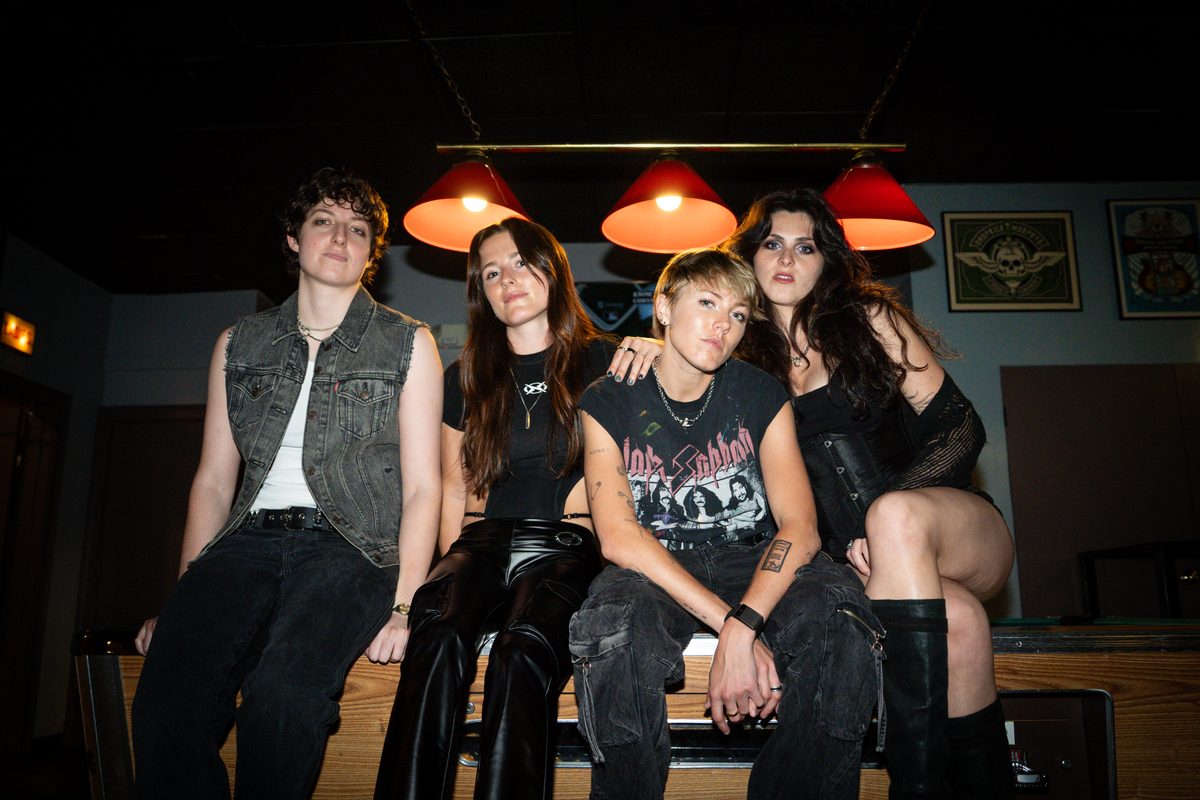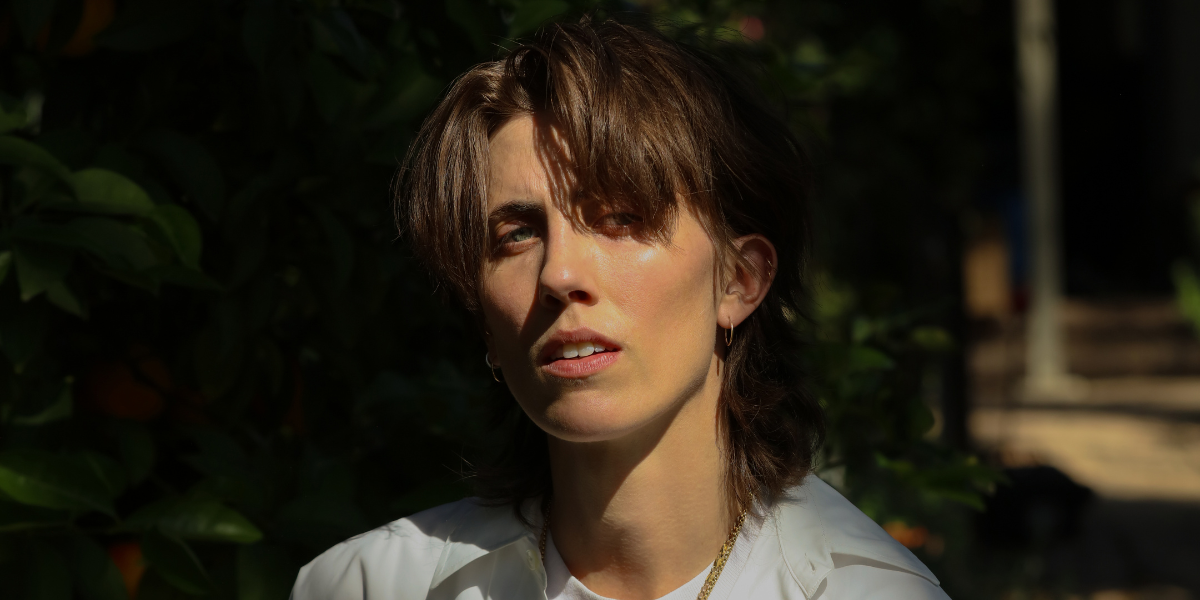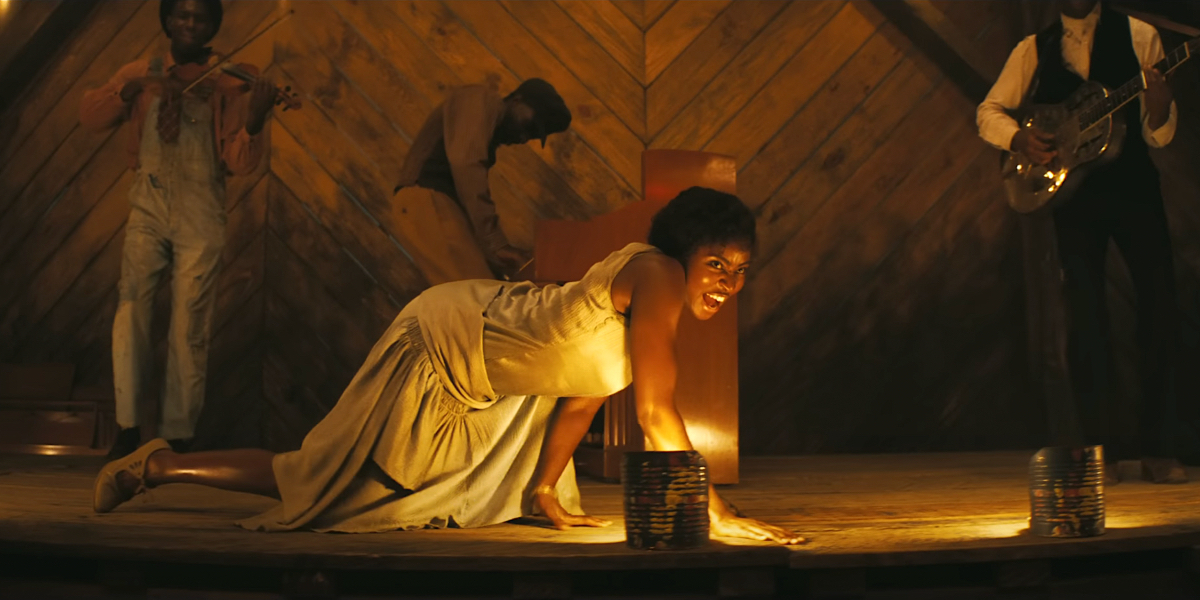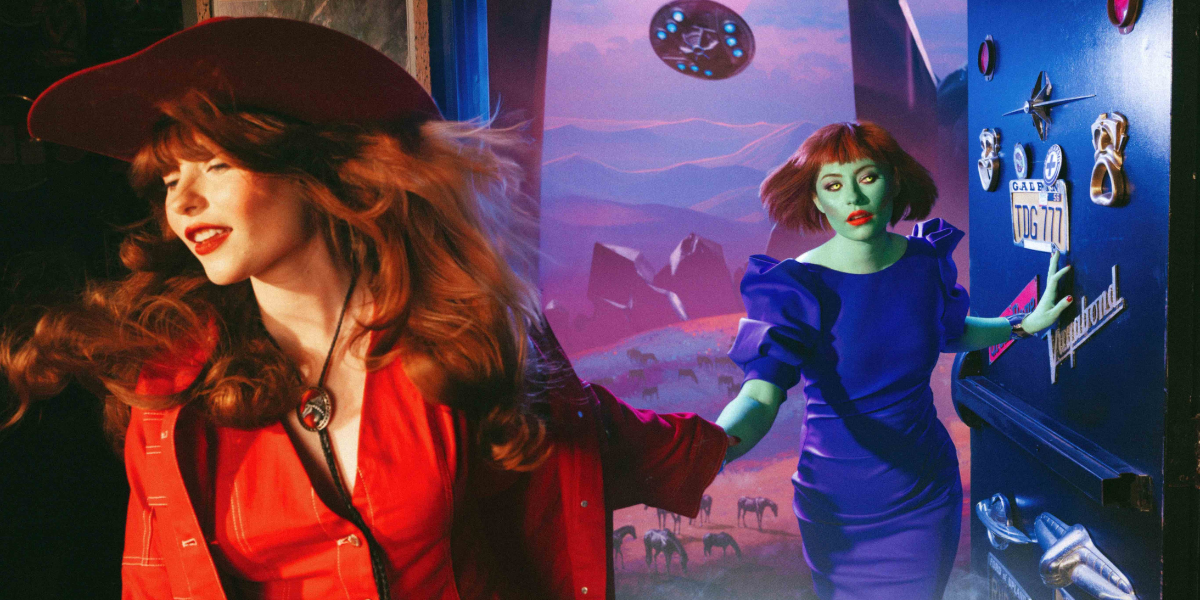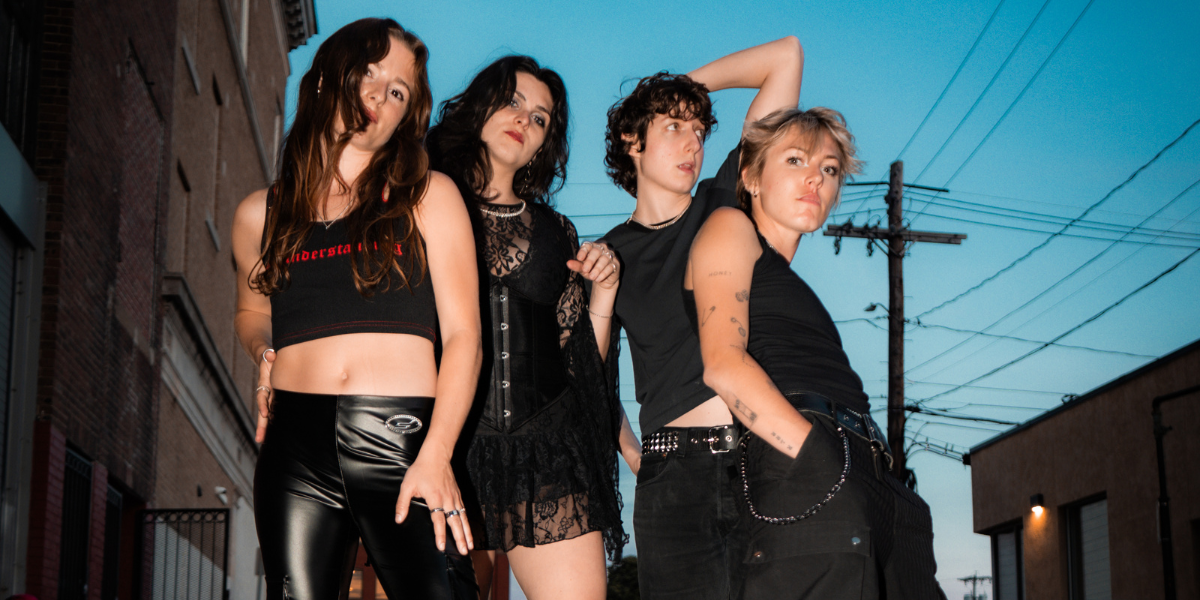
all photos by Sarah Nekich
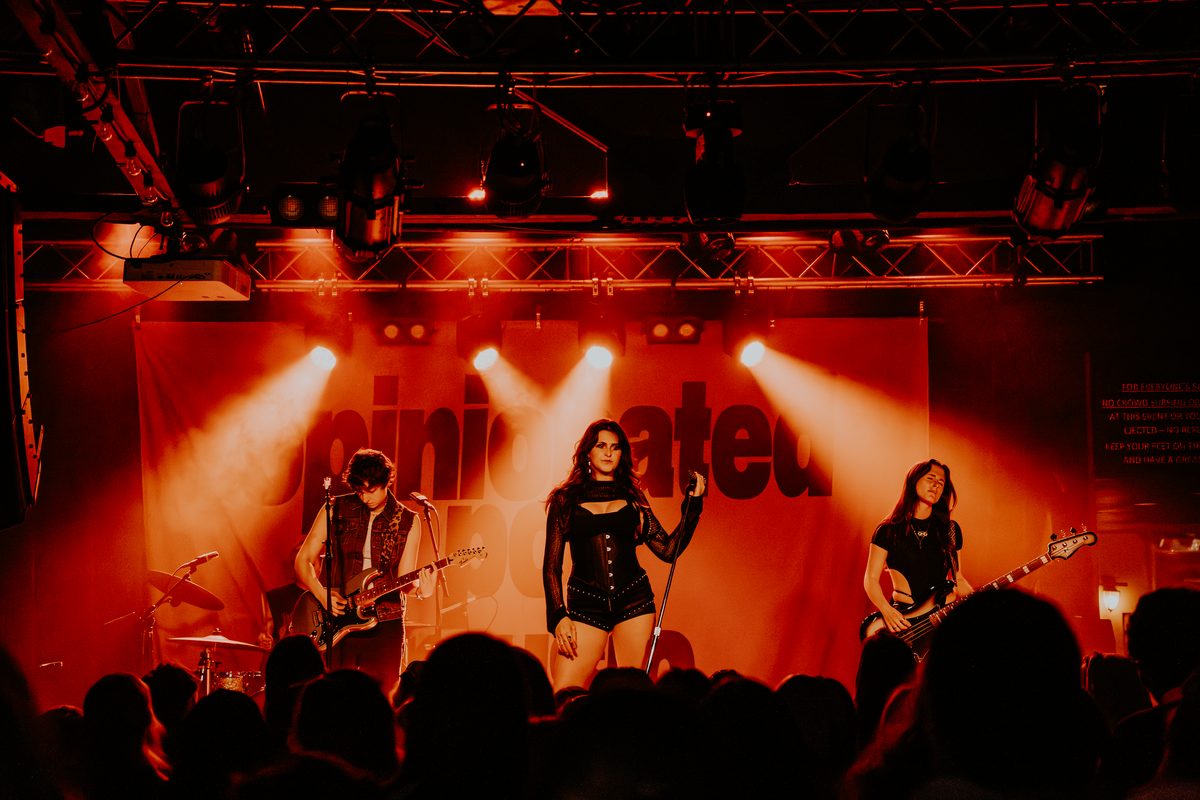
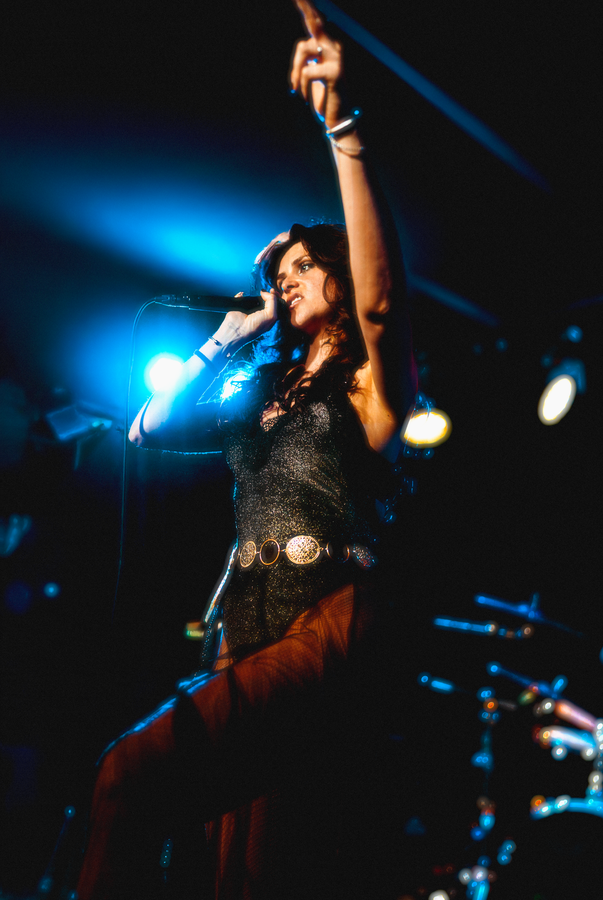
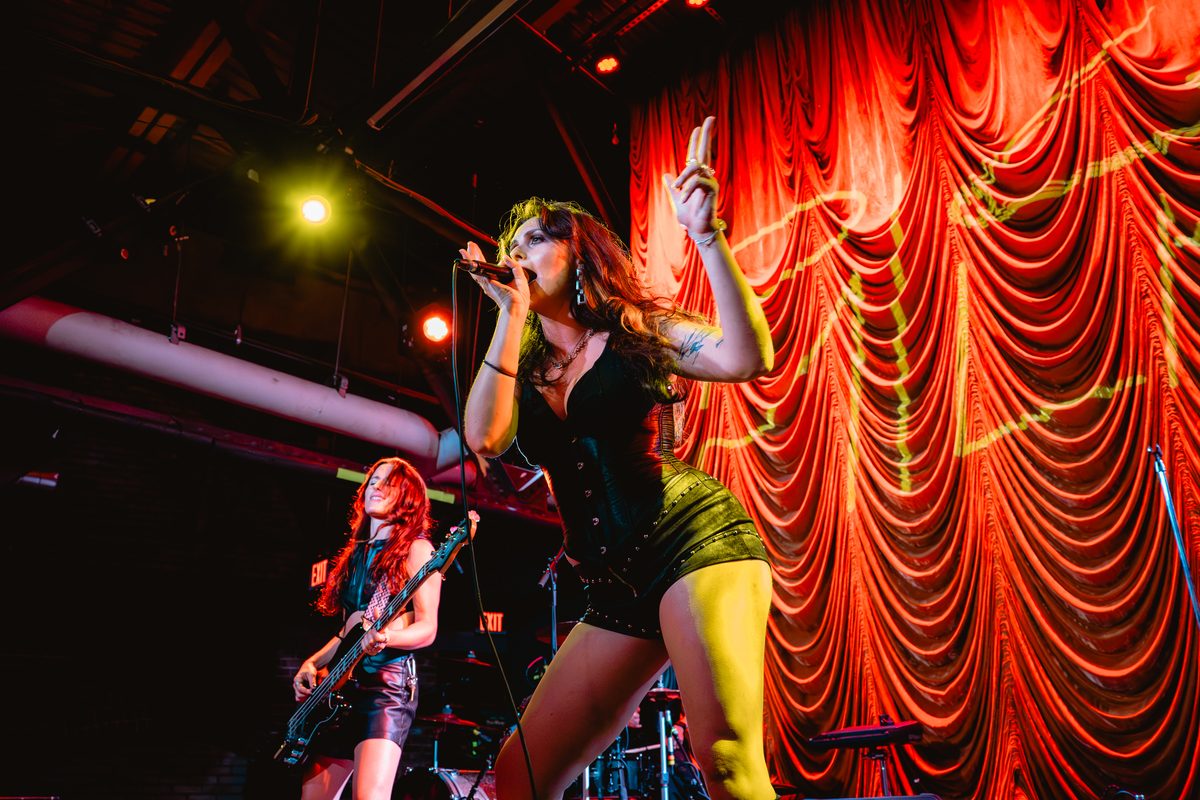
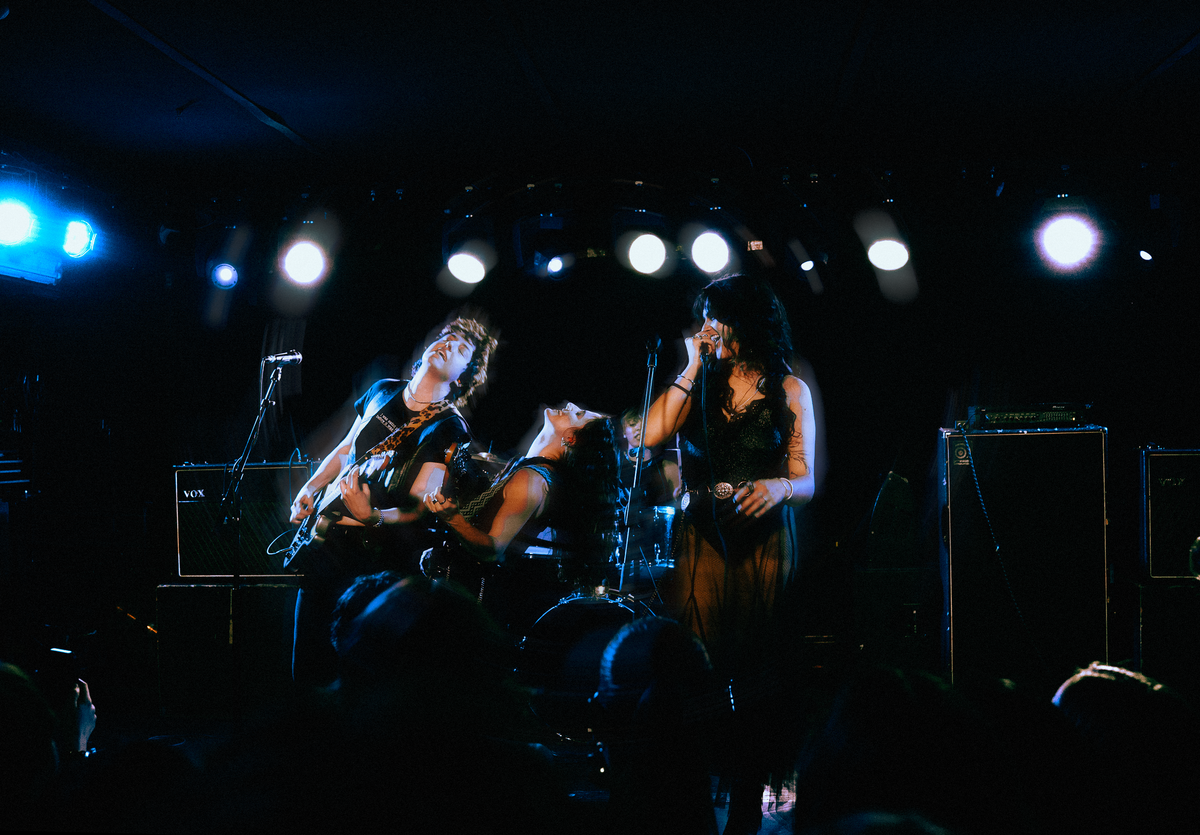
On a Thursday night in January, I walked into the Mercury Lounge in Manhattan and immediately felt an electricity in the room. The venue has hosted legends like the Strokes, Radiohead, and Lana Del Rey through the years, along with local acts, too. On this night, the band’s lead singer wore a black leotard and sheer skirt as she belted a cover of “Crimson and Clover” into the microphone. To her left, the guitarist in all black head-banged in perfect synchrony with every beat. The bassist in a leather vest slid across the stage to the golden-haired drummer and pulled her into a hot make-out, earning the crowd’s approval. I felt the floor vibrating under me as the distorting sounds of rock elevated through the room and crashed against the ceiling. It wasn’t until we were halfway through the show that I realized it wasn’t just the amp vibrating. It was the crowd. The band was Pig Milk, and the crowd was going wild.
A sea of two hundred queer women and femmes jumped and hollered alongside me, mirroring the energy of the performers on stage. Together, we grinned and swayed in unison, moving with joy as a linked group of randoms. In a room of strangers, I felt connected to every sweaty body dancing with abandon. Every movement felt joyous and sensual, safe and alive. That steamy winter night in January 2026 was my introduction to Pig Milk, a Brooklyn-based sapphic rock band. Months later, I got to sit down with the band to learn their story.
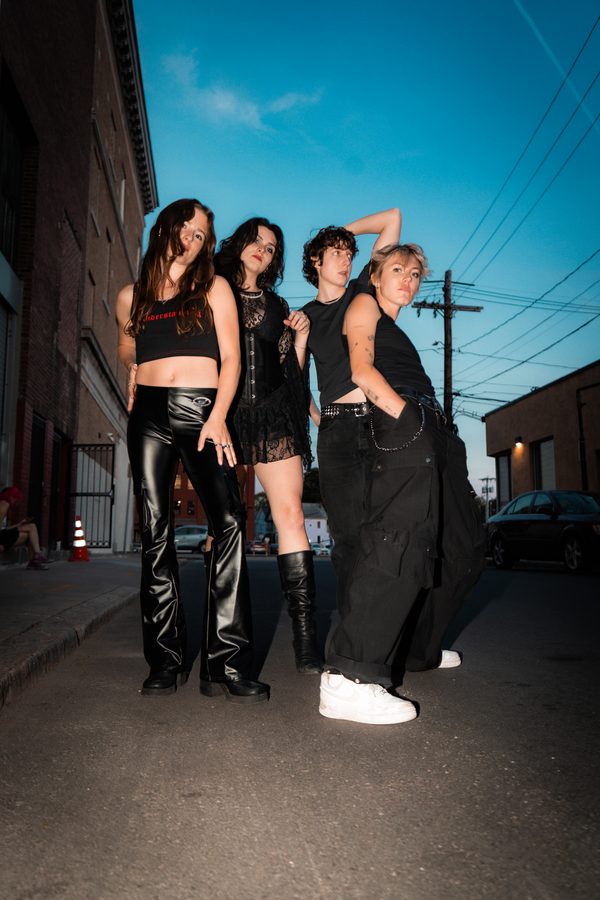
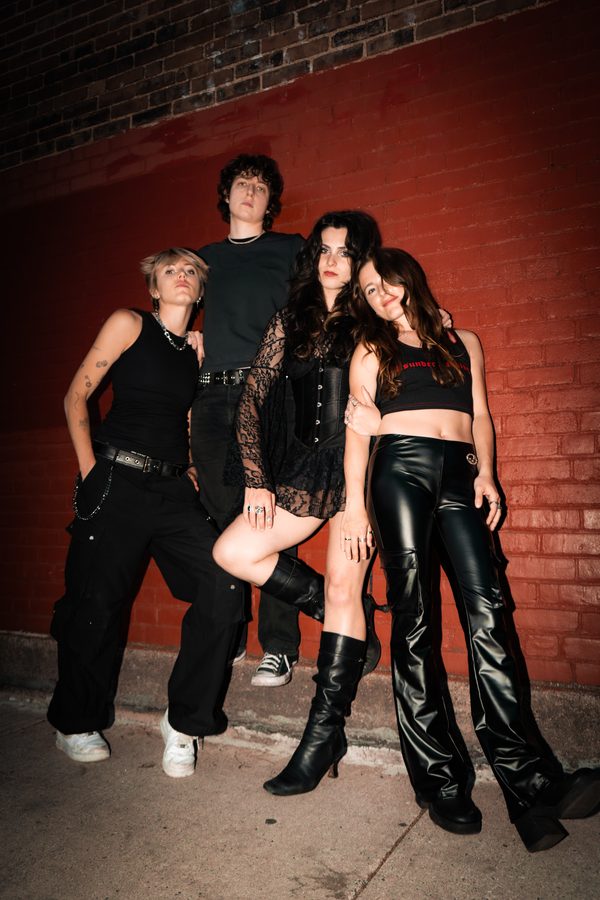
“It’s just nasty!” That’s lead singer Mic Zammuto explaining the band’s unusual name to me. “It’s gnarly and has that masculine energy of rock music that contrasts our vibe. It allows us to take down the barrier of being socialized as women that are supposed to be cute and pretty and nice. Our name helps us embody something outside of that.”
From their glam-punk fashion and gritty sound, to merch that imagines “pig milk” as a viscous orange liquid in a martini glass with two fingers sunk into it, the band subverts traditional expectations of how female artists should look and behave. Their debut single “Take You”, dripping with unrestrained lesbian lust, represents that subversion well.
The music video opens to the band sneaking onto a New York rooftop under the cloak of darkness, instruments in hand, with an entourage of lesbians in tow. Rocking Joan Jett-esque gender-bending black latex and chunky silver chains, they hook up their instruments, plug in their mics, and play to the wind, surrounded by community basking in the music.
The scene unfolds like a spontaneous party you immediately want to be at. We’re treated to flashes of guitarist Allegra Driscoll and drummer Lexie Viklund locked in an arm-wrestling match; bassist Jill Pesce trades glossy red lollipops with lipsticked femmes; and a top-angle shot shows Mic lying on a table, thronged by a sea of reaching hands. In keeping with the sensuality of the visuals, the lyrics make you want to drag your queer ass to the closest lesbian bar to find four different strangers you can lock eyes with:
My touch could tame you, my tongue could taste you
I could be the thrill of your life if you let me takе you
Allegra pinpoints the insatiable thirst they’re trying to capture: “How many people can you kiss in one night? Women can do it too, gay women do it best.”
“Lesbians need an outlet to be angry,” bassist Jill adds. “Especially with everything going on politically right now.”
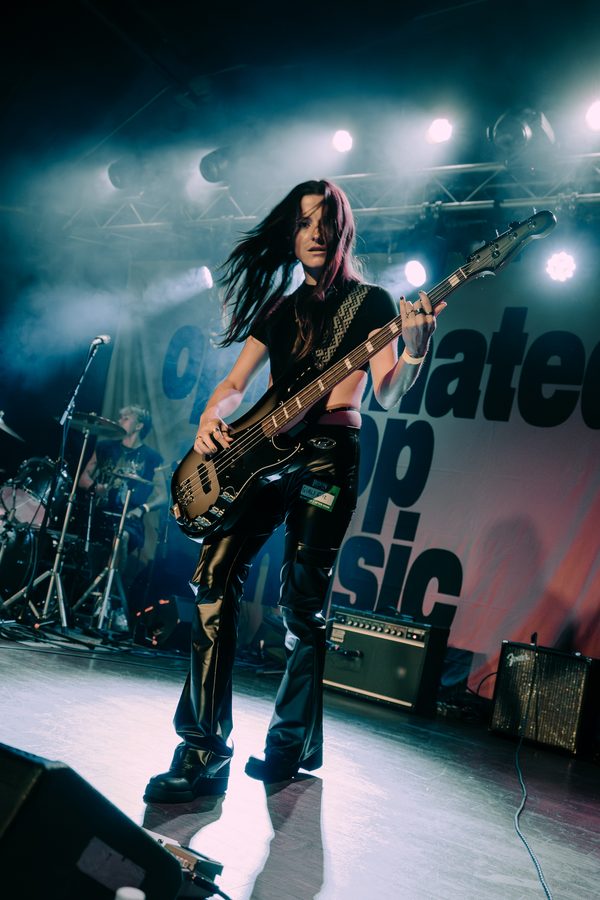
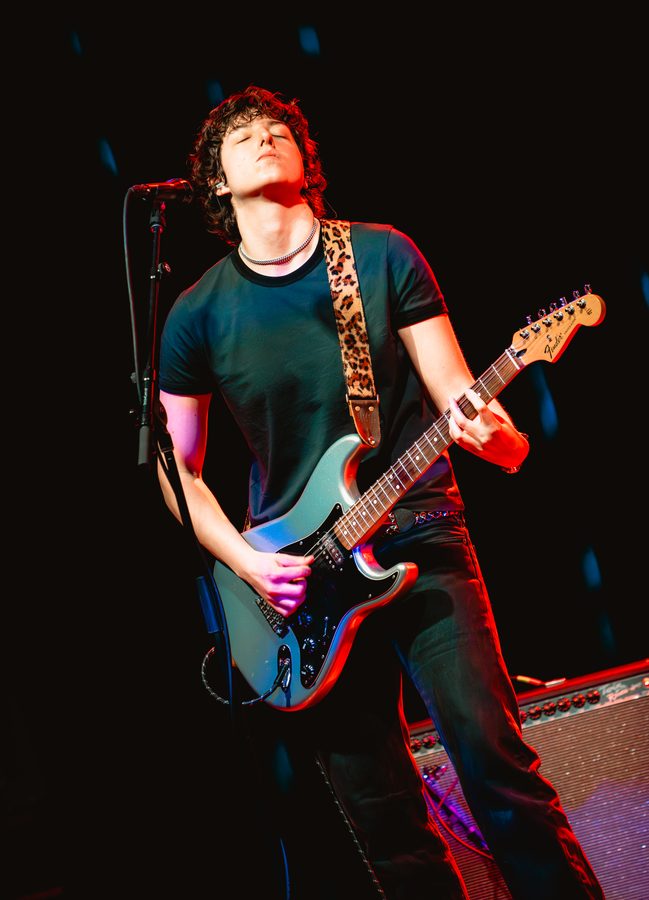
You cannot attend a Pig Milk concert without hearing the words “oink oink” screeching from the throng of rabid sapphic fans, coined ‘Piglets’. They’re front and center at every show, decked out in shirts and hats bearing the band’s signature logo, rage-dancing and mouthing every word. Mic captures it well: “They just completely embrace us and embrace the chaos.”
“They’re thrashing around like they haven’t moved their bodies all week,” Allegra adds. “It’s amazing to watch, and it inspires me—how are they more free with themselves right now than I am?”
With just three original singles out, Lexie has a theory for why the fandom already runs so deep: “It’s a double down community effect. Rock music itself creates a core community. Rock fans are the most passionate fans of music.
“And then you add on us being a lesbian band, which is a whole community of its own,” Lexie adds. “Lesbian rock artists are massively under-represented. We have such an advantage of a built-in core audience that is gay.”
Notably, that community didn’t start with a formal stage at a fancy venue. It started at Dave’s Lesbian Bar.
In a post-pandemic New York, lesbians craving community and connection sought respite in Dave’s Lesbian Bar: a culture club of sorts that organized pop-up events across Queens and Brooklyn featuring sapphic musicians, dancers, BDSM artists, tattooists, and queer-owned businesses like Dyke Beer. Dave’s events gave unorganized sapphic artists a home and have since become a lesbian staple in New York.
Their highlight event is their annual Battle of the Bands, giving local queer bands a stage. In 2024, Pig Milk attended the Battle as spectators in awe. The next year, they came back to compete, nervous to take their first real stage. Little did they know, they were about to walk away with the crown and a manager.
In the crowd that evening was Sarah Nekich, a music marketer at Primary Wave, sitting on the judges’ panel. Performance after performance, she was still waiting for a band to wow her, and that’s when she heard Pig Milk’s cover of Melissa Etheridge’s “Come To My Window”. “They went on and it was hands-down, they won,” Sarah recalls.
She knew immediately: “Mic wasn’t even off the stage yet when I went up to talk to them. I knew it was only a matter of time until someone else saw what I saw.” Within a year, she was managing the band’s socials, bookings, and promotion, and had booked them an East Coast run through Boston, New York, and Philadelphia.
Sarah successfully taking on the band’s management contrasts the tradition of men managing (and often exploiting) female rockers throughout history. One of many examples is The Runaways, who sued their manager Kim Fowley for financial mismanagement. Another is Fanny, a pioneering all-female 70s rock band that was failed by the industry’s over-sexualization and dismissal of women in rock at the time, until they ultimately disbanded in 1975 (and made a comeback in 2018, much to my delight).
Pig Milk defies this trope by deeming Sarah, a trusted fellow-lesbian, as the “fifth member of the band”. Together, they bring sapphic power not only to the art but to the mechanics of how the art is put forth. This past Pride, Sarah transformed her Bushwick backyard into a makeshift stage for Pig Milk to perform in front of an intimate crowd of 35 close friends, complete with her roommates grilling burgers for the community. If that’s not a healthy take on a band-manager relationship, I’m not sure what is.
“In many ways, Dave’s was one of our first moments of confidence building,” Allegra says. “We learned that we speak to people in a way we didn’t expect.”
In 2026, Pig Milk came back to Dave’s Battle of the Bands as judges rather than contestants, observing a new crop of sapphic acts ranging from surf rock and Queen-influenced bands, to campy Rocky Horror homages. Lexie remembers fans recognizing them on their return. “One girl came up and said she saw us perform last year and came back with her sister just because she knew we’d be there,” Lexie says. Of every room they’ve played since, they say this one is still one of the most meaningful.
It’s that same crowd, from the Dave’s regulars to the Piglets, that Mic credits for getting them this far. “We’ve been really fortunate to have this huge queer gay community that really supports us and shows up to everything,” she says. “That kind of love is what allows us to play more shows and to more people.”
Funnily enough, this all traces back to a quintessentially lesbian Christmas present and a gay volleyball tournament.
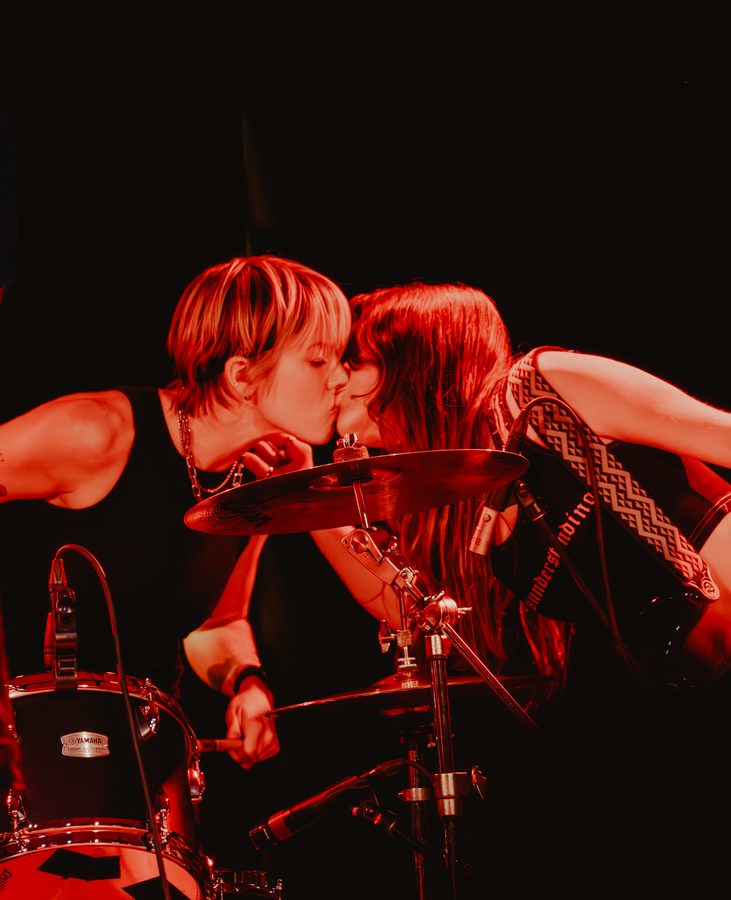
In 2022, Lexie and Jill (Jexie to fans) had only been dating a few months when Lexie, a seasoned drummer, bought Jill a bass guitar for Christmas. Jill, who had only dabbled in the saxophone in middle school, had little musical training but soon “became obsessed with it,” staying home on New Year’s Eve that year to teach herself the bass. The duo spent the next few months renting studios in Manhattan, working out a drum-and-bass sound, until they realized they needed a vocalist.
Enter Mic, who Jill vaguely knew from college and recognized as an experienced singer. Jexie approached her at a gay volleyball tournament (one they are all still playing in) with the ask to sing in their burgeoning band. For Mic, who was looking for an outlet for her voice, it was an easy yes. She arrived at rehearsal days later with printed-out lyrics from girl rock bands to try out, including “Heart Attack” by Demi Lovato, “Cherry Bomb” by The Runaways, and “Crush Crush Crush” by Paramore.
“I didn’t know what I was doing… I’d rather die than listen to recordings from those early rehearsals,” Mic reminisces. “But this band taught me how to sing technically.” After months of the threesome trying and testing, they realized they needed to fill out their sound.
That’s when they found Allegra, who moved from Pennsylvania to New York in search of a band. “I had come to New York looking for a lesbian band to join,” she recalls. Her wish was fulfilled when she reached out to Lexie, who was already in studios with Jill and Mic looking for a guitarist. Lexie invited her to be their fourth, and the rest is Pig Milk.
Their shift from a trial-and-errors band to something more serious came when they started to invest in their art. “We started thinking about what we had to do to become a real band, and Lexie said we have to write songs,” Jill says. That’s when they started to see themselves as something real, something that could be different. And they weren’t the first women to make that leap.
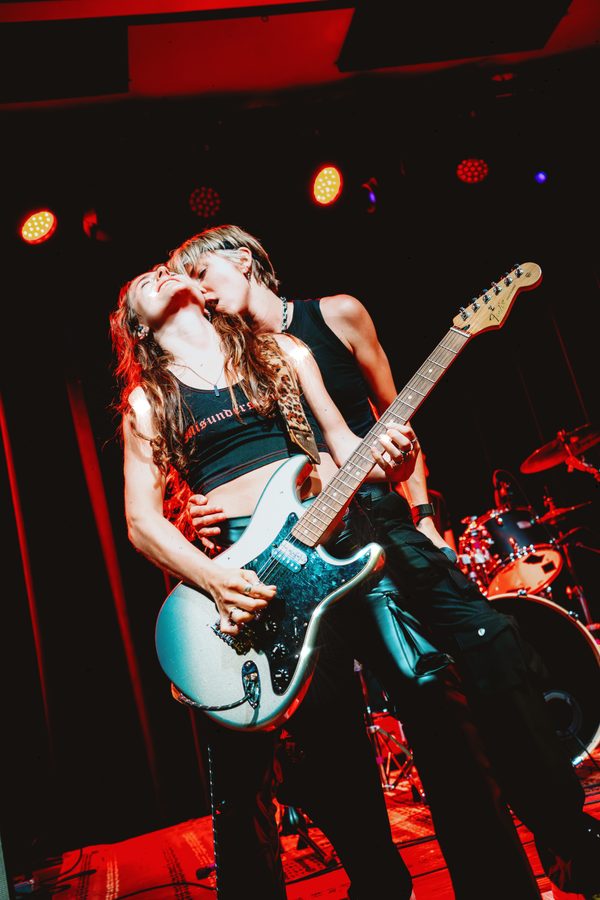
Rock has never lacked women willing to force the door open. Viola Smith was pounding out rhythms as one of the earliest known female drummers in the ’40s, decades before “girls can’t rock” was even a debate worth having. Janis Joplin brought a full-bodied, unfiltered vocal power to the ’60s that redefined what a rock frontwoman could sound like. Joan Jett showed up in a shag mullet and never asked permission, becoming punk’s reigning queen in the process. Decades later, Tina Bell, the “godmother of grunge”, would do it again, laying groundwork for a sound that’s still being built on today. Brooklyn-born Tamar-kali brought afro-punk rock to the 90’s and beyond, adding soul and funk to hard-rock beats.
Today, rock is seeing a resurgence that music writers increasingly describe as female-led. Just this year, festival lineups from Download to Aftershock are stacking women higher on the bill than they have in years, and one industry outlet went so far as to say women aren’t just showing up to rock’s current moment; they’re driving it. Homegrown bands like Pig Milk are part of that wave. That said, the path is still uphill.
Lexie, who works in the music industry for her day job, sees how little has actually changed underneath that history. With limited spots allocated to female rock artists by labels and the radio, she observes that they end up cannibalizing each other, competing for what little the industry allocates them. “No one wants to take a shot on female rock artists right now,” she says.
Given that context, she applauds Pig Milk’s undertaking. “I think it’s really cool for us to say, fuck that, and be gay, and see the opportunity for queer musicians to become mainstream,” she says. “So if we can become a mainstream queer rock band, what an accomplishment.”
The band doesn’t take their place in the lineage of female rockers lightly. Melissa Etheridge belongs right alongside the greats in Lexie’s mind. “We talk about Melissa Etheridge a lot because it’s very sad that she was so clearly talented, ahead of her time, sold out arenas, and was snubbed in many major categories,” Lexie says.
“There’s a lot of strange shit happening around queerness,” she adds. “The first kind of lesbian music I heard was soft, folksy, Girl in Red, King Princess. It’s nice to hear this harder, louder, more passionate stuff. We’re not the only ones doing it; we’re just a part of that burgeoning next wave embracing loudness.”
“Chappell [Roan] is top dog right now, as a pop top 40 artist, Doechii too,” Mic reflects, commending the queer female artists currently topping charts. “It’s really opening up a lane that is inclusive of our vibe… but there’s no rock. Rock has fallen away from mainstream music, they don’t even broadcast the rock grammy awards on the TV anymore. That’s sad to me, it needs a revival that I want to be a part of.”
For Pig Milk, that revival doesn’t mean rock in isolation. While rock remains their house, they are happy to borrow from their neighbors: pop and hip-hop. A perfect example of this melding is their cover of Britney Spears’ “…Baby One More Time”.
“From the rock perspective, they look down on pop musicians, but they shouldn’t,” Allegra says, “I don’t know if anybody has carved out a space for themselves in the way Britney Spears has… I love putting a new spin on ‘…Baby One More Time.’ There’s like a soul to it.” Releasing their sapphic version of Britney’s cult classic in July showcased the exact sapphic soul to pop Allegra was describing.
Pig Milk’s lyrical process is as organic as their fan base. Their single “Breakdown” initially stemmed from Lexie’s personal journal. She recounts the song’s origin: “I was crashing out and thinking about how I crash out so frequently and Jill is so level-headed, and she doesn’t have to be here with me. It started there, and really grew a life of its own.”
It’s a song about her own “insanity” fighting emotional demons and the guilt of putting that weight on her partner.
The chorus stayed true to Lexie’s initial penning,
Here comes another breakdown
Are you looking for a way out?
You’re sick of all the noise
You know you got a choice
So why you stick around?
It comes from a place of truth and vulnerability. And that’s how the band makes most of their music.
Lexie, who has always gravitated towards heavier sounds and vibes, pulls the drumbeat of the band toward that harder, thumping sound. Jill, who has been writing poetry her whole life, learned to turn her poems and rhymes, and her steady personality, into her bass guitar lines.
Allegra brings a love for pop into the room. She remembers being captivated by music since she was seven years old and obsessed with Radio Disney, “I would memorize songs and was constantly listening to them over and over. I would shush my dad in the car if he was talking over a song I liked and forced everybody to listen to it at full blast. It was constant and obsessive.” Though a fan of heavier rock, she sees her high harmonies as, “an outlet to express my femininity… it feels very visceral and cathartic.”
Mic, who carries every lyric to the audience, feels the gravity of that role. “All our songs, cover or original, serve as vehicles for me to think about things in my own life and try to apply them every single time, from ‘Crimson and Clover’ or ‘Hit Me Baby’ to ‘Breakdown’, to myself. So that I can try to emote something that feels genuine, so that other people can pick that up.”
She wants the music to feel more free and less cerebral, hoping for listeners to feel like, “you’re hot, you’re sexy and it’s hot to feel your emotions in a big way.”
She also acknowledges that’s not always easy, drawing a parallel to Olympic skater Alysa Liu’s approach to pressure: “[Alysa] says as long as she’s going out there, she’s still smiling,” Mic says. “That’s her way of describing why the tortured artist thing shoots you in the foot. It’s not fun to watch someone hate themselves on stage. That was a learning curve for us.”
In June, Pig Milk’s single “Sedated” got airplay on SiriusXM’s Octane channel. This would be a modest milestone by industry standards, but the whole band gathered at Jexie’s apartment to celebrate with a personal listening party. That’s something only a band that still can’t quite believe it’s happening does.
The RJ introduces Pig Milk and confesses he doesn’t know what “sapphic rock” is, which is telling of how under-the-radar this subgenre is for someone who covers rock music on a station literally built for the genre. He comes up with: a term used to describe rock, punk and alternative music created by or deeply resonating with queer women. The band is excited by the education they’re able to provide, speaking to the niche they are growing. As the radio show continues, he says he’s extremely proud to introduce their music. And honestly, so am I.
What I keep coming back to about Pig Milk is that they know exactly where they stand: inside a lineage of women who forced rock’s door open before them, at the center of a New York queer scene that’s been hungry for a room this loud and unguarded, and with a lot of road still ahead of them—and no shortage of talent to get there.