





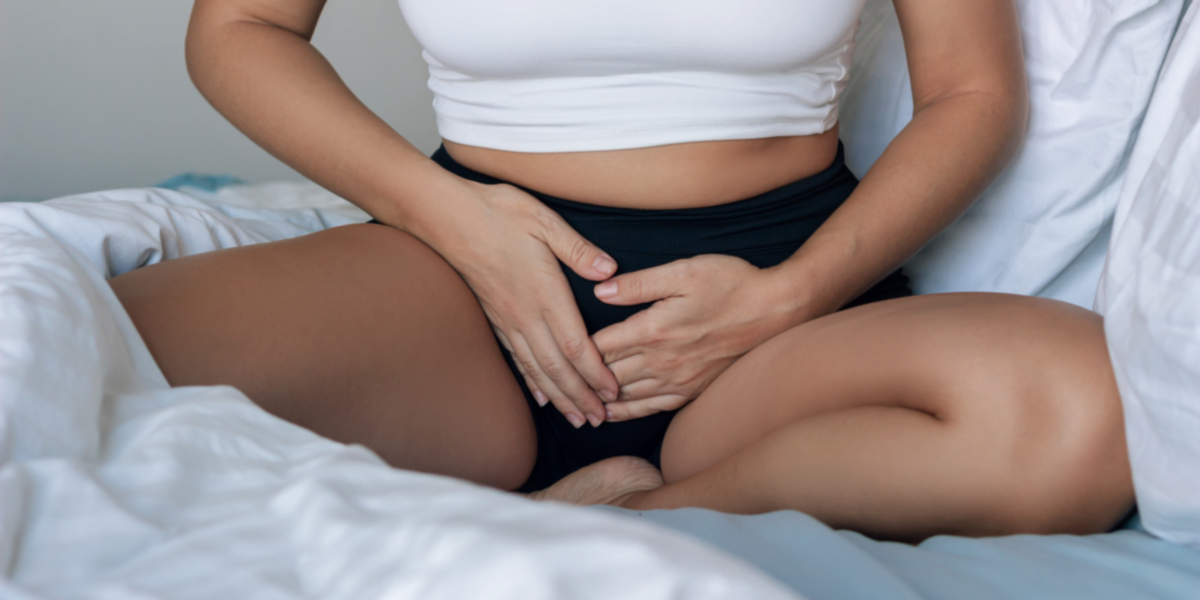
On a chilly November morning, I hauled ass to a Lower Manhattan hospital to see about a uterus. Specifically, a hysterectomy. The ultimate yeeting of an organ I wanted out of my non-binary body.
A year before, I sat in the same waiting room for an exploratory laparoscopy to find out if my worsening pelvic pain was because of endometriosis. In my double-hospital gown setup, I sat in a chair, sterilized and sticky from the entire packet of antiseptic wipes they provided, already bruised because none of the nurses on shift could find a juicy vein for line access. It took them another 30 minutes and putting me under for them to stick me comfortably. I still woke up with pools of fresh blues and purples blooming under my skin.
The diagnosis was inconclusive. The amount of tissue sent to pathology was negative, leaving my health team stumped and stirring me into anxiety. Dr. B, my gynecologist, rattled off a list of options before mentioning: “Your uterus was slightly enlarged. It appeared mottled. I suspect it’s adenomyosis, known as the evil sister of endo. Instead of the endometrium growing in random places, it grows into the organ and muscle of the uterus.” She paused for questions before I gave her a quick nod to continue.
“Luckily, there’s a cure! A hysterectomy.”
Long before a hysterectomy was ever presented as cure, I wondered why I didn’t relate to any of my friends, especially when they claimed their femininity through a connection to their menstrual cycle. The womb warriors were even worse, deifying themselves in the spirit of lifegiving and getting in touch with their yonis. Often, I’d nod in response, just to satiate their egos in the name of camaraderie. I don’t know if I’d feel comfortable about my uterus even if it wasn’t diseased. I tried to fit in—I used a woo-woo period app that synced my cycle to a moon phase. Frantic typing of symptoms, including a week of migraines and extreme nausea, only made me feel more dysphoric. How could I claim womanhood if the organs that deemed me so destroyed me from the inside out?
Though I didn’t come out as non-binary until my late twenties, I couldn’t ever pinpoint the feeling that I didn’t feel at home in my body. Perhaps it’s because I’ve always been chronically ill—diagnosed with Polyendocrine Metabolic Ovarian Syndrome (PMOS) at 16 after three years of an absent period, and becoming a Type 2 Diabetic at 19—but pain and illness proved to be a natural part of life. But I knew something was wrong when, after I switched to a low-hormone IUD at 29, I started having a regular menstrual cycle—accompanied by migraines, crippling pelvic and lower back pain, nausea, and profuse vomiting. Once a month, both in public and private, I’d rush towards the closest bathroom and attempt to aim a stream of projectile vomit into the toilet bowl (often failing).
During our six-month check-up, I asked the physician who inserted my IUD if it was normal to feel so much pain during my cycle and during ovulation. Of course, I did this half-naked with my legs spread and a speculum shoved inside, only a thick mat of medical draping for a shield. The doctor peered down, using a penlight to shine under the drape.
“Yeah, it’s normal. Just pop an Ibuprofen.”
Maybe I saw her head nodding from behind the cover, but I couldn’t think from the sharp jolt I felt as her fingers tugged at what could only be the IUD’s string. “Well, it’s in the right place,” she continued, her voice muffled by the draping. I inhaled, trying to forget the uncomfortable sensation before asking, “Well what about the pain? Do you think it could be endometriosis?”
As she stood up, removing her fingers and the speculum from me, I noticed a grimace plastered on her face. I caught her gaze, and she said, “We have to do an ultrasound anyway to make sure it’s in the right place. Let’s take a look to see if anything’s abnormal.”
I now know that endometriosis and adenomyosis can’t be easily seen on imaging, but I was desperate to find answers for a worsening ache. I started searching outside of the traditional medical system. I took supplements, primped myself, shouted my period out loud, but I still couldn’t fit into this ideal of womanhood.
When my spouse and I wed, the first thing my parents asked was when we were planning on having children. They didn’t understand that I spent half of every month doubled over in the fetal position in bed or crouching over a toilet on my hands and knees, waiting for the rest of the acid to rise in my throat and exit via exorcist-style vomiting.
I never went back to that doctor. It took me another year to find someone else, which meant jumping through insurance hoops, doing exhaustive research, listening to my pelvic physical therapist’s suggestions, and continuing to have this tiny IUD providing enough hormones to keep my pain at bay. By the time I met Dr. B, I’d inquired at every other hospital practice, but their wait times stretched into the next year.
She spent an entire hour sitting with me, poring over my chart in detail and reviewing our options. Dr. B is a pelvic pain specialist, which means she’s spent her career providing sweet relief (often through the form of excision surgery) after years of undiagnosed pain. She’s also a doctor of color, and I don’t think it’s a coincidence that she understood what it takes to be believed. Even with her tentative diagnosis, it still took another year and a half to get me to the hysterectomy stage.
Adenomyosis has one cure: ejecting the uterus.
Before anyone cut, doctors and insurance companies audited my life. My care team assembled around Dr. B. My pelvic floor therapist, Millie, was crucial in advocating for me. Dr. Z was a pain specialist who walked me through my pain regimen and post-surgical care. They urged me to see a therapist to make damn sure I wanted the hysterectomy. My immediate family begged me to see a fertility specialist, just in case my spouse and I wanted children, so that I could freeze embryos and hopefully hire a surrogate before surgery. Though Dr. B never pushed me to see one outright, she reminded me of the looming threats to bodily autonomy, warning me I might not have as much access to the fertility benefits nor to a hysterectomy if the federal government continued to slash and cut funding.
I didn’t see a fertility specialist before the surgery because I talked to one a few years ago, before the pain and diagnosis, and decided I would never carry a child. No one could promise me my pelvic pain would cease, despite the lack of a uterus. I’m still young enough to undergo IVF and freeze embryos, could even hire a surrogate, should my spouse and I change our minds. What I couldn’t guarantee was my hysterectomy, let alone my insurance covering it. Even as a New Yorker, Dr. B warned me to proceed before the next mayoral election, because we weren’t sure if our city and state government would kowtow to the White House. This wouldn’t be true for other places.
She wasn’t wrong to worry. Federal employee plans dropped coverage for gender-affirming care. More than 50 Planned Parenthood clinics have closed or merged since January 2025. Luckily, my surgery was billed under adenomyosis treatment. The ICD code is the reason I could get away with a hysterectomy without more pushback. The disease made me legible in a way I never managed alone and bought me the thing I wanted. Take away the diseased uterus, and I’m someone asking to have a healthy organ removed, a surgery met by a waitlist and invasive scrutinization. Without a definitive diagnosis, anyone seeking a hysterectomy as gender-affirming care runs into a system that demands therapist letters, second opinions, multiple denials and appeals and a shrinking list of places that will offer it to them.
The best thing about the hysterectomy was how seamless the morning felt. I came prepared, spouse in tow, with a go-bag stuffed with essentials: a plastic bag in case I threw up in the car, a soft pillow to keep me propped up, some drinks to hydrate.
The nurses got the IV in the crook of my arm on their first try, and the spare access point in the other arm went just as fast. They wheeled me into the surgical room and everything felt easier, which I hadn’t expected.
When I came to in the recovery room, I croaked, “Water? Is it over? Did you yeet my uterus?”
A nurse responded with a gentle touch, trying to get me to sit up. “Yes, honey. It’s out. We’ll get you water—keep sitting up!” I tried my best not to pass out again, but they brought water, apple juice and a fudge brownie to get my stats up. Another nurse in recovery called me sweetheart. Then she. I imagined my chart was open on the screen behind her with the biological sex marker right there, and my uterus was somewhere, chopped up in a container a few floors down, waiting on pathology to confirm what Dr. B had previously suspected.
After recovery, I retired my heating pad. It’s been a loyal part of my arsenal, but its wiring finally shortened out. I used to fall asleep with it turned almost all the way up for hours until wrinkled brown patches of skin appeared on my belly, effectively searing my skin to ease the pain. I deleted the moon cycle app from my phone without opening it again.
Without my uterus, I no longer double over in excruciating pain or live in bed. I still hurt, but the pain’s settled in my lower back, and it’s a fraction of what it was. I still carry emergency Zofran for my nausea and take bioidentical progesterone to ease the ghost cycle I have since I kept my ovaries. My flares are gone, and the premenstrual symptoms and all that came with it are mild. My progesterone is also gender-affirming care: It quells symptoms—the natural hormone levels fluctuate, but I no longer bleed—and makes me feel more in tune with my non-binary body. The hormones are a prescription I have to keep getting refilled. Every 30 days, I discover anew whether the pharmacy, insurer, and country still agree I can take it.
Strangers keep waiting for me to be sad about the loss of my uterus. My parents openly mourn their lack of a grandchild, and my loved ones keep asking me if I finally feel gender euphoria. I didn’t put together how I really felt until recently.
For years, I’ve told this as a pain and disability story. And it was, but maybe that’s only half of it. My hysterectomy, though medically necessary, was both the cure and gender-affirming. I never liked my period. I don’t want to carry a child, so I stopped wanting a menstrual cycle long before anybody handed me a medical reason. All those years, I was performing a womanhood I didn’t want, on the schedule of reproductive organs I never claimed. But when somebody looks at me a beat too long and are confused, that’s the closest thing to euphoria I’ve got.
So here’s where I’ve landed: My rights are being litigated by people I’ll never meet but who think I’m an abomination either way. Every form still views me as female, which means most nurses (unless they look carefully at the pronouns and until I feel brave enough to correct them) still say she/her. And I’d be lying if I said there wasn’t some safety in being seen as a woman in this process.
I used to let them think it and stayed silent when a practitioner called me she. But now I correct them every time, even at the check-in desk where I’m scribbling out the gender binary and plastering “NON-BINARY” on my forms. I’m proud of this, just as much as I believe this hysterectomy was the best thing that ever happened to me.
I opted out of the binary through a loophole shaped like a painful disease. Without the diagnosis, I’d have been the trans guy asking for the same operation, filed as elective by somebody who has never asked him a single question about his life. He’s still waiting. So is the cis woman who’s been told to wait until she’s 35 just in case she changes her mind. I’d have wanted this uterus out even if it had behaved itself for 32 years. Adenomyosis provided the healthcare system a reason to say yes.


Comments
“But when somebody looks at me a beat too long and are confused, that’s the closest thing to euphoria I’ve got.” 👈🏼 this right here!
Glad to hear you’re getting some relief after it, both physically and emotionally.
(My own nonbinary and progesteronated self next week will reach the one-year mark from yeeting a different selection of reproductive tissue! 💖)
Thank you, thank you! <3
It's taken me awhile to get here, but I love not having a uterus. (And similarly, happy anniversary to the yeet!)
Thank you so, so much for sharing your story! I had tears in my eyes halfway through. 💜
In my case, I had to wait until I was 40, as my condition was fortunately less severe and I initially had to endure some very painful treatments. Now, after 30 years of senseless, terrible bleeding, I feel comfortable in my body and with my gender – even though very few people actually perceive me as a genderqueer fem dyke.
I hope that more people will speak out about their experiences of reclaiming their bodily autonomy.
Thank you for sharing this moving piece. I see some of my experiences in your writing. I am a non-binary dyke with endometriosis and suffered many years of undiagnosed pelvic pain (and careless suggestions from doctors to ‘just take Advil’) before I found my doctor B, who took me seriously. The new doctor prescribed hormonal birth control to manage my symptoms, which fortunately it has so far, but I did not know how relieved I’d feel not to get my period anymore–I did not know how badly my genderqueer body wanted this. My endo treatment has absolutely, by coincidence, doubled as gender-affirming care.