





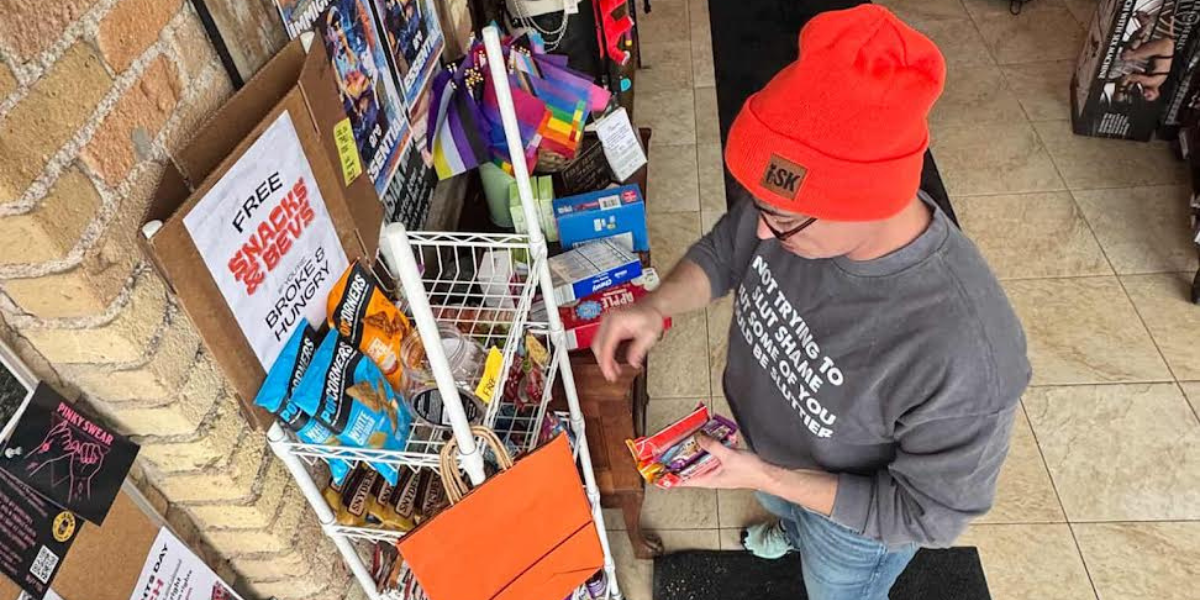
Smitten Kitten is a great place to get advice about a new vibrator, or ask about the pros and cons of different brands of lube, or find an erotic wax play candle. And for the last several weeks, the queer-owned Minneapolis sex shop has also been an unlikely mutual aid hub, moving thousands of pounds of food and household items and collecting cash donations for immigrant families in need.
In December, the Trump administration sent 2,000 Immigration and Customs Enforcement (ICE) and Customs and Border Protection (CBP) agents to Minnesota. The federal invasion, dubbed Operation Metro Surge, has upended every aspect of public life, sending much of the state’s immigrant community into hiding.
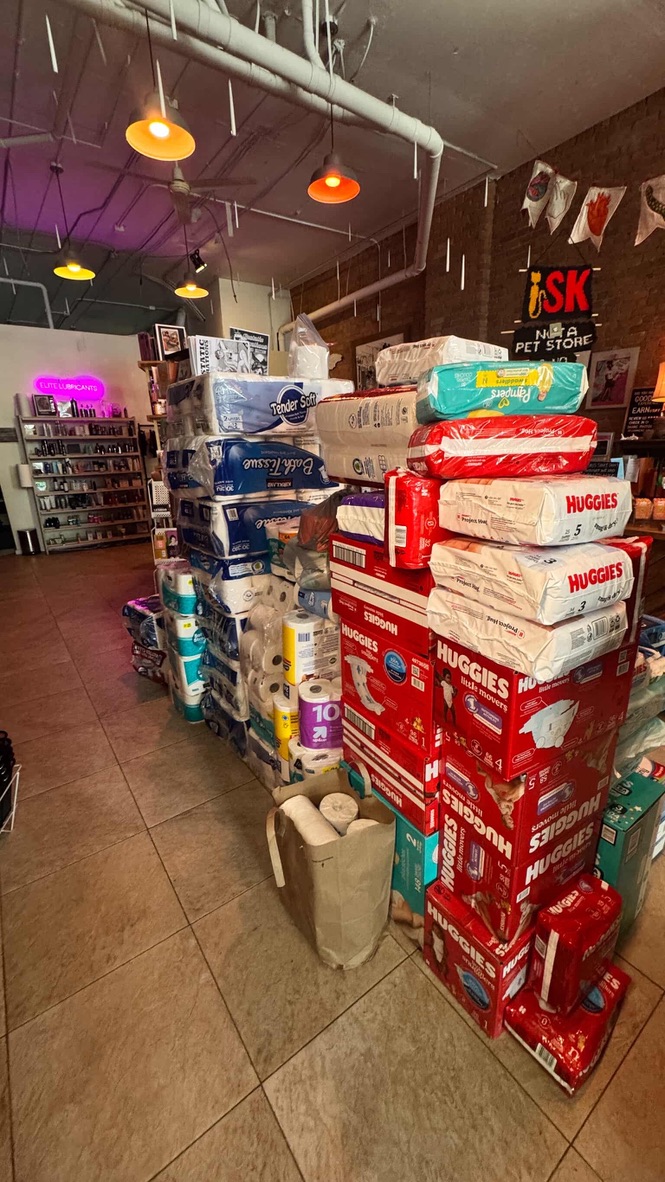
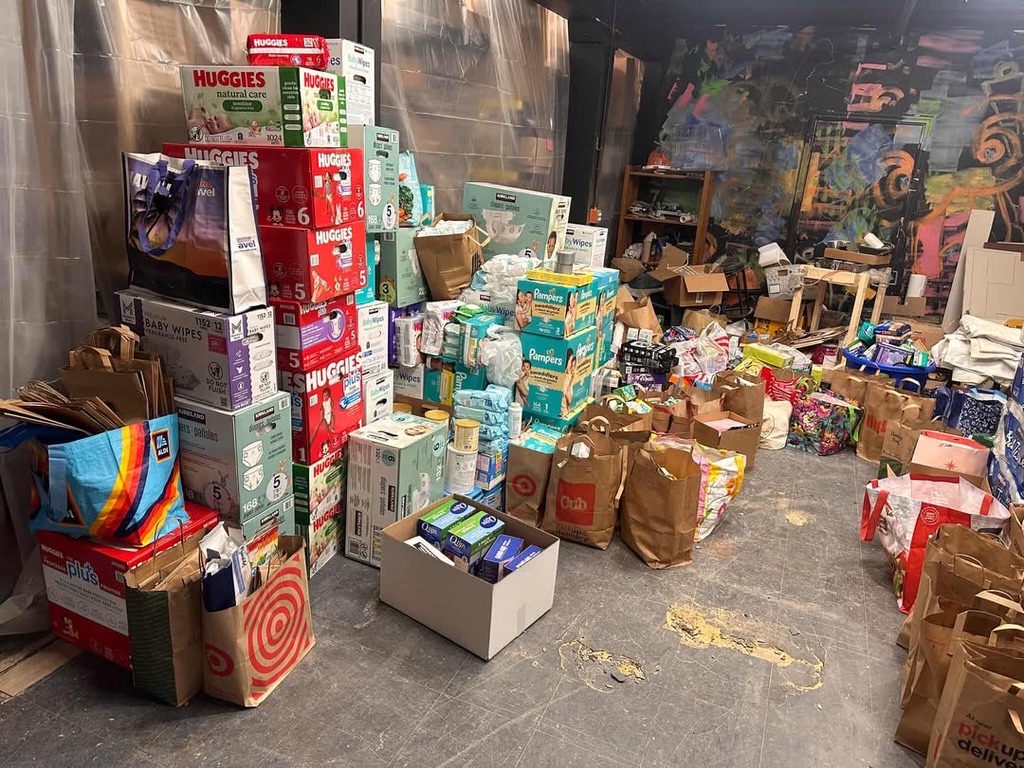
Knowing that many immigrant families would be unable to work or shop safely during the invasion, Smitten Kitten issued a simple request for nonperishable food and household donations in early January. Before long, the shop was at capacity, its wall of dildos obscured by a mountain of diapers. Twin Cities Leather, a queer- and IPOC-owned leather shop around the corner, offered up its space to help with the volume of goods and was soon similarly inundated with donations.
It’s kind of a surprising story to outsiders — the sex shop that’s standing up to masked federal goons — and it even caught the attention of editors at Playboy. But Smitten Kitten owner JP Pritchett says anyone who knows them knows they’d be on the front lines of this work: “We have been doing community help and mutual aid since we started, twenty-something years ago,” they say.
Across the Twin Cities, in fact, queer-owned businesses are fighting back against ICE, a decision they say comes incredibly naturally. As the federal occupation continues, community members are committing themselves to standing up to the feds while supporting the state’s immigrant communities in any way possible. Those who spoke with Autostraddle say it’s virtually the only option.
“We are rejected from the day we come out, many of us,” says M Nijiya, owner of Jackalope Tattoo in south Minneapolis. In early February, their tattoo shop held an anti-ICE flash event that raised more than $22,000 for local orgs, including the grassroots mutual aid group Community Aid Network MN.
“We’re used to being rejected, we’re used to having to start over and support each other,” Nijiya continues. “We became each other’s families, because our families abandoned us, right? We’re used to going and helping our fellow community members.”
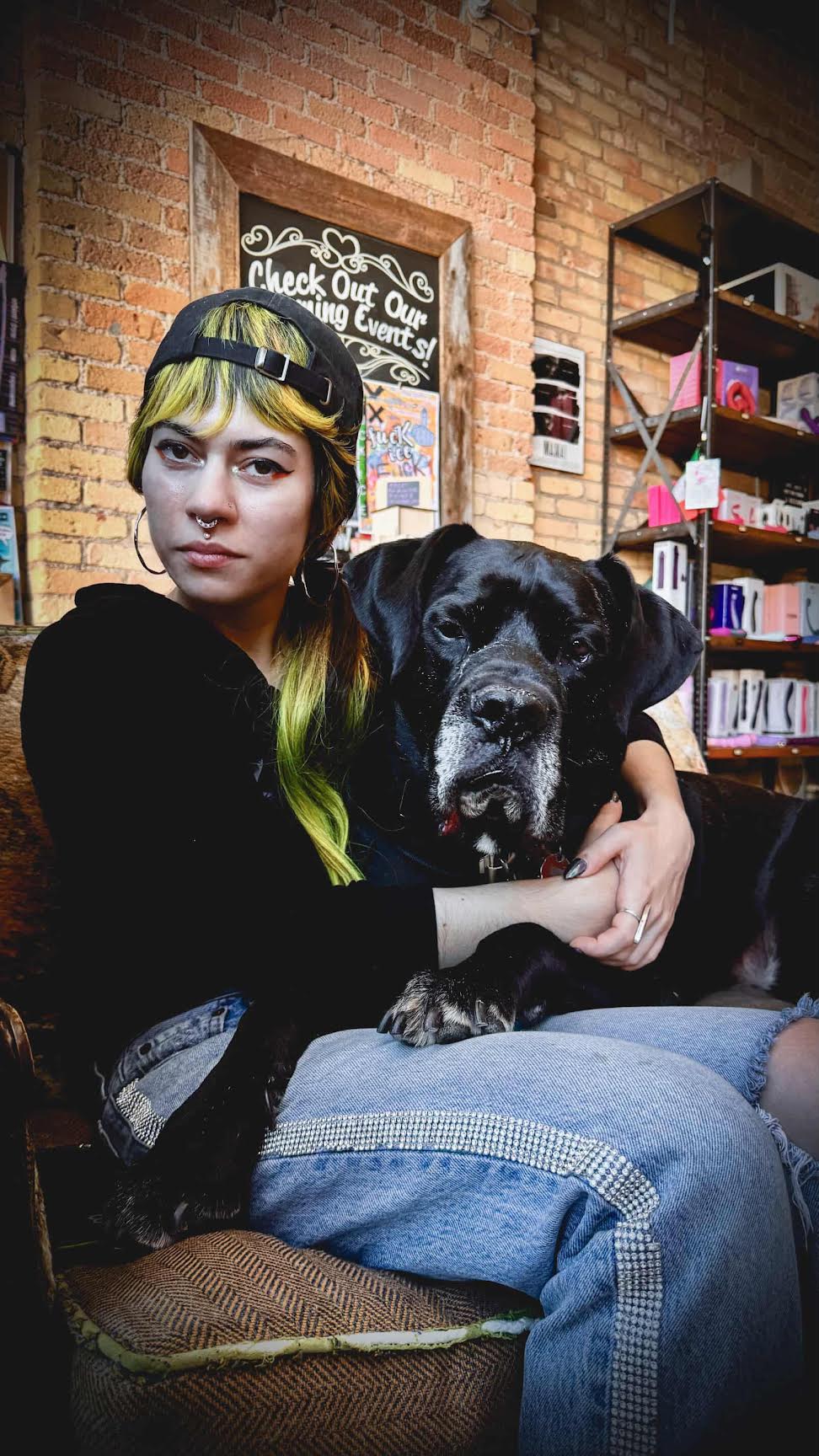
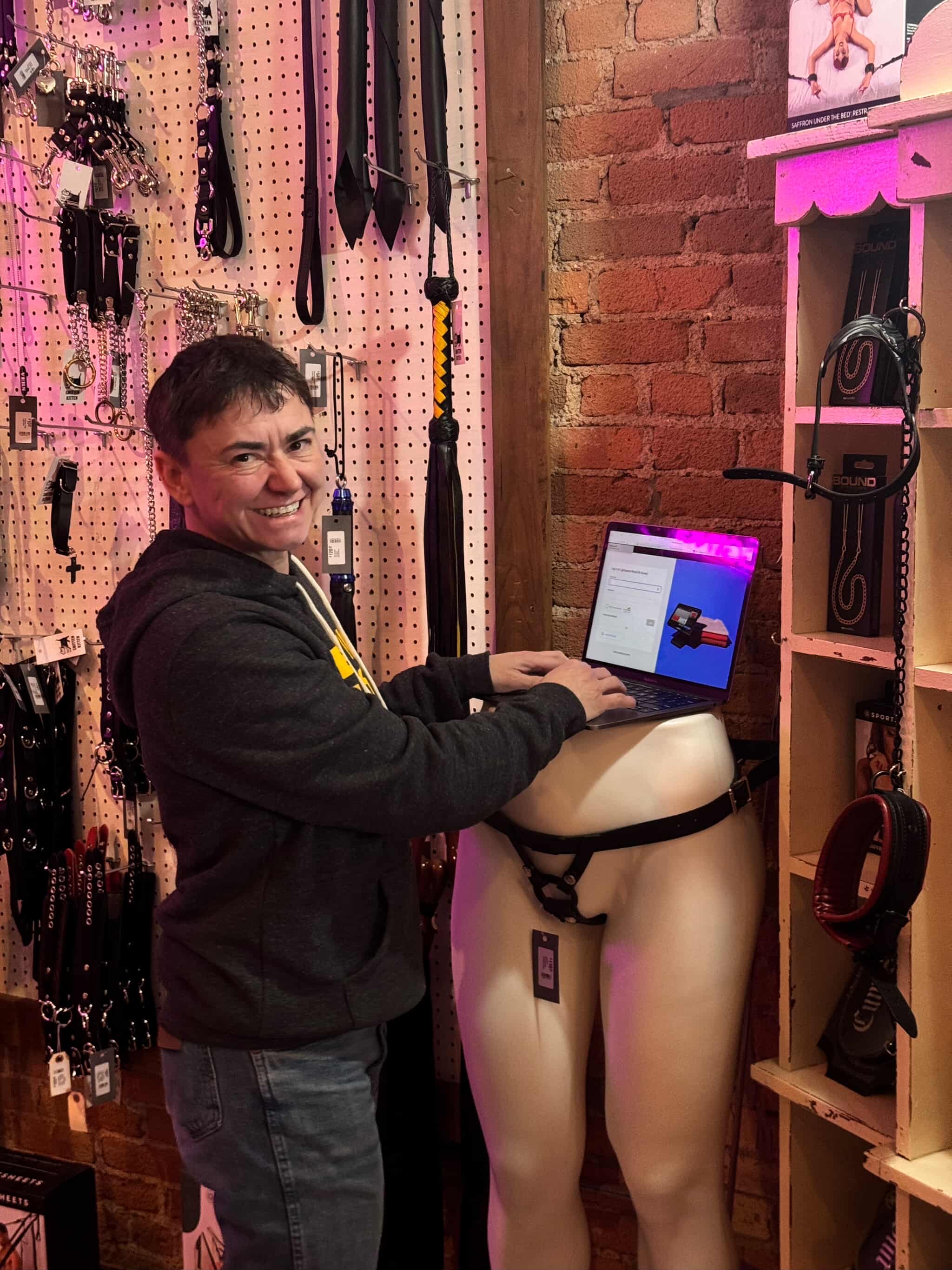
You’d be hard-pressed to find a queer business in Minnesota that isn’t standing up for the state’s immigrant communities in some way — whether that’s by throwing themselves into mutual aid work, sharing resources, or getting out into the streets and protesting — and you’re all but guaranteed to see a basket full of whistles or zines about what to do if you see ICE on the counter of a queer-owned business.
A Bar of Their Own, a women’s sports bar on Minneapolis’s Franklin Avenue, has been providing the materials for protest posters and buttons, and when Minneapolis Public Schools canceled classes due to ICE-related safety concerns in early January, the bar held movie days for families and provided coloring pages for kids. In St. Paul, queer-owned Workhorse Coffee Bar started selling a “Fuck ICE” coldbrew, with the proceeds going to support the Minnesota Immigrant Rights Action Committee. The Brass Strap, a cooperatively run queer and lesbian bar pop-up, hosted a mutual aid market that raised more than $8,500.
The movement includes queer-owned bookstores like Black Garnet Books, which among other actions is hosting a drive to provide children’s books to immigrant families this Black History Month, and the pop-up book shop Beck’s Books, which brought in nearly $4,000 in donations to help keep two families with young children housed.
“For me, there is no other response in times of uprising than using the spaces I own to activate community, bring us together, and to stand up for the rights of our neighbors,” says Black Garnet Books owner Terresa Hardaway. “I have a responsibility as a Black queer woman to continue the fight for freedom set by my ancestral lineage.”
“As a rapid responder, most of the individuals that I encounter on patrol are also queer folks, many with intersectional identities — queer folks who are also people of color or disabled or neurodivergent or low-income,” adds Beck Gilbert, co-owner of Beck’s Books. “The same goes for many of the people I meet while doing supply runs or at protests. They’re the people sending me ten bucks on Venmo when I post a rent support request for an immigrant neighbor, even though they themselves are struggling.”
Chris Stedman lives in Minneapolis’s Longfellow neighborhood, right off of Lake Street, an immigrant corridor that has been a hotbed of ICE activity since the surge began. And right away, he and his neighbors knew their community would need help.
Stedman, a queer writer, podcaster, and professor, also has a background in hosting online fundraisers for crisis support; in recent years in particular, he’s done a lot of fundraising to support trans folks in the upper Midwest. (Minnesota is a trans refuge, and many people travel or relocate to the state from neighboring states for healthcare or safety.)
“I believe we have a responsibility to take care of our neighbors, particularly those who are under attack,” he says, “which is why I’ve done this kind of fundraising in the past, and why I wanted to do it now.”
Stedman was “blown away” by the immediacy of the response and the generosity of donors who responded to the call for support: “We ended up raising more than $50,000 from nearly 200 people in just a couple days,” he says.
This is a story that has played out over and over since ICE’s invasion began. Community-led mutual aid efforts — many of them helmed by queer people, people of color, and queer people of color — are feeding and housing Minnesotans in need.
Stedman says that’s not an accident, nor is it a new development. “We have a really rich history of queer and trans mutual aid here in Minnesota,” he says. “Many of the organizations that serve the LGBTQIA+ community in Minnesota today started as loose, informal networks of queer and trans people and their allies showing up to care for one another when few others would.”
Several such networks emerged during the AIDS crisis of the 1980s and ’90s, when existing institutions had failed the community tremendously.
In recent years, Stedman has been studying this history of queer and trans mutual aid in Minnesota; as part of that work, his podcast production company launched a story-collection hotline called “We Help Us” that documents the histories of queer and trans mutual aid in Minnesota.
“This is something LGBTQIA+ people have truly always done,” he says. “And once these networks are in place, it allows us to respond quickly when crisis occurs, even when queer and trans people aren’t the ones targeted — for being LGBTQIA+, at least.”
“It’s the same reason I wasn’t surprised to learn that Renee Good was queer,” he adds. “We not only know how to show up for our communities, we also know that all oppression is connected.”
At Queermunity, a venue, cafe, and gathering space in Minneapolis’s Uptown neighborhood, they’ve collected donations of food, funds, and household goods for neighbors in need. Mondays have also become known as “Melt Mondays,” a time when community members can make signs, make protest plans, or get connected with resources for defending yourself and your neighbors against ICE.
But the weekly gatherings are more than just a practical response to immediate needs in the community.
“We’ve also been, as part of Melt Mondays, holding space — facilitated space — for people to just talk about the trauma that all of this has brought in our communities,” says Pigeon, Queermunity’s cafe director.
Yes, people can come to Melt Mondays to access supplies or knowledge or networks. They can also attend simply to spend time with others, processing the events of recent weeks and “being emotional beings” in the same room together.
Minnesota’s queer community is big, and it’s resilient. But it’s also not immune to the impacts of an ongoing federal occupation, and the violence and disruption have taken a toll. The occupation has disrupted the day-to-day operations of restaurants and small businesses throughout the state, and that very much includes those that are queer-owned.
“To be plain and simple about it, we operate in part as a business, and it has been an impediment to business,” Pigeon says. Queermunity has postponed, rescheduled, or outright canceled a number of events — including events on crucial topics like reproductive healthcare or healthcare for HIV positive populations — since the invasion began in December, “and on very little notice.”
“Our day-to-day operations have changed,” she continues. “We’re on neighborhood group chats about what’s going on at any given point … Uptown has been a huge hot spot [for ICE activity] the past couple weeks.”
There’s also a shared sense that ICE and Border Patrol agents will specifically target those businesses that have collected donations or otherwise offered up their spaces to observers and protesters. After Smitten Kitten, Twin Cities Leather, and nearby Wrecktangle Pizza collected goods and funds for neighbors in January, agents rampaged through their intersection at the corner of Lake Street and Lyndale Avenue, attempting to break down the door at Wrecktangle and gassing people on the street.
“By the second or third day [of the donation drive], we were like, ‘Okay, we need people to watch,’ because they were here, they were trying to intimidate us,” says Karri Joe Plowman, founder and co-owner of Twin Cities Leather. “They were coming by, they were following some of our delivery people … Anyone who’s ever grown up as a queer person in school knows what taunting is like, and they were taunting us.”
Compounding all of these challenges is the fact that the need is not just ongoing, but growing. As the federal invasion of Minnesota enters a third month, it’s still unclear when the operation will end. In many immigrant families, the primary earners have been out of work for months — in some cases, they’ve been detained or deported. While the city councils of Minneapolis and St. Paul have made pleas for a statewide eviction moratorium, Minnesota Governor Tim Walz appears unwilling to move forward with such an action.
Stedman and his neighbors hoped that their initial $50,000 fundraiser would be enough, “but there’s still so much need,” he says, which led them to reopen The Greater Longfellow Neighbor Relief Fund, this time with a goal of $100,000.
At Smitten Kitten, they’ve pivoted from collecting physical donations to financial ones in order to help people pay rent. “People are hiding in their homes — their home is not only a shelter, it’s a hiding place,” Pritchett says. “The worst-case scenario would be to be evicted.”
But while their strategies may be changing, their commitment to standing up and facing the feds is unwavering.
“We’re figuring it out as a community — the whole Twin Cities is figuring out how this is going to be sustainable,” Pritchett says. “And it’s not pretty, or glamorous, and it’s messy, but it’s getting done in a really incredible way.”
Pigeon remembers thinking, during the week that Renee Good was killed, that Queermunity shouldn’t even be open — that it was futile to try and run a business as usual — while others on the staff thought that closing down would be like giving in to ICE.
“I reached a point where I don’t think either of those perspectives are right,” she says. “I don’t think we need to do business as usual to prove a point, and I don’t think we grind everything to a halt to prove a point. There’s a third way, and that’s business as unusual, and that’s what we’ve found.”
As for how long business as unusual will go on? At this point, it’s anyone’s guess, but Pigeon says that Melt Mondays will continue indefinitely. “The phrase we kept using was ‘as long as necessary,’” she says.
Things may be very difficult now, but eventually, the occupation will end. And until then, Minnesota’s queer community will keep fighting back.
“Someday, we’ll go back to just talking about lube,” Pritchett laughs. “Someday, that’s gonna be the most exciting thing that’s happening in here. But for the foreseeable future, this is what we’re doing.”


Comments
Thank you for continuing to share stories out of Minneapolis.
thank you for this, their stories are so important
Great discussion about For more in-depth information you should view from Air Filter Manufacturer & Supplier – Whalesens! I share more detailed content on https://www.whalesens.com, check it out!