





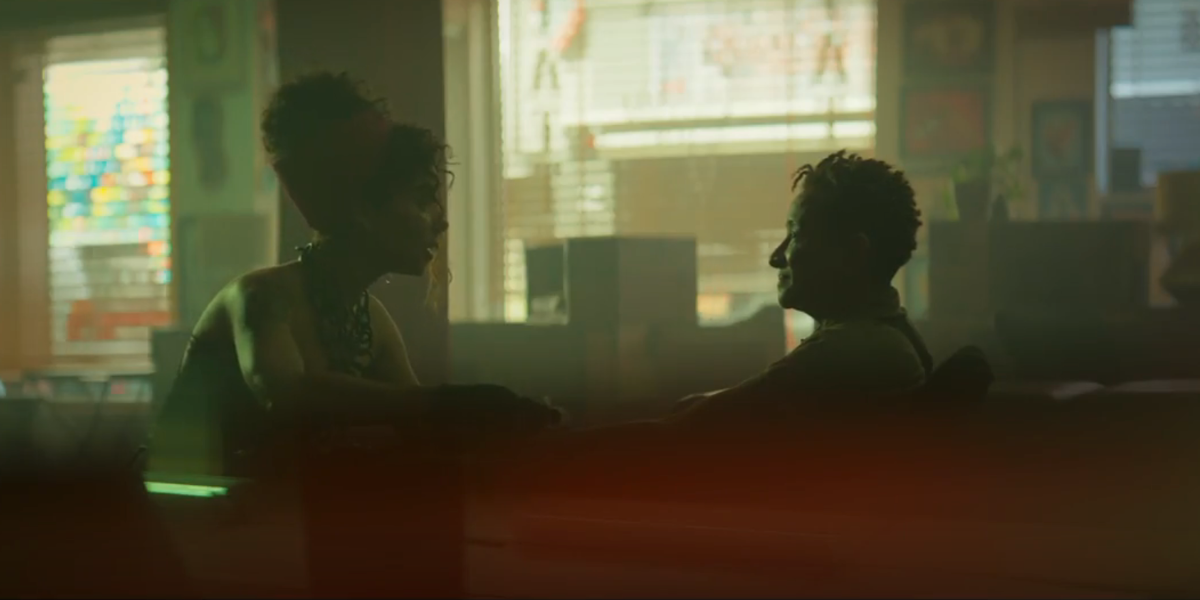
Wanda Sykes always knocks us out with her sharp comedy. In Undercard, she tries her hand to knock us out with a new method: her first dramatic lead performance. In this sports drama, Sykes plays Cheryl “No Mercy” Stewart, a retired boxer and recovering alcoholic trying to repair the broken gloves in her family ties. But while Sykes gives a strong performance, Undercard‘s ring is overstuffed with subplot, aimless in its punches.
Set in Liberty City, Miami, Cheryl “No Mercy” Stewart was once a promising boxer, but struggles with drugs and alcohol led to her career being cut short following a DUI arrest that also results in her son Keith ending up in the foster system. Sixteen years later, Cheryl is now a boxing trainer while on the road to recovery, about four years into her sobriety. Her now estranged son Keith (Bentley Green) rejects her attempt to reconnect. Although Cheryl works, she is evicted from her home after failing to pay her rent. She lives in her van with her young niece Meka (Estella Kahiha), whom she raises as her daughter, and CPS learns of this and threatens to take her into custody. Her sole allies are her former trainer and gym owner, Baba T. (William Stanford Davis), and Mariana (Roselyn Sánchez), a tattoo artist with whom she develops a romantic relationship. Despite her newfound challenges, Cheryl makes every effort to mend her relationship with Keith and persuades him to let her become his trainer.
Undercard swings between the two most common boxing plots — the washed-up star-turned-coach on the path to redemption and the underdog trainer and prodigy — and is frazzled in its storytelling. For a 106-minute runtime, Undercard is way too keen on setting up a myriad of struggles placed against Cheryl and, to an extent, Keith. Pretty much all the plots and subplots you expect from these sports dramas are offloaded and executed mechanically.
While the dynamic between the lesbian single mother boxing trainer and her estranged adult son bears uniqueness, director/co-writer Tamika Miller and co-writer Anita M. Cal’s screenplay frustratingly takes all the generic routes it can. You can tell exactly how the whole movie will play out by the twenty-minute mark. You never really get to know anyone inside the Liberty City-set ensemble outside their struggles. Any opportunity to scratch any intimate, original character depth from Cheryl is skipped.
It’s unfortunate, because it looks as stunning as any modern boxing movie, as gritty as, say, Creed or The Fire Inside. Ana M. Amortegui’s stunning illustration of Liberty City upon an intimate approach infuses Undercard with a grounded, naturalistic, and cinematic realism. The ruggedness in visuals allows the performances, largely Sykes’s and Davis’s, to come alive.
Cheryl is certainly a bland character, and yet Sykes textures her with her sharp, quick-speaking wisdom and empathy. For this being the first time we’re seeing Sykes deliver big, somber emotions in a performance, she delivers a solid showcase. She carries the weight of Undercard‘s shortcomings, which I believe are due to the script and shoddy filmmaking choices. Miller’s poorly choreographed and constructed boxing sequences are Undercard‘s weakest link.
Though I’m a sucker for the big “underdog vs. rival” boxing climax, the subpar filmmaking and the rushed storytelling undercut Sykes and Green’s performances. It slightly lands because of the novelty of Wanda Sykes motivating you as a trainer to get up and knock someone out.
Undercard doesn’t really pack a punch outside of some of these performances, but I would love to see Sykes take more dramatic roles in the future for this show’s potential of a true underdog with a winning performance in her. Even if that underdog is one of the funniest comedians in the biz.




Comments
Is there any kiss or love scenes between Wanda & Roselyn?
you know criticism is alive when you’re allowed to call a spade a spade! in this case that’s saying something felt generic or predictable. that said i’m
absolutely watching this just for wanda sykes 🫡
Thanks for sharing.