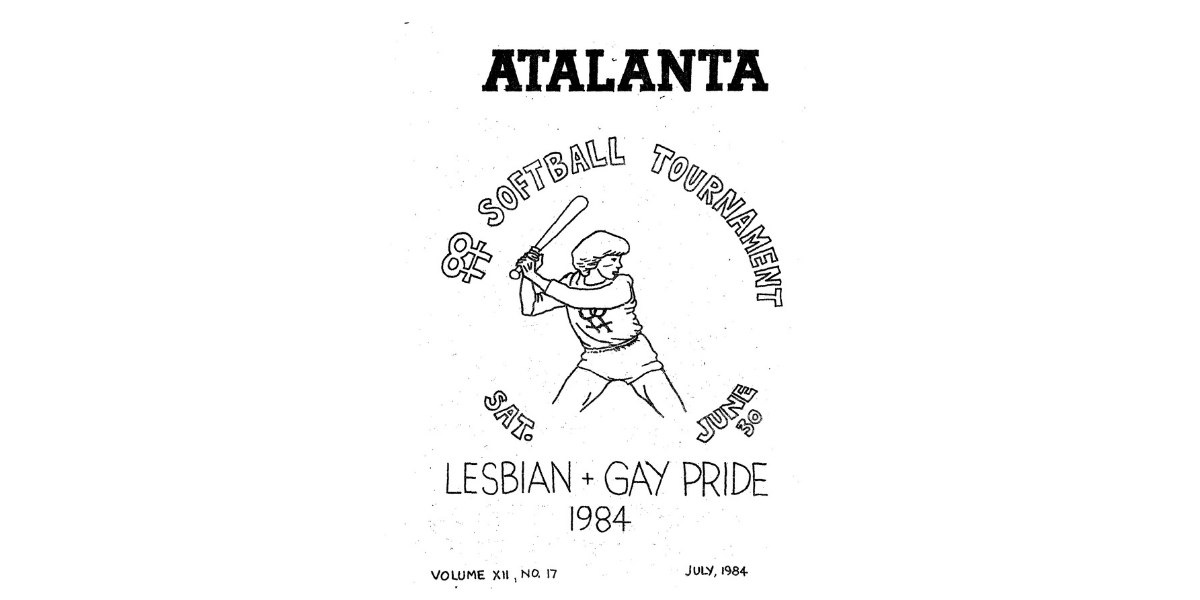
All Atalanta newsletter archival materials featured in this piece are from the Kenan Research Center at the Atlanta History Center. Browse the digital collection.
In the summer of 1974, walker-bys in parks across Atlanta would have had the chance to encounter a revolution in the making. The first openly lesbian softball team, the ALFA Omegas, could be found practicing and playing games, proudly out and making history. As the team played, supporters and teammates cheered: “Give me an A-A, give me an L-L, give me an F-F, give me an A-A. Whattaya got? Dykes, dykes, dykes!”
The ALFA Omegas team was formed by the Atlanta Lesbian Feminist Alliance, which was established just two years prior, in 1972. Their aim was to increase lesbian visibility and solidarity and act as a space where women, especially lesbians, could live freely and openly. The ALFA also ran a library for lesbian literature and formed a softball team for lesbians, which turned out to be a crucial social support system for queer women in Atlanta, at a time when public visibility was low and fear of discrimination was high.
Some of the early members of the ALFA lived communally in a home on Mansfield Avenue in Atlanta, a location that served as the organization’s home base before they found a more permanent location in the city. They set up an answering machine and a PO box to ensure they didn’t miss messages from lesbians in the Southeast looking for community. Reportedly, sometimes women just arrived at their doorstep, having heard rumors a lesbian refuge existed in Atlanta.
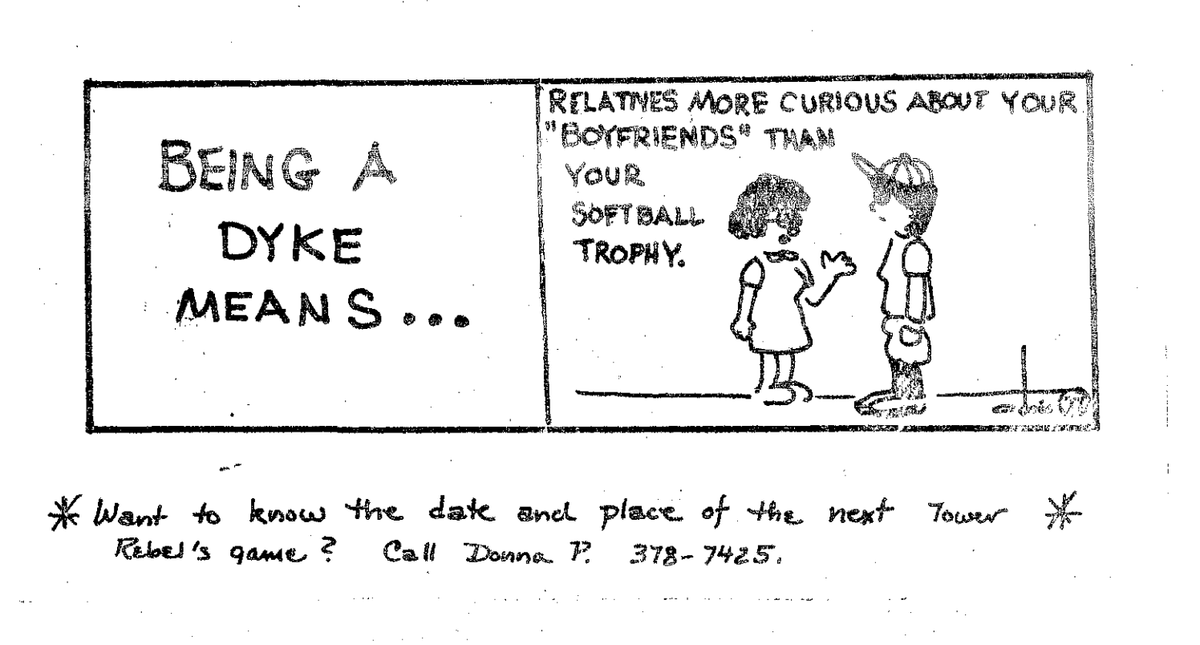
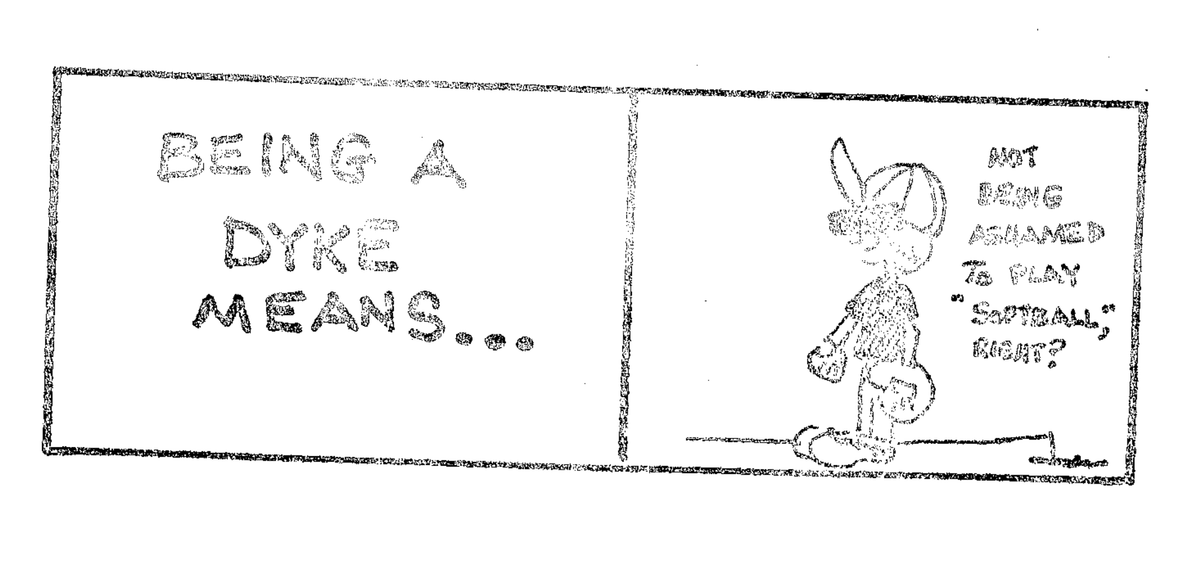
“ALFA was a political and social and educational kind of organization. Socially, a lot of things were [done] just so people’d get to know each other and do things together,” said Lorraine Fontana, one of the founders of ALFA, in a 2012 interview. “One of the things that developed was, some of the jock-type people would like to go out and do touch football, or play basketball, or do some kind of sport thing. And then, someone had the idea of, why don’t we have a regular softball team?”
Shortly after the ALFA Omegas were established, they entered the City League. The team was unique in more ways than one. They did not have a male coach like the other teams, and there was no requirement to already be good at softball before joining. From skilled athletes to women who had never picked up a bat before, all were encouraged to play, with play time divided equally among them. They focused heavily on community building rather than competition.
The ALFA Omegas operated under a player-manager system to be truly egalitarian. According to Southern Cultures, Charlotte Harper, one of the player-managers, taught the team how to play and wrote updates for ALFA’s newsletters. “We didn’t do too badly. We ended up with two teams. We had ALFA 1 and ALFA 2, because there were so many people who wanted to be involved,” Harper said in the interview. “So it became a big thing. It was a good way of actually marketing the organization. Because we would have games every week and…it gave us an avenue to socialize after the games.”
The team was so popular that the ALFA created a second team, the ALFA Amazons, and a sister team, the Tower Hot Shots, sponsored by a local women’s bar, Tower Lounge. After most games, whether they won or lost, the teams often ended up at Tower Lounge, a straight working-class bar during the week and a dyke bar on the weekends, or back at the ALFA house to celebrate or commiserate.
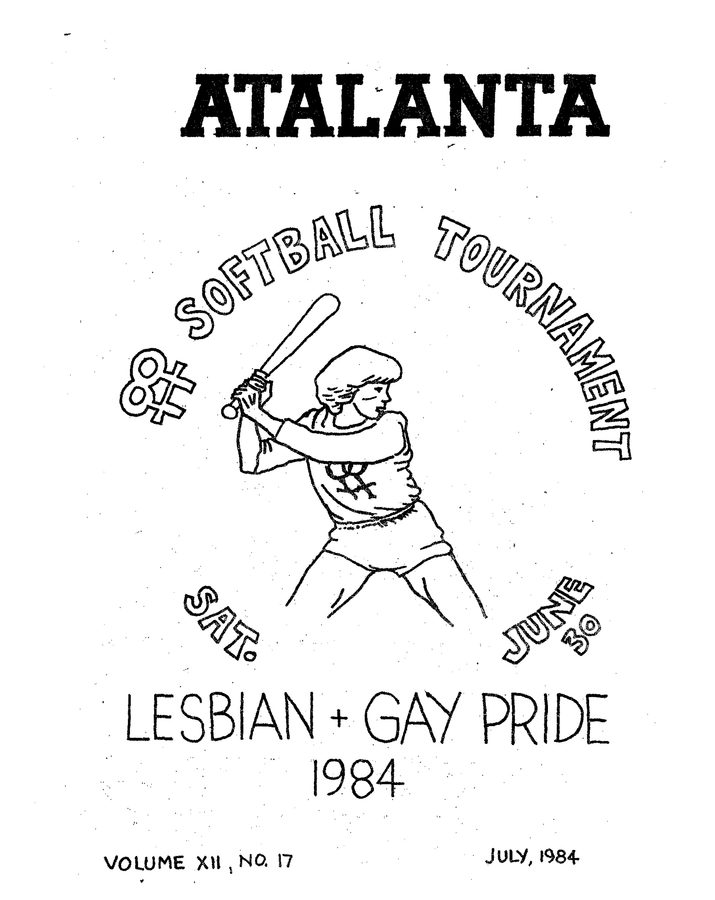
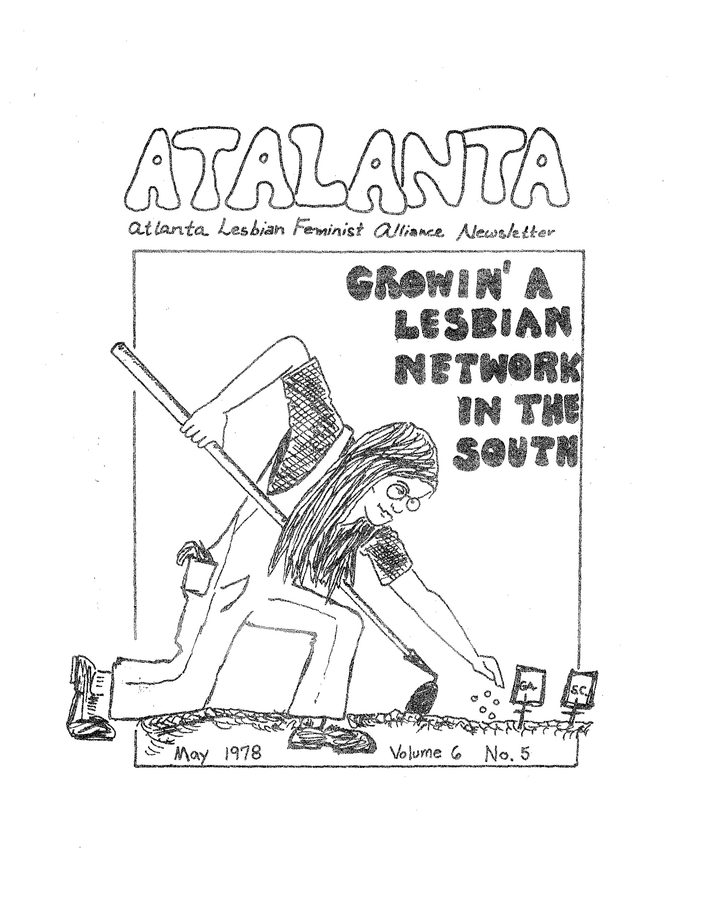
“ALFA Omegas changed my life. It was a way for us to come together as a team, we had such fun,” said Frances Pici, a member of the team, in an interview with Fontana in 2014. “We really didn’t even know each other existed, and now we’re in an environment where we’re coming together in a relatively traditional teamwork framework.”
For ALFA, softball was not only a way to build community but also to engage people in political work to gain rights for women and lesbians in the region and nationally. ALFA was heavily involved in lobbying the Georgia state government to pass the Equal Rights Amendment. Back then, lesbians were often pushed out of mainstream lobbying spaces in fear they would alienate conservative women, and so ALFA built their own coalitions with the Socialist Workers Party and others to lobby for the ERA to be passed. ALFA’s community newsletter—called Atalanta—featured local and national news updates, calls to action, events listings, book reviews, information about softball tournaments, and more. According to the Atlanta History Center, the newsletter’s creation was a direct response to mainstream media ignoring gay and lesbian events in local coverage.
Vicki Gabriner, another co-founder of the ALFA, wrote in a 1976 article called “Come Out Slugging!” for the feminist journal Quest that softball became an ideal organizing tool. It brought women across race and class lines together. For some working-class lesbians who were left out of the gay rights movement or felt that it was dominated by members of a different class, softball became a way to have fun and flirt with girls in broad daylight, something that seemed unimaginable in a time when lesbians were expected to stay hidden. ALFA’s presence at bars, on fields, and in ERA marches elevated the organization’s status, increasing its profile in Atlanta. In the year following the creation of the Omegas, ALFA’s membership grew from roughly 30 to 100, ushering in an era of community, love, and solidarity in the Southeast.
ALFA closed its doors in 1994, after 22 years in operation, but left a lasting impact. Today, many queer softball leagues can be found across the country, continuing these communities that combine athletics, activism, and connection.
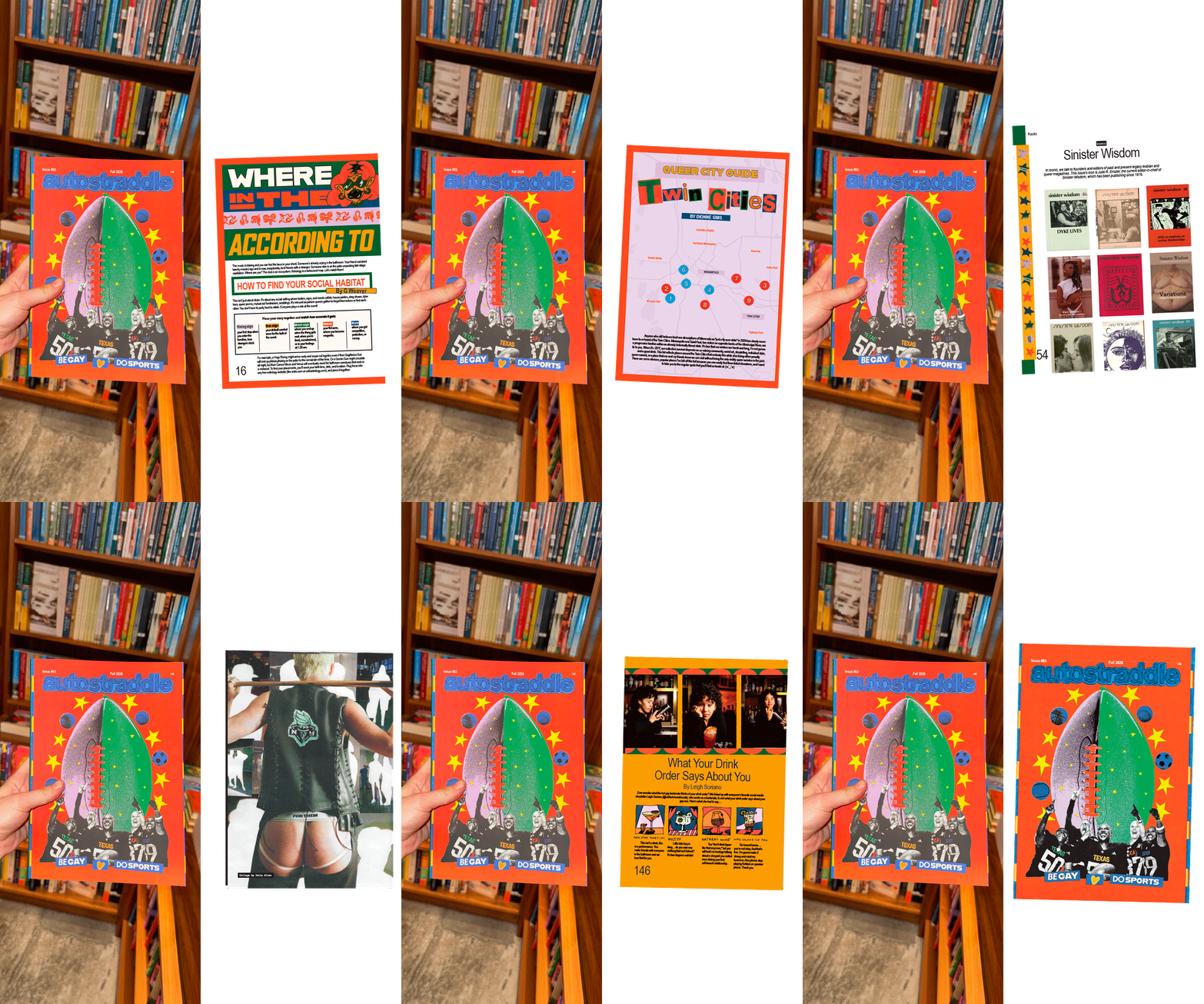
Want more lesbian sports writing? Get your mitts on the Sports issue of our print magazine.