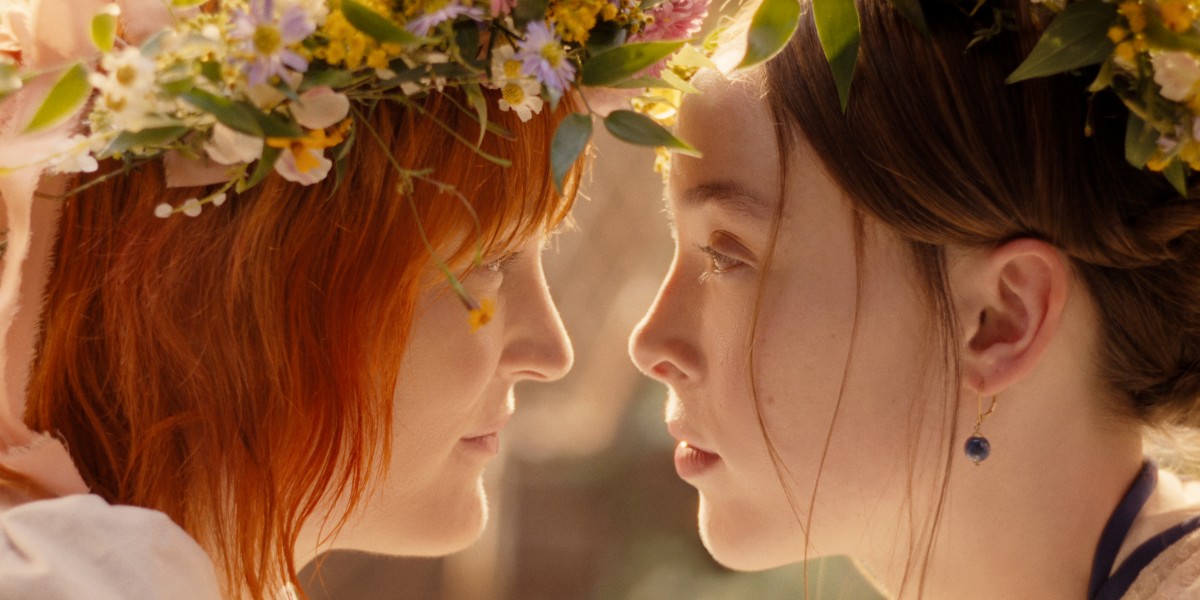
This review has spoilers for Monster: The Lizzie Borden Story…but mostly only if you’re new to Lizzie Borden lore.
If you’re looking for an even slightly factual or close to approximate retelling of what Lizzie Borden’s story might be based on what we know, you may as well turn around now. You won’t find facts or logic here in Monster: The Lizzie Borden Story. But you will find a surreal, bizarre story of one woman who got away with murder, and two who didn’t.
There are some highlights to be sure (specifically: the gay storyline), but overall I found the series to be a chaotic mess trying to string three stories together that don’t have any business being told at the same time. Not all female murderers are created equal, but you will learn about three of them in this show.
First, I will admit I went into this show with some bias. Though one was a pro bias and one was against, so I think they canceled themselves out, allowing me to go in relatively neutral. The positive bias is that I grew up in Massachusetts and have known the Lizzie Borden story all my life. I’ve read and watched multiple versions of her story before and have been fascinated by her since I first learned the jump rope song about her. (A song that, to the show’s credit, is used cleverly throughout.) Hell, I was in Fall River not all that long ago going wedding dress shopping with my sister-in-law. I feel a personal connection to the story and love that it’s technically a mystery and there are many ways to interpret what may have happened.
The negative bias is because I have written off Ryan Murphy Productions for the most part, having been burned too many times before; anything made by him and his cohort is something I either now skip or go into with hesitation. That wasn’t helped by the fact that, before I watched the show, I read this on the show’s Wikipedia page: “According to creator Ian Brennan, the season explores misogyny, gender roles, and societal expectations placed on women in the Victorian era. It also examines class and sexuality themes through the relationship between Borden and Bridget Sullivan.” Meanwhile, Ian himself (a cis straight man) is credited as the writer on every single episode. Also six of the eight episodes are directed by a straight cis man (Henry Winkler’s son, randomly enough). So forgive me if I didn’t have high hopes for the feminist angle of this story. But I promise I did go into this show really wanting to like it. I even specifically requested to be the one to review it.
I was right to have my doubts. But first, the things I did like.
Ella Beatty is absolutely astounding as Lizzie Borden. She pivots from a flighty and quirky public persona to a dark and serious private one so brilliantly. She is great at the quiet moments and great at the loud ones, too. I was not familiar with her before this, but I of course know her parents (Annette Bening and Warren Beatty) so nepotism gets the point on this one, because she was truly fantastic. Her performance was genuinely the highlight of this show for me, and honestly if Lizzie were in lesser hands, I don’t know that I would have even been able to finish the show.
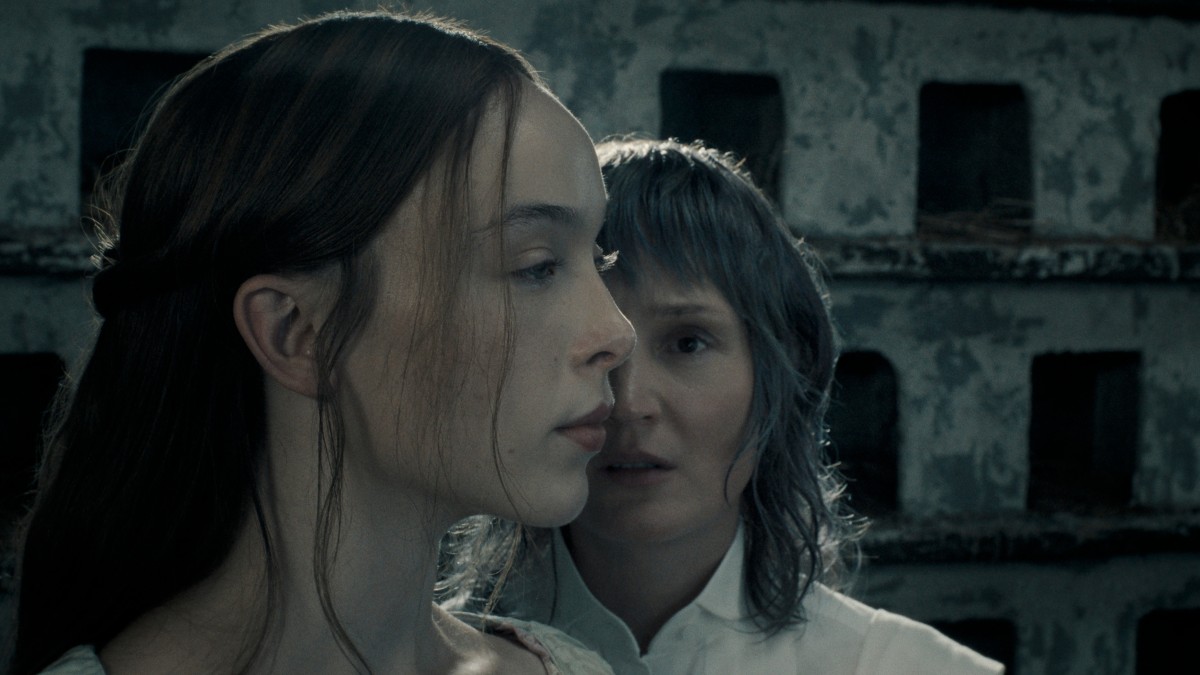
I also think Vicky Krieps is really compelling as Bridget/Maggie, the Borden’s maid. The show makes some curious choices about her character—not making her particularly Irish, her hair, and double-casting her in a peculiar way, for example—but none of that was her fault and she plays the hand she was dealt skillfully. She has great chemistry with Ella Beatty, and the two of them brought so much to Bridget and Lizzie’s dynamic. I also loved the way they portrayed Bridget as being good with chemistry and cooking in a way that almost seemed witchy, always pouring little vials into things, making concoctions. It’s a fun way to show she was smarter than anyone was giving her credit for.
And of course, the two of them together as a pair is delicious. The way they are slowly pulled to each other, the way they get caught up in each other. The way Bridget is a window to Lizzie, so she could finally see that she was a caged bird and that she could be free. She opens up Lizzie’s heart and mind and even teaches her a thing or two about her own sexuality, having to explain to her what an orgasm was in hopes to help her with her difficult periods, for example. There was some great sexual and romantic tension throughout and it was really the main thing keeping me intrigued by the story.
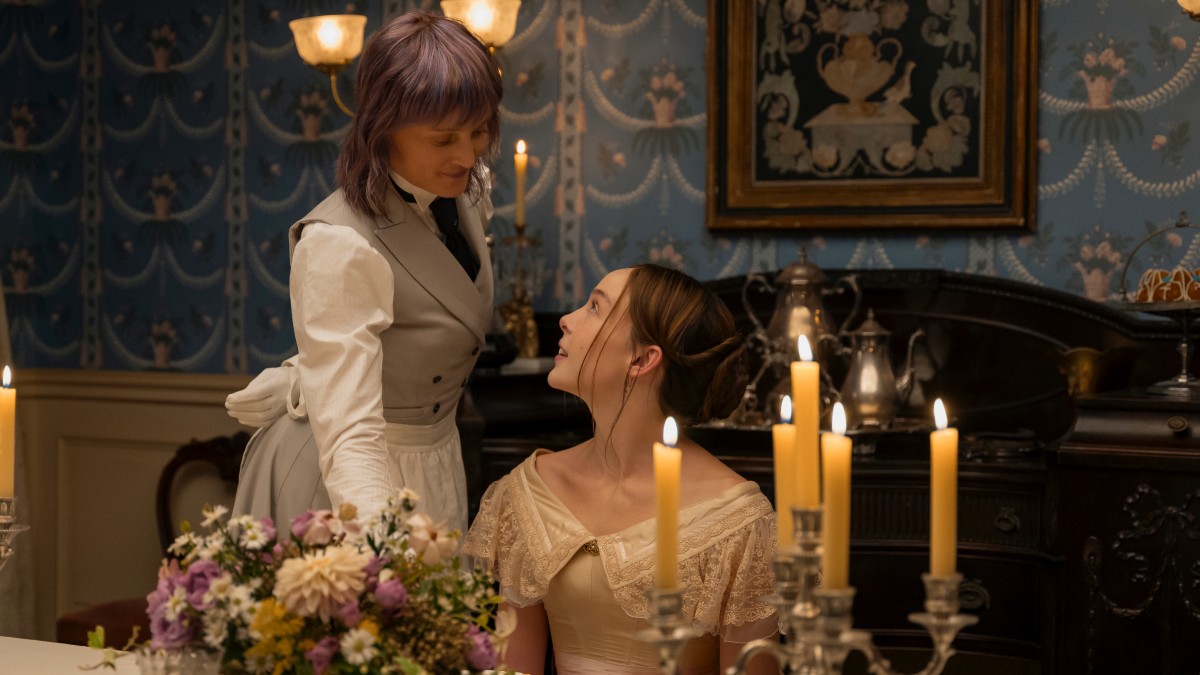
Rebecca Hall was a delight to watch as Lizzie’s evil stepmother, though her cruelty as written was a little over the top. And I’m sure Charlie Hunnam has his charms, but Mr. Andrew Borden was basically written as a cartoon villain, and he took it to the brink of mustache-twirling buffoonery. The show is filmed in a way that is surreal and purposefully unnerving. There is a grotesque undertone to how it depicts certain people eating food, and also, of course, all the violence. The blood is bright and plentiful, and there are multiple montages of murders and violence, some that happened in the reality of the show and some imagined. It was, at times, artful and visually appealing. At others (like an entirely too long sequence of people projectile vomiting) seemingly for shock value alone.
Perhaps this is my fault for going into this show thinking it was going to be more of a crime drama than something more akin to American Horror Story, taking a real story and dramatizing it, sure, but generally remaining grounded in reality. But it felt like only Ella Beatty’s Lizzie, ironically the most fanciful character, and Bridget were grounded, while the rest of the characters were caricatures of themselves. Billie Lourd has some grounding moments as Emma, Lizzie’s sister, but she isn’t around enough to really get a handle on that character.
Running parallel to Lizzie’s story, confoundingly, are the stories of two other murderers. One is Elizabeth Báthory, aka The Blood Countess, who was said to have bathed in the blood of virgins to stay young. For reasons I do not understand, Vicky Krieps also played this role. She did it well, but I don’t know why. Lizzie was fascinated by her story, read to her in a book called Elizabetta, and I think we’re meant to believe that hearing it planted the seed for her own actions later, but I don’t buy it. It seemed more like they wanted to have an excuse for having a youthful looking 26-year-old actress play a woman who was 32 at the time of her parents’ murders all the way through her being almost 50 (or at the very least 40 if we were to believe she was 25 instead of 32), and what better excuse than a story about a woman who was obsessed with staying youthful?
Also running parallel to these stories, even more confoundingly, was the story of Aileen Wuornos, a woman who murdered seven men in 1989 and 1990. She is played by Sarah Paulson. Aileen was obsessed with Lizzie Borden, staying with her girlfriend at the Lizzie Borden house-turned-bread-and-breakfast. She is schizophrenic and sees visions of Lizzie, talks to her ghost, and believes she has a real connection with her because she said their abuse is what drove them to kill. She feels a kinship with Lizzie, and she and her girlfriend read Lizzie’s story the way Lizzie read the Blood Countess’s story. I GET it, but I don’t think it was strictly necessary. In fact, the parallels between the Blood Countess and Aileen Wuornos made more sense and probably could have been a totally separate show, leaving Lizzie out of it and letting her have her own tale.
What’s more, neither of these other women’s stories seemed to take the woman’s side; Elizabetta is made out to be cruel and selfish, Aileen is made out to be crass and unhinged. And maybe they were! But I think we’re supposed to be rooting for Lizzie—I sure was, at least—so why not parallel her stories with other women with similar stories and perspectives? Why not make Aileen out to be a sympathetic character, even if she wasn’t in real life, since we’ve departed so far from reality already? It all just seemed a bit unnecessary.
Speaking of unnecessary, having taken a very purposeful hiatus from the AHS universe, I forgot how much Ryan Murphy Productions loves to brutalize women. This show had so many graphic depictions and/descriptions of rape and generally less-than-consensual sex, it was unreal. Mind you, Lizzie Borden’s real story does not involve sexual violence at all, as far as we know. Yet through Elizabetta and Aileen’s stories, we saw plenty. And also in Lizzie’s timeline, plenty of women having sex with men that either is nonconsensual or borders on it. Even the consensual sex scenes are done crudely and tastelessly. The only sex scene that looks like it was filmed with any kind of respect for women was one between Lizzie and Bridget we see approximately two seconds of in a flashback montage.
I recently watched the TV show Furious, which is entirely about a woman who is seeking revenge on all the men who raped her when she was underage and sex trafficked by murdering them one by one, all while a woman on the FBI who was also sex trafficked and raped tries to find and stop her, and there was not one single second of a single rape shown on that entire show. They still got across the horrors these women and children endured; they showed the ramifications, the trauma, the consequences. But never the actual act. And I think that could have been achieved here, too, in more capable hands. Alas.
And it wasn’t just that either; there were little added moments here and there that undermined the story they were supposedly trying to tell. For example, having her stepmother kill her birds when in real life it was her father. Or how after the murders, Lizzie expresses remorse for killing her father, but not her stepmother, when they were both equally horrible to her. Or how her father stopped fighting back at the last moment, as if it were his decision to die and not Lizzie’s decision to kill him. And there were more, so many more. All these moments that centered men in subtle (or not-so-subtle) ways and/or took agency away from Lizzie in her own story at the point where she was supposed to have broken free of that.
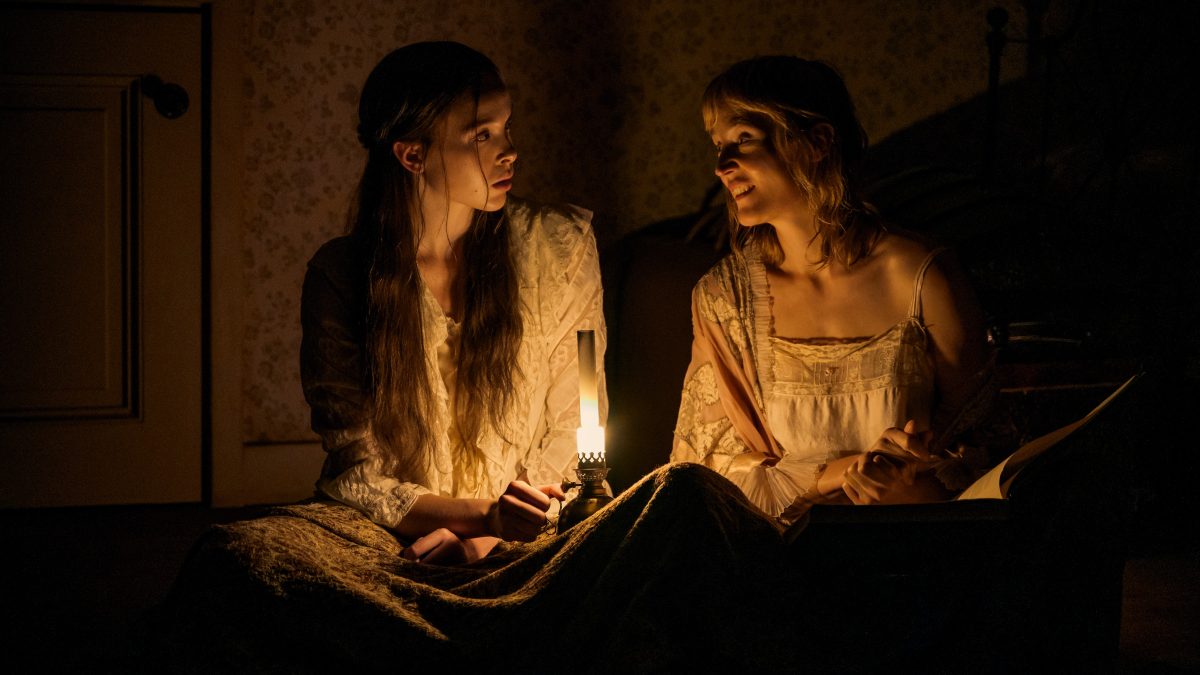
Also, this is neither here nor there but two different characters call Bridget a “Mick dyke” even though she didn’t even have an Irish accent for some reason (not that that alone would be enough to stop discrimination, but just another confusing choice) but more importantly there was no obvious reason why either character would assume Bridget was queer? And it’s not like her out-of-time hair would have been a trend among queer people yet. Bridget and Lizzie’s relationship stayed entirely under the radar and was not a point of contention at all, so it felt so odd. Like a little kid who just learned a new bad word and wanted to use it.
Let’s just say it was not the feminist masterpiece Ian Brennan apparently thought he had on his hands. You can’t just say you’re making a feminist show because it stars women. That’s not how any of this works. He did try to pat himself on the back by adding a truly baffling women’s suffrage montage at the end that has zero basis in reality (there is no evidence Lizzie Borden was a suffragist) and also made no sense for the story or characters in general. Lizzie Borden was, in real life and in this show, an animal lover first. She cared little for people aside from Bridget. But, the show took a lot of liberties about a lot of things, so what’s one more absurd and nonsensical thing, I guess.
I was confused when all the tell-tale whacks were done by the end of the fifth episode, considering there were still three episodes left, but the show takes us through Lizzie’s life, long past the axe incidents. Through the subsequent trial, and her life after, all augmented by the tragic ends to Elizabetta and Aileen’s stories. I normally finish a show and think it could have used more time, but I honestly think this one would have been tighter with six…if it had to be made at all. Which, ultimately, I’m arguing that perhaps these particular men should have stayed away from these women’s stories.
At the beginning of the show, three quotes appear on screen. The first two underestimate the capability of women wrt: murder. The last is a quote from Lizzie Borden herself, though actually it quotes her quoting an African proverb: “If you think you’re too small to make a difference, try sleeping in a room with a mosquito.” So I understand, based on that thesis statement of sorts, what they were trying to do with this show. I just don’t think they succeeded on that front. After all, even Vicky Krieps said the men barely knew what they were doing on set and she had to guide them through a lot of things. But there’s only so much one actor can do, and sadly, it just wasn’t enough for me in this case.
I really wanted to like this show, I did. And I really can’t understate how talented Ella Beatty is in this and how nice the private moments between Lizzie and Bridget were. I love dark television shows, I love “good for her” media, I love a bloody good time. So I did genuinely want to like this show. But, overall, I’m sorry to say, this one didn’t do it for me.
I can’t recommend watching Monster: The Lizzie Borden Story, but if you want to, it’s all on Netflix now, and you can come back and tell me your thoughts about it when you do.